REVIEW · HOBART
7-Day Super Value Tour of Tasmania: Explore Tasmania’s West and East Coasts
Book on Viator →Operated by Under Down Under Tours · Bookable on Viator
Tasmania flips the switch from forest to coast. This 7-day west and east coast tour strings together giant trees, wild rivers, alpine hikes, and convict-era history with a tight, all-in-one plan. I like how it starts in the cooler, greener part of the island and keeps moving toward dramatic shorelines.
I love the mix of walking styles—short, scenic loops like the Russell Falls stroll, then bigger day hikes like Dove Lake. And I really value the wildlife moments built into the schedule, from boardwalk wombat spotting to meeting Tasmanian devils at Bonorong.
One thing to plan for: this is not a sit-everywhere tour. You should be ready for moderate physical fitness, especially with two longer hike blocks around Cradle Mountain.
In This Review
- Key highlights that matter (not just names)
- A Route That Actually Spreads Tasmania Out
- Day 1: Russell Falls, Franklin-Gordon Wild Rivers, and Lake St Clair
- Day 2: Strahan, World Heritage Cruises (Optional), and the West Coast’s Ocean Beach
- Day 3: Dove Lake Circuit, Marion’s Lookout, and Ronny Creek Wombats
- Day 4: Cataract Gorge Reserve, St Helens Lunch Stop, and East Coast Swim Town Time
- Day 5: Freycinet National Park Early Access, Wineglass Bay, and Cape Tourville
- Day 6: Bonorong Wildlife Sanctuary, Georgian Richmond, and Wellington Park on Kunanyi
- Day 7: Eaglehawk Neck Lookouts, Port Arthur Historic Site, and Tasman National Park Walks
- Tour Value: Price, Inclusions, and What You Might Pay Extra
- Guides Make It Real: What to Expect From the Human Part
- Who Should Book This Tasmania West + East Tour
- Tips to Make Your Week Work Better
- Should You Book This 7-Day Tasmania West + East Tour?
- FAQ
- Where does the tour start, and what time does it run?
- How big is the group?
- What’s included in the tour price?
- What major activities are not included or are optional?
- What fitness level do I need?
- Can the booking be changed or refunded if my plans change?
Key highlights that matter (not just names)
- Small group size (max 24): you’ll move as a unit, with enough room for personal questions to the guide.
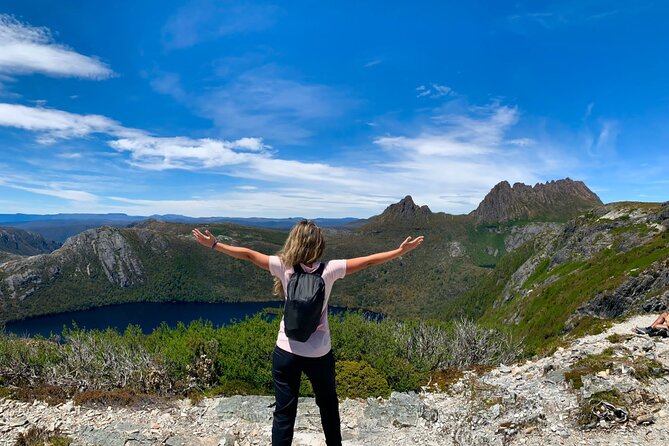
- Cradle Mountain time on the ground: Dove Lake Circuit and a second viewpoint hike for real payoff.
- Wildlife built into the itinerary: Ronny Creek for wombats and Bonorong for quolls, kangaroos, and Tasmanian devils.
- UNESCO Port Arthur visit: a structured history stop with Port Arthur Historic Site entry included.
- Freycinet without rushing the lookouts: Wineglass Bay viewpoints and Cape Tourville lighthouse scenery.
- West Coast extras are optional: Gordon River cruise and Ship That Never Was can be added if you want them.
A Route That Actually Spreads Tasmania Out
This tour is designed for people who want the best-known contrasts of Tasmania without stitching together multiple bookings. You’re covering a west-to-east sweep: temperate rainforests and wild rivers on day one and two, alpine and mountain trails around Cradle Mountain, then east coast bays and lookouts, and finally the Tasman Peninsula and Port Arthur.
I also like that the pacing is built around “do something” stops, not just photo pull-offs. You’ll have guided walks, boardwalk time, and specific viewpoint blocks—so the days feel like they have shape.
A few more Hobart tours and experiences worth a look
Day 1: Russell Falls, Franklin-Gordon Wild Rivers, and Lake St Clair
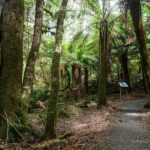
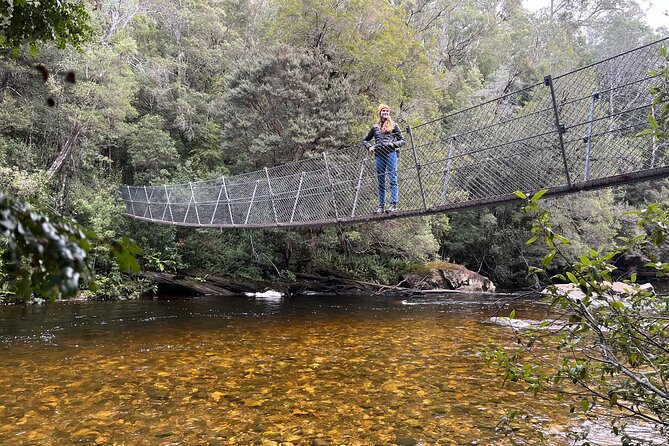
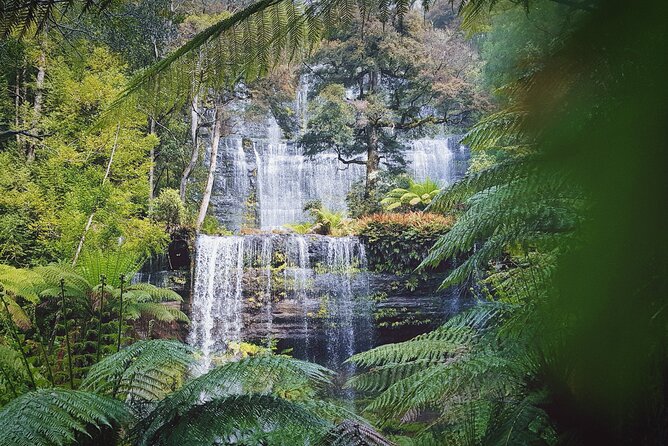
Day one is all about that Tasmanian intro pack: trees, waterfalls, rainforest, and deep-lake quiet. You start with the Russell Falls area and the Tall Trees walk, then you finish with Russell Falls as the star attraction. It’s long enough to feel like an actual walk, but not so long that you’re cooked before the next day.
Next comes Franklin-Gordon Wild Rivers National Park, inside the massive World Heritage Area. This is where you get those big, rugged rainforest views that make Tasmania feel like it’s in a different universe than mainland Australia.
Then you swing by Lake St Clair Park Center, at the southern end of Cradle Mountain–Lake St Clair National Park. You get time for a walk or lunch by the lake, which is a nice reset after rainforest time—your brain gets to breathe for a bit.
Finally, there’s a short stop in Queenstown. It’s quick—about 25 minutes—but it gives you that mining-town flavor to set the mood for the historic and gritty stops later.
Practical note: day one is built to ease you into the tour, but you still need decent walking shoes. Even the “short” stops add up.
Day 2: Strahan, World Heritage Cruises (Optional), and the West Coast’s Ocean Beach
Strahan is your first “settle in” stop, right on the harbour. There’s time to explore the village, including its dark convict past tied to the Tasmanian Wilderness World Heritage Area. Even with limited time, it’s one of those towns where you can understand why people linger.
Then you hit one of the big decision points: World Heritage Cruises into the Gordon River is a major scenic boat option, listed as not included. If you’re into rainforest-from-the-water views, this is the kind of add-on that can turn an ordinary travel day into a memory you keep.
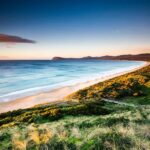
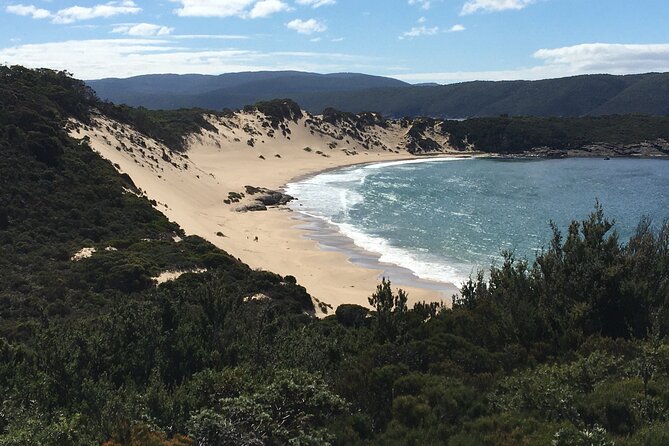
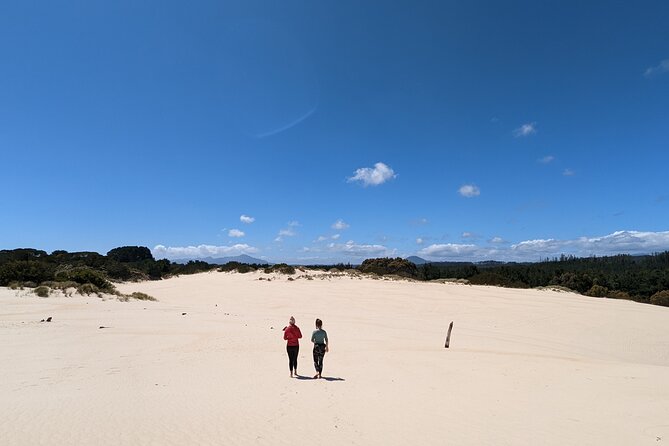
After Strahan, you move to the dunes and beaches. Henty Dunes gives you a long stretch of sand and tall dunes, and Ocean Beach is the ocean-at-full-volume moment. The stop is brief, but it’s long enough for that “stand there and stare” feeling. You’ll also get the fun context that South America is more than 10,000 km away from here—which makes the distance feel real, not abstract.
There’s also an optional history add-on: The Ship That Never Was, tied to the 1834 Great Escape from Sarah Island. It’s listed as not included, so you can choose based on whether you’d rather spend your time outside the vehicle.
Day 3: Dove Lake Circuit, Marion’s Lookout, and Ronny Creek Wombats

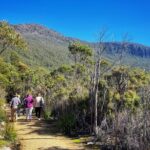
This is the day that turns the volume up. You start with the Dove Lake Circuit, one of Tasmania’s standout nature walks. The time listed is about 4 hours, and the payoff is in both intimate and epic views of the mountain and alpine water. If you want the Cradle Mountain “classic” experience, this is the core.
Next is Marion’s Lookout Walk, also around 4 hours. It’s described as challenging but scenic, with big viewpoint rewards. You don’t need to race it, but you do need to be comfortable on uneven ground.
Then you pivot from mountain effort to culture and wildlife. Sheffield is a short stop—about 45 minutes—enough time to wander through the town’s murals and art/historical vibe without turning it into a separate day trip.
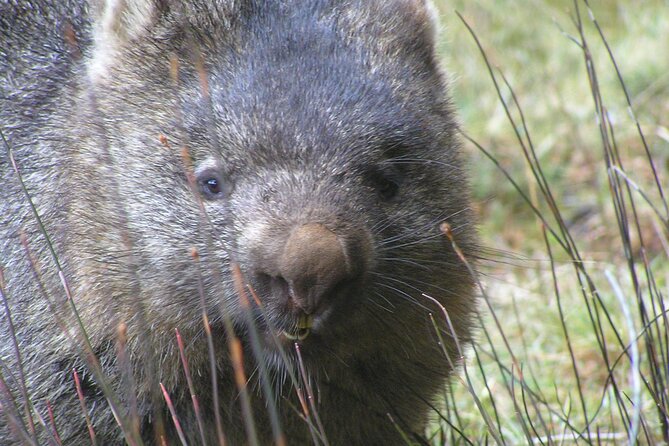
After that, you go to Ronny Creek Carpark for a boardwalk out-and-back and a real shot at seeing wombats. The good news is that these wombats are used to people, so you’re not standing there guessing for luck the entire time.
Tip that matters here: don’t try to “power through” both Cradle Mountain hikes without managing your pace. Bring water, wear grippy shoes, and accept that photos will take a little longer than you think.
Day 4: Cataract Gorge Reserve, St Helens Lunch Stop, and East Coast Swim Town Time
Day four is the change of scenery day: from rugged national park energy to a more relaxed east-coast rhythm.
You start at Cataract Gorge Reserve near Launceston, with time to explore tracks and the world’s longest single-span chairlift. The stop is short (around an hour), but it’s a good stretch-and-walk reset before more coastline later.
Then it’s St Helens for a quick harbour-town break. This is a lunch and atmosphere stop, with time to look at the cray boats in the harbour. It’s not a long town immersion, but it gives you that coastal working-life texture.
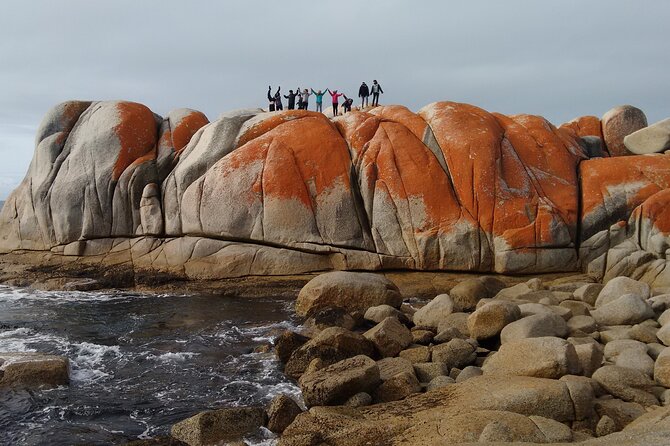
Next comes Binalong Bay, and this is one of the tour’s “stop and actually enjoy it” points. It’s famous for crystal-clear water, white sand, and those orange lichen-covered granite boulders. If conditions are right, it’s described as a great swim spot—so if you like water time, this is your window.
You finish with Bicheno in the evening for free exploration. The stop is about two hours, and it’s set up for coastal views and a simple food plan like fish and chips, plus wildlife watching depending on what’s around.



Day 5: Freycinet National Park Early Access, Wineglass Bay, and Cape Tourville
This is a big day for views. Freycinet National Park is where the tour aims to beat crowds by arriving early. You get time to walk to a lookout for panoramic Wineglass Bay views, with the option to relax afterward.
From there, you also have time explicitly tied to the Wineglass Bay Lookout segment. Between the morning drive rhythm and these listed durations, plan for a day where you’re mostly outdoors, with a mix of walking and lookout time.
Then there’s Cape Tourville Lighthouse, about 45 minutes. It’s a scenic viewpoint session with views out to the Tasman Sea and back toward the Hazards Mountains and Wineglass Bay. This stop is short on paper, but it’s a classic “the road brings you to the right view” feeling.
You’ll then pass through along the Great Eastern Drive and stop briefly at Orford (about 15 minutes). It’s a quick photo-and-stretch moment, not a full town visit.
Day 6: Bonorong Wildlife Sanctuary, Georgian Richmond, and Wellington Park on Kunanyi
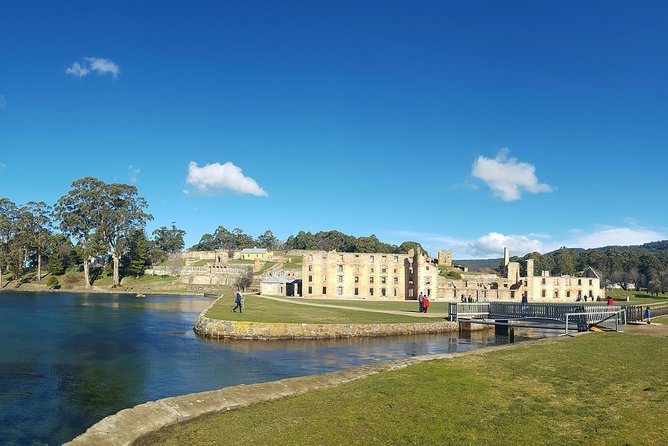
Day six blends wildlife, history, and a nature viewpoint near Hobart. You start with Bonorong Wildlife Sanctuary (about 2 hours). This is one of the most practical wildlife experiences because it’s built for close-up encounters. The animals listed include quolls, birds, wombats, kangaroos, and Tasmanian devils.
Then you move into Richmond, a colonial-era town with more than 50 Georgian buildings, many functioning as cafes, restaurants, galleries, and accommodation. The stop is about an hour—enough to walk the streets and feel the preserved-era atmosphere.
There’s also a quick stop at Richmond Bridge, noted as the oldest existing stone arch bridge in Australia. It’s short, but it’s the kind of landmark that rewards a quick stop if you’re into old infrastructure.
Finally, you head to Wellington Park on Mount Wellington/kunanyi for a couple hours. It’s described as Hobart’s nature playground, with fern glades, eucalyptus forests, and dramatic rock columns and boulder formations. Even if you don’t do a long hike, it’s a strong end-cap before your final day.
Day 7: Eaglehawk Neck Lookouts, Port Arthur Historic Site, and Tasman National Park Walks
Day seven is about intensity and closure: coastal geology plus a serious history anchor.
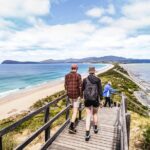
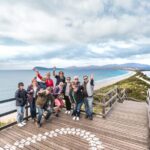
You start with a quick lookout at Pirates Bay/Eaglehawk Neck, giving panoramic views of the Tasman Peninsula area and nearby capes like Cape Hauy and Cape Pillar. It’s short—10 minutes—but it sets up what you’ll see next.
Then you go to Port Arthur Historic Site, about 3 hours, with entry included and the site described as Australia’s best-preserved convict location and World Heritage-listed. This is the emotional center of the itinerary: convict settlement stories with the chilling realities of prison life. It’s not just sightseeing. It’s history that lands.
After Port Arthur, you head into Tasman National Park for coastal geology time, including features like Tasman Arch, Devil’s Kitchen, and the Blowhole. Then you have short, focused add-on tracks like the Tasman Arch Track and Devils Kitchen observation platform.
You end at Remarkable Cave, with a short walk described as one of the best short walks in Tasmania to see coastal sand dunes of Crescent Bay. It’s a fitting finale: from stone-and-history back to sand-and-coast.
Tour Value: Price, Inclusions, and What You Might Pay Extra
The price is $1,038.14 per person for the full 7-day tour. That’s not “cheap,” but it’s also not the kind of tour where you get nickel-and-dimed constantly. You’re paying for national park access, guided time, and 6 nights accommodation, plus Hobart CBD pickups and drop-offs.
Here’s what’s explicitly included:
- National park entry fees
- Hobart CBD pickup and drop-off (hotel/hostel/motel pickups)
- Expert guides
- 6 nights accommodation
- Port Arthur Historic Site entry
- Bonorong Wildlife Sanctuary entry
- Mobile ticket
- Advanced eco-certified tour
What can cost extra or stay optional:
- World Heritage Cruises (Gordon River) is listed as not included
- The Ship That Never Was is listed as optional extra and not included
So, how do you judge value? You look at the biggest “paid attractions” first. Port Arthur and Bonorong entries are included, which are usually major ticket items. Then you consider the national park fees, because this route is heavily national-park-based. Finally, you decide whether you want to add the boat cruise and the Sarah Island story dramatization in Strahan.
Also, a detail I like: the tour max is 24 travelers. For a multi-day itinerary, that’s a sweet spot. Big enough for energy, small enough that the guide can still manage the group without turning it into a factory line.
Guides Make It Real: What to Expect From the Human Part
The itinerary is packed, but what keeps it from feeling like a checklist is the guide. In the feedback you shared, Evan is praised for detailed yet interesting history, considerate driving, and strong recommendations. Another guide, Natalie, is highlighted as amazing and accommodating for a wide age range in the group.
You should expect the guide to help connect the dots between places. For example, the convict themes show up in Strahan and then again at Port Arthur. The geology shows up as waterfalls on day one, dunes on the west coast, and arch-and-blowhole features at Tasman National Park.
In short: if you’re the type who likes context, this tour has the right structure for it.
Who Should Book This Tasmania West + East Tour
This tour is a great match if you:
- Want both Cradle Mountain hiking and big scenic viewpoints like Wineglass Bay
- Like wildlife experiences that are scheduled and dependable, including Bonorong
- Prefer an organized route that manages the day-to-day driving and entry tickets
It might not be the best fit if you:
- Prefer slow travel with minimal walking (you have two 4-hour hike blocks)
- Hate the idea that some major add-ons, like the Gordon River cruise, cost extra
The moderate fitness note matters here. If you’re comfortable walking for hours and handling changing weather, you’ll be fine.
Tips to Make Your Week Work Better
Bring the basics like you mean it. The tour includes multiple outdoor walks, lookouts, and boardwalk time.
A few practical ideas:
- Wear shoes you trust on uneven trails. Dove Lake Circuit and Marion’s Lookout are the places where footwear matters.
- Pack a rain layer. Tasmania weather can change fast, and you don’t want to cut hikes short because you’re soaked.
- If you’re considering the Gordon River cruise, decide before you get to Strahan. Then you can plan your day around it instead of weighing it on the fly.
- Budget time at each lookout stop. The best views need a minute of standing still, not just a quick photo.
Should You Book This 7-Day Tasmania West + East Tour?
I think you should book it if you want a guided Tasmania “greatest hits” route with enough nature time to feel real and enough structure to keep moving. The Cradle Mountain hikes, Port Arthur visit with entry included, and wildlife at Bonorong are three anchors that make the week feel worth it.
Before you commit, be honest about two things: your comfort with the longer hike blocks, and whether you want to add optional experiences in Strahan like the Gordon River cruise or Ship That Never Was. If you like active days and historical context, this one fits nicely.
FAQ
Where does the tour start, and what time does it run?
The tour starts at YHA Hobart Central, 9 Argyle St, Hobart TAS 7000, with a start time of 7:00 am. It ends back at the same meeting point.
How big is the group?
This tour has a maximum of 24 travelers.
What’s included in the tour price?
The price includes national park entry fees, Hobart CBD hotel/hostel/motel pickups and drop-offs, expert guides, 6 nights accommodation, Port Arthur Historic Site entry, and Bonorong Wildlife Sanctuary entry.
What major activities are not included or are optional?
The World Heritage Cruises (Gordon River) stop is listed as not included. The Ship That Never Was in Strahan is also listed as an optional extra and not included.
What fitness level do I need?
The tour is marked for travelers with moderate physical fitness. There are longer walk times on the itinerary, including day-long hike blocks around Cradle Mountain.
Can the booking be changed or refunded if my plans change?
The experience is non-refundable and cannot be changed for any reason. If you cancel or request an amendment, you won’t get a refund of the amount paid.