REVIEW · QUEENSLAND
Australian Dinosaur Giants Tour
Book on Viator →Operated by Eromanga Natural History Museum · Bookable on Viator
Bigger-than-life dinosaurs, in rural Queensland. This short tour at the Eromanga Natural History Museum turns a handful of fossil displays into a real workshop story, where you’ll meet titanosaur sauropods Cooper and George and even touch a 95 million-year-old dinosaur bone. I love that it’s not just looking. You’re learning how paleontology work gets done, step by step.
My second big win: the fossil-hunting tools demonstration. You see how they expose fossilised bone using specialised equipment, then connect it to the bigger prehistoric picture of Australia. One possible drawback is that the whole experience depends on your guide’s delivery. If audio clarity or pacing isn’t your thing, you may find the narration harder to follow than you hoped.
In This Review
- Key things that make this tour worth your hour
- Eromanga Natural History Museum: The Outback Setting for Titanosaurs
- Tour Flow in About an Hour: From Intro Video to the Workshop
- Touch a 95 Million-Year-Old Bone: Fossil Tools Up Close
- Eulo Megafauna and Other Collections: Putting Australia’s Prehistory in Context
- Value for $11: What’s Included and What to Budget For
- Should you book Australian Dinosaur Giants at Eromanga Natural History Museum?
- FAQ
- How long is the Australian Dinosaur Giants Tour?
- Where does the tour start and end?
- What’s included in the ticket price?
- Can I touch the dinosaur bone on this tour?
- How big are the groups?
- Do I need good weather?
Key things that make this tour worth your hour
- Cooper and George (titanosaur sauropods): Two of Australia’s largest discovered dinosaur bones, highlighted as the largest bones found on the continent so far.
- Touch a 95-million-year-old dinosaur bone: A rare chance to make the science feel real.
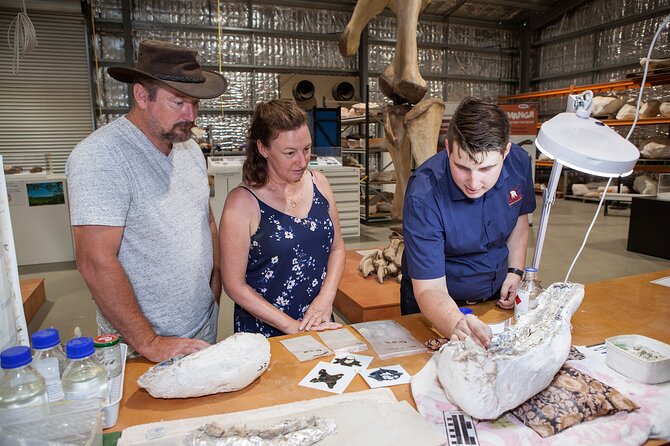
- Fossil hunting tools demo: You’ll watch specialised techniques used to expose fossilised bone.
- Eromanga workshop setting: It’s guided and hands-on without being a long, exhausting day trip.
- A strong museum context: You also get time with other collections, including Eulo megafauna fossils.
Eromanga Natural History Museum: The Outback Setting for Titanosaurs
This is the kind of place where the building itself helps you shift gears. When you’re driving through the Queensland outback, you don’t expect a museum experience to feel this polished. But Eromanga Natural History Museum is set up for science storytelling, not just static displays, and you’ll feel that from the moment the tour starts.
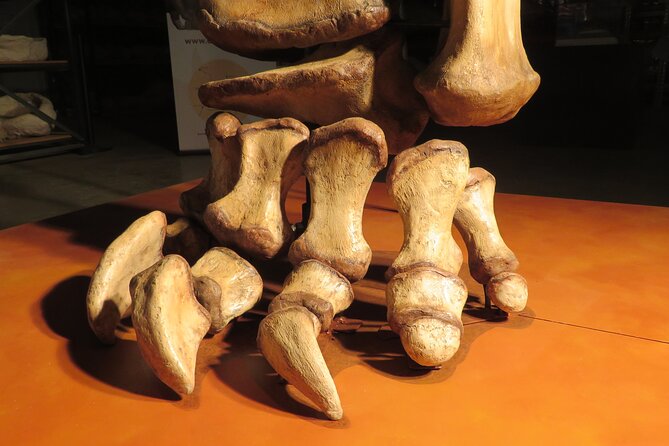
The main draw is the titanosaurs—specifically the sauropods showcased as Cooper and George. These are not small dinosaurs. Titanosaurs are described as some of the last remaining sauropod groups of the Cretaceous Period, and sauropods were the biggest land-dwelling animals. The museum gives you a clear reason to care: the bones of Cooper and George are presented as the largest dinosaur bones found in Australia so far, and also among the largest bones of any animal that walked the continent.
What I like here is that you’re not stuck inside a single exhibit room. The tour connects you to the museum’s workshop area. That means you’re seeing the museum as a living place—where real fossil preparation work happens—rather than treating it like a storage unit for old rocks.
You’ll also get context beyond dinosaurs. The tour mentions Eulo megafauna fossils and other natural history collections. That matters because it helps you picture Australia during deep time as more than just “dinosaurs everywhere.” You get the sense of an ecosystem and a history that includes other extinct beasts too.
If you’re the type who likes your fossils with a little story and a little practical detail, this museum hits that sweet spot.
You can also read our reviews of more tours and experiences in Queensland.
Tour Flow in About an Hour: From Intro Video to the Workshop
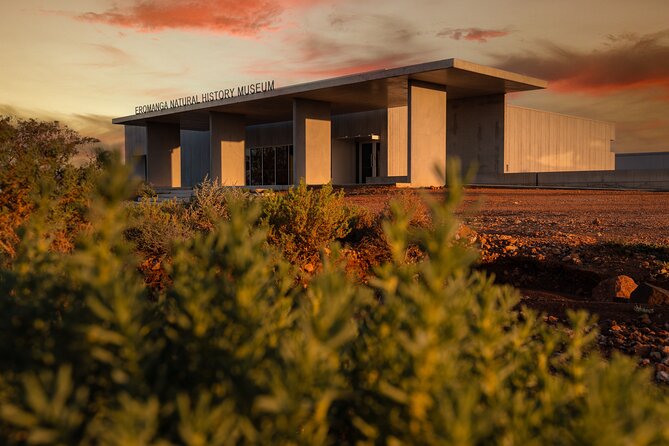
The tour runs about 1 hour, and it’s built around one main stop: Eromanga Natural History Museum on Dinosaur Dr in Eromanga (QLD 4480). It ends back where you meet, so you’re not dealing with a complicated route through the town or a long transfer.
Here’s the rhythm you can expect once you arrive:
- You start with a guided introduction that sets the prehistoric scene.
- Then you move into the workshop area for the “how it’s done” part.
- The tour wraps up with time spent seeing the dinosaur bones and related collections.
One thing that shows up consistently in feedback is that visitors get a strong setup before they see the fossils in person. There’s mention of a pre-tour video that runs about 20 minutes, designed to be informative and easy to follow. After that, the tour shifts to the shed/workshop where the dinosaur preparation work is happening and where the guides can point out what you’re actually looking at.
Since the group size is capped at 30 travelers, the experience is likely to feel more manageable than the bigger, busier dinosaur stops. You won’t have to shout over a crowd to hear the guide’s explanations. And because it’s a short tour, it works well as a “worth it” detour if you’re passing through the area.
Practical note: the tour is described as requiring good weather. If conditions aren’t right, the experience can be canceled and you’ll be offered a different date or a full refund. In the outback, that’s not just bureaucracy—it’s how they keep the day running smoothly.
Touch a 95 Million-Year-Old Bone: Fossil Tools Up Close
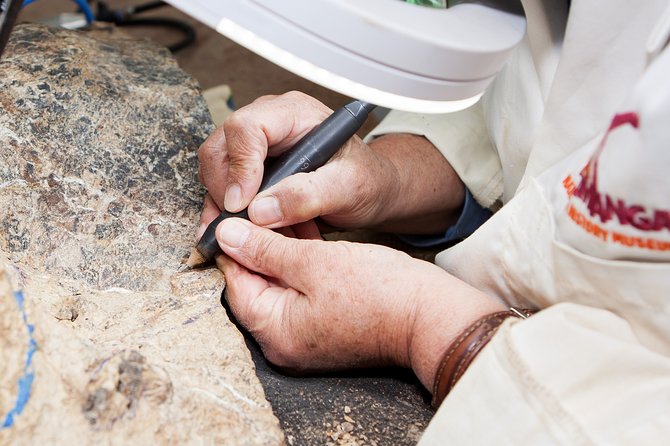
This is where the tour earns its keep. The experience isn’t only about sightseeing. You get a demonstration of tools used in fossil hunting, including how fossilised bone is exposed using specialised equipment. That’s a big deal, because it turns “cool fossils” into “how we know what we know.”
The tour’s standout moment is the chance to touch a 95 million-year-old dinosaur bone. That detail alone is unusual for a paid short tour. It’s the kind of hands-on interaction that makes the science feel less abstract. Instead of only thinking about dinosaurs you’ve never met, you’re physically interacting with an object that has survived nearly the entire history of modern Earth.
I also like that the tour connects the tool demonstration back to the dinosaurs you’re there to see. Cooper and George aren’t presented as random giants. The museum frames them as massive titanosaurs/sauropods and explains their role in Australia’s prehistoric story—then you’re shown the preparation angle that makes that story visible to the public.
The workshop vibe is likely to be especially compelling if you enjoy watching expert work. Fossil preparation isn’t magic. It’s careful, slow exposure and documentation. So even if you’ve never studied paleontology, you’ll probably leave understanding that “digging” is only the start. The work continues long after the fossil is found.
One more point to keep in mind: the tour experience relies on guided explanation. If you’re picky about clear speaking, you’ll want to position yourself where you can hear well. One guest noted trouble understanding a guide due to articulation and confidence in delivery. That’s not about the museum or the fossils—it’s about the human factor. If you have hearing needs, choose a spot closer to the guide and don’t be shy about asking for clarification in plain terms.
Eulo Megafauna and Other Collections: Putting Australia’s Prehistory in Context
For me, the best dinosaur museums do two things at once: they show you the wow factor and they place that wow factor in a wider story. This tour attempts that with the inclusion of other natural history collections.
Besides Cooper and George, you’ll encounter the Eulo megafauna fossils mentioned as part of the museum’s impressive holdings. That matters because Australia’s prehistoric past wasn’t a one-dinosaur parade. Even if your heart is set on sauropods, seeing other extinct beasts helps you understand that the museum is building a fuller picture of deep-time life.
You also get background information tied to displays. Feedback highlights that the museum provides the “why” behind exhibits, not only the “what.” There’s also mention of an informative video explaining the eons of Earth, which likely helps you connect dates and scale to something you can actually feel in your brain.
Think of it like this: when you see a giant bone, you might feel awe for about 30 seconds. When you learn how it was prepared, what group it belongs to, and what else lived around that era, that awe starts to last longer. This tour is short, but it tries to give you that second layer without turning it into a lecture marathon.
If you’re traveling with kids, this is also a helpful format. You get a clear sequence—watch, see, touch, learn—and the museum environment makes it feel like you’re stepping into a science story rather than sitting through a presentation. Adults tend to like it too, especially if you enjoy hands-on explanations and want your “dinosaur time” to come with method, not just spectacle.
Value for $11: What’s Included and What to Budget For
At $11 for about an hour, this is priced like a quick hit. But it doesn’t feel like a watered-down experience. The included items are a guided tour and entry to the workshop. That means you’re not just paying for museum access—you’re paying for a guided explanation and access to the workshop area tied to fossil hunting preparation.
In a good museum, the workshop portion can be the difference between seeing fossils and understanding fossils. Here, that workshop access is part of the deal. Add in the chance to touch a 95 million-year-old dinosaur bone, and the cost starts to make sense fast.
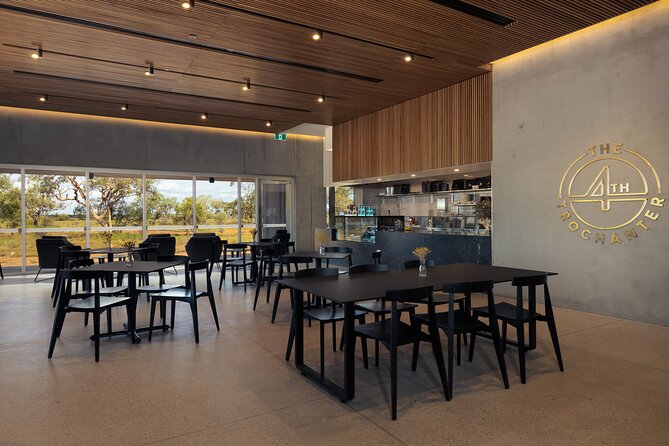
There is one small catch: coffee and/or tea aren’t included. That’s easy to plan for. If you want a snack or hot drink, you can likely grab refreshments at the museum’s cafe. People mention good coffee and food options like sausage rolls, plus the convenience of being in the same facility while you’re there.
Also, because the group is capped at 30 travelers, the experience likely stays more personal than you’d expect for an inexpensive ticket. If you like small moments of guided attention, that structure helps.
Finally, remember weather matters. If the tour is canceled due to poor weather, you’ll be offered a different date or a full refund. That’s especially relevant in outback travel planning, where plans can shift quickly.

Should you book Australian Dinosaur Giants at Eromanga Natural History Museum?
I think you should book this if you want a high-impact dinosaur experience without spending a whole day on the road. It’s short, it’s focused, and it includes the kind of hands-on moment you rarely get—touching a 95 million-year-old dinosaur bone—plus a real look at fossil hunting tools.
Book it if you’re traveling through Queensland and you want something that feels educational but not stiff. The workshop setting and the emphasis on how fossils are exposed make it more than a museum walk.
I’d think twice if you’re very sensitive to guide delivery. The tour is guided, and clarity matters. If you’ve had trouble with narration-based tours in the past, position yourself where you can hear and be ready to ask a question if something doesn’t land.
If you like your science with practical detail, this one is a solid yes.
FAQ
How long is the Australian Dinosaur Giants Tour?
It lasts about 1 hour.
Where does the tour start and end?
It starts at Eromanga Natural History Museum, Dinosaur Dr, Eromanga QLD 4480, Australia, and ends back at the meeting point.
What’s included in the ticket price?
The ticket includes a guided tour and entry to the workshop.
Can I touch the dinosaur bone on this tour?
Yes. The tour includes a chance to touch a 95 million-year-old dinosaur bone.
How big are the groups?
The tour has a maximum of 30 travelers.
Do I need good weather?
Yes. This experience requires good weather, and if it’s canceled due to poor weather, you’ll be offered a different date or a full refund.