REVIEW · CAIRNS AND THE TROPICAL NORTH
Cairns History Walking Tour
Book on Viator →Operated by Cairns Urban Walking Tours · Bookable on Viator
Cairns has a story behind every doorway. This 90-minute small-group walk (max 12) helps you see Cairns beyond the reef and the surf, with a guide covering everything from Indigenous life that can reach back 40,000 years to colonial-era trade and war. I especially like how compact it is (you hit a lot of key spots on foot) and how the route mixes architecture, public art, and street-level landmarks instead of dry facts. One consideration: it’s brief, with short stops, so if you want to linger for long photos at each location, you may feel slightly rushed.
This tour is run by Cairns Urban Walking Tours and meets at the Cairns Museum on Lake Street. Guides can vary by date, and names like Peter and Georgia show up in the mix, which matches the overall feel: you get an active, chatty stroll with clear explanations and practical pointing-out along the way. With a price of $37.98 per person and a very high 4.9 rating from 52 reviews, it’s an easy add-on if you want to get your bearings fast and understand why Cairns grew where it did.
In This Review
- Key highlights worth planning for
- Why this walk works when you only have a day (or two) in Cairns
- Before you step out: what to expect from the vibe and pace
- Stop by stop: what you’ll see and why each one matters
- 1) Cairns Museum: the meeting place story
- 2) Cairns Art Gallery: Shields Street and the colony’s shift
- 3) Cairns Esplanade Lagoon: World Heritage context and early arrivals
- 4) Tourist Information Centre area: early government made visible
- 5) The Reef Hotel Casino and the war memorial: WWII and beyond
- 6) The Chambers: commerce in the streets—Bolands, steamships, hotels
- 7) Crystal Ball Bookstore area: Chinatown and Grafton Street
- 8) Hides Hotel Cairns: arts institutions and the early hotel role
- How to get more value from the tour after it ends
- What the review score and repeat praise say about fit
- Price and value: is $37.98 actually fair here?
- Who should book this Cairns history walk
- Quick FAQ
- FAQ
- How long is the Cairns History Walking Tour?
- Where does the tour start?
- How many people are in the group?
- What’s the tour price?
- Do I need to bring a printed ticket?
- Are the stop admissions free?
- Does the tour run in all weather?
- What if the minimum number of travelers isn’t met?
- Is it easy to reach using public transport?
- Can I bring a service animal?
- Should you book this tour?
Key highlights worth planning for
- Max 12 people means you can actually hear your guide and ask questions.
- Meet at Cairns Museum so you start with context, not guesswork.
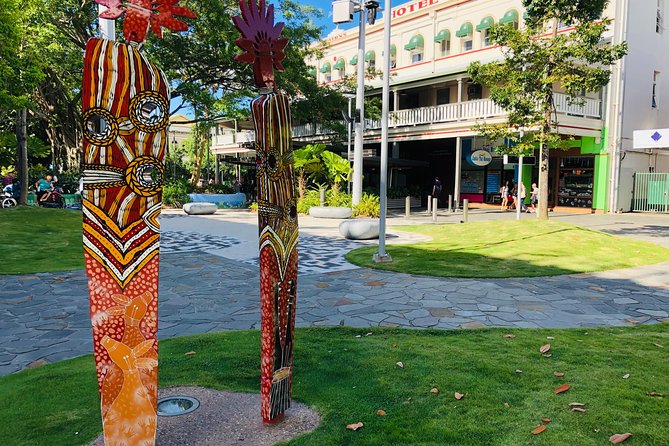
- Architecture + public art stops (including Shields Street work by Paul Bong) make the history visual.
- A route that covers multiple eras: colonization, pirates, opium trade, and WWII.
- Mostly no extra stop fees listed at each location, so you’re not paying for museum after museum.
- A “good weather” walk, so quick planning helps if rain or strong wind hits.
Why this walk works when you only have a day (or two) in Cairns
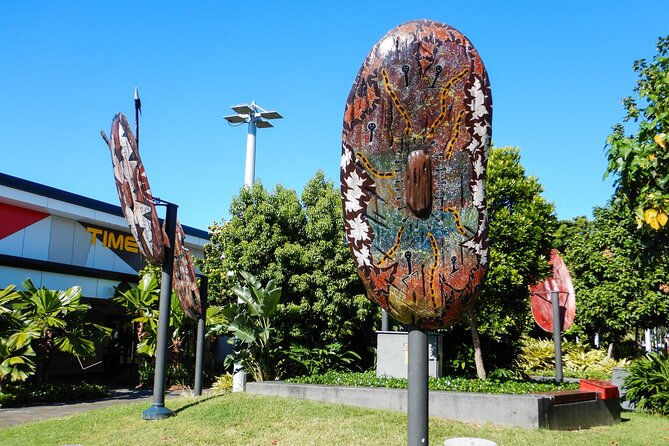
Cairns can be a little tricky at first. You land, you look around, you see palm trees, markets, lagoon light, and tour buses heading toward the coast. Then you realize: the place is full of history, but it isn’t labeled in a big, obvious way.
That’s where this Cairns History Walking Tour earns its keep. Instead of sending you to one indoor museum, it threads through central Cairns and connects the dots. You get a guided sense of place—how the town’s meeting points formed, what colonial settlement looked like on the ground, and why certain buildings matter today. The big win is that you learn while walking, so Cairns stops feeling like a blur between excursions.
The route is also the right length for most schedules. At about 1 hour 30 minutes, you can do it early in your trip and come back later with a much sharper eye.
You can also read our reviews of more walking tours in Cairns and the Tropical North


Before you step out: what to expect from the vibe and pace
The tour runs with a group capped at 12, which usually means a more personal feel. You’re walking in the city core, with short orientation-style stops rather than long show-and-tell lectures. Most stops clock in around 5–10 minutes, so the pacing stays lively and you keep moving.
Bring practical basics:
- Wear comfortable shoes. This is a city-walk pace, not a slow park stroll.
- Plan for Cairns weather. The tour requires good weather, and one review notes it can get cold and windy—so a light layer can save the day.
- If you’re taking transit, the meeting point and most stops are in the central area and described as near public transportation.
If you like to learn by looking—street corners, building facades, public art, and memorials—this is a solid match.
Stop by stop: what you’ll see and why each one matters
1) Cairns Museum: the meeting place story
You start at the Cairns Museum on Lake Street, a smart move because it frames everything that follows. The first topic is the historic meeting point for traditional owners and colonial settlers. That matters because it sets a tone: Cairns history isn’t just European arrival and then ending. It’s contact, change, and layers of cultural presence.
This opening also helps you understand why later stops feel connected. You’ll be looking at buildings and streets, but the guide keeps tying it back to who lived here, who governed, and what economic forces pulled people in.
Practical note: the stop is brief, so don’t expect a deep museum experience. The value is context, not a full self-guided museum tour.
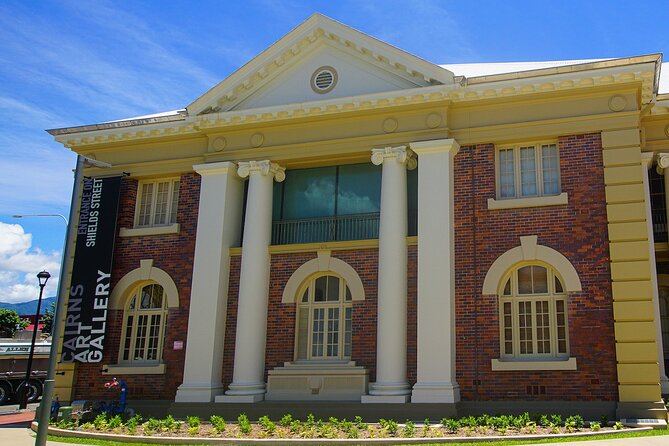
2) Cairns Art Gallery: Shields Street and the colony’s shift
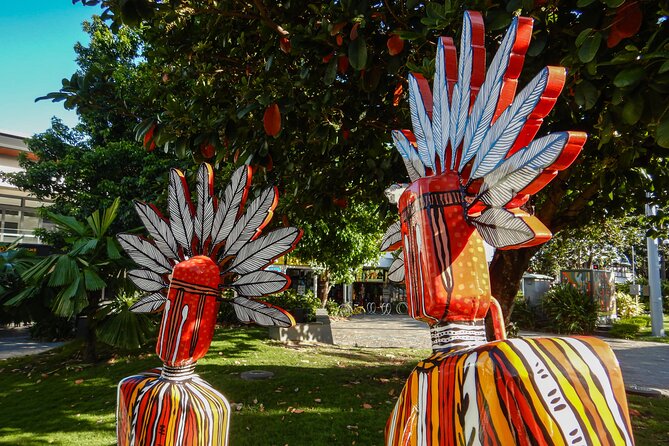
Next up is the Cairns Art Gallery area, with a focus on Shields Street traditional Aboriginal shields street art by Paul Bong. Public art like this does two jobs at once: it adds visual texture to the city, and it teaches you how Indigenous culture lives in the present while referencing older knowledge.
From there, you also get the story of the gold rush and the establishment of the colony. That combination works well because it shows how wealth and settlement shaped Cairns—and how cultural expression remained visible even as the town’s character changed.
One drawback with this kind of stop: it can feel like you’re skimming visually. But the guide’s job is to give you just enough anchor points that you can recognize themes later as you explore on your own.
You can also read our reviews of more historical tours in Cairns and the Tropical North






3) Cairns Esplanade Lagoon: World Heritage context and early arrivals
Then you’re at the Cairns Esplanade Lagoon, which is one of those places that looks simple until someone explains why it exists. Here, the guide discusses the history of the reef and rainforest as World Heritage Sites, tying Cairns’s identity to the environment that draws people to the region.
You’ll also hear about early settlers, including pirates. That might sound like fun trivia, but it’s more than entertainment. Pirates and sea-linked stories help explain how coastal towns developed quickly, because ports and sea routes move people and money fast.
This stop is especially helpful if your Cairns plans include the Great Barrier Reef or the rainforest. You’ll go from seeing nature as a postcard to seeing it as part of a bigger system that influenced settlement patterns and trade.
4) Tourist Information Centre area: early government made visible
At the Tourist Information Centre, you learn about early government in Cairns, in front of the Mulgrave Shire building, described as the original local government headquarters for the colony.
This is one of those segments that many walking tours skip, but it’s useful. If you understand where and how decisions were made—who ran local affairs, how structures formed—you start reading the city differently. You notice civic building styles. You pay attention to what feels official. You understand why certain streets grew important.
If you like history that connects to what you can still see today, this stop delivers.
5) The Reef Hotel Casino and the war memorial: WWII and beyond
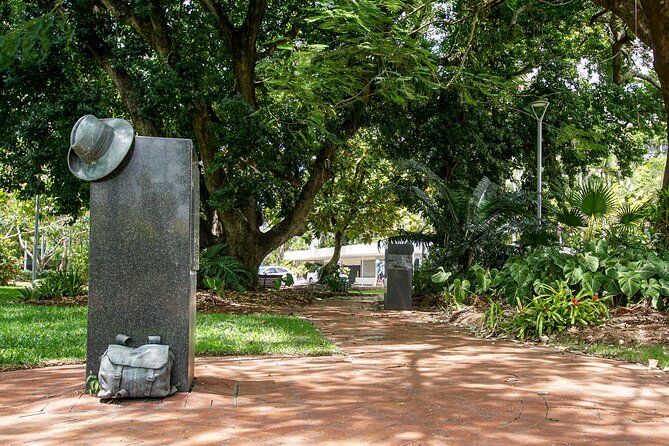
The Reef Hotel Casino area is where the tour turns to conflict. You visit the war memorial next to the casino and talk about the role of wars in Cairns life, with extra focus on World War II.
This part matters because it broadens Cairns history beyond the obvious “coastal town” story. The city’s position in the tropics gave it strategic importance, and war left marks—socially, economically, and in the way communities remembered sacrifice.
It’s also a nice contrast to earlier pirate stories. One’s chaotic and maritime; the other is modern-scale and organized. Together, they show how the ocean-facing location shaped Cairns across very different eras.
6) The Chambers: commerce in the streets—Bolands, steamships, hotels
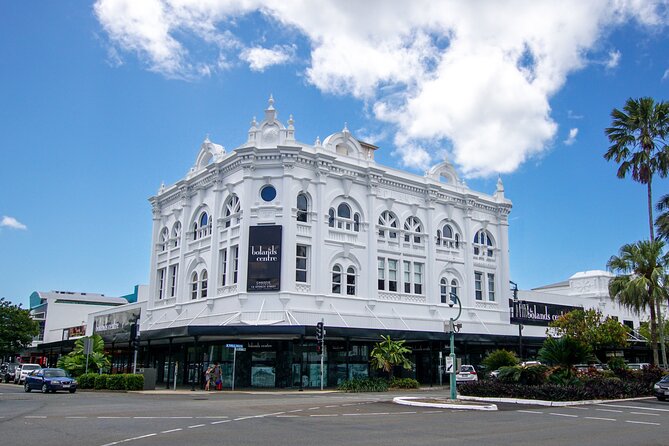
At The Chambers, the guide explains the historic Bolands Centre as the first department store in Cairns, plus references to the Adelaide Steamship Company and the Central Hotel from that vantage point.
Even if you never set foot in these businesses again, the lesson is clear: Cairns grew into a service and supply hub. Retail anchors like department stores reflect population growth and changing tastes. Steamship-company links show why global connections mattered. Hotels reflect how people moved—workers, travelers, traders, and officials all needing a place to land.
This stop can be the most “I can’t believe this is right here” moment on the walk, because it makes modern street life feel like the latest chapter of an older commercial pattern.
7) Crystal Ball Bookstore area: Chinatown and Grafton Street
Next you head to Crystal Ball Bookstore, with a Chinatown exhibit in front. This is where the tour gives Cairns history a key piece many people overlook: the important role of Chinese communities.
You also learn about the history of Grafton Street as the heart of Chinatown. That’s a helpful detail because Grafton Street is a place you’ll likely walk through anyway. Now you’ll understand why it became meaningful, and why that historic identity still matters when you’re shopping, dining, or just wandering at night.
This stop is short, but it’s a strong example of how a city tour can be more than “old buildings.” It’s about community presence and cultural continuity.
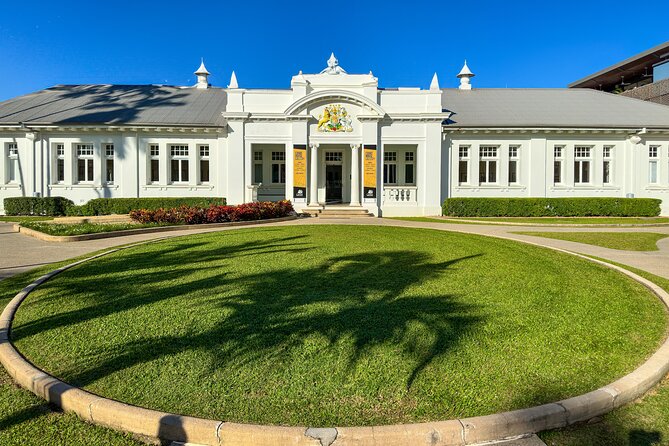
8) Hides Hotel Cairns: arts institutions and the early hotel role
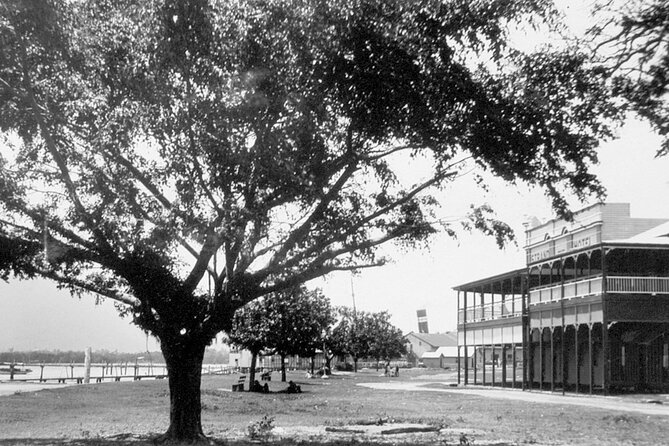
You end back near the start area in front of Hides Hotel Cairns. Here the guide discusses the School of Arts in the founding colony and the role of historic hotels in early colony life.
This ending works because it ties together themes from earlier: who set up institutions, how towns organized social life, and why hotels mattered as hubs for news, meetings, and travelers.
Hotels aren’t just background in a port town. They’re often where people from different worlds intersect. Closing with that idea gives the walk a satisfying “now I see the pattern” feeling.
How to get more value from the tour after it ends
I like these kinds of tours best when they make my next hours easier. This one tends to do that in a few ways:
- You’ll recognize names and themes as you wander—community presence, government growth, trade links, and the way war and conflict showed up in memorials.
- You’ll have context before you go reef or rainforest focused. Instead of only learning nature logistics, you can connect it to why Cairns became a crossroads in the first place.
- You’ll know where to stop for extra looking. After a guided overview, you’re better at spotting the “why” in what you see.
If you’ve got a day trip planned, I’d place this tour earlier. It acts like a map you can remember.
What the review score and repeat praise say about fit
The overall rating is 4.9 with 98% recommended, and the most praised elements are consistent: compact route, strong storytelling, and a guide who ties together architecture, culture, and big-picture history in a way that feels easy to follow.
Two guide names you might hear—Peter and Georgia—come up in the feedback, and that matches the tour’s approach: people describe it as an easy walk that makes Cairns feel understandable fast. One review also highlights that the guide pointed out coffee spots and dining along the way, which is a bonus if you’re still sorting out where you want to eat.
Price and value: is $37.98 actually fair here?
At $37.98 per person for about 1.5 hours, this is not a budget “one stop” attraction. But it does feel fair because you’re paying for interpretation, not just movement.
Here’s why the value holds up:
- You cover multiple central landmarks in one walking session, instead of paying for separate museum tickets.
- The stops listed are marked with free admission tickets, which reduces the hidden cost factor.
- The group size cap helps keep it conversational rather than a lecture line.
If you’re planning several paid activities during your Cairns stay, this tour can work like an orientation layer. You’ll likely get more out of your other excursions once you understand how the town formed and why it looks the way it does.
Who should book this Cairns history walk
You’ll probably enjoy it if:
- You want Cairns context without committing to a full-day museum plan.
- You like history that includes art, buildings, and community stories, not just dates.
- You prefer small groups and an active walk over a big bus tour.
- You’re staying in central Cairns and want to do something easy that doesn’t eat your whole day.
You might feel less satisfied if:
- You want long time at each stop for photos or reading.
- You dislike weather-dependent outdoor activities and don’t want to adjust your plans.
Quick FAQ
FAQ
How long is the Cairns History Walking Tour?
It’s approximately 1 hour 30 minutes.
Where does the tour start?
You meet at Cairns Museum, 93/105 Lake St, Cairns City QLD 4870.
How many people are in the group?
The tour has a maximum of 12 travelers.
What’s the tour price?
The price is $37.98 per person.
Do I need to bring a printed ticket?
No. The tour uses a mobile ticket.
Are the stop admissions free?
Each listed stop includes admission ticket free for that location.
Does the tour run in all weather?
It requires good weather. If it’s canceled due to poor weather, you’ll be offered a different date or a full refund.
What if the minimum number of travelers isn’t met?
If it’s canceled because the minimum isn’t met, you’ll be offered a different date or a full refund.
Is it easy to reach using public transport?
The activity is listed as near public transportation.
Can I bring a service animal?
Yes, service animals are allowed.
Should you book this tour?
If you’re new to Cairns and you want your first city walk to actually teach you something, I’d book it. The route is short, the group size stays small, and the story covers the stuff that makes Cairns feel like more than a gateway town—Indigenous presence, colonial settlement, Chinese community influence, and the war memorial side of the city.
Book it especially early in your trip so you can explore with better context afterward. Just keep your eye on the weather forecast, wear comfortable shoes, and treat it as orientation plus inspiration rather than a slow museum day.