REVIEW · SYDNEY
Historic Walking Tour of Glebe
Book on Viator →Operated by Real History Walking Tours · Bookable on Viator
Glebe makes history walkable in an hour. This weekend Historic Walking Tour of Glebe strings together Edwardian and Victorian landmarks with the suburb’s unusual mix of industry, ambition, and ultra-rich play. I like that the route doesn’t feel like a museum shuffle; it feels like you’re learning why these streets look the way they do.
I especially like the architecture. You get a Gothic Revival church with a towering spire, several sandstone and heritage churches, and a run of impressive mansions that show how wealth changed hands over time. That variety means the story never stalls.
One thing to consider: this tour depends on good weather, and it’s short. You’ll cover a lot of ground at a steady pace, so wear comfy shoes and don’t plan to linger long at each stop.
In This Review
- Key Highlights You’ll Notice Right Away
- Why Glebe Works So Well for a Short Walking Tour
- Getting Oriented: Meet at 140 Glebe Point Rd, Finish at St Scholastica’s
- Stop 1: St Johns Anglican Church on Glebe Point Rd
- Stop 2: Glebe Presbyterian Church’s Sandstone Presence
- Stop 3: St James’ Catholic Church and Its Stained Glass
- Stop 4: Bidura House at 357 Glebe Point Rd
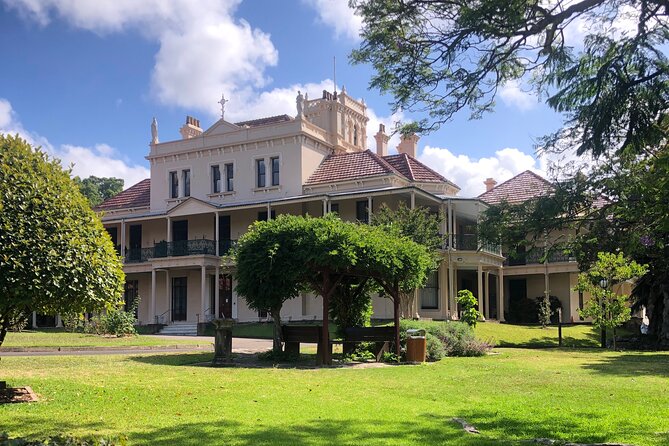
- Stop 5: Hartford House at 244 Glebe Point Rd
- Stop 6: St Scholastica’s College and the Former Toxteth Park House
- What I’d Do Before and After the Walk
- Price and Value: $28.69 for a Full Heritage Hour
- Who This Tour Suits Best
- Should You Book This Historic Walking Tour of Glebe?
- FAQ
- Where does the Historic Walking Tour of Glebe start?
- What time does the tour run?
- How long is the tour?
- How much does it cost?
- Is coffee or tea included?
- What’s included in the ticket price?
- Do I need to bring a printed ticket?
- Are pets or service animals allowed?
Key Highlights You’ll Notice Right Away
- Six heritage stops in about 60 minutes, with tight timing that keeps the pace easy.
- Free entry at every listed sight, so you’re not paying extra just to see buildings up close.
- Major church architecture close together, from Gothic Revival to sandstone to stained-glass detail.
- Bidura House’s dramatic past, shifting from gentleman’s home to children’s detention centre.
- A strong “social history” theme, connecting what happened in Glebe to how the buildings survive today.
- Small group size (max 30), which helps you actually hear the guide.
Why Glebe Works So Well for a Short Walking Tour
Glebe is one of those Sydney suburbs where the streets do the talking. You can look at a building and instantly feel that something bigger is behind it—money, industry, community life, and the big swings between them. This tour uses that advantage well, because it doesn’t ask you to guess. It hands you a clear thread, then points you at the proof.
I like that the tour is designed for attention without dragging. You get around ten minutes at each stop, which is enough time to absorb what you’re seeing—then move on before your brain goes on strike. For a first-time visit, it’s a great way to build instant context.
And the cast of characters is varied. The route blends Anglican, Presbyterian, and Catholic sites with gentleman’s residences and mansion-scale properties. That matters because it shows how different institutions and social groups shaped the suburb’s look and layout.
You can also read our reviews of more walking tours in Sydney
Getting Oriented: Meet at 140 Glebe Point Rd, Finish at St Scholastica’s
The tour starts at 140 Glebe Point Rd, Glebe NSW 2037. That places you close to the first major landmark, St Johns Anglican Church, so you’re not walking for ages before the story begins.
You’ll finish out the front of St Scholastica’s College at 15 Avenue Rd, Glebe. That end point is handy if you want to keep exploring afterwards on foot. It also makes the route feel like a loop through the most historically significant cluster of buildings.
Start time is 10:00am, and the tour runs every weekend on Saturday mornings. It’s a small-group format with a maximum of 30 people, and you’ll have a mobile ticket. Near public transport, so you’re not forced into a car-first plan.
Stop 1: St Johns Anglican Church on Glebe Point Rd
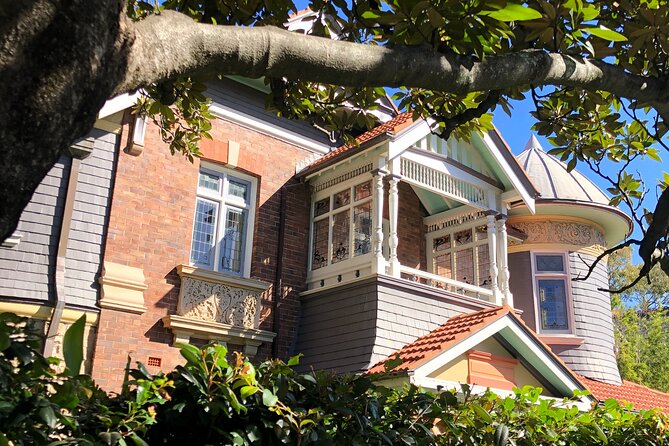
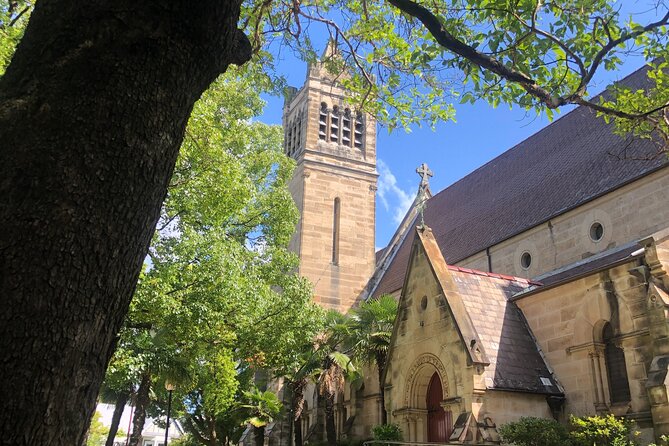
The first stop sets the tone fast. St Johns Anglican Church at 138A Glebe Point Rd is a massive Gothic Revival building that dominates the Glebe streetscape. When a church is built with a towering spire, you get a built-in way to orient yourself—look up, and you always know where you are in the suburb’s geography.
I like this stop because it gives you a clear visual anchor. Gothic Revival isn’t subtle, and the “big statement” style helps you understand why these buildings mattered to the people who planned them. Even if you’re not a church-architecture person, it’s hard to miss the scale and the grounds.
A practical bonus: the stop includes free entry. That means you can focus on the guide’s story and the building details without wondering whether the next part will cost extra.
If you’re planning photos, arrive with a quick mindset: stand back first, then move in. From the street, you can take in the overall impression; when you get closer, you start noticing the elements the guide highlights.
Stop 2: Glebe Presbyterian Church’s Sandstone Presence
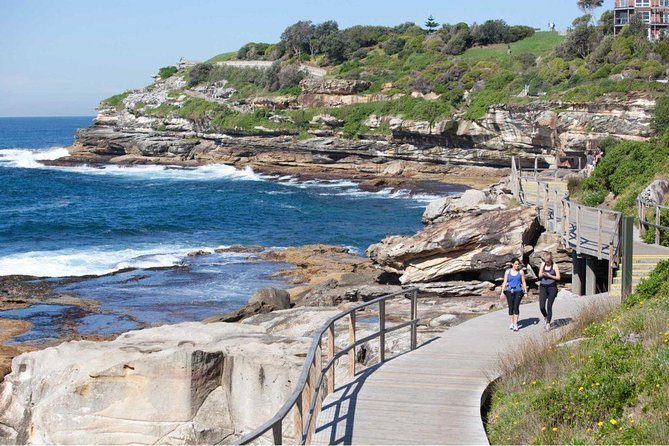
Next up is Glebe Presbyterian Church at 158 Bridge Rd. This is a dominating sandstone building, and the key detail here is its “nomadic life.” That phrase is useful: it signals that the church’s story includes movement and change, not just static brickwork.
Sandstone churches have a particular charm because they weather in a way that feels human. The color and texture can look different depending on light, and it makes the building feel part of the suburb rather than a museum object. Here, the building’s presence is the lesson: it shows how established communities leave lasting marks—even when plans or locations shift over time.
Again, free entry is part of the deal. So you’re free to look for the features the guide calls out without turning it into a shopping trip for tickets.
This stop also helps you compare. You’ve seen one church style first, now you’re facing a different material and a different “feel” of structure. That contrast makes it easier to understand how Glebe’s heritage sites represent separate communities and different eras.
Stop 3: St James’ Catholic Church and Its Stained Glass
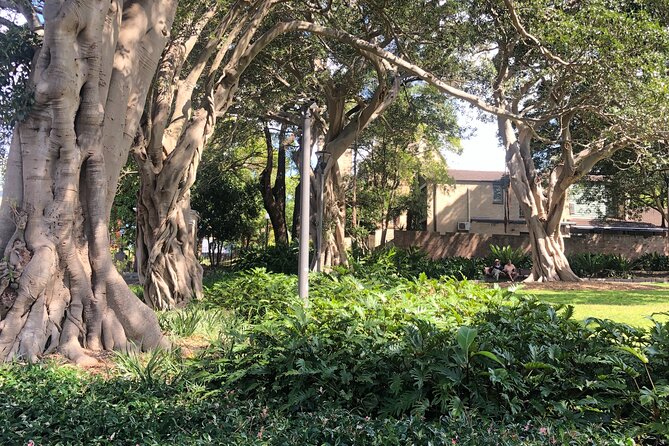
At 2 Woolley St, you’ll reach St James’ Catholic Church. This stop matters because it’s set within a very rich complex of differing heritage architectural styles. In other words, you don’t just view one building—you’re surrounded by a whole “ensemble” of heritage choices.
The highlight called out here is the stained-glass windows. Stained glass can be hard to appreciate on a casual glance, because you often need the right angle and time for your eyes to adjust. That’s why this stop’s timing works: you get enough minutes to actually look, not just walk past and move on.
There’s also an intriguing back story attached to the site. The practical takeaway for you: don’t treat this as only a visual stop. Use the guide’s context to make sense of what you’re seeing. Stained glass is rarely random decoration—it often reflects a community’s priorities and the way a place wanted to be remembered.
Like the others, admission here is free, so keep your attention on the architecture and story rather than the logistics.
You can also read our reviews of more historical tours in Sydney



Stop 4: Bidura House at 357 Glebe Point Rd

Now the tour shifts gears into mansion territory with Bidura House at 357 Glebe Point Rd. This is described as a beautiful 1860s gentleman’s residence, and the reason it’s memorable is its chequered past.
The big contrast is right there in the description: it went from a prominent mansion to a massive children’s detention centre. That kind of transformation changes how you read the building. Suddenly, windows and rooms stop being just charming features. They become evidence of how the same space can serve very different purposes across decades.
This stop is where I think the tour becomes most meaningful, even for people who only came for architecture. Social history works best when it shows consequences, and Bidura House is exactly that: a physical reminder that comfort and control can coexist in the same address, depending on the era.
Practical tip: if you’re taking photos, try not to only shoot the front. Use your minutes to look for how the building’s structure and layout imply different “lives” inside it over time. The guide’s context helps you see what you might otherwise miss.
Free entry is included for this stop too, so you can stay present and let the story land.
Stop 5: Hartford House at 244 Glebe Point Rd
At 244 Glebe Point Rd, the tour introduces Hartford House, an elaborate mansion and an example of one of Glebe’s more prestigious houses. This is a classic contrast stop. Bidura House hits you with a sharp change of purpose; Hartford House reads more like the “before” side of the equation—wealth, status, and the kind of scale that signals power in a growing city.
The “elaborate” label matters, because mansion architecture is often about small decisions. Even without getting technical, you can spot that the building is meant to impress from a distance and reward closer attention. You’re looking at details designed to be noticed.
I also like this stop for how it balances the mood. If you’re the kind of person who absorbs stories better when they’re not all heavy, Hartford House gives you breathing room. It lets you appreciate craft and ambition, then move on with a clearer sense of what changed in later years.
Since admission is free here as well, you’re not limited by timing rules tied to paying for entry. You can focus on what the guide points out and make your own mental checklist of what “prestige” looks like in built form.
Stop 6: St Scholastica’s College and the Former Toxteth Park House
The final stop is St Scholasticas College, tied to the former Toxteth Park House at the top end of Avenue Rd. This is described as the most impressive house in Glebe, and the reason is simple: it was a mansion of one of the richest families in Sydney.
That’s a powerful way to end, because it brings the “ultra rich” thread into sharp focus. You’re finishing with a site that represents the extreme end of the suburb’s wealth spectrum. And because it’s now part of a college, you get a subtle sense of continuity too: these grand residences don’t always disappear. Sometimes they get repurposed.
This is also a great ending point if you want to keep exploring on your own. You exit the tour right at the front of St Scholastica’s College, which gives you a clear landmark to orient yourself. From there, you can continue down Avenue Rd and keep spotting heritage façades.
Like the other stops, entry is free. The guide’s job here is to make the building’s scale and significance understandable fast, and this is exactly the kind of setting where that works.
What I’d Do Before and After the Walk
If you want the most out of a one-hour format, do two small things.
First, show up ready to look up. With churches and mansions, the details are often vertical—spires, rooflines, windows, and façades. If you only look straight ahead, you miss half the story the building is telling.
Second, after the tour, pick one building and compare it to another you saw earlier. For example, put the Gothic Revival spire in your mind next to the sandstone church presence. That kind of mental comparison helps you remember the bigger patterns, not just the individual stops.
You should also know what’s not on the schedule: coffee and/or tea aren’t included. If you’re planning a morning out, plan to grab a drink before you start or after you finish. A one-hour walk moves quickly, so don’t count on a café stop mid-tour.
Price and Value: $28.69 for a Full Heritage Hour
At $28.69 per person, this is priced like a short experience rather than an all-day commitment. For you, the value comes from two things: concentration and variety.
Concentration because you’re getting a guided narrative that ties together multiple major sites without turning it into an hours-long hike. Variety because the tour spans church architecture and major mansion-scale properties, including a standout transformation story at Bidura House.
Also, you’re not paying extra for entry at the listed stops. The tour is set up so free admission applies across the sights, which makes the cost easier to justify. Add the small group size cap of 30, and the experience feels more “human-scale” than big walking groups.
Booking-wise, it’s often purchased about 17 days in advance on average. That suggests demand, especially for weekend Saturday mornings. If you’re visiting during a busy period, I’d book earlier rather than gambling on last-minute availability.
Who This Tour Suits Best
This tour is ideal if you want:
- A fast way to understand why Glebe looks the way it does
- A walking format that covers landmark churches and heritage mansions in a single hour
- Stories that connect architecture to social change, including major shifts in how buildings were used
It’s also a good choice if you like learning on your feet. This isn’t a lecture where you sit and forget. The sights are the classroom.
If you hate walking, this may feel short but still like walking. The schedule is built around staying moving, and it depends on decent weather.
Should You Book This Historic Walking Tour of Glebe?
Yes, if you want a one-hour, high-impact introduction to inner-city Sydney heritage. The mix of church architecture, free entry to each stop, and mansion stories with real social consequences makes it more interesting than a simple “look at the buildings” stroll.
Book it if you’re the kind of person who remembers places by stories, not just photos. You’ll likely leave with a clearer sense of Glebe’s identity—how industry, ambition, and community institutions shaped the suburb in visible ways.
Skip it only if you’re hoping for a slow, linger-at-each-site pace or if you need on-tour refreshments. This one is efficient, and it’s meant to be.
FAQ
Where does the Historic Walking Tour of Glebe start?
It starts at 140 Glebe Point Rd, Glebe NSW 2037, Australia.
What time does the tour run?
The start time is 10:00am, and it runs every weekend on Saturday mornings.
How long is the tour?
The duration is about 1 hour.
How much does it cost?
The price is $28.69 per person.
Is coffee or tea included?
No. Coffee and/or tea are not included.
What’s included in the ticket price?
You get a guided historical walking tour of one of Sydney’s most historically rich suburbs.
Do I need to bring a printed ticket?
No. The tour uses a mobile ticket.
Are pets or service animals allowed?
Service animals are allowed, and pets are welcome.

More Walking Tours in Sydney


More Tours in Sydney
- Blue Mountains Small-Group Tour from Sydney with Scenic World,Sydney Zoo & Ferry
★ 5.0 · 3,709 reviews


More Tour Reviews in Sydney
- Blue Mountains Small-Group Tour from Sydney with Scenic World,Sydney Zoo & Ferry
★ 5.0 · 3,709 reviews