REVIEW · DARWIN
Kakadu, Katherine & Litchfield Camping Tour
Book on GetYourGuide →Operated by Adventure Tours Australia · Bookable on GetYourGuide
Croc sightings and ancient art in four days. This relaxed camping tour threads together the Top End’s big moments: saltwater crocs at Corroboree Billabong and Ubirr rock art in Kakadu, plus swims that feel like you found them by accident. You also get enough time between stops to actually enjoy the heat, the views, and the walking, not just tick boxes.
Day by day, I like how the route balances wildlife, culture, and water. The other plus is the small-group vibe, capped at 16, with an experienced guide and an all-terrain vehicle that keeps you moving without feeling rushed. The one thing to consider: there’s a strict luggage limit, so you’ll want to travel light and think about what you truly need for four days.
In This Review
- Key highlights worth packing for
- Entering Kakadu and Nitmiluk by 6:30 am from Darwin
- Day 1: Corroboree Billabong crocs, Cahill’s Crossing lunch, and Ubirr views
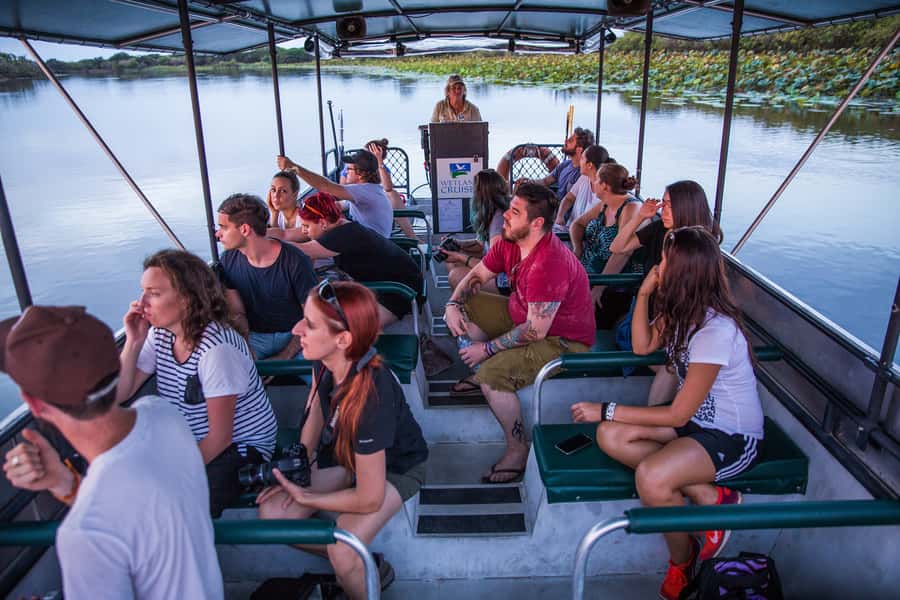
- Corroboree Billabong cruise
- Cahill’s Crossing lunch stop
- Ubirr rock art and the lookout climb
- Night at the exclusive camp in Jabiru
- Day 2: Maguk’s 1 km trek to a deep waterhole
- The paperbark forest walk to Maguk
- Bukbukluk Lookout and a woodland walk
- Ikoymarrwa (Moline Rockhole): a special permit-only waterhole
- Sunset at Nitmiluk, then camp near Litchfield
- Day 3: Katherine Gorge cruise and Edith Falls swimming
- Two-hour Katherine Gorge cruise
- Edith Falls picnic lunch and swim options
- Driving north toward Litchfield camp
- Day 4: Litchfield’s termite mounds and croc-free waterfall swims
- Cathedral and magnetic termite mounds
- Multiple swimming spots: Buley Rockholes, Florence Falls, Wangi Falls
- Return to Darwin by about 4 pm
- Price and value: what $1,058 buys you in the Top End
- Camps, transport, and what to pack without losing your mind
- Pack like you’ll be walking and sweltering
- Luggage limit: plan to travel light
- Itinerary changes can happen
- Who this tour suits best (and who might feel cramped)
- Should you book Kakadu, Katherine & Litchfield camping?
- FAQ
- How long is the Kakadu, Katherine & Litchfield camping tour?
- What’s included in the price?
- Are there swims included, and which places are croc-free?
- Is there a luggage limit?
- How big is the group?
- Is the tour suitable for kids or mobility impairments?
Key highlights worth packing for
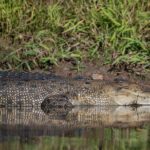
- Corroboree Billabong wildlife cruise: spot saltwater crocodiles and watch busy birdlife in their natural setting
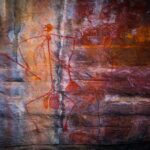
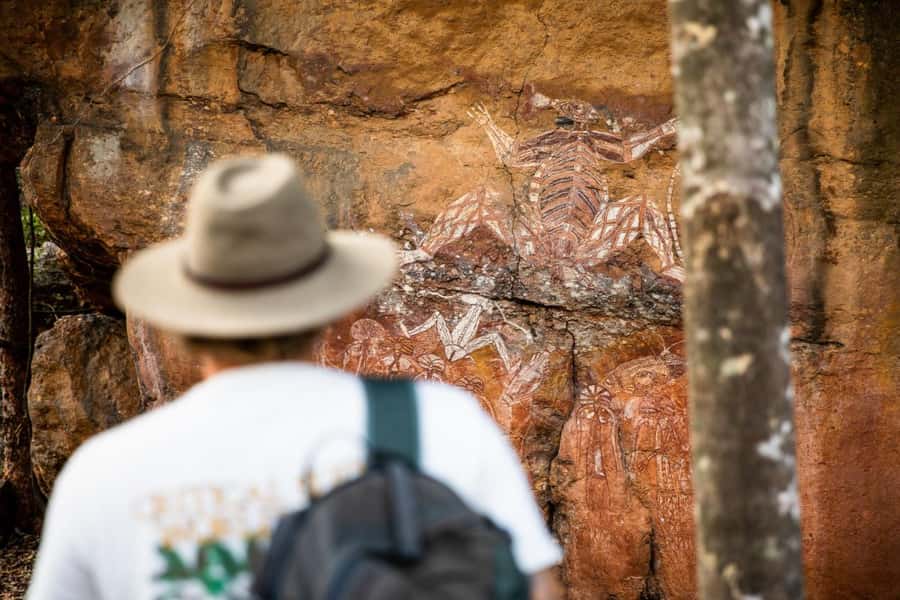
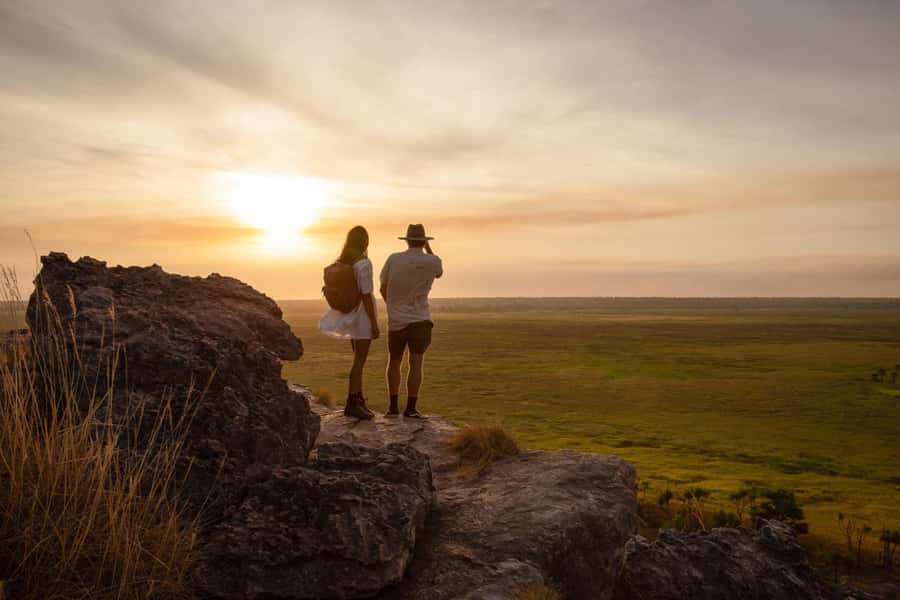
- Ubirr lookout and rock art: see ancient Indigenous art and earn big panoramic views with a short climb
- Maguk (Barramundi Gorge) swim: a 1 km trek through paperbark forest to a deep, clear waterhole
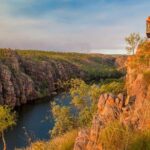
- Katherine Gorge cruise (2 hours): a boat ride that makes the cliffs and river bends feel close
- Litchfield’s termite mounds and waterfall swimming: magnetic termite towers plus multiple swims at croc-free spots
Entering Kakadu and Nitmiluk by 6:30 am from Darwin
This tour starts early in Darwin at 6:30 am, which is honestly the right move in the Top End. You catch cooler morning light, you drive while the day is still fresh, and you avoid the late-day traffic grind that can eat into your time at the sights.
After pickup, the plan runs east along the Arnhem Highway. You’ll pass expansive floodplains and cross the Adelaide and Mary River areas before you reach the first big wildlife stop. It’s a good rhythm: travel, arrive, do the main activity, then move again without dragging. If you like road-trip energy but also want structured time for swimming and viewing, this format works well.
Another smart detail: the itinerary is built around time outside. Even when you’re in a vehicle, you’re heading toward places you’ll feel immediately—river bends, escarpment edges, and waterholes that look unreal in person.
You can also read our reviews of more tours and experiences in Darwin.
Day 1: Corroboree Billabong crocs, Cahill’s Crossing lunch, and Ubirr views
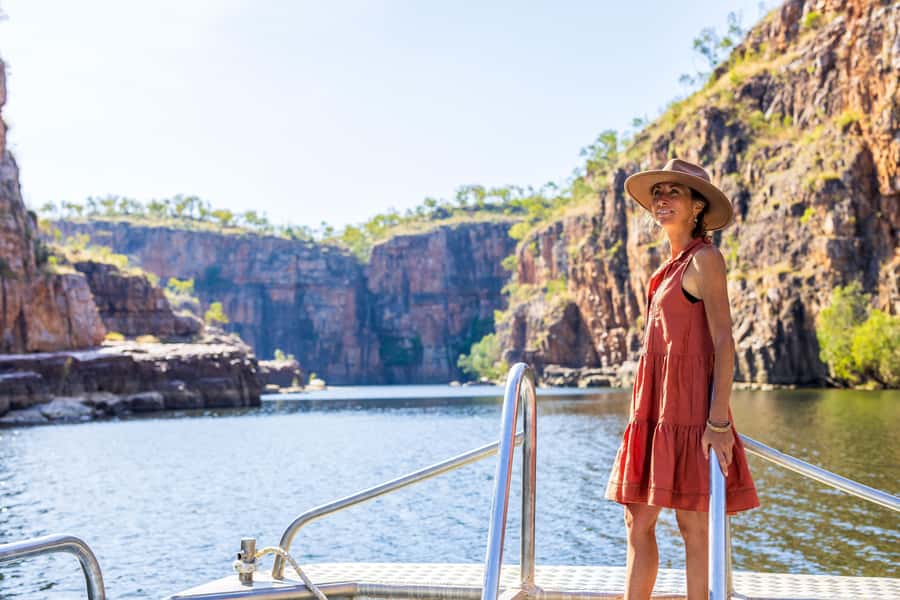
Your first full day is basically three “wow” blocks plus a lot of useful context about where you are.
Corroboree Billabong cruise
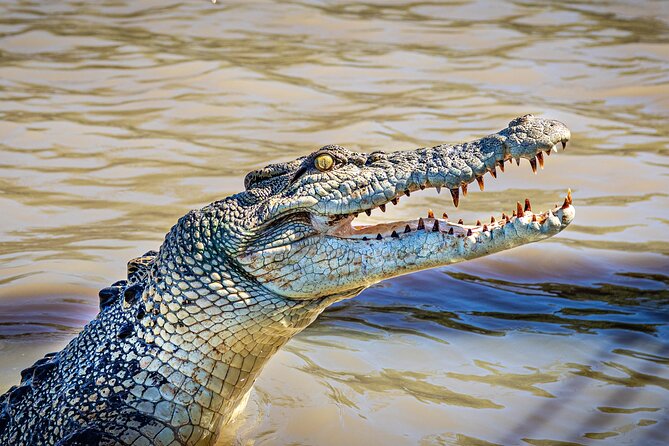
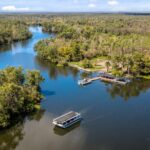
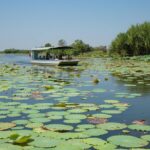
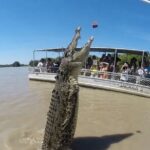
You cross from driving into wildlife mode at Corroboree Billabong, known for the world’s highest concentration of saltwater crocodiles. You join a wildlife cruise there, and you’re not just watching from a distance—you’re seeing crocs and prolific birdlife in their natural habitat. It’s one of the Top End experiences that makes you understand the region isn’t a theme park. It’s a working ecosystem, and it feels real.
Practical tip: wear sun protection and keep your water bottle handy. Even on a cruise, you can feel exposed with all the open river views.
Cahill’s Crossing lunch stop
Right after the billabong cruise, you’ll head to Cahill’s Crossing near the East Alligator River for a hearty lunch. It’s a good pause day-one energy-wise. You get food, you reset, and then you go to Kakadu proper without arriving hungry and cranky to the rock art.
Ubirr rock art and the lookout climb
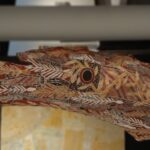
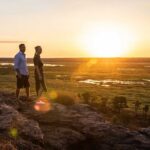
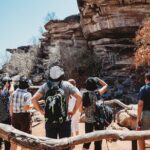
Then comes Ubirr—one of Kakadu’s rock art areas—and you’ll see some of the finest Northern Australian Indigenous rock art. Plan on a short climb for panoramic views over the Nardab Floodplains, the East Alligator River, and the Arnhem Land escarpment.
What I like here is that rock art isn’t treated like a quick photo stop. You’re set up to actually look. Once you’re up at the higher viewpoint, the scenery explains the art’s setting—vast waterlines, floodplain flatness, and the escarpment rising behind it.
Night at the exclusive camp in Jabiru
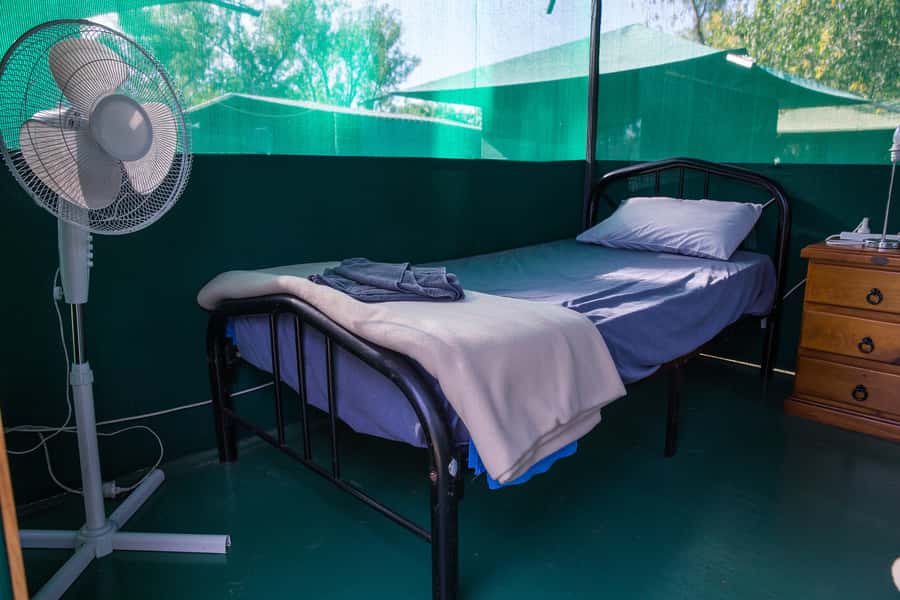
You end the day at an exclusive camp in Jabiru. You’re in a furnished tented setup with shared facilities, and the pillow, linen, and sleeping bag are included—so you don’t need to bring full camping gear. It’s a real outdoors base, not a hotel, but it’s comfortable enough for a tour pace.
Day 2: Maguk’s 1 km trek to a deep waterhole
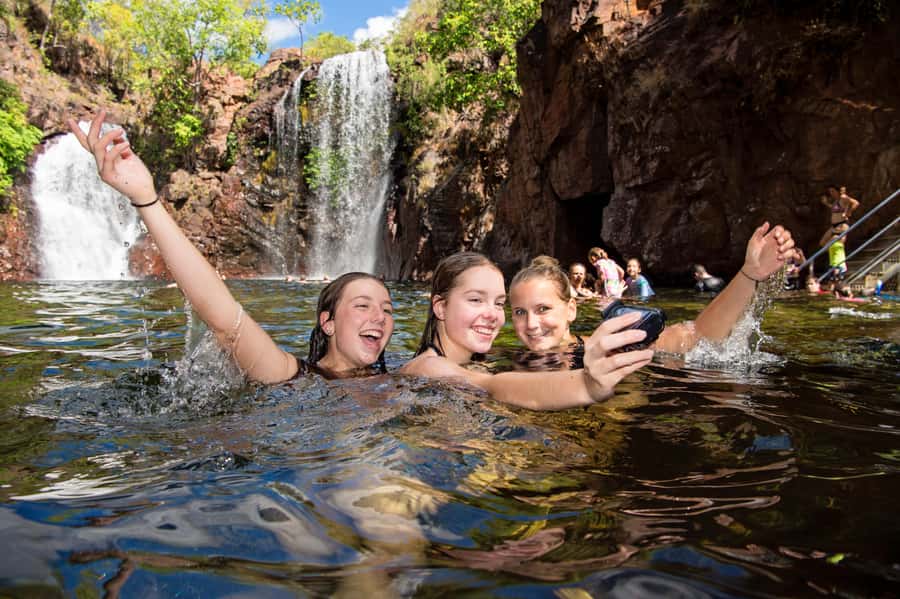
Day two is where Kakadu shifts from big driving-and-cruise moments into waterhole country. After breakfast, you travel south through Kakadu toward Maguk (Barramundi Gorge), and you’re given the chance to walk and swim, not just watch.
The paperbark forest walk to Maguk
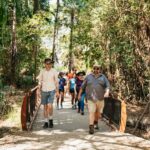
The trek is about 1 km through paperbark forest. That distance isn’t huge, but it’s enough to get your legs working and your brain switching from road mode to nature mode. The reward is the waterhole: a deep, refreshing swim spot surrounded by ancient cliff walls.
Bring the right shoes for this part. If you slip here, you’ll feel it for the rest of the day. Also, expect that the “deep clear waterhole” part sounds simple until you’re standing there—it hits you in the best way.
Bukbukluk Lookout and a woodland walk
After Maguk, you return to the 4WD and then take a short woodland walk to Bukbukluk Lookout. This is a nice pacing shift. The swim was action. Now you get views, but on a lighter schedule—more breathing room, less sprinting.
Ikoymarrwa (Moline Rockhole): a special permit-only waterhole
In the afternoon, the tour visits Ikoymarrwa (Moline Rockhole), described as a special permit-only waterhole. That detail matters. It signals a more controlled, protected experience rather than a place the public can wander into however they want.
If you’re a water person, this is likely to be a standout. If you’re not a water person, it’s still worth going for the setting—waterholes in this region feel like a different world compared to dry country nearby.
Sunset at Nitmiluk, then camp near Litchfield
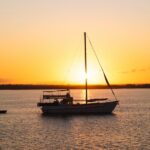
After leaving Kakadu, you head to Nitmiluk National Park for the Katherine River area. You’ll enjoy a breathtaking sunset before settling into camp for the night near Litchfield. Sunset timing is more than a nice-to-have here. It gives your body a chance to cool down and your eyes time to adjust to the light changes on the escarpment.
Day 3: Katherine Gorge cruise and Edith Falls swimming
Day three turns the volume up on scenery.
Two-hour Katherine Gorge cruise
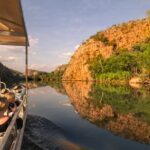
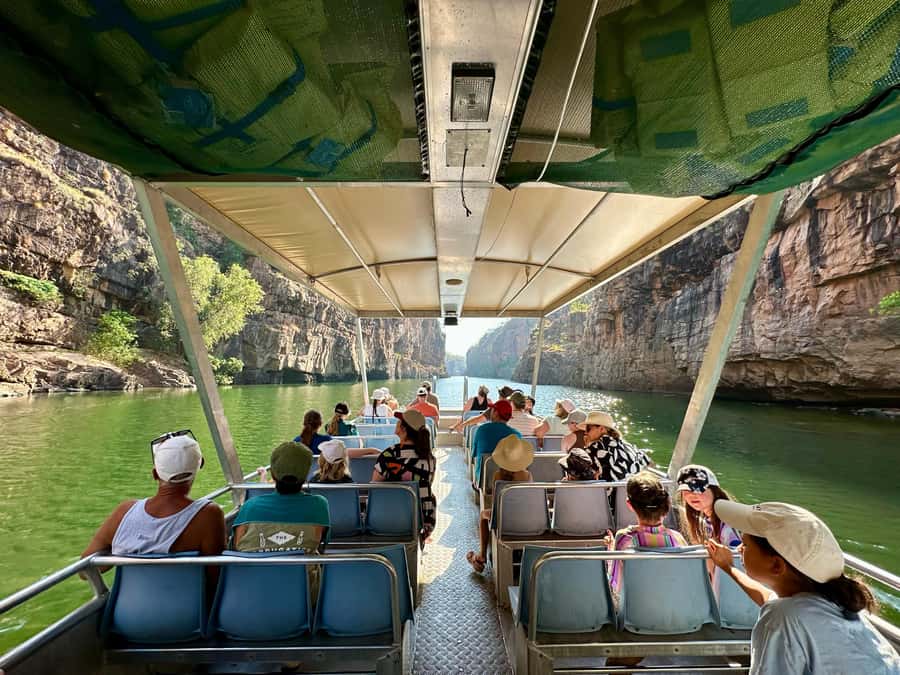
You start with a 2-hour cruise through Katherine Gorge. The gorge system is the kind of place where the boat format is the smart one. You’re close to the water and the rock edges at the same time, so the bends and cliffs feel like a guided reveal rather than a distant postcard.
You also have an option to explore escarpment walks instead of—or as a complement to—the cruise. Either way, you’ll spend time looking across the river’s shape, not just across a view platform.
Edith Falls picnic lunch and swim options
Next stop: Edith Falls, where you have a picnic lunch and a refreshing swim. You can opt for a short hike to a top pool or relax in the vast lower plunge pool.
I like that the tour gives choices that match different energy levels. You can go for a bit of walking if you feel good, or you can keep it easy and still get the reward of a real plunge. This is especially valuable on a 4-day trip when you may have stacked a swim already the day before.
Driving north toward Litchfield camp
In the late day, you travel along the Stuart Highway through Adelaide River and Pine Creek before reaching the exclusive camp near Litchfield National Park. It’s a steady finish: drive, arrive, reset for an active day four.
Day 4: Litchfield’s termite mounds and croc-free waterfall swims
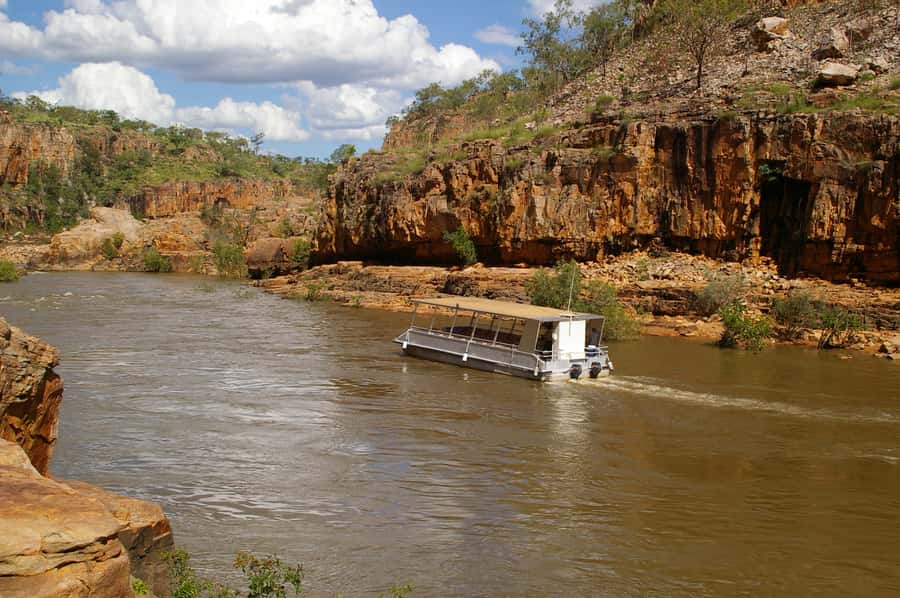
If day three is about gorge drama, day four is about waterfalls and weird geology you can’t replicate back home.
Cathedral and magnetic termite mounds
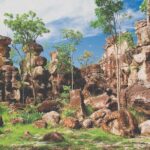
You start with Litchfield’s towering cathedral and magnetic termite mounds. Termite mounds here aren’t just a cute side stop. They’re a clue to how these landscapes function and how life adapts. The magnetic aspect is part of what makes these formations a talking point. Even if you don’t know the science, standing near the mounds helps you appreciate how engineered the natural world can be.
Multiple swimming spots: Buley Rockholes, Florence Falls, Wangi Falls
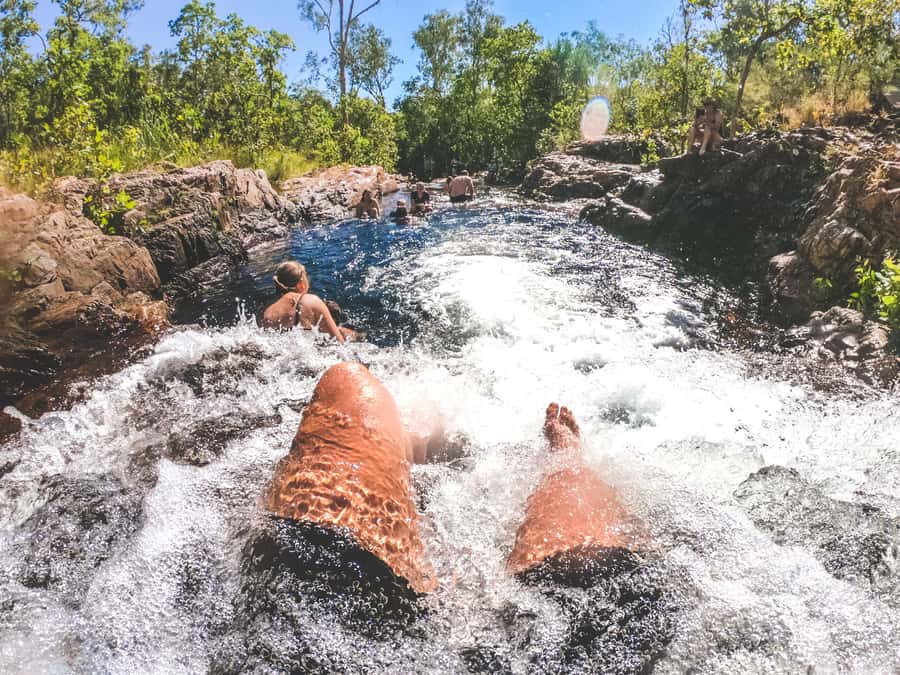
Then you get the lineup of swim stops: Buley Rockholes, Florence Falls, and Wangi Falls. The tour notes these are croc-free, which is huge for peace of mind when you’re actually planning to swim rather than just splash.
What I appreciate is that you’re not limited to one water stop. Multiple swims mean you can choose based on conditions—shade, footing, and how your energy feels. It also helps you avoid that end-of-day situation where you only get one chance and the water level doesn’t feel right.
Return to Darwin by about 4 pm
You’ll return to Darwin by approximately 4 pm, giving you time for the Mindil Beach Markets if you want that extra evening after a full adventure day. It’s a nice way to end without rushing immediately to dinner somewhere random.
Price and value: what $1,058 buys you in the Top End
At $1,058 per person for four days, this is not a budget trip. But it also isn’t just a collection of entries and a seat on a bus. Your money largely covers three things you’d struggle to replicate on your own without planning: guided access, specific park experiences, and transport across long distances.
Here’s where the value shows up:
- You get a small group (limited to 16), with an experienced guide who runs the timing and keeps the day smooth.
- Key paid experiences are included: the Corroboree Billabong cruise, Ubirr rock art, Maguk, the Katherine Gorge cruise, and the Edith Falls and Litchfield waterfall entries.
- Meals are partially included: 3 breakfasts, 4 lunches, and 3 dinners. That matters in a remote region where buying food on the fly can get expensive fast.
- You’re not driving yourself through rough country. You travel in an all-terrain vehicle, which changes what’s realistically possible in a short itinerary.
- Your accommodation is handled: a permanent, furnished tented camp with linen, pillow, and sleeping bag provided.
What you should plan for your wallet beyond the base price: snacks and alcohol aren’t included, and there are optional add-ons not listed here. If you’re the type who snacks constantly, budget for that.
Also remember the day-to-day reality: national park entry fees are included, which reduces the usual “surprise total” effect.
Camps, transport, and what to pack without losing your mind
This is camping with support. You’ll sleep in a permanent furnished tented camp with shared facilities. That means you don’t need to carry a full camping setup, but you should still expect a more outdoor feel than a motel night.
The tour provides the basics for sleeping—pillow, linen, and sleeping bag—so your packing list can stay focused on comfort and protection.
Pack like you’ll be walking and sweltering
You’re told to bring:
- comfortable shoes
- sun hat and sunscreen
- a reusable water bottle (1.5 liters)
- a torch
- insect repellent/net
- sturdy walking shoes
- winter warm clothing (in the cooler season)
- a power bank (limited power is available at camp)
I’d add one practical mindset: treat day four as your “water gear day.” Bring what you’ll need to change quickly and stay comfortable after multiple swims.
Luggage limit: plan to travel light
You’re not allowed luggage or large bags. There’s a strict luggage limit of 10 kg, with one small to medium soft bag or backpack plus a small daypack that can be carried inside the vehicle.
This is the biggest logistical constraint. If you’re used to packing like it’s a week at the beach, you’ll want to cut down early. Use one bag, pack for walking plus swim, and keep your daypack simple.
Itinerary changes can happen
The plan notes that itineraries may vary and attractions can be substituted due to seasonal conditions, weather extremes, and traditional owner/national park requirements. That’s normal for remote places. It’s also a reason to stay flexible rather than emotionally clinging to a single photo spot.
Who this tour suits best (and who might feel cramped)
This experience fits best if you want a guided route that hits multiple parks without you doing logistics math all day. You’ll enjoy it most if you like:
- wildlife and scenery that feel firsthand
- swimming at multiple stops
- short walks mixed with active days
- a small group pace (max 16)
It’s not suitable for children under 8 and it’s not suitable for people with mobility impairments. That’s worth taking seriously, because the itinerary includes walking and swimming locations that are not described as step-free.
If you hate early mornings, day one’s 6:30 am departure may feel like a challenge. If you love being out early with better light and cooler temperatures, it’s a gift.
Should you book Kakadu, Katherine & Litchfield camping?
I’d book this if you want a four-day sampler that still feels real. The combination of Corroboree Billabong croc cruise, Kakadu’s Ubirr rock art, Maguk’s waterhole swim, the Katherine Gorge boat cruise, and Litchfield’s cathedral/termite mounds plus croc-free swims is a strong lineup that doesn’t rely on just one kind of attraction.
Skip it if:
- you need to travel with large luggage or you’re not willing to keep it under the 10 kg limit
- you don’t like camping-style sleeping (even though linen, pillow, and sleeping bag are provided)
- you want a fully relaxing, no-walk schedule (there are walks, including a 1 km trek)
If you can handle a light pack, early starts, and active days, this tour is a solid value for the Top End. You’re paying for guided access, included park experiences, and transport across distance—exactly what makes remote trips painless.
FAQ
How long is the Kakadu, Katherine & Litchfield camping tour?
The tour runs for 4 days.
What’s included in the price?
The price includes meals (3 breakfasts, 4 lunches, and 3 dinners), a guide, national park entry fees, all-terrain vehicle transport, camping with pillow/linen/sleeping bag, and the listed activities such as the Corroboree Billabong cruise, Ubirr rock art, Maguk, the permit-only Moline Rockhole, Katherine Gorge cruise, Edith Falls, and Litchfield swim stops.
Are there swims included, and which places are croc-free?
Yes. Swims are included at Maguk (Barramundi Gorge), Edith Falls, Buley Rockholes, Florence Falls, and Wangi Falls. The tour specifically notes that Buley Rockholes, Florence Falls, and Wangi Falls are croc-free.
Is there a luggage limit?
Yes. There’s a strict luggage limit of 10 kilograms, and you should plan for one small to medium-sized soft bag or backpack plus a small daypack carried inside the vehicle. Large bags are not allowed.
How big is the group?
This is a small-group tour limited to 16 participants.
Is the tour suitable for kids or mobility impairments?
No. It’s not suitable for children under 8 and it’s not suitable for people with mobility impairments.