REVIEW · WESTERN AUSTRALIA
Kitesurfing Lesson
Book on Viator →Operated by Shark Bay Kitesurfing · Bookable on Viator
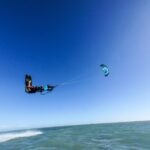
Kitesurfing feels less scary with the right setup. This one-on-one beginner lesson in Western Australia takes you from watching the wind to setting up your gear and getting ready for your first real flight-style moments. The setting helps too: the crystal-clear waters around Shark Bay are made for learning.
What I like most is the radio-helmet communication—it means your instructor can coach you in real time while you’re on the water. I also like that the lesson focuses on practical safety and best practices, not just trying to get you airborne.
One consideration: it depends on good weather and wind. If conditions aren’t right, the lesson may be adjusted or moved, which can affect your timing in Denham.
In This Review
- Quick takes before you commit
- Shark Bay for beginners: why the water works
- The 3-hour lesson flow: from wind checks to first controlled moves
- Radio-helmet coaching: calmer nerves, faster corrections
- Francois Peron National Park: the “safari day” feel
- Downwinder practice: why moving with the wind teaches control
- Gear, comfort, and timing: make the 3 hours work for you
- Price and value: what $279.72 really buys
- Safety culture that matters when the wind is the boss
- Who should take this lesson (and who might not)
- The most important practical choice: flexibility with wind
- After your lesson: how to keep momentum in Denham
- Should you book this Shark Bay kitesurfing lesson?
- FAQ
- Where does the kitesurfing lesson take place?
- How long is the beginner kitesurfing lesson?
- Is this lesson private?
- What’s included in the price?
- Does the instructor communicate with you while you’re on the water?
- What happens if the weather is poor?
- Can I cancel for a full refund?
Quick takes before you commit
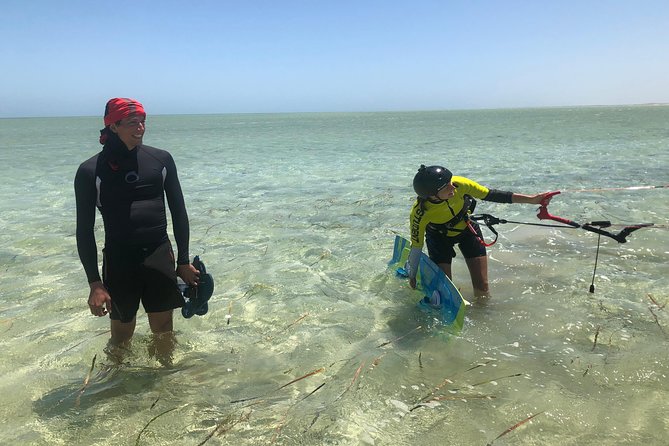
- Private, one-on-one coaching that keeps the focus on you and your control of the kite
- Radio-helmet guidance for clear instructions while you’re riding (or resetting)
- A structured learning plan that covers wind-watching, setup, and safe take-down
- Downwinder practice so you learn kite control while moving with the wind
- Shark Bay + Francois Peron National Park setting for a “learn and explore” day on the water
Shark Bay for beginners: why the water works
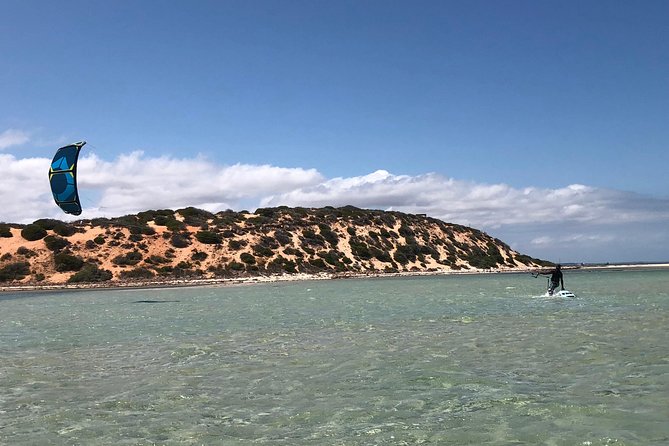
Shark Bay is the kind of place where learning feels natural. The water is described as crystal clear, and that clarity matters when you’re learning kite lines, body position, and how the board reacts once you’re finally moving. You’re not fighting “spotty visibility” on top of the usual learning curve.
The lesson is designed for people who are starting from scratch. So instead of being thrown into random attempts, you build a base: understand the wind, set up correctly, and get into a safe rhythm with your instructor close by. That approach helps you avoid the most common beginner problem—getting overwhelmed and skipping the basics.
And there’s another underrated perk: once you know what you’re doing, you’re in one of the most memorable kiting regions in Western Australia. The day isn’t just about getting a photo moment; it’s about learning in a place you’ll want to return to.
You can also read our reviews of more tours and experiences in Western Australia.



The 3-hour lesson flow: from wind checks to first controlled moves
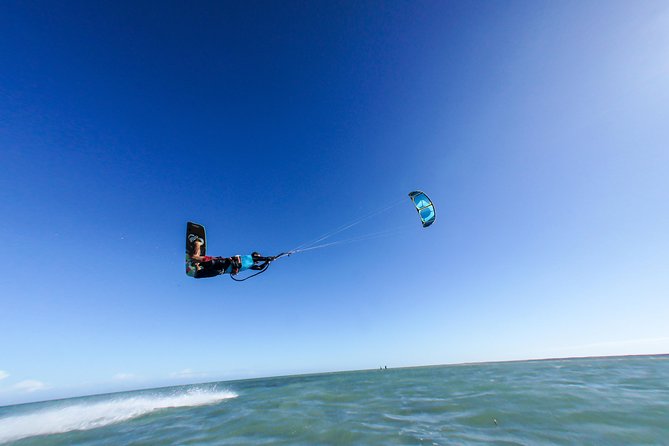
This is a half-day session of about 3 hours, centered on a beginner progression. While the exact pace depends on conditions and how you’re doing, you can expect a sequence that makes sense for first-timers.
You start with the fundamentals of weather-watching. That means learning what to look for before you ever step into the water—wind direction, consistency, and what those signals mean for your session. If you’ve ever watched kites pull from shore and wondered why sometimes it feels smooth and sometimes it feels chaotic, you’ll start getting answers here.
Next comes setup and take-down. For beginners, this is where a private instructor earns their fee. You’ll learn how the gear should be arranged and handled, plus the habits that keep you safer when you’re tired, wind shifts, or your confidence runs ahead of your technique.
Finally, you move toward the moments where it clicks—when you stop thinking about the kite as a mystery object and start treating it like a tool you can manage. The goal is that you leave with enough understanding to progress independently, not just “you had fun once.”
Radio-helmet coaching: calmer nerves, faster corrections
In most sports, the coach has to shout across distance. Here you get something better: two-way communication via a radio helmet. That changes everything for learning, because kitesurfing is a timing sport. If you miss one cue about kite angle, power, or your stance, you can end up back in the water sooner than you want.
With radio guidance, you can correct quickly. You can also stay mentally calmer because the instructor is actively monitoring what’s happening on the water and telling you what to do next. That reduces the guesswork and the panic loop that beginners can fall into.
This kind of coaching also supports the safety-first approach the school emphasizes. In an environment where wind and equipment matter, being able to communicate clearly while you’re learning is a real advantage—not a gimmick. It’s the difference between learning by trial and error and learning by feedback.
Francois Peron National Park: the “safari day” feel

One of the included parts is a safari day tied to the experience. Even if you’re there for kiting, the national park stop (Francois Peron National Park) makes the day feel bigger than a standard lesson on a generic shoreline.
What that translates to for you: your time isn’t just broken into training moments. You get a sense of place—Shark Bay’s coastal setting and the feel of being out in the region rather than simply doing a drop-off and pick-up. It’s a nice balance when you’re on holiday and you want the activity to connect with the destination.
The lesson is still the main event, of course. But the added “safari” component is a plus if you like to spend your day outdoors with a guide who can point out what matters while you’re there.
Downwinder practice: why moving with the wind teaches control

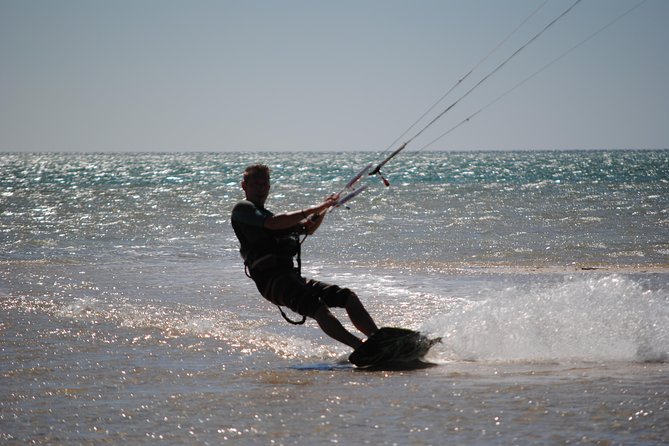
The experience includes a downwinder, which is where beginner sessions start turning into real riding. A downwinder typically means traveling with the wind rather than fighting it from a standstill. It gives you a chance to feel how the kite’s power and your board speed work together.
For beginners, this is useful because kiting isn’t just about getting traction. It’s about managing power as conditions change. When you’re moving, you learn how to keep your kite positioned without constantly stopping to reset.
You can also think of a downwinder as a confidence builder. You’re still learning, still under instruction, but it feels more like kitesurfing and less like a series of isolated attempts. That’s one reason downwind sessions often get talked about as “the part that makes the sport real.”





Gear, comfort, and timing: make the 3 hours work for you
Your lesson includes rental gear, so you shouldn’t need to show up with a full setup. That’s a genuine value point: kitesurfing gear isn’t cheap or easy to source when you’re traveling, and renting keeps the sport accessible.
Because snacks aren’t included, I’d plan around energy. Bring water and plan to eat before you go (or carry something small if that fits your day). Kitesurfing is physical—especially when you’re learning and doing repeated resets.
What to wear? The data doesn’t list a specific dress code or wetsuit requirement, so you’ll want to be practical and flexible. Expect it to be an active, outdoor session. Wear something you can move in, and if you have questions, ask the school before the day so you’re not stuck improvising.
Timing is also a factor. The experience runs during daytime hours (7:00 AM to 6:30 PM). So plan your schedule with the reality that wind can control the session start and pacing.
Price and value: what $279.72 really buys

At $279.72 per person, this is not a budget “try kiting once” splash. But for a private beginner lesson, it’s easier to judge as value than as cost.
Here’s what you’re paying for:
- Private instruction with an experienced instructor
- Rental gear included, so you avoid the hassle and expense of sourcing equipment
- Radio-helmet communication, which supports faster feedback
- Extra experience elements like a safari day and downwinder
If you compare it to shared beginner lessons, the biggest value is time. You get coaching that stays focused on your specific mistakes and your specific body position. When you’re learning something technical and safety-critical, that one-on-one time often saves days of frustration.
Also, the lesson is built to help you become more independent. The goal is not just to give you a taste—it’s to set you up with the knowledge and skills to progress on your own later. That’s a big deal if you’re the type who wants to return and keep improving.
Safety culture that matters when the wind is the boss

The school’s approach is all about best-practice safety, enjoyment, and respecting the natural environment. That isn’t just a slogan. It affects how beginners are coached and how sessions are managed.
A good safety culture looks like this: you’re learning weather-watching before you jump in, and you’re getting taught how to set up and take down gear properly. It also shows up when instructors pay attention to whether wind conditions are suitable for safe learning.
In fact, the positive feedback I’ve seen puts special emphasis on instructors who make you feel secure and comfortable—teaching safety first without stripping away fun. That balance is exactly what you want when you’re out on a windy coastline learning a sport where mistakes happen quickly.
Who should take this lesson (and who might not)
This is a great fit if:
- you’re a true beginner who wants structured instruction
- you want a private lesson, not a group where you wait your turn
- you value clear feedback while you’re on the water (radio helmet)
- you want to learn in a dramatic setting like Shark Bay and Francois Peron National Park
It may be less ideal if:
- you’re tightly locked into a schedule and can’t be flexible with wind-driven changes
- you’re hoping for a passive sightseeing activity with minimal learning (this is kitesurfing-focused)
Most travelers can participate, and it’s positioned as a beginner-friendly starting point. If you’re nervous, that’s not a disqualifier—just tell your instructor what worries you most so they can tailor the coaching.
The most important practical choice: flexibility with wind
Kitesurfing is controlled by the weather. The experience requires good weather, and it can be rescheduled if conditions aren’t right. That’s not a downside in the long run—it’s how you protect the learning process.
Here’s how to handle it smartly:
- Keep your Denham schedule lightly packed the day you book.
- If you have multiple days in the area, it’s often easier to line up the best wind.
- If conditions aren’t ideal, trust that a good instructor will prioritize making the learning safe and productive.
This is where private lessons pay off too. A good instructor can decide what to do next instead of simply following a script. For beginners, that kind of judgment matters.
After your lesson: how to keep momentum in Denham
Once you’ve had coaching, your next step is simple: practice and return. Shark Bay is a place people come back to, and the included downwinder element gives you a first taste of what rides can feel like.
If you’re staying in Denham, you’ll probably want to spend more time on the water after your first lesson. Even if you only manage small sessions at first, you’ll build muscle memory faster if you keep going.
The best part is that the lesson is built to help you understand the fundamentals well enough to keep improving. Instead of feeling like kitesurfing was random luck, you’ll know what the kite is doing and what to watch for next.
Should you book this Shark Bay kitesurfing lesson?
Book it if you want the fastest path to confident basics. The biggest reasons are the one-on-one instruction, the radio-helmet communication, and the structured focus on weather, setup, safety, and first riding moments. Add in the downwinder practice and it’s not just a short intro—it’s a real start.
Hold off or be flexible if you’re visiting during a week where wind looks uncertain, or you can’t reshuffle your schedule. Because it depends on conditions, the experience is best when you give it room to find the right day.
If you’re dreaming about kitesurfing and want to start in a place that makes learning feel possible, Shark Bay is a strong pick—and this is one of the more focused ways to begin.
FAQ
Where does the kitesurfing lesson take place?
The lesson is in Western Australia in the Shark Bay area, with a stop at Francois Peron National Park. The experience starts at an unnamed road in Denham WA 6537 and ends back at the meeting point.
How long is the beginner kitesurfing lesson?
It lasts about 3 hours.
Is this lesson private?
Yes. It’s a private tour/activity, so only your group participates.
What’s included in the price?
You get the kitesurfing lesson, rental gear, a safari day component, and a downwinder. Snacks are not included.
Does the instructor communicate with you while you’re on the water?
Yes. The highlights mention a radio helmet so you can communicate with your instructor on the water.
What happens if the weather is poor?
The experience requires good weather. If it’s canceled due to poor weather, you’ll be offered a different date or a full refund.
Can I cancel for a full refund?
Free cancellation is available up to 24 hours in advance of the experience start time for a full refund. If you cancel less than 24 hours before, the amount you paid will not be refunded.