REVIEW · MELBOURNE
Melbourne Sports Walking Tour
Book on Viator →Operated by Sporting Capital Tours · Bookable on Viator
Stadiums, river, and Olympics in two hours. I like how this tour strings together Melbourne’s biggest sporting venues into one easy walk, with stops like Rod Laver Arena and the MCG so you get the bigger picture fast. I also like the guide-led storytelling across multiple sports, including Australian rules football and tennis, plus the 1956 Olympic Games angle that adds real context. One drawback: you’re mostly outside and moving between venues, so if you want full stadium interior access, you may feel a bit limited.
You meet at Fed Square and keep things small with a maximum group size of 8, which makes it easier to ask questions and actually have your guide tailor answers. It runs about 2 hours, and you finish at the MCG area, with an easy walk back toward public transport.
In This Review
- Key things I think are worth your time
- Entering Fed Square: where the whole sports precinct makes sense
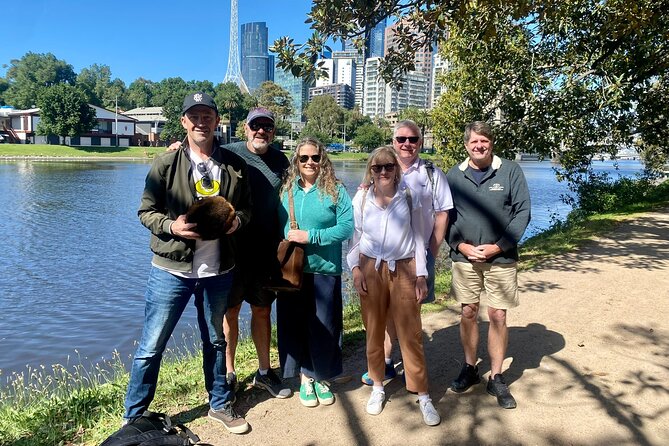
- Yarra River stop: sport and the river’s job in the city
- Rod Laver Arena and Melbourne Park tennis: what to notice as you walk
- Melbourne & Olympic Parks: the 1956 Games thread that ties the route together
- AAMI Park: soccer and rugby stop that helps you read the sport
- Melbourne Cricket Ground (MCG): the finale for Australian sport fans
- Price and time: does $63.12 feel like value?
- Who this tour fits best (and who should consider alternatives)
- Quick practical tips before you go
- Should you book this Melbourne Sports Walking Tour?
- FAQ
- How long is the Melbourne Sports Walking Tour?
- Where do I meet the guide?
- Where does the tour finish?
- Which venues will I see during the walk?
- Is the tour suitable for most people?
- Is there a maximum group size?
- Are tickets mobile?
- Does the experience run in poor weather?
Key things I think are worth your time
- Small group (max 8) means fewer people, more Q&A, and a calmer pace
- Fed Square start makes it simple to get oriented before you begin walking
- All the major stadiums in one route, so you’re not bouncing around the city on your own
- 1956 Olympic Games focus gives you a reason to look up while you pass through the precinct
- Yarra River stop ties Melbourne’s sport to the city’s geography, not just the arenas
- Guides use props and rules explanations so the sports make sense, even if you are not a die-hard
Entering Fed Square: where the whole sports precinct makes sense
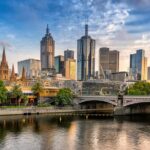
This is the kind of tour where the “start” matters. You begin at Fed Square, a central landmark that’s easy to find and easy to use as a meetup point. That matters because once you’re moving, you’ll want to keep track of where you are in Melbourne’s sporting corridor.
The group format is a big part of the experience. With a maximum of 8 people, it doesn’t feel like you’re shouting over other tourists. You also get a more conversational rhythm as you walk—short stretches, then a story, then a new sight. If you’ve ever done big-city tours and felt like you were just another body in a stream, this one is more human-sized.
The guides are a standout. In the reviews, guides like Ben, Greg, Cathy, and Brian come up repeatedly for being friendly and personable, with explanations that connect what you’re seeing to how the sport works. One guide even adjusted the meeting time to help avoid the worst heat in the day, which is a small detail that says a lot about how this tour is run.
You can also read our reviews of more walking tours in Melbourne

Yarra River stop: sport and the river’s job in the city
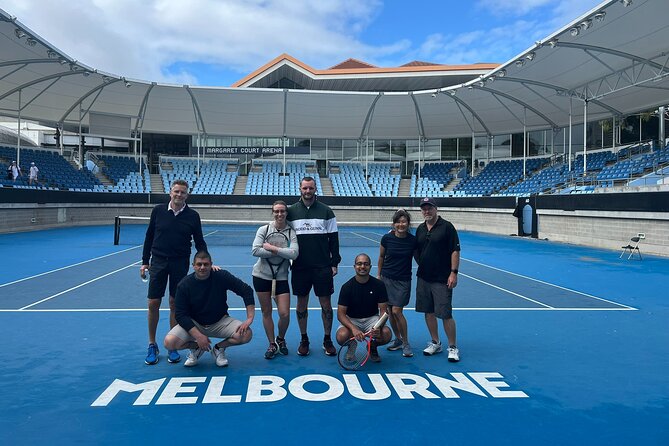
Right after you begin, you get your first “why here?” moment at the Yarra River. This stop is short, but it’s not just a photo break. You walk along the river and learn how it shaped the area’s role in Melbourne over time—especially how the city’s movement, gathering, and major events connect to this stretch of land.
For me, this is valuable because it prevents the tour from becoming a list of stadium names. You’re seeing sport as part of how Melbourne organizes itself: where people can arrive, where crowds can gather, and how the city’s energy feeds major events. You’ll also be better at reading the streets as you move toward the stadium precinct.
Rod Laver Arena and Melbourne Park tennis: what to notice as you walk
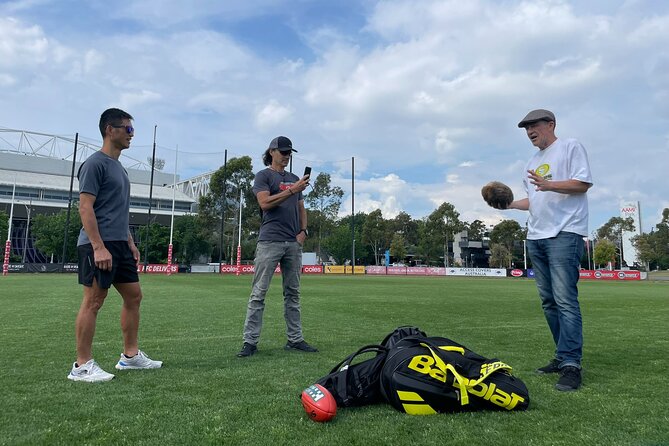
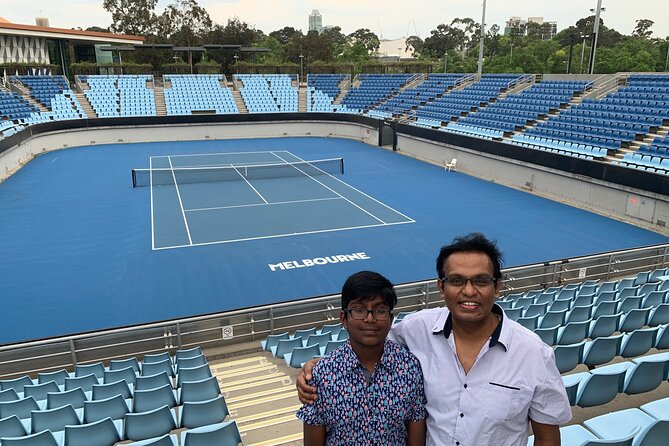
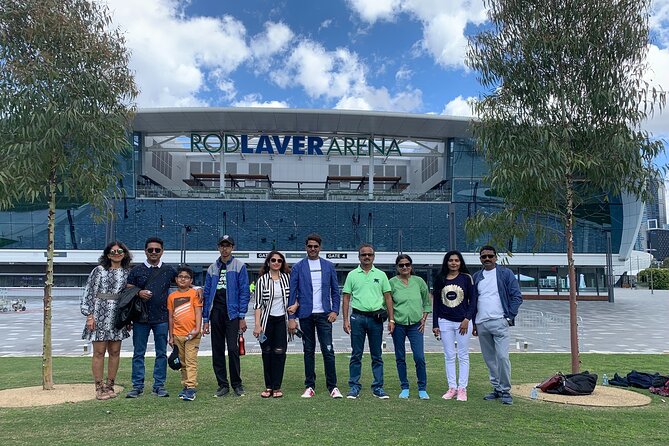
Next, you head through the Melbourne Park area, with a specific stop at Rod Laver Arena. Even if you don’t know tennis rules, you can follow along because your guide points out what matters. Reviews mention guides discussing facilities and also the players or event context around major tennis moments.
In practice, what you’ll likely enjoy here is the shift from “this is famous” to “this is how it works.” A good tennis guide helps you notice things like court layout, event flow, and why this venue became such a magnet for global tournaments. One review also mentioned the guide using props and walking through rules and the way games are played, which turns a simple exterior stroll into something you can actually understand.
One practical note: this portion can feel more open to sun and wind, depending on the day. If you’re visiting in warmer months, bring a hat and sunscreen. If you’re visiting in cooler months, layers help because you are outside most of the time.
Melbourne & Olympic Parks: the 1956 Games thread that ties the route together
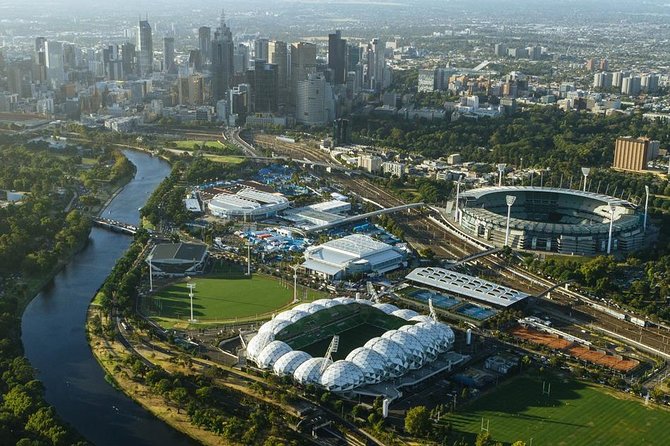
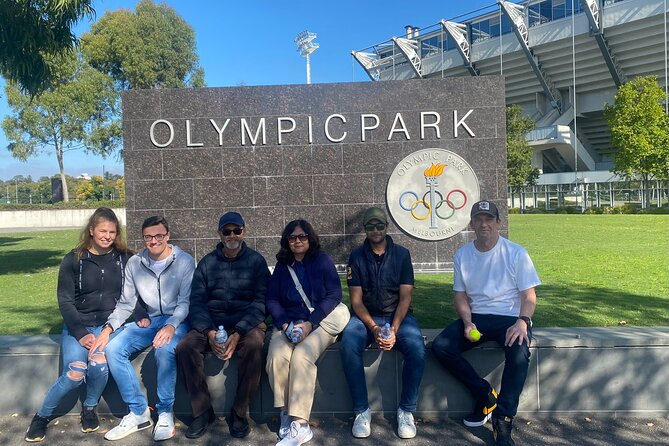
The tour then moves into the Melbourne & Olympic Parks precinct, and this is where the tour’s theme gets extra weight. The focus here is the 1956 Olympic Games held in Melbourne, which gives you a reason to look past the modern stadiums and think about the legacy underneath them.
This stop is also short, but it gives your walking route a storyline. Without it, the precinct can blur into a cluster of venues. With it, you start seeing the area as an “event machine” that has been planned and used for decades. That kind of context helps you understand why the stadiums feel so intentionally placed and connected.
If you like sports beyond just today’s match schedule, this Olympic angle is one of the best reasons to book. You’ll likely find yourself thinking about how infrastructure and community planning shape what a city becomes known for.
AAMI Park: soccer and rugby stop that helps you read the sport
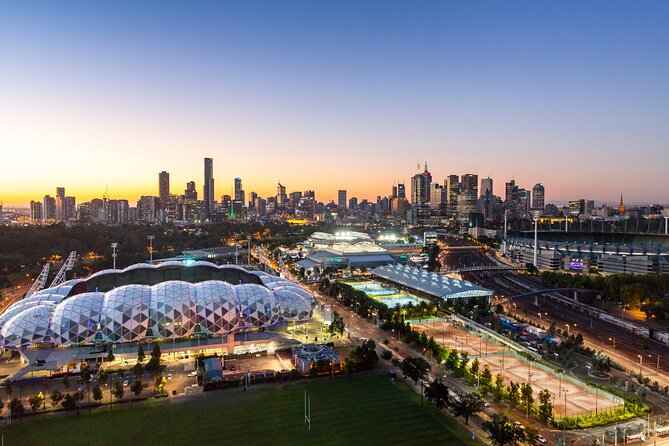
Then it’s on to AAMI Park, Melbourne’s main stadium for soccer and rugby. The value here is less about stadium architecture (since you’re not described as going inside) and more about understanding the sport culture. AAMI Park fits the tour because it broadens the mix beyond cricket and tennis.
Guides in the reviews are praised for being great at explaining rules and how games are played. That same approach is what makes a stop like AAMI Park feel worthwhile: even if you’re not a regular fan of soccer or rugby, you can leave with clearer basics about what you’re watching when the big events happen.
This stop also helps the tour deliver what it promises: variety. If you only enjoy one sport, the pace can still be enjoyable because you’re learning how Melbourne’s sports scene is layered, not locked into a single tradition.




Melbourne Cricket Ground (MCG): the finale for Australian sport fans
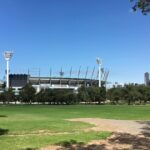
You end at the Melbourne Cricket Ground (MCG), which is basically the final boss of Aussie sports. The tour finishes at MCG area on Brunton Ave, and the tour description says it’s a short walk back toward Federation Square—about 10 minutes—or close to multiple train and tram stops.
Even better, the MCG isn’t just a landmark. It’s part of the reason the tour exists. The guide framing here is “home of Australian sport,” and the route leading there builds anticipation. You’re walking toward something iconic, but you’re also learning what to look for so the stop feels more like understanding than sightseeing.
If you are a cricket fan, you’ll probably enjoy hearing how the venue fits into Melbourne’s longer sports timeline. If you’re not, you can still appreciate why the MCG matters: it’s a cultural centerpiece, not just a sports arena.
And yes, one review mentioned a wish to see more inside stadiums. That’s the kind of expectation check you should keep in mind: this tour is about a walking route and context, not guaranteed interior access.
Price and time: does $63.12 feel like value?
At $63.12 per person for about 2 hours, you’re paying for four things: a timed, curated route; a small group (max 8); an on-the-spot guide who connects venues to stories; and a practical “no-map-needed” way to cover several major locations.
When I judge value for a tour like this, I look for two practical wins: do you save time, and do you leave with understanding rather than just photos? This tour hits both. The route takes you past major venues in a compact block, and the guide-driven explanations—rules, history cues, and event context—give you more to think about after you finish.
It’s also a good fit if you’re trying to see the city efficiently. Melbourne is spread out, but this sports precinct walk keeps everything close. If you’re here for a short visit, you can fit this into a morning or early afternoon and then spend the rest of your day doing less structured exploring.
Who this tour fits best (and who should consider alternatives)
This tour is ideal if you fall into any of these categories:
- You love sports, but you also want the stories behind the venues, not just the stadium names.
- You’re traveling with people who have mixed sport interests (tennis, cricket, AFL-style football, rugby, soccer).
- You like small-group guiding where you can ask questions and get direct answers.
It may be less ideal if your top priority is interior stadium access or if you get frustrated when tours are mostly walking rather than ticketed entry. Based on the way the tour is described and the feedback about wanting to see more inside, you should expect mostly outside viewing and guided context.
Quick practical tips before you go
- Wear comfortable walking shoes. The pace is friendly, but it’s still a city walk across multiple stops.
- Bring sun protection and a water bottle if the weather is warm, because several segments are outdoors.
- Take advantage of the Q&A. Guides in the reviews are praised for being willing to answer questions and share rules and stories.
- If you’re visiting during a big sports season, plan to be flexible. The tour runs on a route and timing, so staying adaptable helps.
Should you book this Melbourne Sports Walking Tour?
I’d book it if you want an efficient, story-led way to understand Melbourne’s sporting identity. The big win is that you get multiple major venues connected by a theme: the sporting precinct, the Yarra River context, and the 1956 Olympic Games reference point. With a small group and guides like Ben, Greg, Cathy, and Brian showing up in the feedback as standout hosts, it’s the kind of tour where the guide can seriously change the experience.
I’d skip or compare alternatives if your dream trip is built around getting inside stadiums and spending time touring facilities. This walk is about seeing the sites and understanding them, not a behind-the-scenes stadium day.
If you want a compact, meaningful morning that helps Melbourne click—this tour is a strong choice.
FAQ
How long is the Melbourne Sports Walking Tour?
It runs for about 2 hours.
Where do I meet the guide?
You start at Fed Square in Melbourne.
Where does the tour finish?
The tour ends at the Melbourne Cricket Ground (MCG) area on Brunton Ave in Richmond.
Which venues will I see during the walk?
You visit the Yarra River area, Rod Laver Arena, Melbourne & Olympic Parks, AAMI Park, and the Melbourne Cricket Ground (MCG).
Is the tour suitable for most people?
Most travelers can participate.
Is there a maximum group size?
Yes. The tour has a maximum of 8 travelers.
Are tickets mobile?
Yes. You receive a mobile ticket.
Does the experience run in poor weather?
It requires good weather. If it’s canceled due to poor weather, you’ll be offered another date or a full refund. Service animals are allowed, and the meeting area is near public transportation.