REVIEW · GOLD COAST
Miami: Group Surf Lesson
Book on GetYourGuide →Operated by Australian Surfing Adventures · Bookable on GetYourGuide
Your first wave is closer than you think. This Gold Coast surf lesson (Queensland, not Miami) keeps things beginner-focused, with small groups and a fully accredited instructor working to get you standing fast, even though the exact beach can change with conditions. It’s a simple setup that trades planning stress for a day at the water.
I especially like that you get more than just a board and a hope. You’ll have all equipment and sunscreen provided, plus photos of your best moments after the lesson, so you don’t have to rely on blurry selfies. One consideration: the surf location isn’t guaranteed in advance, since the beach is chosen based on the ocean that day.
You’ll meet the surf van outside the Tallebudgera Surf Club entrance, and instruction is offered in English, Spanish, and French. The lesson runs about 150 minutes total, with a full 2-hour surf session inside that time window, so it fits well if you’re touring the Gold Coast but still want a real activity.
In This Review
- Key Things I’d Prioritize Before You Go
- Gold Coast Surf Lesson: Where You’ll Actually Start (Tallebudgera)
- 150 Minutes With a Real 2-Hour Surf Session
- Small Groups and Instructors: How Feedback Works
- How Beginner Surf Techniques Translate Into Standing Up
- The Beach Change: Why You Should Not Worry Too Much
- Equipment, Sunscreen, and Photos: The Stuff That Makes It Easy
- Dolphin and Whale Spotting: A Bonus That Doesn’t Feel Forced
- Price and Value at $46: What You’re Getting for Your Money
- What to Bring (So You Don’t Fumble in the Parking Lot)
- Who This Is Best For (And Who Might Want Something Else)
- Should You Book This Gold Coast Group Surf Lesson?
- FAQ
- Where do I meet for the surf lesson?
- How long is the experience?
- Is surf equipment provided?
- Are photos included?
- What language options are available for the instructor?
- What should I bring to the lesson?
- Is food or drinks included?
- What’s the minimum group size?
- Will I know which exact beach you use?
Key Things I’d Prioritize Before You Go
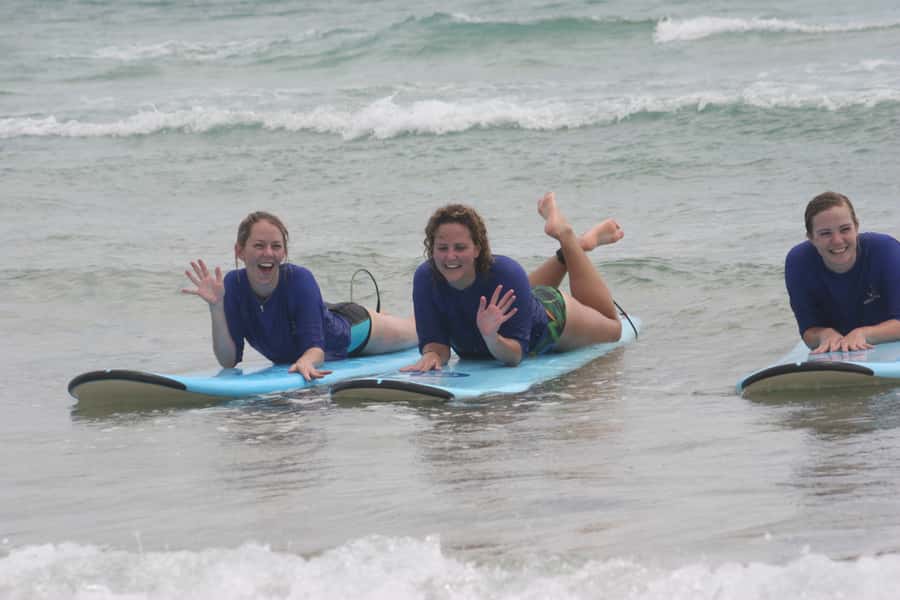
- Small-group coaching so you get individual feedback, not just a group pep talk
- Beginner-suitable waves with a goal of standing up during the lesson
- Photos included after your session, often shared digitally like Wetransfer
- All gear and sunscreen handled for you, which keeps your morning stress low
- Dolphin and whale spotting built into the outing, so you’re not stuck only staring at boards
Gold Coast Surf Lesson: Where You’ll Actually Start (Tallebudgera)
First things first: you’ll meet the group at the surf van parked outside the Tallebudgera Surf Club entrance. That matters because surf days are time-sensitive. Being there on time helps you get fitted, get briefed, and get out to the water while conditions are still good.
Tallebudgera is a strong pick for beginners because it’s right in the Gold Coast surf scene. You’re not traveling far across town, and you’re close to the kind of sandy, public-beach energy that makes a first lesson feel less intimidating.
If you’re driving, give yourself cushion time. One booking tip stands out: arriving an hour early helps with parking. Surf areas can get busy fast, and the easiest way to ruin your vibe is to start the day rushing.
A few more Gold Coast tours and experiences worth a look
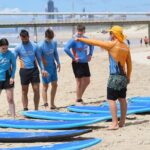
150 Minutes With a Real 2-Hour Surf Session
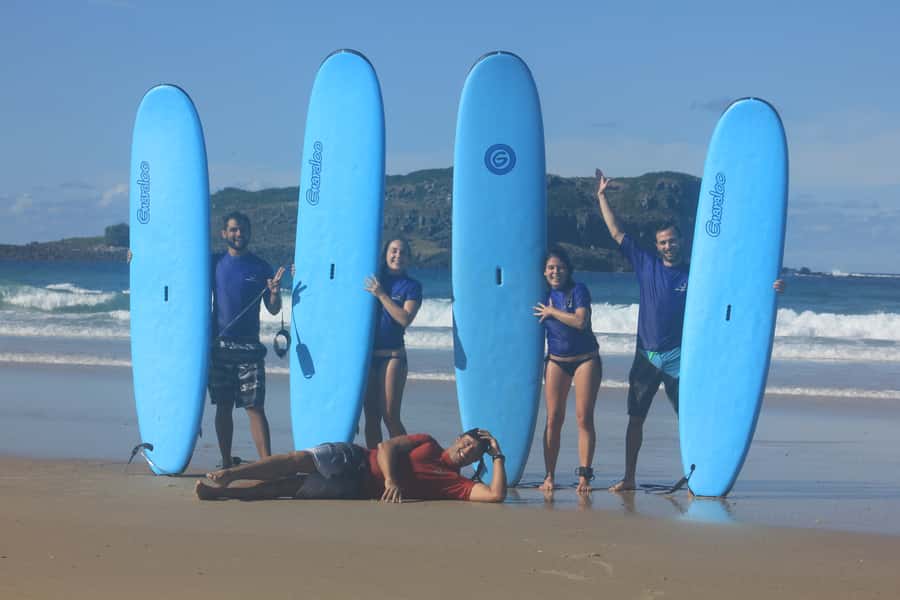
This experience is listed as 150 minutes total, with a 2-hour surf lesson inside it. I like this format because it’s long enough for progress. A quick 45-minute crash course can be fun, but you usually spend half the time just learning where to stand and how to paddle.
Plan for the day to move in stages:
- Meeting and gear setup
- Instruction on technique and safety with your accredited guide
- Time in the water practicing what you were taught
- End-of-session photos and wrap-up
That time structure also explains why people feel like they learn a lot in a short window. It’s not just “try and see.” You get teaching, then repetition, then more attempts while the lesson is still fresh.
Small Groups and Instructors: How Feedback Works
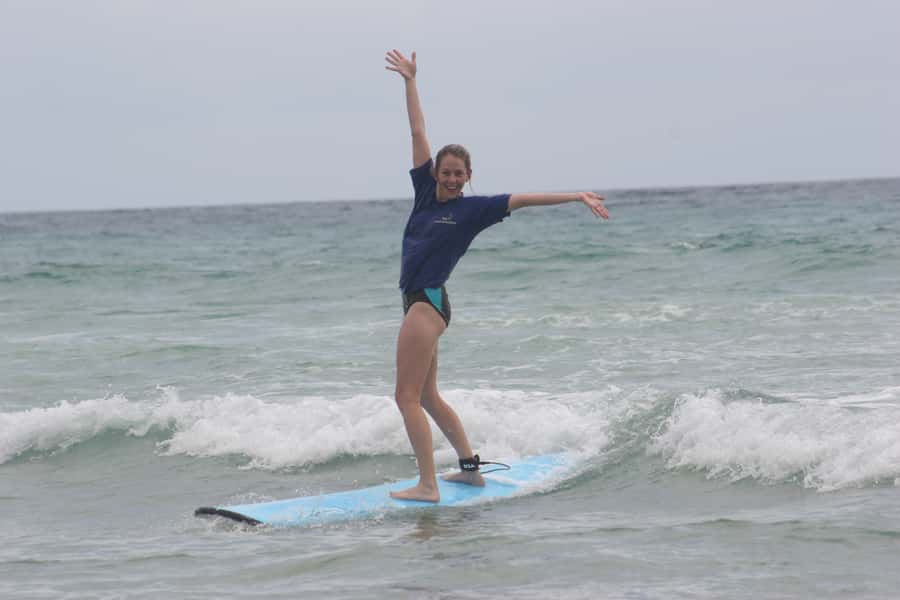
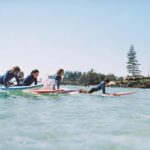
The biggest quality-of-life feature here is the small group size. Surf can go sideways when you’re one of 20 people and the instructor is juggling safety and timing. With fewer people, you get closer attention and faster correction.
You’ll be with a fully accredited, qualified instructor, and language support includes English, Spanish, and French. From past lessons, names like Ted, Luke, Alex, Gabriel, and Jack show up frequently in instructor feedback—so you can expect a professional teaching style, not a random coach with a board problem.
What I find valuable is the way coaching shows up in the water:
- someone helps you position on the board
- someone cues your paddling and timing
- someone gives quick fixes so you can stand more often
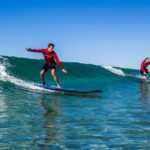
That’s why the lesson’s promise of a 100% stand-up rate is taken seriously in practice. Even when the ocean is “just okay” and not perfectly glassy, the instruction aims to get you into the right conditions to succeed.
How Beginner Surf Techniques Translate Into Standing Up
The lesson is built for newcomers, so the focus is on fundamentals that actually matter when you’re out there trying not to get launched.
Here’s what the instruction style tends to reward:
- Consistent paddling rhythm so you build speed at the right moment
- Learning where to place your body on the board before the wave matters
- Understanding the pop-to-stand sequence so it’s not guesswork
- Safety and wave awareness so you can relax while still being smart
In instructor-led surf, the difference between trying and catching is often timing. That’s why your guide’s feedback is key. When someone spots what you’re doing wrong right away, you can correct it before the wave window closes.
And if conditions are a little “pot luck,” don’t panic. Even in less-than-ideal surf, small-group coaching can still get you standing a few times. Several first-timers described exactly that: fun attempts, a few successful stand-ups, and a sense of progress by the end of the session.
The Beach Change: Why You Should Not Worry Too Much
One detail that can throw people off: the exact beach is decided depending on conditions on the day. That means you shouldn’t expect to lock in a specific coastline view the night before.
But here’s the practical upside. Surf operators pick the site based on what’s working—wave size, shape, wind, and currents. For a beginner lesson, those variables matter more than your favorite Instagram location.
So if you’re the type who hates uncertainty, this is the tradeoff. If you’re there to learn and have fun, it’s mostly good news: your instructor is likely choosing what gives you the best chance to catch waves safely.





Equipment, Sunscreen, and Photos: The Stuff That Makes It Easy
You don’t need to bring the heavy thinking. All equipment is included, and sunscreen is provided. That’s a real value point because it removes the shopping list problem that often turns “one small activity” into an extra expense and effort.
Then there are the photos. Getting surfing highlights photographed after your session is more than a nice extra. It helps you remember what felt right and what to improve next time. It also means you’re not juggling a phone while trying to stand.
Past participants highlighted receiving photos after the lesson, including digital delivery like Wetransfer. That’s exactly what you want: you can focus on the waves first, then review your progress later.
Dolphin and Whale Spotting: A Bonus That Doesn’t Feel Forced
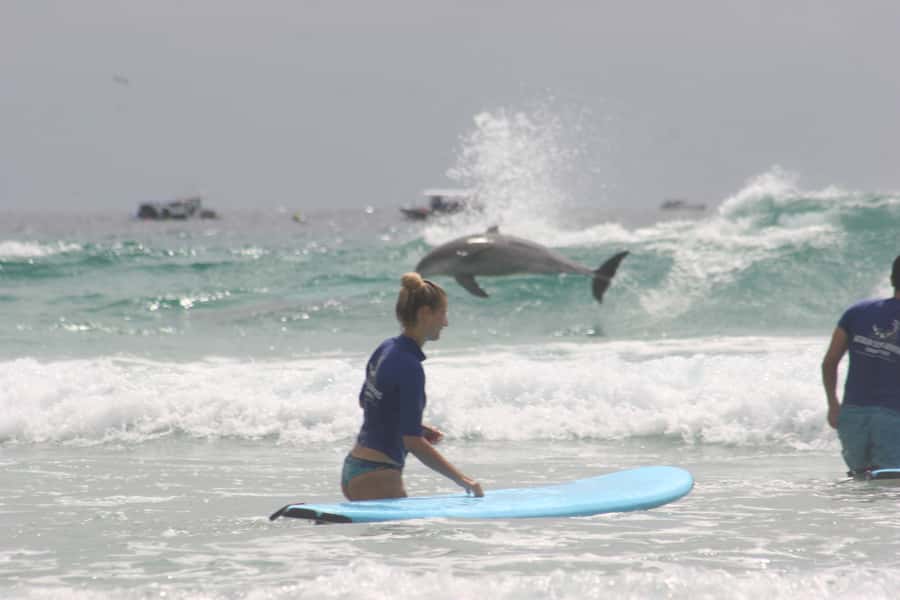
This lesson also includes dolphin and whale spotting. I like this because it turns the outing into more than just paddling practice. When the ocean is quiet and the group is getting set up, a wildlife scan adds variety.
Just treat it as a bonus, not a guarantee. Still, it’s a pleasant way to make the day feel more special and more “Gold Coast” than a generic lesson in the middle of nowhere.
Price and Value at $46: What You’re Getting for Your Money
$46 per person can look surprisingly affordable for a guided surf lesson—especially one that includes gear, sunscreen, and photos. The value is not just in the price. It’s in what’s bundled.
You’re typically paying elsewhere for:
- rental equipment
- basic instruction time
- and usually photos if you want them
Here, those pieces are built in, plus the group is kept small enough that coaching actually lands. For a first-timer, that “everything included” approach saves you time, hassle, and extra costs you might otherwise spend last-minute.
One thing you should plan for: food and drinks are not included. So grab a snack before you go (or plan cash for a nearby option afterward). Also note there’s no hotel pickup or drop-off, so you’ll handle your own travel to the meeting point.
What to Bring (So You Don’t Fumble in the Parking Lot)

This is a straightforward “show up and surf” activity, but a few basics matter.
Bring:
- Swimwear
- A towel
- Comfortable clothes for after you’re done
The best add-on if you have it is a small dry bag for your phone and keys—nothing fancy, just something that keeps sand and water chaos under control.
Not allowed:
- Alcohol and drugs
That’s a safety and comfort decision, and it also keeps the environment more family-friendly, which is usually a good sign for beginners.
Who This Is Best For (And Who Might Want Something Else)
This lesson is ideal if:
- you’re a beginner who wants structured guidance
- you want a small-group experience rather than crowds
- you’d like photos so you can remember your first wave
- you’re short on time and want real progress in one outing
You might want a different option if:
- you hate any uncertainty about the beach location at all
- you’re looking for advanced technique drills or big-wave training (this one is clearly set up for first-time surfing)
For families, it also tends to work well. One parent-focused highlight was that instructors gave special attention to a daughter, keeping her comfortable and supported.
Should You Book This Gold Coast Group Surf Lesson?
If your main goal is to stand up, catch beginner-friendly waves, and leave with photos and a story worth telling, I’d say yes. The value is strong at $46 when you compare what’s included: equipment, sunscreen, a full 2-hour coaching session, and photos afterward. Add in the small group size and you get the kind of instructor attention that actually helps you improve while the waves are still rolling.
Book it if you can handle one tradeoff: the beach might change based on ocean conditions. For most first-time surfers, that’s the sensible way to do it. The ocean decides the plan. Your job is to show up ready, follow instructions, and enjoy the ride—because the first successful stand-up is a real confidence boost.
FAQ
Where do I meet for the surf lesson?
Meet your tour at the surf van parked outside the Tallebudgera Surf Club entrance.
How long is the experience?
The duration is about 150 minutes total, with a 2-hour surf lesson included.
Is surf equipment provided?
Yes. All equipment is included.
Are photos included?
Yes. Photos are included, and you’ll receive surfing highlights after your session.
What language options are available for the instructor?
The instructor can teach in English, Spanish, and French.
What should I bring to the lesson?
Bring swimwear, a towel, and comfortable clothes.
Is food or drinks included?
No. Food and drinks are not included.
What’s the minimum group size?
Surf lessons require a minimum of 4 participants.
Will I know which exact beach you use?
No. The exact beach is decided depending on conditions on the day.