REVIEW · GOLD COAST
Whale Watching Tour with Spirit of Gold Coast
Book on Viator →Operated by Spirit of Gold Coast Whale Watching · Bookable on Viator
Humpback sightings are easier than you think. Spirit of Gold Coast Whale Watching puts you on a purpose-built 24m super catamaran in the June–November migration window, with marine biologist-led live commentary about what humpbacks are doing. You’re not just staring at the water—you’re getting the quick, practical story behind the splashes.
I love the layout: 360º viewing from both the lower and upper decks means you can find the best angles without giving up your spot. The crew also works hard to keep you with the whales, backed by a 100% whale sighting guarantee that includes a free return cruise if you don’t see humpbacks. The trade-off is you’re on the water, so bring a jacket and expect some swell, especially on breezy days.
In This Review
- Whale Watching Spirit of Gold Coast: Key highlights at a glance
- What makes Spirit of Gold Coast whale watching feel worth your $53.08
- Boarding at Aqua Adventures (Southport) and how the timing works
- The 24m super catamaran: your best view choices from both decks
- Marine biologist-led whale spotting: what you’ll actually learn
- The 2.5-hour cruise experience: what the ride feels like
- Morning tea, bar access, and small comforts that keep you comfortable
- Seasickness and cold: how to prepare like a pro
- Whale behavior: what you’re most likely to see (and why it varies)
- Price, value, and the 100% whale guarantee (what it really means)
- Who this whale watching tour suits best
- Practical tips for a smooth day on the water
- Should you book the Spirit of Gold Coast Whale Watching tour?
Whale Watching Spirit of Gold Coast: Key highlights at a glance
- Marine biologist commentary on board, focused on whale behavior, not just facts on a poster
- 100% whale sighting guarantee, with a complimentary second cruise if humpbacks are not spotted
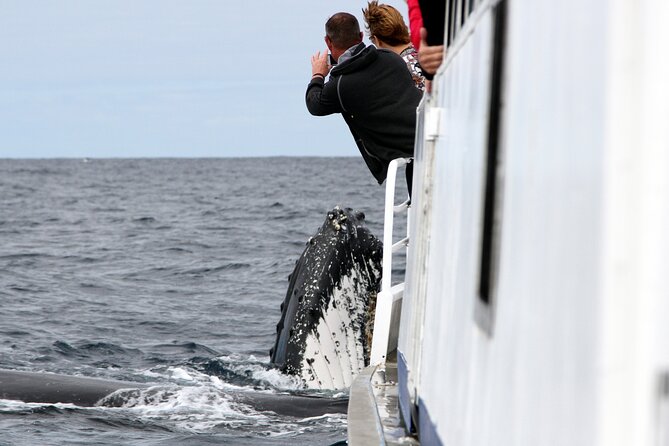
- 24m super catamaran with 360º viewing from both lower and upper decks
- Morning tea included, plus a photo booklet souvenir after the trip
- Crew that actively searches and follows to improve your chances, instead of just cruising a fixed route
What makes Spirit of Gold Coast whale watching feel worth your $53.08
This trip costs $53.08 per person and runs close to 2 hours 50 minutes. For that price, you get more than boat time. You get a marine biology guide, a real whale-focused search, and morning tea, which adds up when you compare it to tours that feel light on explanation.
The big value hook is the 100% whale guarantee. In plain terms, you’re not stuck with the classic whale-watch problem—hoping the sea gods cooperate. If they can’t find humpback whales during your scheduled outing, you’re offered a free return cruise. That kind of policy matters because whale behavior is unpredictable, and you can’t force whales to breach.
Still, manage expectations for visuals. Humpbacks don’t always put on the big breach show back-to-back. Sometimes you’ll get longer stretches of surface appearances and cruising, and you’ll still be seeing real behavior—just not always the postcard moment.
You can also read our reviews of more whale watching tours in Gold Coast
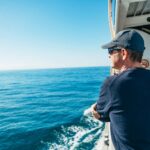
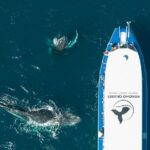
Boarding at Aqua Adventures (Southport) and how the timing works
Your tour starts and ends at Aqua Adventures, 95 Marine Parade, Gold Coast Hwy, Southport QLD 4215. There’s no hotel pickup, so plan to get there on your own. The meeting point is near public transportation, which is useful if you’re not driving or you want an easy last-mile option.
The day moves fast once you’re checked in. You’ll head out soon after departure, and there’s a real chance of seeing whales within minutes. That’s not a promise that every sailing will start with a breach fest, but it’s exactly why this tour keeps attention high from the first minutes on the water.
You’ll also be traveling with a maximum of 140 people. That’s big enough to feel lively, but small enough that you’re not totally swallowed by a crowd. A mobile ticket helps too—less time hunting for printed paper, more time getting your deck position.
The 24m super catamaran: your best view choices from both decks
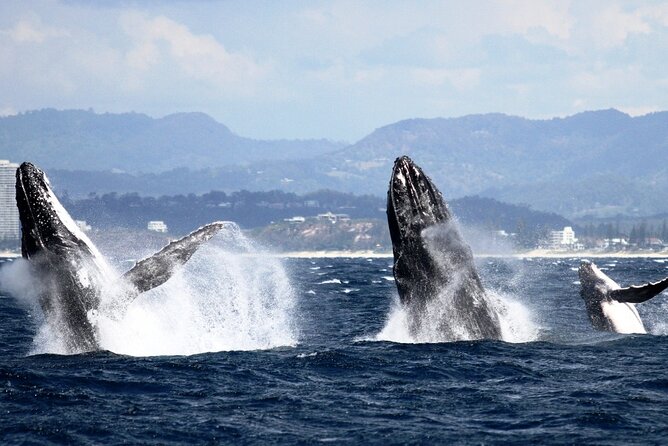
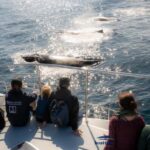
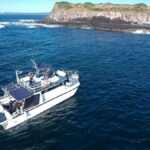
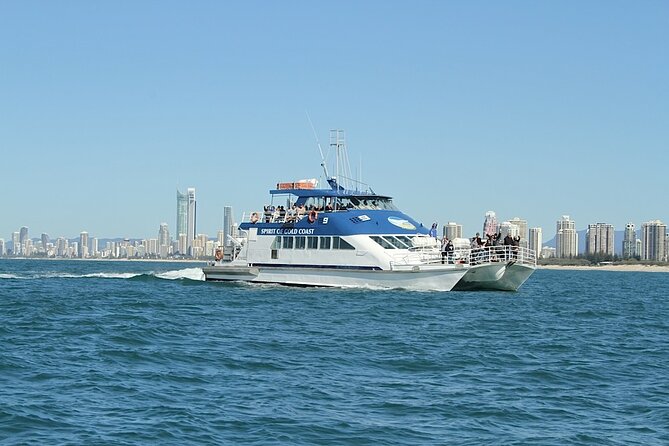
This isn’t a tiny boat where you fight for one “good side.” It’s a 24-meter super catamaran built for whale watching, with 360º viewing from both lower and upper decks. If you’re traveling with kids, this layout is a win because you can reposition for sight lines without the whole group feeling stuck.
On the lower deck, you can feel closer to the waterline, and you’re often better placed for when whales rise near the hull. On the upper deck, you tend to get better sight lines across open water—especially when the sea gets choppy and spray reduces contrast closer to the boat.
Practical comfort matters on whale trips. The catamaran has toilets, and there’s a fully licensed bar for drinks you can purchase. There’s also morning tea included, which is a small but smart detail for a trip that can start with cool air and end with you wanting a warm reset.
Marine biologist-led whale spotting: what you’ll actually learn
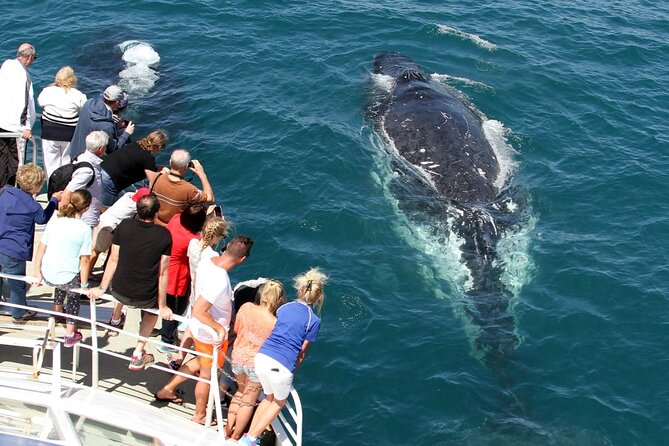
The tour is guided by a marine biologist who provides full onboard commentary. This is the difference between watching whales as a random activity and watching them as a behavior show.
Here’s what that kind of guidance changes for you: you start noticing patterns. You’re not just looking for a splash. You’re picking up cues that whales are coming up, moving, and reacting—like timing for surfacing and what “breach,” fin slap, and tail slap usually mean in a whale’s routine.
The crew isn’t passive either. Multiple captains mentioned in passenger feedback—like Captain Dean and Captain Gavin—were described as active and fun in the way they work the route. The key point: the skipper follows whales to give you the best opportunity, rather than treating the outing like a scenic drive.
Also, don’t get hung up on one behavior. A few whales can create an excellent viewing session even if the breaches slow down. One of the more common realities of whale watching is that you might spend a long stretch with the same group of whales, including a mother and calf, and still get plenty of moments worth seeing.
The 2.5-hour cruise experience: what the ride feels like
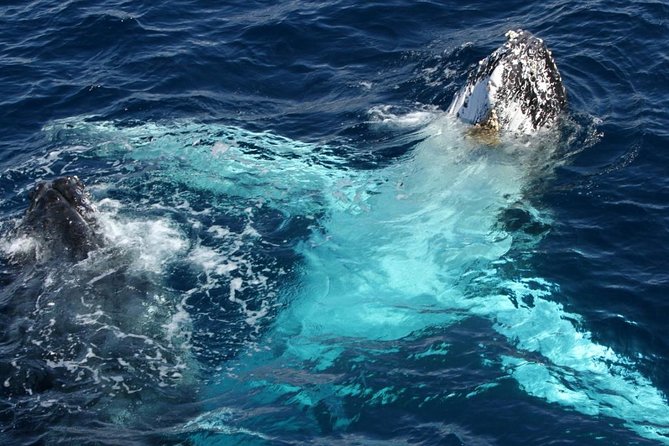
The tour is about 2 hours 50 minutes, and the pacing is built around finding whales quickly. With humpbacks migrating along Australia’s east coast in the June to November season, your trip is timed for that migration window.
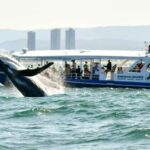
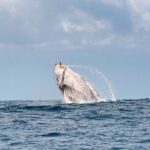
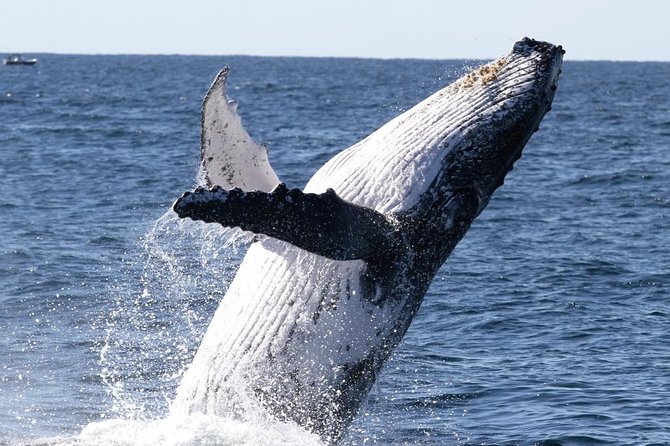
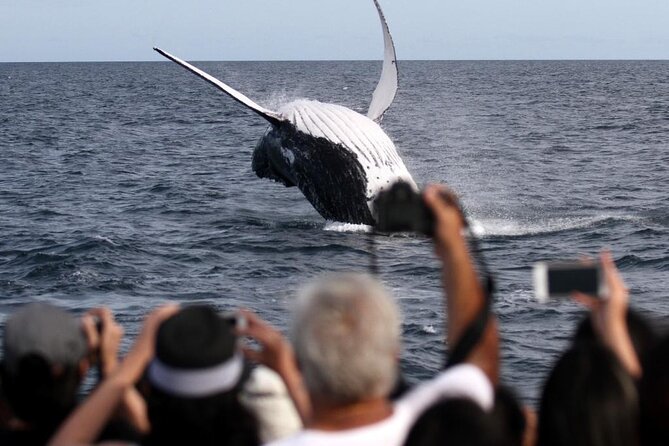
In many cases, you’ll start seeing activity soon after leaving port. The headlines are usually the dramatic ones: breaching, pectoral fin slaps, and tail slaps. When you’re on the right side and the timing is good, whales can look surprisingly close—close enough that you realize how big they are once they’re in your field of view.
That said, whale watching isn’t a controlled show. You might get classic breach behavior one day and mostly surface-ups and cruising another day. Some trips focus on a handful of whales and stick with them for a long run. That can be great because you learn the rhythm of their movement, but it can feel repetitive if you’re chasing constant “new sightings.”
If you’re hoping for a calmer experience, pay attention to conditions. Expect that the water can be rocky at times, and wind can add to the ride. In feedback, people mentioned needing help with seasickness and valuing the crew’s support.





Morning tea, bar access, and small comforts that keep you comfortable
This tour includes coffee and/or tea as well as morning tea, so you’re not just relying on your own snacks. That matters when you’re out on the water and the temperature drops when you’re moving across open ocean. It’s also a nice “reset” break during a trip that’s mostly spent watching and waiting.
Food is not included beyond the morning tea. A fully licensed bar is on board, but drinks are available to purchase. If you’re the kind of person who gets hungry easily, bring a plan for the gap—either eat before you arrive or expect to rely on what you can purchase during the cruise.
There are toilets on the boat, and that’s a real quality-of-life detail on a nearly three-hour tour. Also, enclosed walking shoes and a jacket are recommended, which lines up with what you’ll likely feel on deck: cool air, salty breeze, and wind that can sneak under light layers.
Seasickness and cold: how to prepare like a pro
This is the part people forget until they’re already bouncing. The catamaran rides the ocean, and even if you don’t feel terrible, you may feel motion in your stomach. One passenger specifically said they were glad they took seasickness tablets offered on board for about $3, even though the trip wasn’t extreme that day.
So here’s the practical approach:
- Wear layers and bring a jacket, especially if you’re sitting on deck for long stretches.
- If you’re sensitive to motion, consider taking seasickness support ahead of time rather than after you feel bad.
- Expect wind chill. Even in warm months, the open water can feel colder once you’re moving.
If you’ve done boat trips before, you already know your limits. If you haven’t, treat this as a “might be bumpy” ride, not a lake cruise.
Whale behavior: what you’re most likely to see (and why it varies)
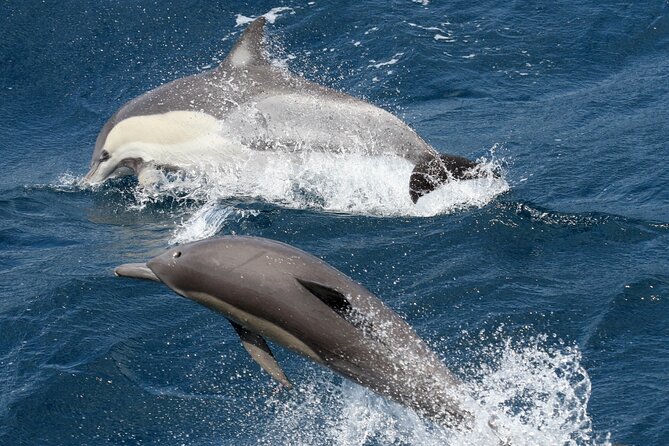
Humpback whales migrate past the Gold Coast during the June to November season, and this tour is designed for that timing. When the whales are active, you can see breaching, fin slapping, and tail slaps—big behaviors that make whale watching feel cinematic.
But here’s the honest part: the whales are in charge of the schedule. Some outings deliver frequent surface breaks with dramatic breaches. Others may be slower, with whales that surface briefly, cruise along, and give you shorter looks. You may also see the same small set of whales for a long time rather than a changing roster of new individuals.
This is also why the 100% whale guarantee is so reassuring. It doesn’t mean you’ll get the exact behavior you’re imagining. It means you won’t be left with a blank check for hope.
And when you do get the memorable moments—like a mother and calf spending time near the boat—you’ll understand why people call whale watching a bucket-list day.
Price, value, and the 100% whale guarantee (what it really means)
Let’s talk value. At $53.08, you’re paying for:
- a purpose-built catamaran experience,
- a marine biologist-led commentary,
- morning tea,
- onboard comforts like toilets, and
- the chance to see humpbacks during migration.
Then there’s the 100% whale guarantee. In a whale-watch world, that’s the closest thing to a safety net you can get. If whales aren’t spotted, you receive a complimentary second cruise. For budget planning, that lowers the risk that you’ll spend money on a disappointment.
That said, double-check what you’re booking to match your trip plans. If you’re traveling at a busy time and your schedule is tight, a second cruise may require you to stay flexible. Weather also plays a role in whether trips run as scheduled, since this is an ocean outing.
Some people also noted that cancellations and refunds can be messy when changes happen late. The core thing to do: be patient and keep your booking confirmation details handy. If a sailing changes due to weather, follow the communication you receive and confirm how rescheduling or refunds are handled through your booking channel.
Who this whale watching tour suits best
This is a strong choice if you:
- want a structured experience, not just a boat ride with vague narration
- like seeing wildlife in their natural habitat and hearing what you’re watching
- are traveling with kids or teenagers and want the viewing setup to work for everyone
- appreciate a crew that’s active and supportive
It’s also a good fit for first-timers. The combination of 360º sight lines, onboard commentary, and the guarantee helps you feel “in the game” instead of standing around hoping.
Who should think twice? If you hate any boat motion at all, or you get easily seasick, the ocean ride may not be your favorite. And if you’re only excited by huge breaches, be aware the whales don’t always schedule those for you. You may still see plenty, but the intensity can vary.
Practical tips for a smooth day on the water
A few things make a noticeable difference on this type of tour.
Dress for deck time. Wear enclosed walking shoes and a jacket, and plan for wind chill. Layers work best because you can get warmer near the middle of the ride, then feel cold again when you step out to look for surfacing whales.
Bring your own patience. Whale watching runs on animal behavior, not human timing. If you don’t see a breach immediately, you’re still in the search window.
If you’re bringing a pram, you should advise the operator. The tour info specifically asks you to let them know, which is a sensible request for safe boarding and movement on deck.
Take advantage of the photo booklet souvenir. It’s included, and it’s a nice way to keep the day from fading into fuzzy memories—especially since most of your attention will be on the water.
Finally, if you’re trying to line up your day, remember this tour doesn’t include lunch. Plan food before or after, and consider bringing a snack if you’re the type who gets snacky during long waits.
Should you book the Spirit of Gold Coast Whale Watching tour?
I’d book this if you want a well-run Gold Coast whale watching outing with real explanation and a 100% whale guarantee. The catamaran setup—360º viewing from both decks—is exactly what you want when you’re trying to catch whales at the right angle. Add morning tea and a marine biologist’s commentary, and the overall experience feels solid for the price.
Skip it if you’re extremely motion-sensitive or you can’t handle being on a windy, sometimes bumpy ocean ride. Also, if your schedule is locked tight with zero flexibility, build in a little buffer, because whales and weather can both affect how the day plays out.
If you’re traveling during the June to November humpback season and you want your whale watching day to feel informed and organized, this is a smart bet.