REVIEW · GOLD COAST
Surfers Paradise: 2 Hour Surf Experience on the Gold Coast
Book on GetYourGuide →Operated by Go Ride A Wave · Bookable on GetYourGuide
Surfers Paradise makes beginners feel brave. I love the push toward standing early and the way Level 1 instructors coach you through safety, positioning, and board control. Main trade-off: if the surf turns rough or the weather is nasty, you may ride fewer waves than you hoped, even though the team keeps teaching and practicing.
You meet at shop 26A in Paradise Center, next door to Hungry Jacks just off the beach end of Cavill Avenue, close to the Surfers Paradise sign. Then you gear up with a rash shirt or wetsuit plus a soft-top board, and the lesson starts right on the famous golden sand. The goal stays practical: feel confident in waist-deep water, learn the pop-up, and catch some first, real rides.
Plan to arrive 20 minutes early so you’re not scrambling to check in and get fitted. Most first-timers do manage to stand by the end, but the bigger win is learning what to do when you fall, because you will.
In This Review
- Key moments that make this surf lesson worth your time
- Why Surfers Paradise is a great classroom for surfing
- Meeting Point and gear check: how to start without wasting energy
- Rash shirt or wetsuit, and why the soft-top board matters
- The 2-hour lesson flow: from safety talk to standing attempts
- 1) Safety briefing and technique setup
- 2) Into waist-deep water to start catching waves
- 3) Back to the sand for pop-up coaching
- 4) Back into the surf with the instructor close by
- Instructors up close: what great coaching actually looks like
- Standing on day one: what to expect realistically
- Timing and how a 2-hour lesson can feel like more
- Value at $59: what’s included, what you’ll need to budget, and how to plan
- Who this surf lesson fits best on the Gold Coast
- Should you book this Surfers Paradise surf experience?
- FAQ
- How much does the Surfers Paradise surf lesson cost?
- How long is the experience?
- What’s included in the lesson?
- What should I bring with me?
- Where do I meet the instructor?
- Do kids need an adult in the water?
- What are the age limits?
- Is English instruction available?
Key moments that make this surf lesson worth your time
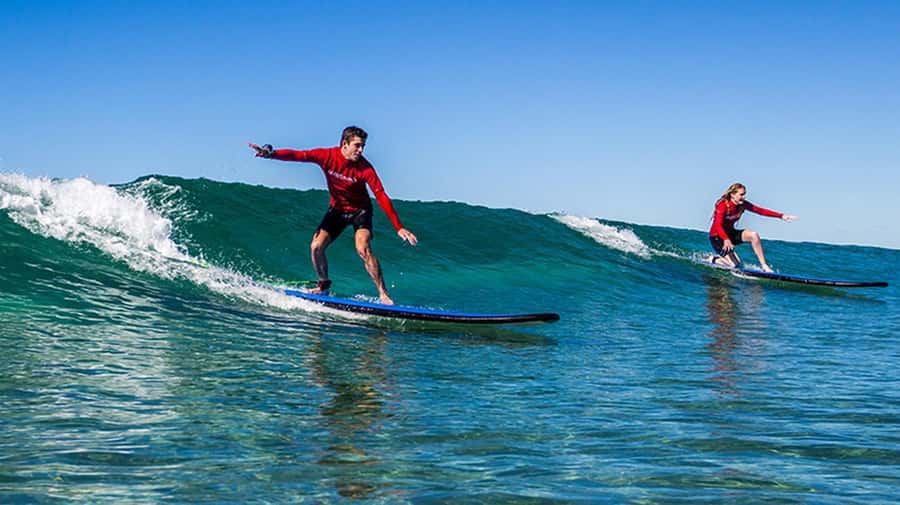
- Stand-up practice happens early with sand drills before you’re sent into the waves
- Safety and wave positioning get explained step-by-step in plain, do-this-now language
- You get real attention, not just a quick demo, even in groups
- Soft-top boards and rash gear lower the fear factor so you can focus on technique
- Instructors adapt fast when conditions change, including cold/rainy sessions
- A family-friendly setup works for kids with the parent assistance rule (with limits)
Why Surfers Paradise is a great classroom for surfing
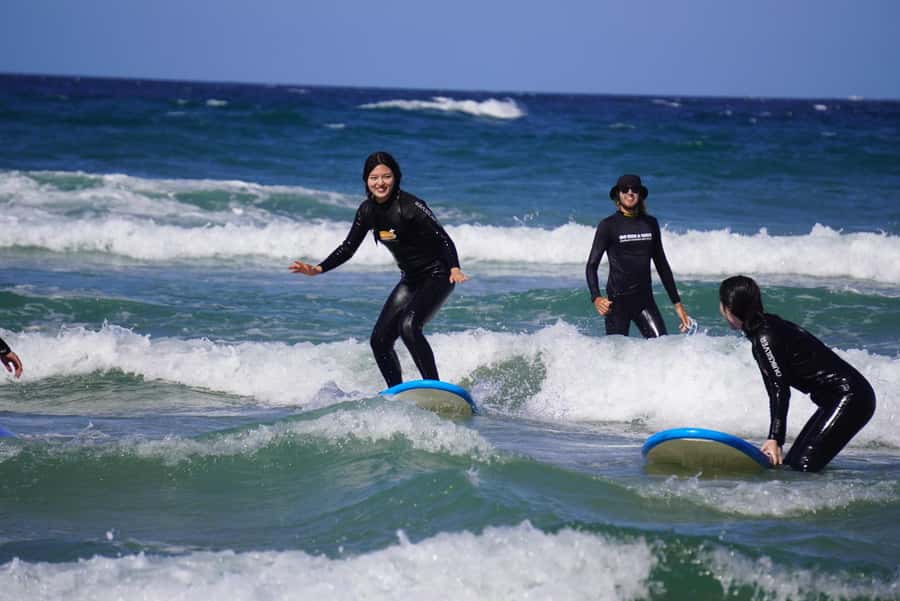
Learning to surf in Surfers Paradise makes sense because it’s built for access. You’re right where the action is: iconic beach sand, consistent foot traffic, and an obvious spot to start coaching without complicated logistics.
The lesson also benefits from the kind of conditions you’re likely to face on a beach trip anyway. Some days are calm and you can chase clean little rides. Other days bring wind and choppy water, and that’s exactly when you learn the most about staying safe, choosing where to wait, and controlling your board instead of panicking.
One detail I really like is how they handle the fact that this surf zone can feel tight. You’re not just left to figure it out. The instruction keeps your group spaced out and teaches you what to look for so everyone can practice safely.
A few more Gold Coast tours and experiences worth a look
Meeting Point and gear check: how to start without wasting energy
Your meetup is shop 26A in the Paradise Center, next door to Hungry Jacks, just off the beach end of Cavill Avenue near the Surfers Paradise sign. I’d treat this as your warm-up window. If you arrive on time, you can check in, get fitted, and get your board without burning out your arms early.
The gear is straightforward:
- swimwear underneath
- towel for after
- rash shirt or wetsuit provided
- soft-top surfboard provided
- sunscreen provided
One small practical note: you may be carrying a board a bit to reach the teaching area. If you know your arms tire fast, do yourself a favor and arrive early so you’re not doing that at the same time as you’re rushing and flustered.
Rash shirt or wetsuit, and why the soft-top board matters
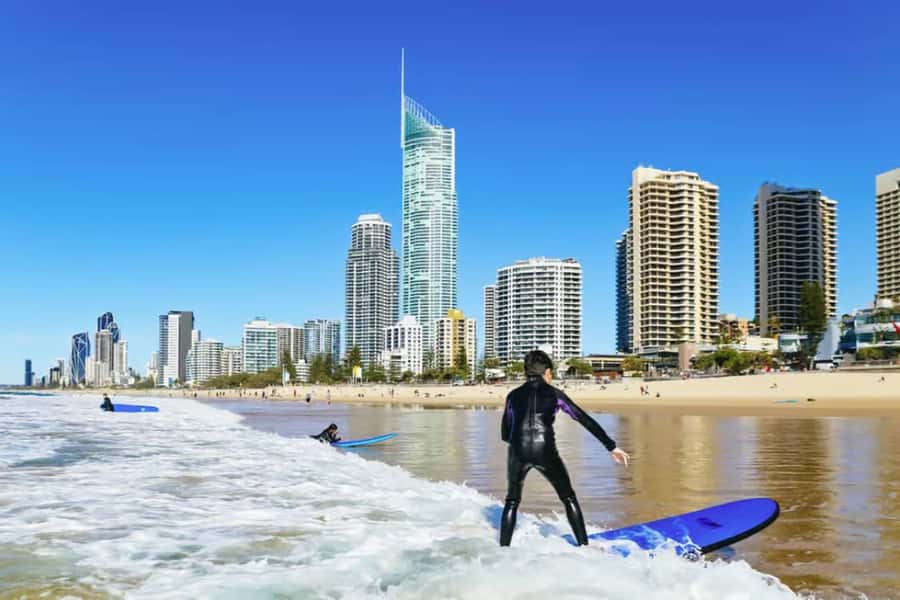
The soft-top board is a big deal for beginners. It’s designed to be more stable and forgiving while you’re learning balance and how to get your feet positioned. That means you spend more time practicing pop-ups and catching small waves, and less time fighting the equipment.
The rash shirt or wetsuit also changes the whole vibe of the lesson. Even on warm days, sun and wind can dry you out fast. On colder or rainy mornings, getting the right layer matters for comfort and confidence. In one rainy, windy session, an instructor was reported as running back to help with a wetsuit after noticing someone was cold—exactly the kind of hands-on care that keeps your lesson from turning into a shiver session.
The 2-hour lesson flow: from safety talk to standing attempts
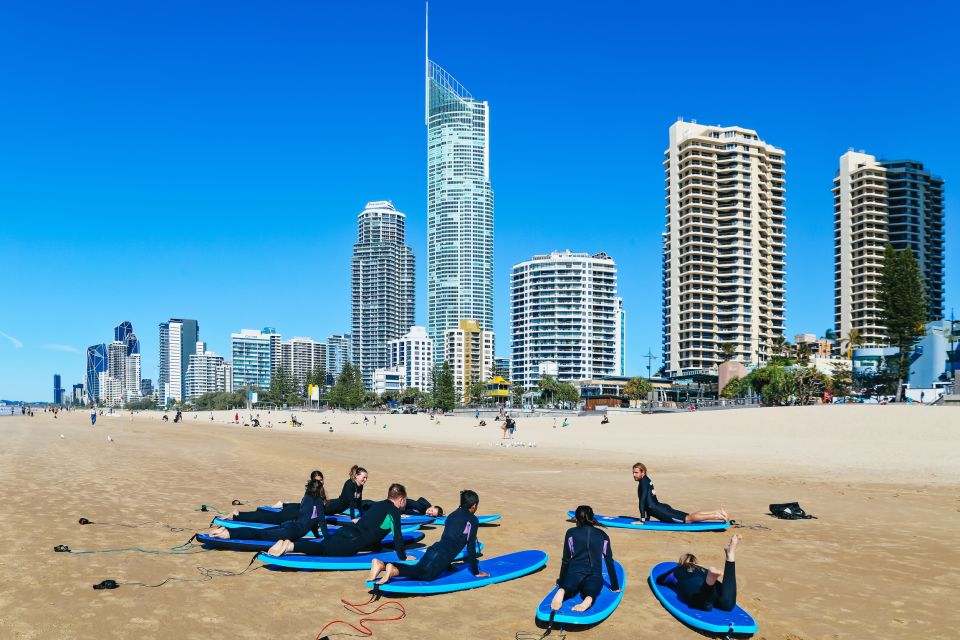
This is a true beginner format. You don’t just get handed a board and told to go have fun. The flow is built in stages, and each stage solves a specific problem you’ll have in the water.
1) Safety briefing and technique setup
You start with a safety briefing plus the key fundamentals you need to move through the surf zone. Expect basics around positioning, safe habits, and how to control your board so you’re not guessing.





2) Into waist-deep water to start catching waves
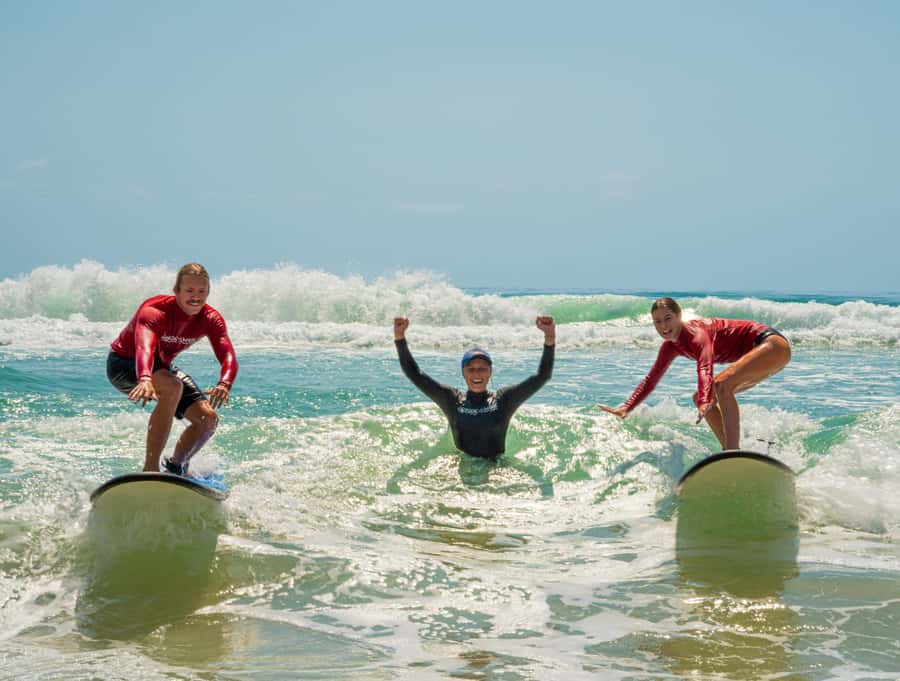
Then it’s straight into the water in the most learnable way: wading into waist-deep conditions to get comfortable and start catching waves. This is where the lesson becomes physical fast. You’ll learn how the ocean moves you, how to time your board, and how to aim for that first ride instead of just standing on the beach.
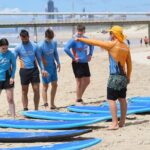
3) Back to the sand for pop-up coaching
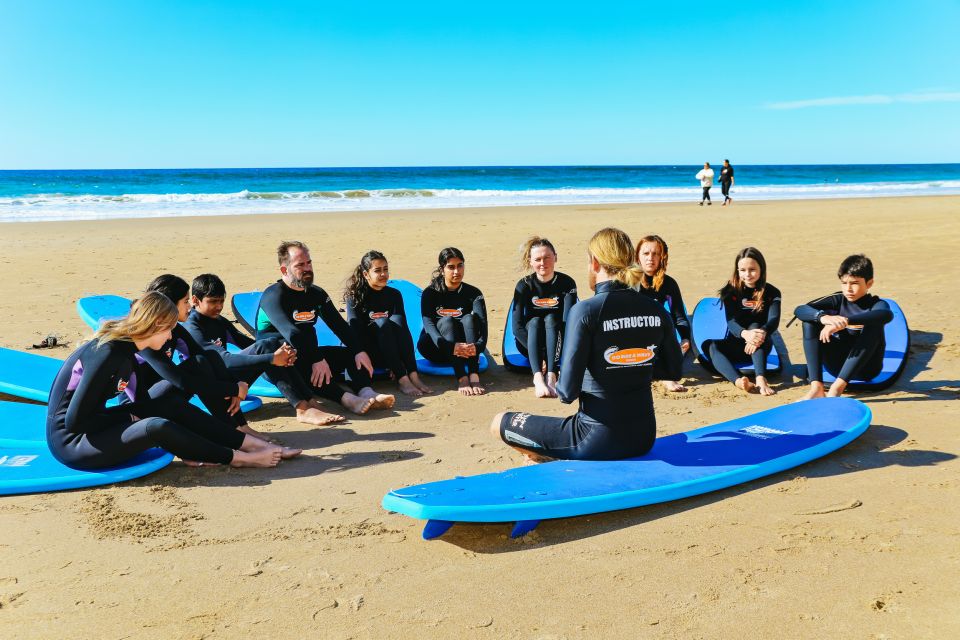
A really smart piece is regrouping on the sand. Sand practice matters because it lets you slow everything down:
- body position
- foot placement
- how to shift weight
- what your hands and balance are doing
It’s also why so many people manage to stand during the lesson. The sand drills give your brain a map before the ocean adds chaos.
4) Back into the surf with the instructor close by
After the sand practice, you return to the water for more attempts. Your instructor stays by your group and offers corrections. In several accounts, instructors like Taj and Danny were praised for keeping attention on everyone and giving quick, clear feedback when someone struggled to stand.
The instructors also bring a practical mindset: teach it, practice it, adjust it. That’s why first-timers often leave with more confidence than they expected.
Instructors up close: what great coaching actually looks like
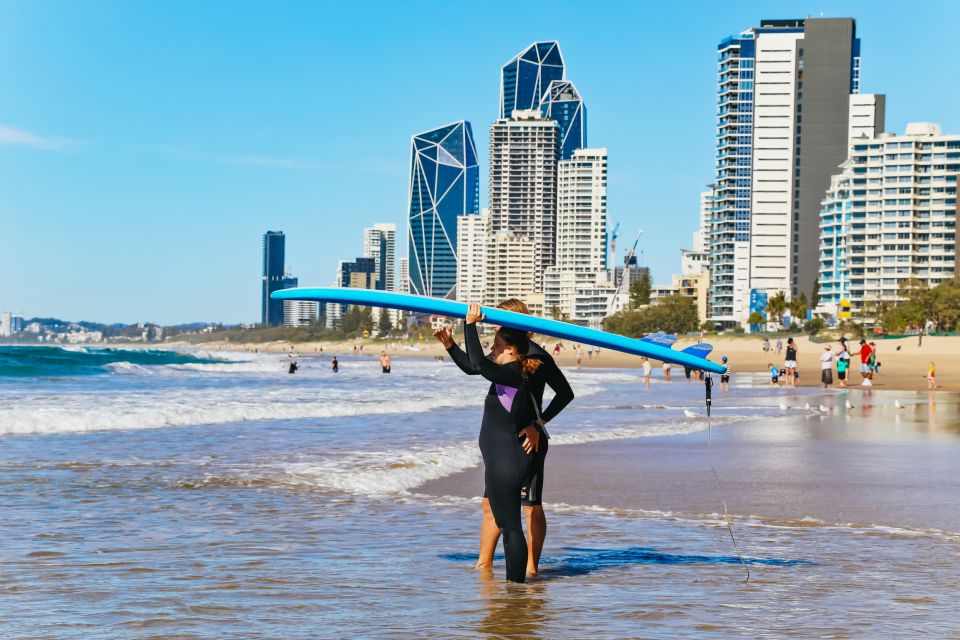
The biggest repeated theme is how hands-on the instruction is. It’s not just one person giving a demo while everyone else watches.
You’ll see patterns in how instructors run the session:
- Clear, simple directions that you can follow without surfing jargon
- Lots of encouragement without losing focus
- Multiple check-ins while you’re learning to pop up and stay balanced
- Patience when conditions are rough
Some instructors are specifically named in the experience reports, including Jack and Ciara, Hudson, Taj, Danny, Karl, Rohan, and Charlie. The names aren’t the point. The teaching style is: instructors spread themselves out, notice who’s getting stuck, and keep pushing everyone toward at least a few successful attempts.
One more detail I appreciate is adaptation. If it’s cold, wind-driven, or wave conditions aren’t ideal, the lesson still runs. That can mean more coaching emphasis, more practice time, and fewer perfect rides—but you still get the value of structured learning.
Standing on day one: what to expect realistically
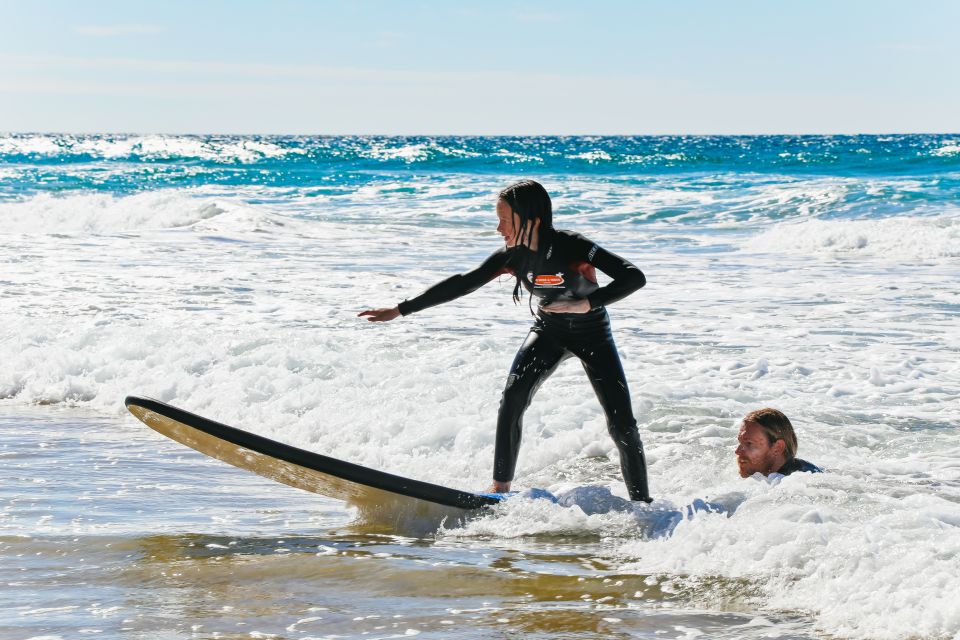
I love that the highlight is standing during your first lesson, because it’s not magic. It comes from good sequencing.
You start with safety and fundamentals. You then build confidence in the water. You practice the pop-up mechanics on sand where you control the variables. Then you transfer that movement back into real waves with an instructor correcting your position.
That said, it’s still surfing. If the day is choppy, your attempts might be shorter and bumpier. If you’re nervous, the ocean can feel bigger than you planned. The good news is that the format is built for that moment. You get coached through it, not just pushed into it.
If your goal is to become a longboard hero in one afternoon, you’ll be disappointed. If your goal is to learn how not to faceplant instantly and to understand what to practice next, this is the sweet spot.
Timing and how a 2-hour lesson can feel like more
The lesson instruction time is 2 hours, but your total time on the ground can run longer (the experience is listed as 2–6 hours depending on your start time). That’s typical for activities where you need:
- check-in and gear fitting
- walking/carrying boards to the teaching area
- breaks and regrouping for teaching
- time in the water and practice cycles
Also, surfing is work. Expect it to be tiring in your legs and core even if you’re only standing for seconds at a time. Several accounts describe it as a proper workout, which is part of why it feels satisfying when you finally catch that first wave ride.
Value at $59: what’s included, what you’ll need to budget, and how to plan
At $59 per person, you’re paying for a guided 2-hour coaching block plus the basics that usually add up on your own:
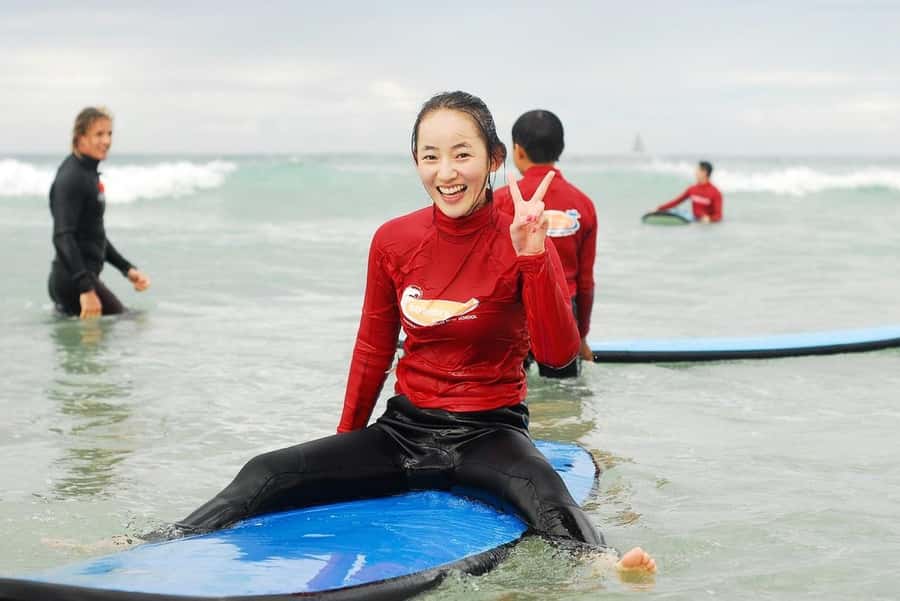
- rash shirt or wetsuit
- soft-top surfboard
- 2 hours of instruction from a Level 1 surf instructor
- sunscreen
That bundle is the value. Without it, you’d likely be paying for rentals, figuring out where to go, and losing the structured practice time that helps you stand sooner.
What costs extra:
- food and drinks
- towel and bathers (you bring a towel; bathers are on you as swimwear)
My practical tip: plan to eat before or after so you’re not trying to find food mid-surf. Bring a spare set of dry clothes for the walk away from the beach, and consider a hat and water bottle too, since the activity is outdoors.
Some sessions also come with photo options (one account mentions the chance to purchase great pictures afterward for a fair surcharge). If photos matter to you, ask on the day what’s available so you don’t miss the chance to document the attempts.
Who this surf lesson fits best on the Gold Coast
This is a strong choice if:
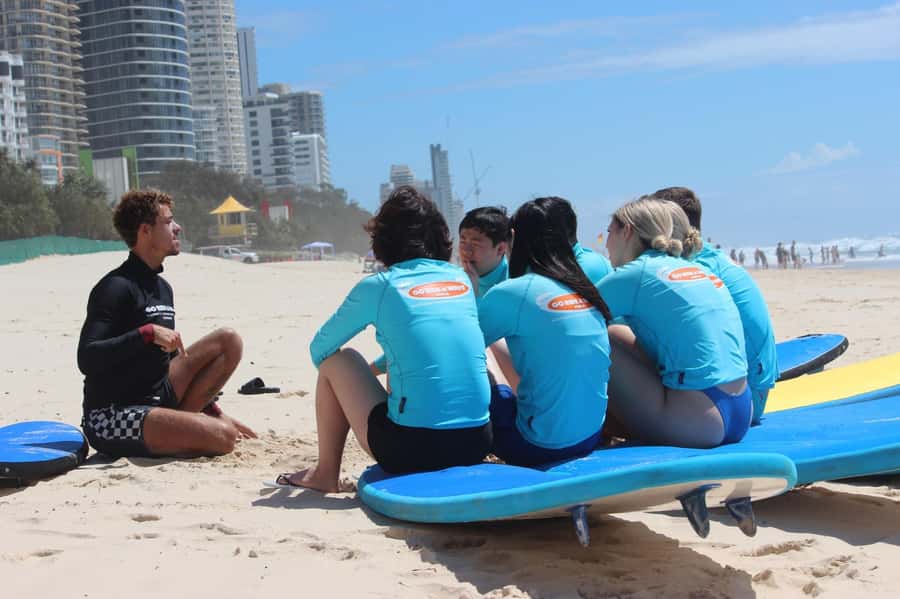
- you’re a true beginner and want the basics taught in order
- you’re traveling as a couple, small group, or family
- you want a safe, structured way to learn rather than guessing on your own
It can also work well for kids, with clear limits:
- Children under 9 must be accompanied by a parent who is not participating, and that parent can come into the water to assist.
- It is not suitable for children under 8.
That parent-accompanied requirement is important. If you’re traveling with younger kids, it affects how you can plan the water time. If your child is in the eligible age bracket, the instruction style can still be very supportive, with accounts describing kids standing and enjoying the session even during tricky conditions.
Should you book this Surfers Paradise surf experience?
Book it if you want a guided first surf lesson that prioritizes standing attempts, safety, and hands-on coaching in a prime Gold Coast location. The value is strongest for absolute beginners who want clear instructions, equipment provided, and instructors who actively help when conditions aren’t perfect.
Skip it or adjust expectations if you’re only interested in long, smooth wave rides. This isn’t a guarantee of that. Some days can be windy, rainy, or choppy, and while the instructors keep teaching, the ocean decides how easy the rides are.
If you’re open to learning and you’re okay treating it like a skill-building session (with plenty of laughs and sore legs), this is a great way to spend time on the Gold Coast.
FAQ
How much does the Surfers Paradise surf lesson cost?
The price is $59 per person.
How long is the experience?
You get 2 hours of instruction. The overall experience duration can run 2–6 hours depending on the start time.
What’s included in the lesson?
Included items are a long-sleeved rash shirt or wetsuit, a soft-top surfboard, 2 hours of instruction from a Level 1 qualified surf instructor, and sunscreen.
What should I bring with me?
Bring swimwear and a towel. Food, drinks, towel, and bathers are not included.
Where do I meet the instructor?
Meet at shop 26A in the Paradise Center, next door to Hungry Jacks, just off the beach end of Cavill Avenue near the Surfers Paradise sign.
Do kids need an adult in the water?
Yes. Children under 9 must be accompanied by a parent who is not participating and can come into the water to assist.
What are the age limits?
The lesson is not suitable for children under 8.
Is English instruction available?
Yes. The instructor language is English.