REVIEW · SYDNEY
Private Walangari’s Aboriginal Walking Tour in Bondi Beach
Book on Viator →Operated by Walangari Karntawarra and Diramu Dance & Didgeridoo Aboriginal Experiences · Bookable on Viator
Didgeridoo beats the surf on this Bondi walk. The star is Walangari Karntawarra, an Aboriginal Elder and Bondi local, who turns one iconic stretch of coastline into a living story—starting with a didgeridoo ceremony and then guiding you to ancient rock carvings with meanings. I also really like how you’re encouraged to ask questions as you go, so the walk doesn’t feel like a lecture. One possible drawback: it’s pricey, so this is best when you truly want a First Nations-led, place-based explanation of Bondi rather than a standard sightseeing stroll.
This is a private, group-style outing (up to 15 people) that runs about 1 hour 30 minutes. You start at North Bondi near the cliffs (Military Rd at Blair St) and finish at Bondi Pavilion, with the option to add an interactive cultural performance by Diramu Aboriginal Dance and Didgeridoo for an extra fee.
In This Review
- Key things to know before you go
- Entering the walk with Walangari Karntawarra’s didgeridoo ceremony
- Bondi’s cliffside route: coastline stories as you walk downhill
- Ancient rock carvings and what they mean
- Bush foods and medicines still growing along the route
- Q&A, audio support, and keeping the group in sync
- How the Bondi walking experience matches different ages and energy levels
- Where you start and where you finish: Bondi’s North to the Pavilion
- The price: what $710.07 per group really buys you
- Optional Diramu Aboriginal Dance and Didgeridoo performance after the walk
- Weather, timing, and how to plan your Bondi day
- Should you book Walangari’s private Bondi Aboriginal walking tour?
- FAQ
- How long is the private Walangari Aboriginal walking tour?
- What is the price?
- How big is the group?
- Where does the tour start?
- Where does the tour end?
- Does the tour include a didgeridoo ceremony?
- Will I see Aboriginal rock carvings?
- Is there translation support if I need it?
- Can I add a cultural performance?
- What happens if the weather is bad?
Key things to know before you go
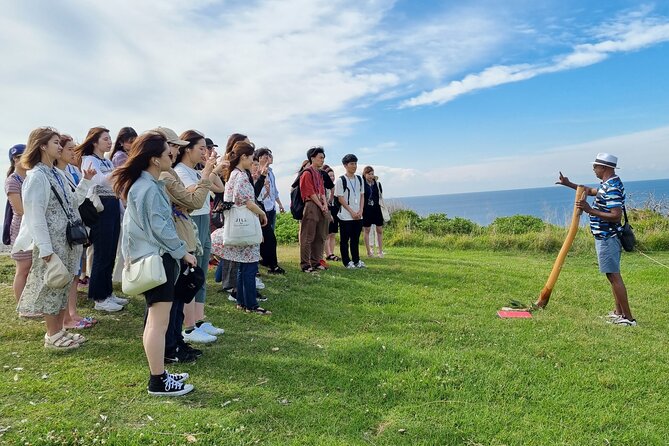
- Elder-led, Bondi-local guiding: Walangari Karntawarra leads the walk with cultural authority and local knowledge.
- Didgeridoo ceremony at the start: The session begins with a didgeridoo ceremony before you even set off.
- Rock carvings you can read with help: You’ll see Aboriginal rock carvings and learn what they mean.
- Bush foods and medicines on the route: He also identifies Aboriginal bush foods and medicines still growing along the way.
- Translation support via audio transmitter: There’s an audio transmitter available if you need a translator or group leader.
- Optional Diramu show: You can tack on a more interactive cultural performance after the walk.
Entering the walk with Walangari Karntawarra’s didgeridoo ceremony
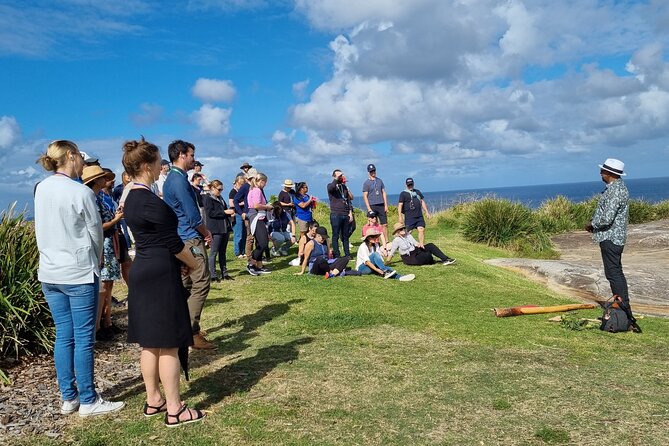
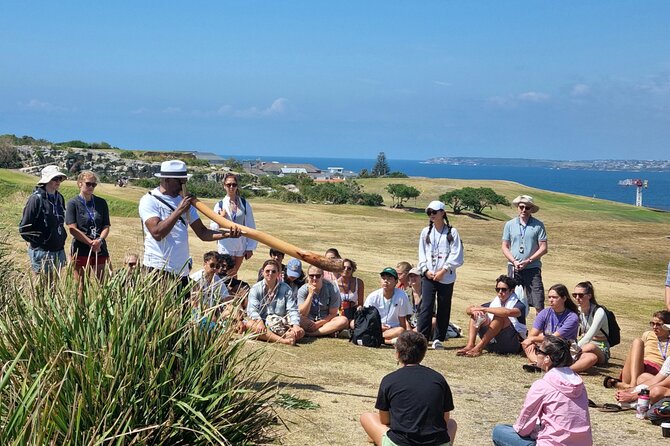
The experience really starts before the first steps. You meet in North Bondi at the corner of Blair St and Military Rd, near the cliff views over the Pacific. Walangari Karntawarra welcomes the group with a didgeridoo ceremony, which sets the tone fast: this isn’t just about seeing Bondi, it’s about understanding how the place is read and remembered.
What I like here is the way the opening ritual makes the rest of the walk feel anchored. You’re not jumping from one photo spot to the next. Instead, you’re being oriented—spiritually and culturally—before the geography lessons begin. It’s also led by someone who is both an Aboriginal Australian Elder and a Bondi resident, so the “local” part isn’t a gimmick.
This is also where the walk’s learning style becomes clear. You’re guided through geological and social history tied to the coastline, and you’ll get chances to ask questions along the way. If you like respectful back-and-forth, you’ll probably enjoy the pace.
You can also read our reviews of more walking tours in Sydney
Bondi’s cliffside route: coastline stories as you walk downhill
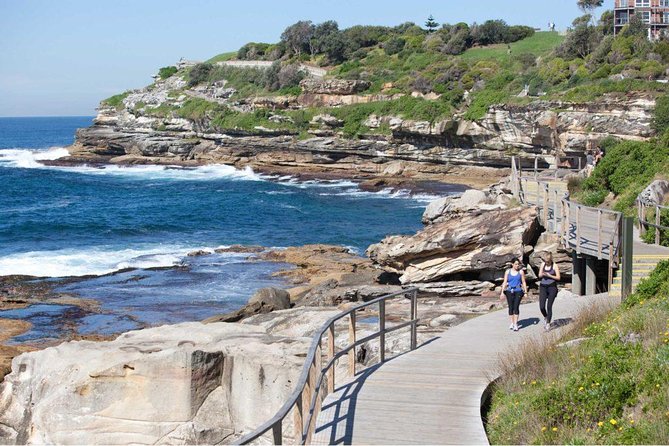
Once you start moving, you follow a gentle, downhill walk that’s designed to be manageable for mixed groups. Along the way you pass the Ben Buckler Gun Battery, a heritage-listed fortified former gun emplacement. It’s named after a bushranger connected to a cave nearby, so you get a layered view of how different eras have left their marks on the headland.
Then there’s the visual side of Bondi itself. You’ll pass examples of art deco architecture, and you’ll take in the sights and sounds of the beach. It’s the kind of route where you can look up at the ocean while still keeping your eyes on what’s at hand—especially if you’re interested in how culture, land, and history intersect.
The geography lesson is a big part of why this tour feels different from a typical “Bondi highlights” walk. You’ll hear about how the coastline has formed and changed over the ages. When a guide ties the rocks and shoreline to time—without turning it into an abstract lecture—you get a more grounded sense of what Bondi actually is: a constantly shifting coastal place shaped by forces much bigger than any one era.
One small practical thought: because it’s downhill and involves coastal footpaths, it’s smart to wear comfortable, grippy shoes. Not because it’s extreme, but because it’s Bondi—there can be slick spots near cliffs and beach-adjacent paths.
Ancient rock carvings and what they mean
The heart of the walk is the Aboriginal rock carvings you’ll see along the route. Walangari identifies them and explains their meanings, which is a major difference between simply noticing markings and understanding them in context.
Here’s what makes this valuable for you: it changes how you look at the land. Bondi can feel like it’s all about beach culture and surf culture. This tour brings you to a deeper reading of the same scenery. Instead of treating the artwork as decoration, you learn how it connects to Aboriginal knowledge, stories, and how people have long understood country.
You also get to hear about the world’s oldest living culture in a way that’s tied to the location you’re standing on. That matters because it keeps the information from floating away into generic “history talk.” You’re learning in the same environment where the carvings exist, and that makes the experience stick.
If you’re the kind of person who likes seeing meaning attached to what you’re looking at, you’ll probably find this section the most memorable part of the tour.
Bush foods and medicines still growing along the route
Another standout feature is that Walangari doesn’t just point out artwork—he also identifies Aboriginal bush foods and medicines still growing along the way. This is one of those details that can make a big difference in how you experience the tour, because it turns the walk into something more than storytelling.
Instead of thinking about plants only as scenery, you’re invited to see them as knowledge—species with uses, with relationships to land and seasonal patterns. Even if you don’t remember every name, the takeaway is clear: country isn’t empty. It’s an environment with purpose, history, and care.
This section is also a good match for people who want cultural learning that’s not only about the past. When the guide points out living plants and explains their roles, it helps you connect culture to the present tense.
Q&A, audio support, and keeping the group in sync

This is a private tour, and that changes the feel right away. You’re not fighting for time with a microphone or hoping your question gets answered. The format supports questions as you go, which is especially helpful when you’re learning about complex topics like coastline change and long-standing cultural knowledge.
There’s also an audio transmitter available for translation support if required—so a translator or group leader can help the group follow along. That’s the kind of detail that makes tours easier for families and for groups with different language needs.
In real terms, this can help you in two ways:
- You spend less time wondering if you missed something.
- You can focus on asking your own questions instead of trying to keep up alone.
And because it’s private, the guide can usually keep the pacing aligned with your group’s energy and interests.
You can also read our reviews of more private tours in Sydney




How the Bondi walking experience matches different ages and energy levels
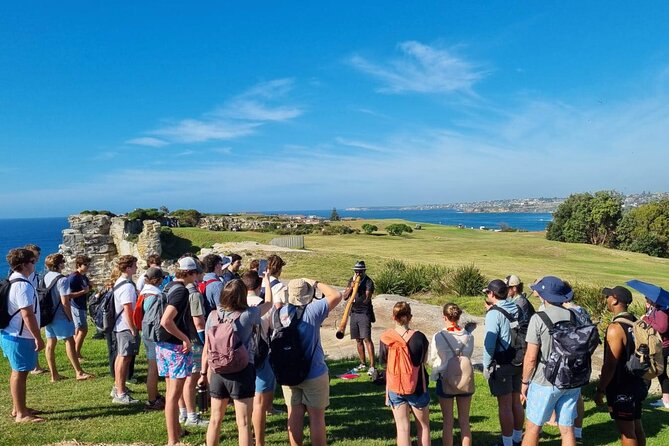
The route is described as a gentle downhill walk, and that’s a key part of why this can work for more than just hardcore walkers. You’re out for about 1 hour 30 minutes, so you should be prepared for a sustained stretch of time outdoors, but not a grueling hike.
This matters if you’re planning for:
- mixed ages (kids and grandparents, if your group is used to walking)
- people who want culture plus ocean views without steep climbs
- travelers who want a guided experience that still feels relaxed
You’ll also be moving between viewpoints while the guide teaches. So it’s not a “sit and watch” style tour. It’s active enough to keep your attention, but gentle enough that the focus stays on listening and looking, not on challenging terrain.
For the best experience, aim for a calm pace and bring a little flexibility. If you like to ask questions, you’ll naturally slow down in the best way.
Where you start and where you finish: Bondi’s North to the Pavilion
The walk begins at Military Rd at Blair St, North Bondi. That meeting spot is near the cliff views overlooking the Pacific Ocean, so you get scenery from the first minute. Your route then keeps you moving through Bondi’s built environment and coastal features, guided by what you’ll see and what it means.
You finish at Bondi Pavilion on Queen Elizabeth Dr, Bondi Beach. That end point is useful because it gives you an easy place to wrap up and continue your day—whether that means lingering for beach time or grabbing food nearby.
Also worth noting: the tour uses a mobile ticket, so you’ll want your phone charged. And since it’s near public transportation, you’re not locked into needing a private car.
The price: what $710.07 per group really buys you
At $710.07 per group (up to 15 people), this isn’t a budget walk. But for many groups, it can make sense because you’re paying for a private, Elder-led cultural experience rather than shared commentary.
Here’s the value math. If you book at full capacity (15 people), the cost comes out to roughly $47 per person. If your group is smaller, it rises quickly. So this is where you should be honest with yourself: do you want the privacy and personal Q&A that comes with a private group format, or would you rather pay less for a larger group experience?
This tour also includes multiple learning elements bundled together:
- didgeridoo ceremony at the start
- rock carvings and meaning
- bush foods and medicines
- geological and social history of Bondi
- optional Diramu performance add-on
When those pieces matter to you, the pricing can feel more reasonable. When they don’t, it will feel steep.
One more practical note: it’s often booked about 46 days in advance on average. That doesn’t mean you can’t book later, but it does suggest this is a popular style of experience with limited availability.
Optional Diramu Aboriginal Dance and Didgeridoo performance after the walk
You can add a performance by Diramu Aboriginal Dance and Didgeridoo for an additional fee. If you love the didgeridoo atmosphere from the opening ceremony, this add-on can extend the story into something more interactive and performance-based.
What’s appealing about this option is timing and flow. You spend the walk learning place-based meaning, then you can end with an event that reinforces the culture through movement and sound. If you’re traveling with people who enjoy a bigger closing moment, or if you simply want more of the musical and dance elements, this is the cleanest way to get it.
If you’re not sure, you can treat it like a choice based on energy. The walking portion already gives you a lot of cultural content, so the add-on is best when you want that extra final chapter rather than a quick exit.
Weather, timing, and how to plan your Bondi day
This experience requires good weather. Since it’s a walking tour and depends on being outdoors along the route, check forecasts before you head out and have a backup plan for your Bondi schedule.
Timing-wise, you’ll want to arrive early enough to settle in at the start point near Blair St and Military Rd. Then give yourself time at the end at Bondi Pavilion to decompress. Bondi is popular, and the area around the pavilion is a good place to continue on with food and beach time after you finish.
One more planning tip: think of this as a focused experience, not a quick stop between other attractions. Because the main value is listening and learning on-site, you’ll get more out of it if your day isn’t packed hour-to-hour.
Should you book Walangari’s private Bondi Aboriginal walking tour?
I’d book this if you want Bondi explained by someone who lives the place, not just someone who can describe it. You’re getting an Elder-led walk with a didgeridoo start, rock carvings with meanings, and identification of bush foods and medicines still growing along the route. If that mix sounds like your kind of travel—part culture, part land knowledge, part thoughtful Q&A—this is a strong fit.
I’d think twice if price is the main issue and your group isn’t large enough to make the per-person cost feel fair. Also, if you’re looking for a purely beach-and-surf sightseeing checklist, you might find the focus on cultural and geological context a bit more than you expected.
If you do book, plan for comfortable walking shoes, allow time to ask questions, and treat it as the main event of your Bondi outing. That’s when this tour stops being “a thing you did” and starts feeling like how you see Bondi afterward.
FAQ
How long is the private Walangari Aboriginal walking tour?
The tour runs about 1 hour 30 minutes.
What is the price?
The price is $710.07 per group, for up to 15 people.
How big is the group?
It’s a private tour with your group only. The standard group size is up to 15, and it can be expanded up to 38 walkers for an additional fee.
Where does the tour start?
The meeting point is Military Rd at Blair St, North Bondi NSW 2026.
Where does the tour end?
The tour finishes at Bondi Pavilion on Queen Elizabeth Dr, Bondi Beach NSW 2026.
Does the tour include a didgeridoo ceremony?
Yes. The walk begins with a didgeridoo ceremony led by Walangari Karntawarra.
Will I see Aboriginal rock carvings?
Yes. You’ll see ancient Aboriginal rock carvings and learn about their meanings.
Is there translation support if I need it?
There is an audio transmitter for a translator or group leader, if required.
Can I add a cultural performance?
Yes. There is an option to finish with an interactive cultural performance by Diramu Aboriginal Dance and Didgeridoo for an additional fee.
What happens if the weather is bad?
The experience requires good weather. If it’s canceled due to poor weather, you’ll be offered a different date or a full refund.

More Walking Tours in Sydney

More Tours in Sydney
- Blue Mountains Small-Group Tour from Sydney with Scenic World,Sydney Zoo & Ferry
★ 5.0 · 3,709 reviews



More Tour Reviews in Sydney
- Blue Mountains Small-Group Tour from Sydney with Scenic World,Sydney Zoo & Ferry
★ 5.0 · 3,709 reviews