REVIEW · GOLD COAST
Broadbeach: 2 Hour Surf Experience on the Gold Coast
Book on GetYourGuide →Operated by Go Ride A Wave · Bookable on GetYourGuide
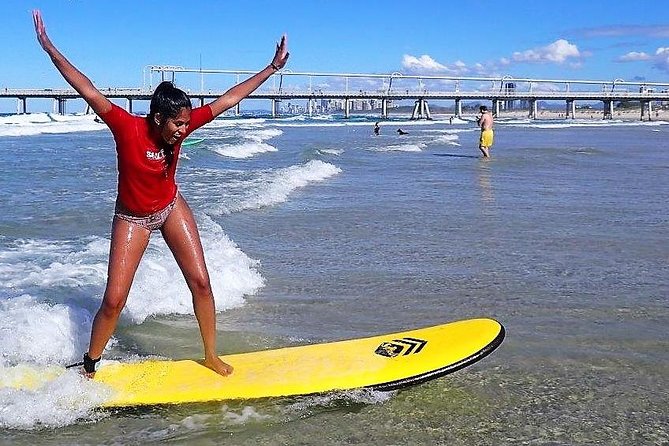
First-time surfers don’t need luck here; they get guided coaching. A 2-hour surf lesson in Broadbeach turns the scary idea of waves into repeatable skills. I like that you start with safety basics and basic board control, then get real time in the water—often with instructors such as Kal, Blake, and Damien helping you get your body into the right position. One possible drawback: surf conditions change, and on windier or messier days it can take more effort to catch clean waves.
I also really like how beginner-friendly the setup feels: you use a soft-top board and you’re taught in shallow water first (waist-deep, then more coaching once you’re trying to stand). The energy from the instructors shows up in the details—people talk about clear demonstrations, lots of patience, and instructors rotating through so everyone gets chances. If you’re sensitive to water time or you’re bringing kids, note the age rules: under 8 isn’t suitable, and kids under 9 need a parent who can assist in the water.
You’ll spend a fun chunk of your day focused on one goal: catching waves safely and standing up more often. If you already know you want to keep surfing after your first lesson, this experience sets you up well for extra lessons or a progressive course.
In This Review
- Key things that make this Broadbeach surf lesson work
- Hitting the Beach: Kurrawa Surf Club Meeting Point Reality Check
- Two Hours of Coaching: What Happens Before You Stand Up
- Learning Safety, Positioning, and Board Control in Shallow Water
- Gear Check: Rash Shirt, Soft-Top Board, Sunscreen, and Shower Time
- The Instructor Factor: Why Kal, Blake, Damien, and Tahu Keep Coming Up
- Surf Lesson Timing: How 2 Hours Turns Into a Real Chunk of Your Day
- Waves and Weather: What to Expect When Conditions Aren’t Perfect
- Price and Value: Is $59 Fair for a Beginner Surf Win?
- Who This Broadbeach Lesson Is Best For (And Who Should Skip)
- Should You Book This Broadbeach Surf Lesson?
- FAQ
- Where do we meet for the lesson in Broadbeach?
- How long is the surf experience?
- What’s included in the price?
- What should I bring with me?
- Is this lesson suitable for kids?
- Who are the instructors, and what language do they teach in?
- What happens during the lesson?
- Can I continue after the 2-hour lesson?
- Is it possible to cancel and get a refund?
Key things that make this Broadbeach surf lesson work
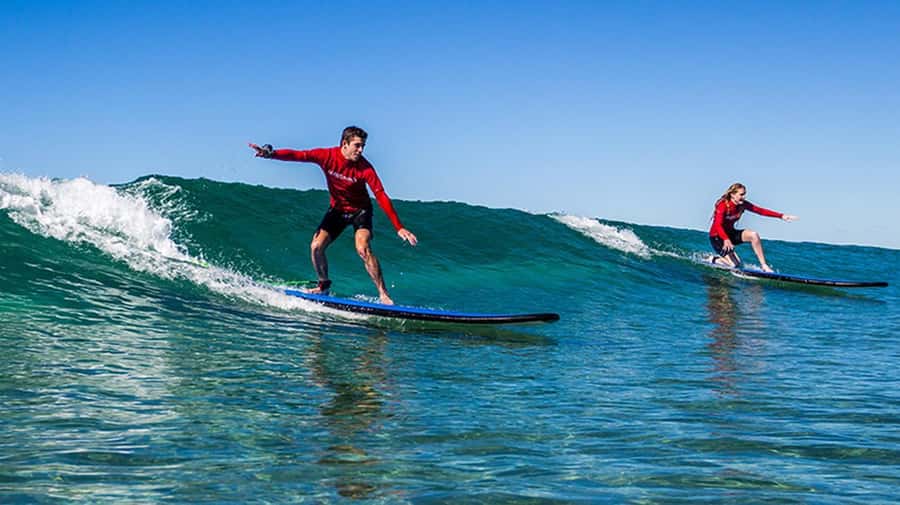
- Soft-top surfboard training that makes first rides far more realistic
- 2 hours of instruction from a Level 1 qualified surf instructor
- Shallow-water coaching starting around waist-deep so you can focus on technique
- Instructor-style support praised for patience, clarity, and individual attention
- You’ll rotate through to get time on the wave (not just watching from shore)
- You can keep going with private lessons or a 3 x 2-hour progressive course
Hitting the Beach: Kurrawa Surf Club Meeting Point Reality Check
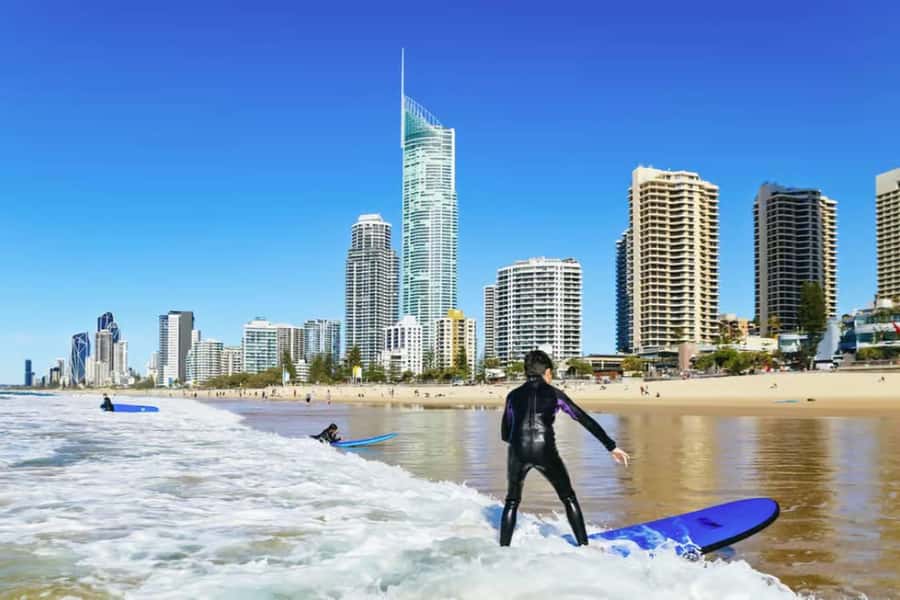
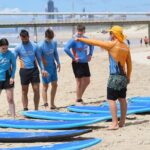
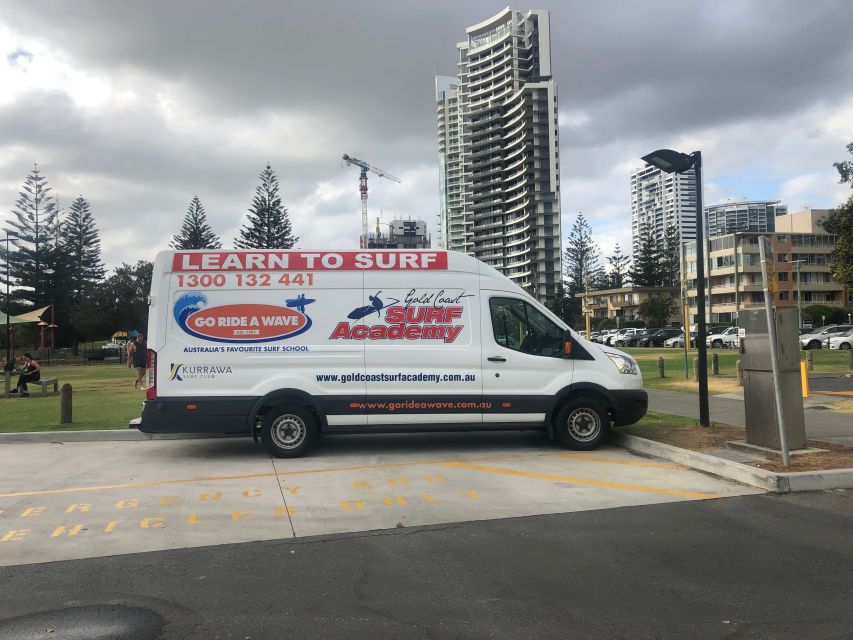
Your surf lesson starts in the central Broadbeach area, at the Kurrawa Surf Club. You meet the local partner’s minibus in the car park, then you walk to the beach with the group after grabbing your gear from their trailer.
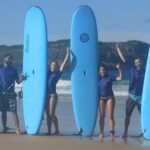
This matters more than you’d think. A good surf school keeps the “getting ready” part simple so you spend your energy on learning—not on figuring out where to stand, what to wear, or how to organize your board. Here, you collect your rash shirt or wetsuit plus a soft beginner surfboard, and you’re off for a short safety briefing before you hit the sand.
You’ll also want to plan for sunscreen and sun exposure. Sunscreen is included, which is great, because even on a day that looks cloudy, you can still feel the Gold Coast sun once you’re in the mix.
One small practical tip: bring a towel and have your swimwear ready. That way you’re not trying to change efficiently while everyone else is already hyped and moving.
A few more Gold Coast tours and experiences worth a look
Two Hours of Coaching: What Happens Before You Stand Up
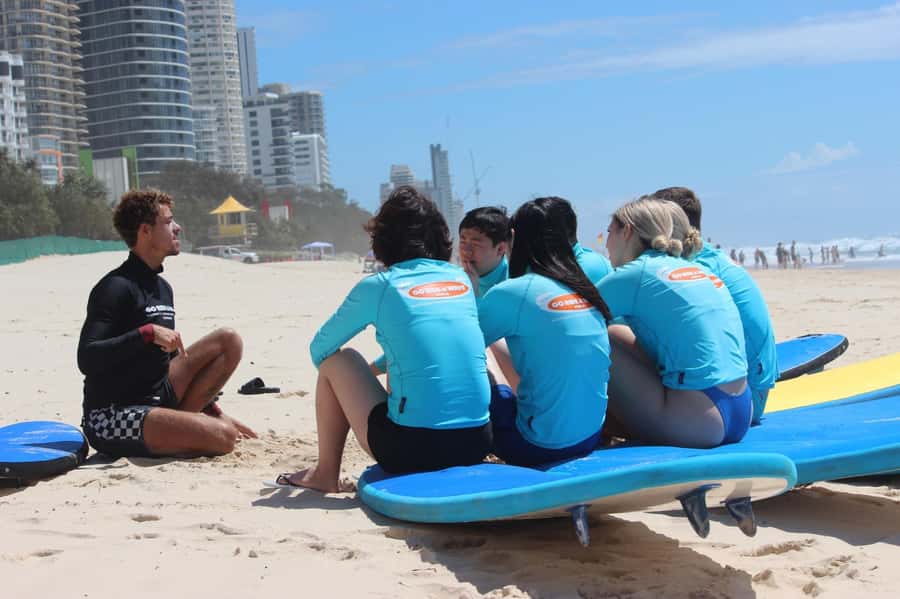
The lesson is built like a ladder. You don’t jump straight to the biggest, scariest part of surfing. Instead, you work from understanding the basics to doing them in real ocean conditions.
First, there’s a safety briefing and some basic instruction. You’ll learn what to do before you paddle, how positioning works, and how to control your board. That basic “rules of the water” piece helps you relax fast, because you’re not just reacting—you know what you’re supposed to be doing.
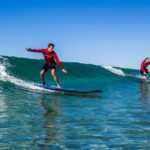
Then comes the early win moment: you head into the water and start catching waves in waist-deep conditions. This is where you get a few attempts that teach your body how the board feels under you and how your weight needs to shift when a wave lifts you.
After catching a few waves, you go back to the beach for more focused instruction—especially on how to stand up. The lesson then finishes with more time in the water, with the instructor helping you stand on their board, so you’re practicing the real mechanics instead of just copying instructions from shore.
If you’re wondering how quickly you’ll stand: a lot of people do. In the feedback you shared, beginners describe standing multiple times and catching plenty of rides, especially with patient, step-by-step coaching.
Learning Safety, Positioning, and Board Control in Shallow Water
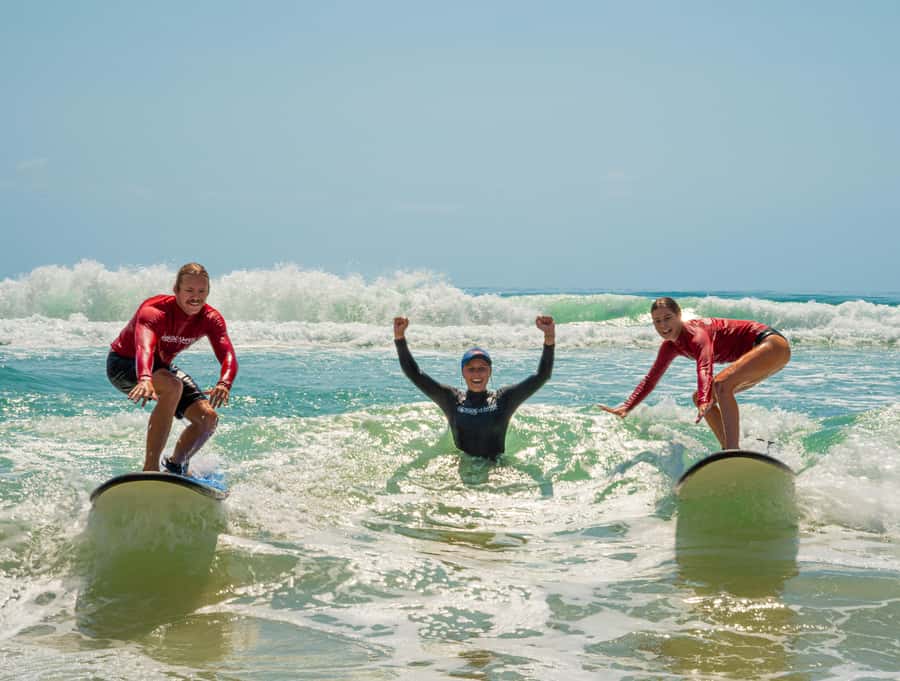
Surfing looks spontaneous, but it’s mostly control. This lesson does a good job teaching control in steps—starting in the shallows and then refining your technique with instructor help.
You’ll focus on a few key skills:
- Positioning: where you should be relative to the wave so you’re not paddling blindly
- Board control: keeping the board stable as you move from lying to standing
- Safety basics: how to handle the ocean responsibly while you’re learning
- Body mechanics: where your weight goes when the wave lifts you
What I like is that you’re not just thrown into the water and told to try. You first get told what matters, you attempt it with instructor support, and then you get corrected so your next attempts improve.
Instructors like Kal and Damien get praised for spending time with each person and for giving individual attention. That’s the difference between a fun photo moment and actual skill-building. If you’re the type who needs clear feedback (and not just encouragement), you’ll probably feel the benefit during the standing-up coaching on the beach and the hands-on support in the water.
Also, because you’re working in shallow water first, you can concentrate on technique without the stress of being out of your depth.
Gear Check: Rash Shirt, Soft-Top Board, Sunscreen, and Shower Time
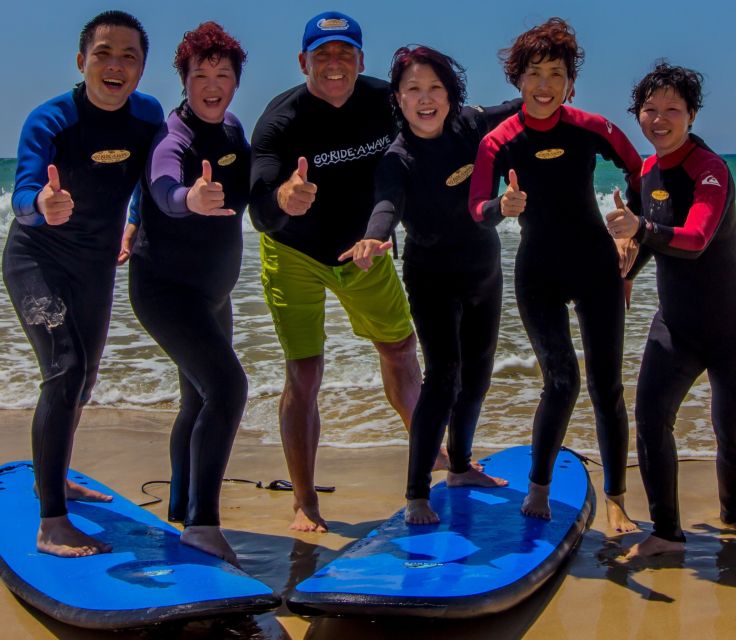
One of the better parts of this experience is how much of the gear setup is handled for you. You don’t need to show up with a full wetsuit plan or a board rental puzzle.
Included items:
- Long-sleeved rash shirt or wetsuit
- Soft-top surfboard
- 2 hours of instruction from a Level 1 qualified surf instructor
- Sunscreen
Not included:
- Meals or drinks
- Swimwear or towel
So what do you bring? Swimwear and a towel are the big ones. Everything else is provided.
This soft-top board choice is a beginner win. It’s more stable and more forgiving than a hard surfboard, which means you spend more time learning and less time fighting balance. That’s especially helpful if you’re going into the lesson feeling nervous.
After the lesson, you return the equipment to the trailer and you get a shower to rinse off salt and sand. That might sound like a small thing, but it makes the whole experience feel practical and finishable. You’re not left to hike back sandy and salty, hoping you can wash later.
The Instructor Factor: Why Kal, Blake, Damien, and Tahu Keep Coming Up
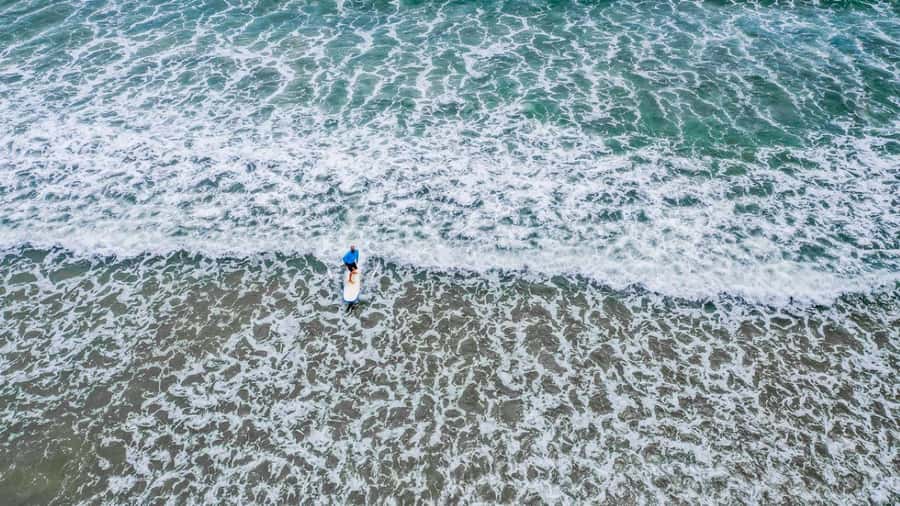
The most consistent theme in the feedback is simple: the instructors are patient, clear, and focused on getting you standing.
Names that show up strongly include Kal, Blake, Damien, Damo, Tommy, Tahu, and Daniel. Different people, same idea. They explain things in a way beginners can follow, then they help you translate those instructions into movement in the water.
People also mention that instructors rotate around so everyone gets a turn, not just one or two participants dominating the best waves. One person even highlighted how smoothly instructors managed rotation and kept things moving. That’s key on a Gold Coast beach where conditions can change quickly.
A note on teaching style: a good coach doesn’t just say what to do; they watch you try. When someone is adjusting your stance, shifting your weight, or helping you paddle correctly, that’s when the lesson clicks.
And yes, rain or less-than-perfect weather doesn’t automatically cancel the fun. One lesson ran even when it was raining, with the instructor still guiding everyone actively. That’s a good sign you’ll be looked after even when the ocean isn’t behaving like a postcard.





Surf Lesson Timing: How 2 Hours Turns Into a Real Chunk of Your Day
The lesson is listed as 2 hours of instruction, but you should plan for a wider window. The duration shows 2–6 hours, depending on starting times and the flow of the program.
In real terms, the day feels like:
- Meet, collect gear, and get a briefing
- Walk down to the beach and get into the water in phases
- Practice and repeat, with beach instruction in the middle
- Return gear and shower afterward
For your schedule, the lesson is best treated as a morning or afternoon activity that you plan around. It’s not a quick “drop in and go.” There’s enough training and enough water time that you’ll likely want downtime afterward—especially if it’s your first time paddling for real.
If you’re booking this during a busy Gold Coast itinerary, I’d aim to keep your next activity flexible. You’ll come out tired in the good way.
Waves and Weather: What to Expect When Conditions Aren’t Perfect
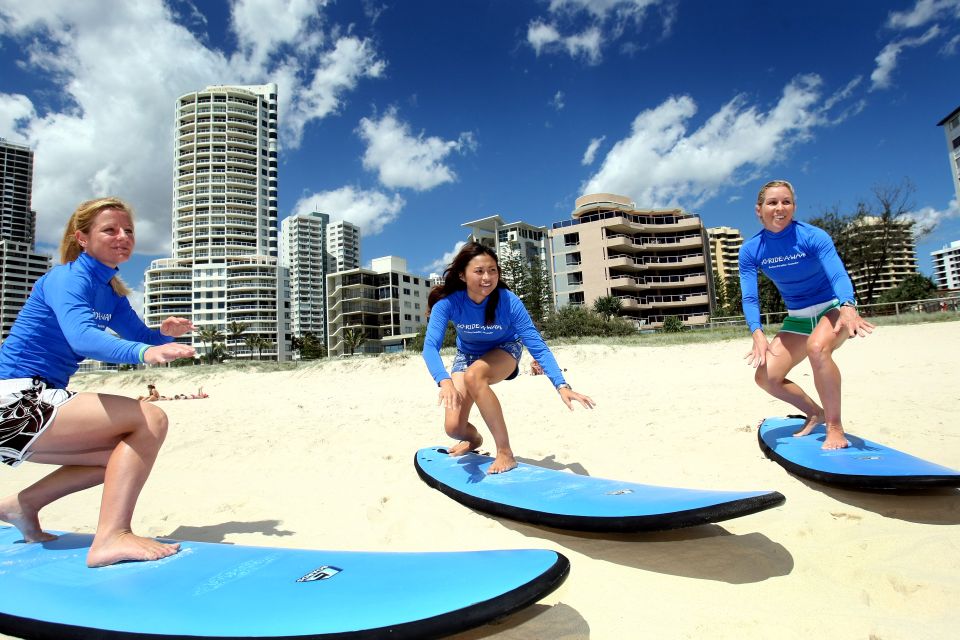
Even the best instructor can’t control wind and wave shape. The good news is the lesson is designed for beginners, so you’re learning in a structured environment.
A couple of practical takeaways from the feedback:
- The waves can feel powerful on the Gold Coast, so your coaching matters. Beginners who followed careful instruction describe feeling at ease and catching waves successfully.
- Windy or messy conditions can make it harder to catch waves cleanly, even if the lesson still runs. Still, it tends to stay fun because you’re getting guided attempts and feedback.
Translation: if it’s not an ideal ocean day, your goal shifts from catching the perfect ride to learning the process. If you stay focused on what your instructor is asking you to do—paddle timing, stance, and weight shift—you’ll still get value.
Also, there’s something reassuring in the way instructors keep pushing for standing up while staying safety-minded. That’s how beginners progress without feeling overwhelmed.
Price and Value: Is $59 Fair for a Beginner Surf Win?
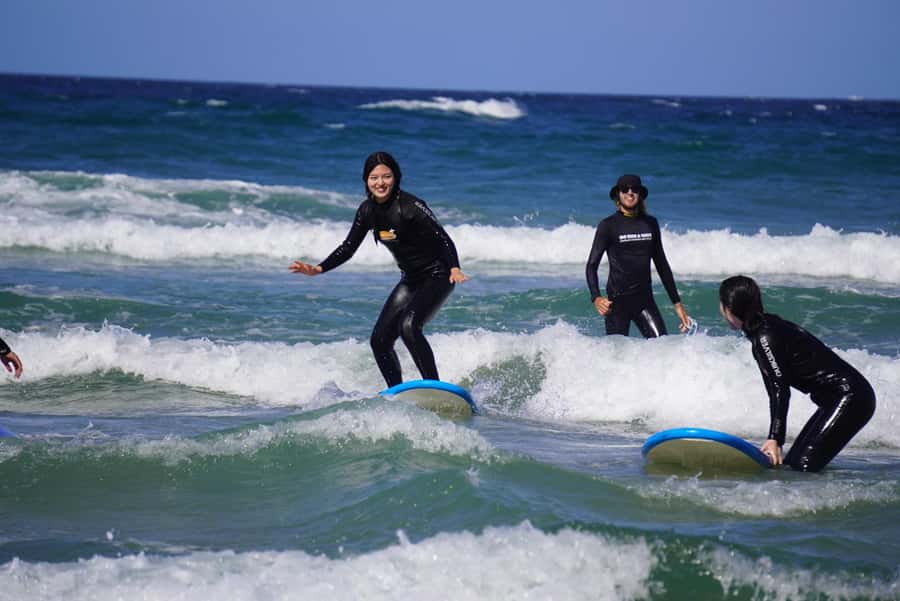
At $59 per person, this is one of those activities that feels “pricey” only if you compare it to doing nothing and watching waves from shore.
Compared to trying surfing on your own, the value is strong because you’re paying for:
- Instruction time (2 hours) rather than guesswork
- Equipment provided (soft-top board + rash shirt or wetsuit)
- Safety and technique coaching (positioning, board control, and how to stand)
- Hands-on help while you’re in the water
You’re not just renting gear. You’re buying feedback loops: try, get corrected, try again. That’s what gets people standing faster.
And the group vibe matters. Multiple participants describe feeling safe, confident, and supported. When the instructor spends time with each person and rotates well, you don’t feel like you’re paying for a lesson where half the time you’re waiting.
If you’re the kind of traveler who wants one memorable “I did it” moment that also improves a real skill, this is good value.
Who This Broadbeach Lesson Is Best For (And Who Should Skip)
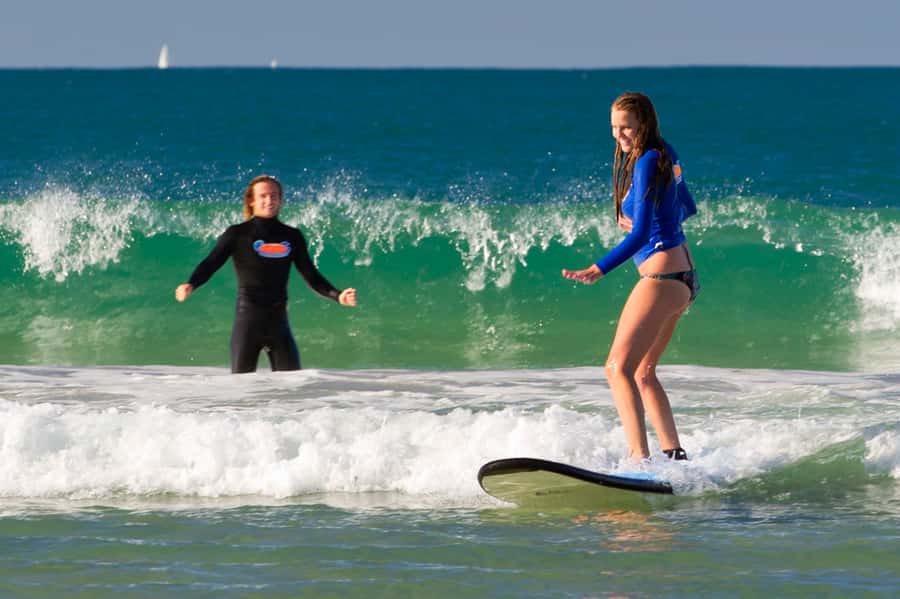
This experience is built for beginners who want a guided start.
Best fit:
- First-timers who need clear instruction and support in the water
- People who want to learn safety, positioning, and board control—not just stand once
- Families looking for confidence-building coaching (with the right age requirements)
Age notes to watch:
- Not suitable for children under 8
- Children under 9 must be accompanied by a parent who is not participating in the lesson and who can come into the water to assist
So if you’re bringing a child, plan the adult role ahead of time. This isn’t a drop-off style activity for younger kids.
If you already surf regularly and you’re hunting for advanced maneuvers, you might find this too basic. But if you’re rusty or returning and want fundamentals with a strong safety-first approach, it could still be a helpful reset.
Should You Book This Broadbeach Surf Lesson?
If you want your first surfing session to feel doable, this is an easy yes. The combination of soft-top board training, a structured two-part coaching flow (briefing, waist-deep attempts, stand-up instruction on shore, then more practice), and instructors praised for patience and clarity makes it a smart beginner choice.
I’d book it if:
- You’re aiming to stand and catch waves during your first try
- You value step-by-step coaching in the ocean
- You want a practical, gear-included experience with shower access after
I’d think twice if:
- You’re looking for a long, single-day surf adventure with advanced skills
- You have strict timing and can’t spare the broader 2–6 hour window
FAQ
Where do we meet for the lesson in Broadbeach?
You meet the local partner’s minibus in the car park at the Kurrawa Surf Club in central Broadbeach.
How long is the surf experience?
It includes 2 hours of instruction, and the total time on the schedule can run 2–6 hours depending on starting times.
What’s included in the price?
You get a long-sleeved rash shirt or wetsuit, a soft-top surfboard, 2 hours of instruction from a Level 1 qualified surf instructor, and sunscreen.
What should I bring with me?
Bring swimwear and a towel.
Is this lesson suitable for kids?
Children under 8 are not suitable. Children under 9 must be accompanied by a parent who is not participating and can come into the water to assist.
Who are the instructors, and what language do they teach in?
The instruction is provided by a Level 1 qualified surf instructor and the lesson is in English.
What happens during the lesson?
You start with a safety briefing and basic instruction, catch waves in waist-deep water, then return for more instruction on standing up. The remainder is spent in the water with the instructor helping you stand and surf.
Can I continue after the 2-hour lesson?
Yes. You can take further lessons or hire equipment to keep surfing. There’s also an option for a 1.5-hour private lesson or a surf course (3 x 2-hour progressive course).
Is it possible to cancel and get a refund?
Yes. You can cancel up to 24 hours in advance for a full refund.
If you tell me what month you’re going and whether you’re doing this as a solo trip, couple, or with kids, I can help you plan the best time of day and how to set your expectations for your first stand-ups.