REVIEW · SYDNEY
Sydney Origin Story Walk in The Rocks
Book on Viator →Operated by Bloody Interesting Tours · Bookable on Viator
The Rocks has always had stories, and this walk brings them back. I love how Bloody Interesting Rocks makes convict-era Sydney feel alive, with dramatic storytelling, dark humour, and stops tucked into places most people never notice. You’ll also get native flavours like wattleseed ANZAC cookies and lemon myrtle tea, which keeps the experience from turning into dry lectures.
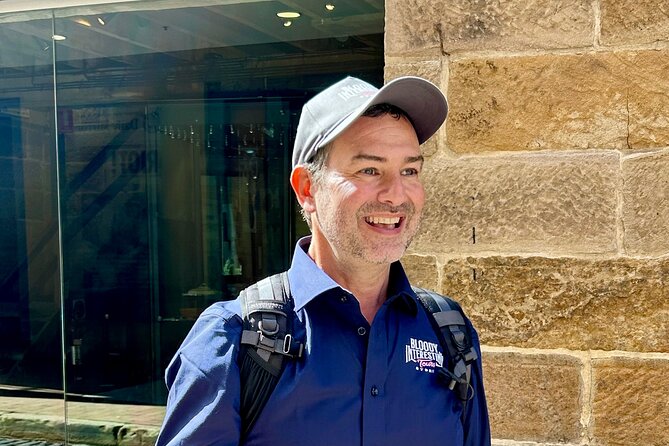
Two things I really liked: I love the storytelling itself, and I like that the guide, Ed, keeps it sharp, funny, and easy to follow throughout. The group stays small (up to 10), so you’re not lost in a crowd and you can actually hear the details.
One possible drawback: it’s an outdoor walking tour and it needs good weather. If rain or heat is an issue for you, you may want to plan flexible clothing and shoes (or be ready for a reschedule).
In This Review
- Key highlights you’ll remember
- The Rocks, where Sydney’s origin story still shows on the ground
- Price and value: what $48.77 gets you in real terms
- Logistics that make the walk smoother (meeting point, timing, group size)
- Cadman’s Cottage: the oldest residential clue in convict Sydney
- The Argyle tunnel: convict-hewn paths and crime that goes underground
- Foundation Park: sandstone ruins that explain how slums form
- Campbells Cove: harbour views that make shipping history click
- Playfair Street: preserved colonial buildings you can read like a map
- Dawes Point Park under the Harbour Bridge: first-gun territory and Gadigal context
- Suez Canal: the alleyway where sly grog and push gangs became part of the story
- Wattleseed ANZAC cookies and lemon myrtle tea: the tastings that keep it memorable
- Pace, comfort, and weather: the practical side of an entertaining walk
- Who should book this Rocks walking tour (and who might want another option)
- Should you book Bloody Interesting Rocks?
- FAQ
- How long is the Sydney Origin Story Walk in The Rocks?
- What does the tour cost?
- Where does the tour start and when?
- Is the ticket mobile?
- What food or drink is included?
- How big is the group?
- What happens if the weather is bad?
Key highlights you’ll remember
- Convict-era Sydney, told where it happened at Cadman’s Cottage and The Argyle tunnel
- Small group size (max 10) so the pace stays personal and the stories land
- Harbour Bridge lookout at Dawes Point Park with Gadigal and military context
- Sly-grog alleyway stories at Suez Canal that feel like local legend
- Native food and drink tastings, including wattleseed ANZAC cookies and lemon myrtle tea
- A pub finale, which is a fun way to end the walk and swap notes
The Rocks, where Sydney’s origin story still shows on the ground
If you want Sydney in postcard form, you can get that anywhere. But if you want the start of the city—rough, messy, and human—you come to The Rocks. This tour focuses on the part of Sydney that grew out of convict settlement, trade, crime, and survival, and it does it with stories that sound like someone is telling you what they saw.
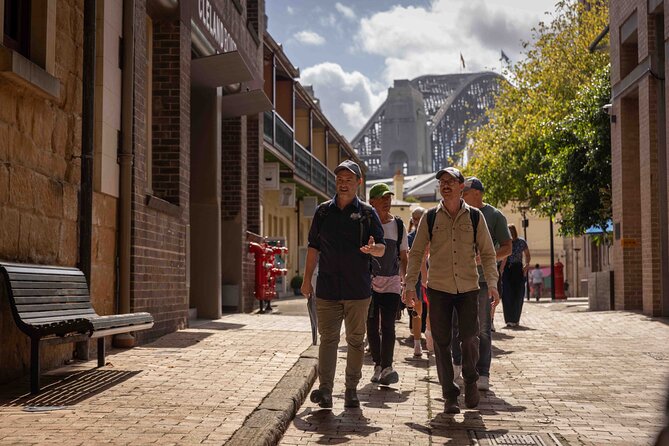
What works best is the way the guide ties each moment to a physical location. You’re not just learning dates. You’re standing in front of buildings, lanes, and harbour viewpoints that shaped daily life. That’s why the experience feels less like a history class and more like an entertaining street walk with sharp commentary.
You can also read our reviews of more walking tours in Sydney

Price and value: what $48.77 gets you in real terms
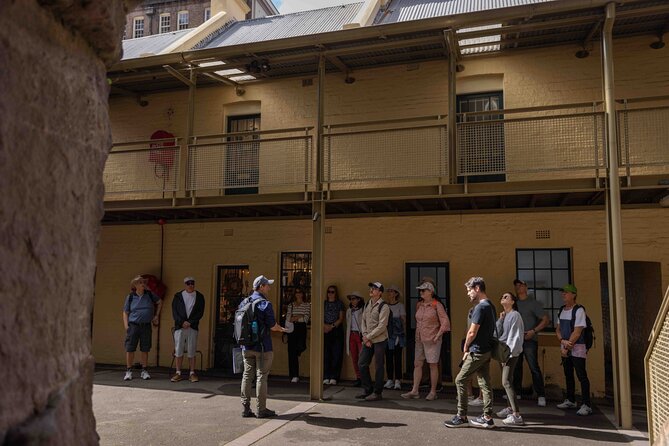
At $48.77 per person for about 2 hours 30 minutes, you’re paying for more than a guided walk. You’re paying for storytelling that turns scenery into context, plus included tastings from native ingredients. That matters because it turns the tour into something you’ll actually enjoy while you’re doing it, not just something you’ll remember as facts later.
Also, each main stop is listed with free admission, which helps the value if you’ve had day tours where you keep paying extra once you’re on foot. Add the small group size and the fact that the tour runs at a walkable pace, and it feels like a good deal for the time and effort.
Logistics that make the walk smoother (meeting point, timing, group size)
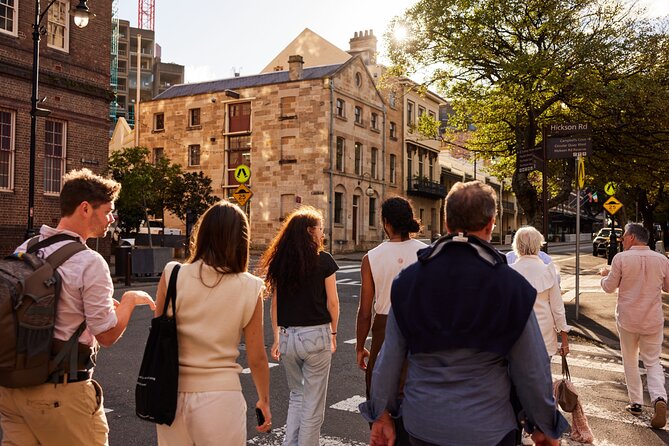
You meet at 107 George St, The Rocks NSW 2000 and the start time is 9:30 am. The end point is back in The Rocks, so you’re not stuck figuring out how to get home halfway through your day.
The tour caps at 10 travelers, which is a big deal in a place like The Rocks where lanes can feel tight. Fewer people means you get closer to the guide, and it’s easier to hear the punchlines and the real details.
It’s also close to public transportation, and you’ll be holding a mobile ticket. Service animals are allowed, and most travelers can participate—so long as you’re comfortable with a couple hours of walking on uneven outdoor surfaces.
Cadman’s Cottage: the oldest residential clue in convict Sydney
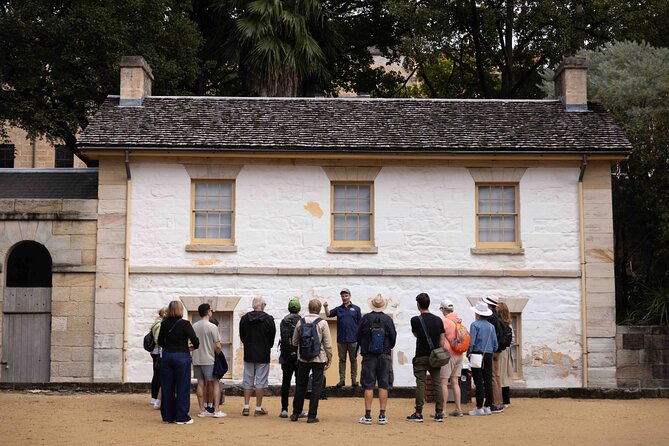
Cadman’s Cottage is one of those places that makes history feel tangible. This is Sydney’s oldest surviving residential building, and it was part of the convict-era base. On the tour, the guide uses that setting to help you picture daily life—less polished, more lived-in, and shaped by the realities of the settlement.
What I like about this stop is that it’s not just about the building standing still. The story reframes the cottage as a working piece of early Sydney, not an artifact behind glass. You also get a short visit window (around 10 minutes), which is perfect for keeping momentum without turning the day into a museum crawl.
The Argyle tunnel: convict-hewn paths and crime that goes underground
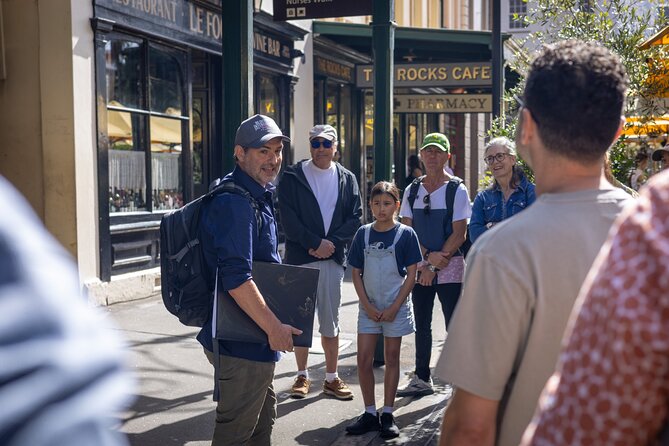
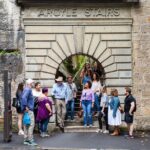
Then you move to The Argyle, a dramatic convict-hewn tunnel that links Millers Point and The Rocks. A tunnel is naturally perfect for dark stories: it’s narrow, it changes your sound, and it makes the past feel physically close. The guide turns that space into a scene, talking about the kind of movement—escape, transport, shadow activity—that happens when people don’t have freedom.
A bonus here is atmosphere. Even if you already know The Rocks has convict origins, seeing a tunnel helps you understand why crime and survival weren’t abstract concepts. They were routes, hiding places, and shortcuts people used to stay one step ahead.
- Blue Mountains Small-Group Tour from Sydney with Scenic World,Sydney Zoo & Ferry
★ 5.0 · 3,709 reviews


Foundation Park: sandstone ruins that explain how slums form
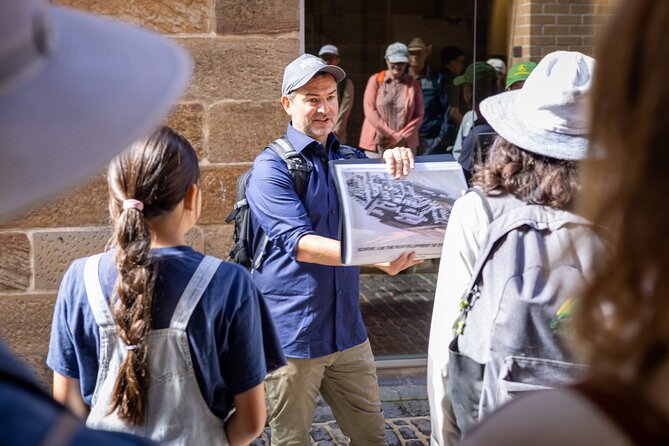
At Foundation Park, the focus shifts from single buildings to what the settlement did to whole neighbourhoods. This stop shows sandstone ruins connected to a former slum. Instead of romanticizing the era, the guide points out what people built with limited options—and what that meant for everyday living.
This part of the tour works well because it gives you contrast. Earlier stops explain early structures and movement; Foundation Park shows the darker side of housing and overcrowding. It’s also a great place to slow down mentally. You’re standing in the physical reminders of harsh conditions, and the guide’s storytelling makes the human side feel unavoidable.
Campbells Cove: harbour views that make shipping history click
Next is Campbells Cove, where the harbour comes into focus. You get prime harbour views plus commentary about colonial shipping history—and that matters because trade and transport shaped nearly everything the settlement did.
I like this stop because it gives your legs a brief reset while your brain connects the dots. If convicts and criminals moved through The Rocks, ships and cargo moved through the harbour. Put those two together and Sydney’s early economy starts to make sense in a way that photos alone never do.
Playfair Street: preserved colonial buildings you can read like a map
Playfair Street is one of those areas where the architecture does some of the teaching. The tour highlights iconic thoroughfares lined with preserved colonial buildings, and you get the kind of commentary that helps you see patterns—who built what, why these lanes mattered, and how the area functioned as the city grew.
What makes this stop valuable is that it’s visual learning. When you’re walking past preserved buildings in an area designed for pedestrians, you start noticing details on your own: street lines, building placement, and the way the city was laid out to serve movement.
If you’re the type who likes taking photos, this is a good moment for it—just remember the tour is timed, so don’t get so photo-focused that you fall behind.
Dawes Point Park under the Harbour Bridge: first-gun territory and Gadigal context
At Dawes Point Park, the mood shifts again. You’ll visit the former site of the colony’s first gun battery, now a lookout under the Harbour Bridge. The guide also brings in Gadigal and military history, which helps you understand that this place wasn’t only about convicts and alleyways—it was also about defence, authority, and power.
This stop is about perspective. You look up at the Harbour Bridge, but you learn about why this coastline mattered long before the bridge ever existed. And since the park stay is about 15 minutes, it’s one of the more spacious stops—good for listening without rushing.
Suez Canal: the alleyway where sly grog and push gangs became part of the story
Then you hit Suez Canal, an infamous alleyway once known for sly grog, brothels, and push gangs. This is where the tour leans hard into street-level scandal and survival. It’s also where the guide’s dark humour really shows, because the setting matches the topic: narrow, tense, and historically easy to imagine as a place people slipped into and out of.
What I found useful is that the stories aren’t just shock value. The guide uses the vice-and-crime themes to explain how networks formed—who benefited, how corruption could spread, and why some people kept choosing risky lives. It’s a reminder that survival in early Sydney often meant bending rules, not just breaking them.
Wattleseed ANZAC cookies and lemon myrtle tea: the tastings that keep it memorable
A lot of walking tours say they include refreshments. This one uses food and drink in a way that fits the theme. You’ll taste native flavours, including wattleseed ANZAC cookies and lemon myrtle tea, and it’s timed so you get a break without losing the thread of the stories.
Why this matters: the tastings act like a palate-cleanser for your attention. After crime lanes and harbourside talk, the native flavours give you something real to focus on that isn’t just more words. It also adds a modern layer to the experience, so the tour ends up feeling connected to Sydney today, not locked in the past.
And yes, there’s also mention of a pub finale, which is a solid way to wrap things up—especially if you like finishing with a drink and comparing notes.
Pace, comfort, and weather: the practical side of an entertaining walk
The tour runs about 2 hours 30 minutes, with typical stop durations around 10 minutes and one longer stop at Dawes Point Park (about 15 minutes). That pacing keeps you moving while still letting the guide build a full story.
Wear comfortable shoes. The Rocks streets can include uneven paving and slopes, and you’ll want your feet to feel stable. If you dislike walking in the sun, plan shade where you can and bring water. The experience also requires good weather, and if it’s canceled for poor conditions, you’re offered a different date or a full refund.
Who should book this Rocks walking tour (and who might want another option)
This is a strong choice if you want entertaining history—the kind that uses drama, detail, and dark humour, not just facts read off a page. It’s also a good fit if you like small groups and guides who can keep attention without rushing.
It may be less ideal if you need quiet, purely academic interpretation, or if you don’t handle outdoor walking well. Since the tour depends on good weather, you’ll want flexibility if the forecast looks iffy.
If you’re in Sydney for a short time and want a dense, walkable slice of the city’s origin story, this tour is the kind of experience that gives you context fast. Once you’ve done The Rocks with this perspective, other parts of Sydney make more sense.
Should you book Bloody Interesting Rocks?
I’d book it if your goal is to understand The Rocks as a living origin story—convict settlement, crime, corruption, and survival—told in a way that actually feels fun to follow. The guide name that comes up again and again is Ed, and that enthusiasm is clearly part of the package: people describe the tour as engaging, funny, and packed with details you won’t easily get elsewhere.
The value is also solid for the price: guided access to key locations, native tastings, a small group, and a finish that feels like part of the day rather than a quick stop-and-go schedule.
If you’re going to do one thing in The Rocks besides just wander, do this. Just make sure you pick a day with decent weather and you’re ready for a proper walk.
FAQ
How long is the Sydney Origin Story Walk in The Rocks?
It’s approximately 2 hours 30 minutes.
What does the tour cost?
The price is $48.77 per person.
Where does the tour start and when?
The meeting point is 107 George St, The Rocks NSW 2000, and the start time is 9:30 am.
Is the ticket mobile?
Yes, it’s a mobile ticket.
What food or drink is included?
The tour includes tastings such as wattleseed ANZAC cookies and lemon myrtle tea.
How big is the group?
The tour has a maximum of 10 travelers.
What happens if the weather is bad?
The experience requires good weather. If it’s canceled due to poor weather, you’ll be offered a different date or a full refund.


More Walking Tours in Sydney


More Tour Reviews in Sydney
- Blue Mountains Small-Group Tour from Sydney with Scenic World,Sydney Zoo & Ferry
★ 5.0 · 3,709 reviews