REVIEW · QUEENSLAND
Taribelang Bunda Cultural Tours
Book on Viator →Operated by Taribelang Bunda Cultural Tours · Bookable on Viator
Bridges, beaches, and Dreamtime stories in three hours. Taribelang Bunda Cultural Tours pairs Dreamtime teachings with Taribelang Bunda Traditional Owner stories, then ties them to everyday Bundaberg landmarks like bridges, the CBD, and Mon Repos. You’ll also learn how language lives in place names and boundaries, not just in a classroom.
I especially like the Yarn Time morning tea built around native bush tucker, because it turns culture into something you taste and talk about, not just hear. I also like the practical artefact moments, including step-by-step guidance with traditional items like boomerangs and the chance to sound a bullroarer. One thing to consider: you’ll need decent mobility for a mix of stops, and Hummock Lookout has an admission ticket that isn’t included.
In This Review
- Key highlights I think you’ll care about
- A short half-day that still feels like real country
- Under the Burnett, Railway, and Tallon bridges: floods, engineering, and memory
- Baldwin Swamp Environment Park: plants used for food, medicine, and shelter
- Visitor Information Centre stops: Rum and brewing history with a local-language thread
- Hummock Lookout and Yarn Time: bullroarer sounds and boundaries
- Mon Repos: men’s stories, initiations, and South Sea Islander history
- The artefact and language moments: what makes this tour different
- Bush tucker at Yarn Time: tasting culture, not just food
- Price and value: $75.31 for 3 hours in a small group
- Who should book this tour (and who should skip it)
- Should you book Taribelang Bunda Cultural Tours?
- FAQ
- Where is the meeting point and where does the tour end?
- What time does the tour start?
- How long is Taribelang Bunda Cultural Tours?
- What is the maximum group size?
- What’s included in the tour price?
- What isn’t included?
- Does the tour require a certain fitness level?
- Are service animals allowed?
- What happens if the weather is bad or I need to cancel?
Key highlights I think you’ll care about
- Small group size (max 10) makes it easier to ask questions and learn language bits without feeling rushed.
- Yarn Time bush tucker morning tea gives you an actual food experience, not just photos of food.
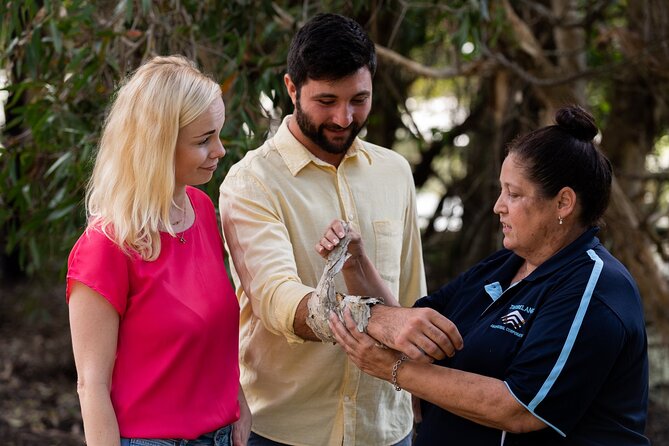
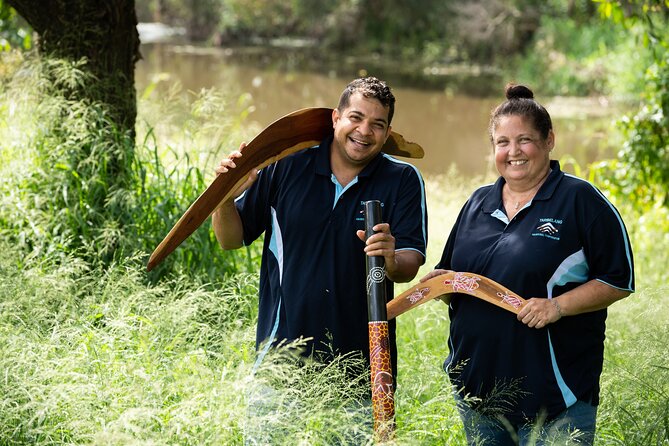
- Artefact time includes guided hands-on learning, with a step-by-step approach and a bullroarer moment.
- Bundaberg landmarks with context: bridges, CBD language links, Baldwin Swamp, and Mon Repos are explained as living country.
- A short, structured half-day (about 3 hours) works well if you want culture without a full travel day.
A short half-day that still feels like real country
If you only have a morning in Bundaberg, this tour hits a sweet spot. It runs about 3 hours and keeps you moving between meaningful sites, with explanations that connect what you’re seeing to what the land means. You’re in an air-conditioned vehicle, which is a big deal in Queensland when the weather turns warm.
The tour’s biggest strength is how it blends story with place. You’re not just taken to points on a map—you’re guided through why those spots matter, including the way Dreamtime teachings and Taribelang Bunda history sit alongside European contact history in the Bundaberg region. The guides also focus on language learning, so you’re not only listening to the past.
There’s also a practical reason I like it for first-timers: everything is tightly timed. You get bridge history, CBD context, then specific stop locations with hands-on moments and a morning tea break, all without feeling like you’re waiting around.
You can also read our reviews of more tours and experiences in Queensland.


Under the Burnett, Railway, and Tallon bridges: floods, engineering, and memory
The tour starts with a drive underneath key bridges: the Burnett Bridge, Railway Bridge, and Tallon Traffic Bridge. This is a clever first move because bridges are easy for anyone to notice, and they’re also perfect for telling stories about flood patterns and how the area has changed over time.
You’ll learn the history of each bridge and what the area has been like through significant flood times. That context matters because it helps you read the built environment differently. Instead of thinking of the bridges as just traffic routes, you start seeing them as part of how people navigated risk, movement, and water.
Another win: this bridge-and-flood framing sets the tone for the rest of the tour. It prepares you to understand why country knowledge isn’t abstract. It’s practical knowledge, carried through generations and expressed through language and local place meaning.
Baldwin Swamp Environment Park: plants used for food, medicine, and shelter

Next comes Baldwin Swamp Environment Park, where you learn about the site and how life worked there. You’ll talk about plants and how they were used for food, medicines, and shelter. That’s a big shift from the usual tourist pattern of seeing nature as scenery only.
Even though the stop is brief (around 15 minutes), it’s set up to give you a working idea of how bush knowledge turns into daily survival. When you hear that the same plants can support food, healing, and shelter, you understand why Indigenous land knowledge is so closely tied to place.
One practical plus: the admission ticket for this stop is listed as free. That makes it easier to plan your budget for the morning.
Visitor Information Centre stops: Rum and brewing history with a local-language thread

At the Bundaberg Visitor Information Centre, you’ll learn history connected to the Bundaberg Rum distillery and Bundaberg Brewed Drinks barrel. This is one of the most interesting sections for people who want both sides of the story: what European industry brought to the region, and how Traditional Owner history is woven into the same places.
What I like here is the pacing. You’re not pulled away for long museum-style reading. Instead, you’re given just enough context so your later land sites (and the language pieces you’ll hear) don’t feel disconnected from what you already see in Bundaberg today.
If you’re the type who enjoys linking old and new, this stop is a helpful bridge. You get a clearer sense of why Bundaberg is the place it is, while still keeping the focus on Taribelang Bunda connections to country.
Hummock Lookout and Yarn Time: bullroarer sounds and boundaries
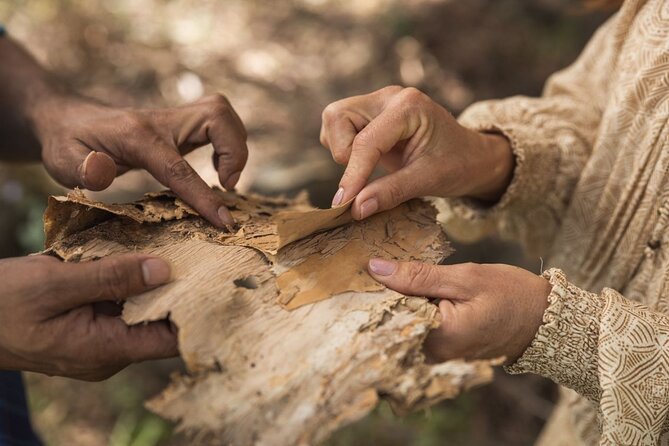
Hummock Lookout is where the tour leans into experiences you can physically take part in. You’ll hear stories about the place, learn some language, and also learn about boundaries. That boundary information matters because it helps you understand that country knowledge often comes with rules—rules about where things are, who speaks for what, and how language marks those relationships.
You also get artefact moments here, including the chance to sound a bullroarer. It’s a great hands-on break from listening, and it gives you something concrete to remember later. (Even if you’ve never handled traditional items before, the tour includes step-by-step guidance for artefacts, so you’re not thrown in.)
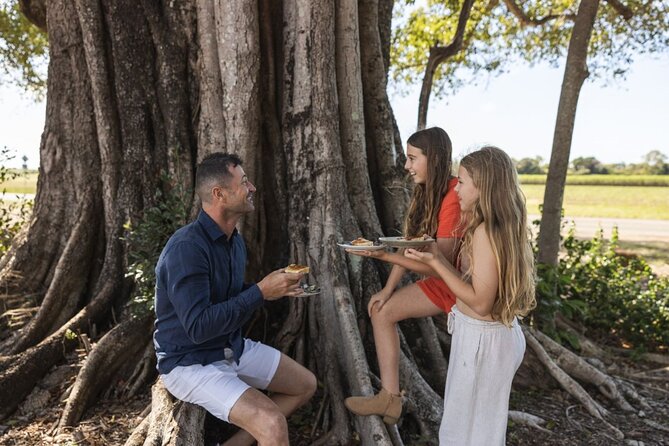
Morning tea is part of this section too, and this is one of the stand-out value points for me. You’ll have an Indigenous-inspired morning tea as part of Yarn Time, tasting native bush tucker with the guidance of the people who know what it is and how it connects to country.
One possible budget consideration: the Hummock Lookout admission ticket is not included. So if you’re trying to keep your spend tight, make sure you set aside a little extra for that stop.



Mon Repos: men’s stories, initiations, and South Sea Islander history
The tour’s last stretch takes you to Mon Repos, and it shifts into heavier cultural context. You’ll learn about the significance of the area for men and for the tribe as a whole. The guide also covers initiations and shares history of the South Sea Islander peoples.
This is the part of the tour that tends to stick with people, because it’s about how community and knowledge are passed along, not just what’s on the ground now. Initiation stories often explain roles, responsibilities, and cultural continuity. Even when you don’t know the background, you’ll leave with a stronger sense of why the site is protected and respected.
This stop also adds depth to the earlier bridge and CBD sections. You can see how the tour’s theme works: language, place, and human history are linked. The morning doesn’t just move you around Bundaberg—it changes what you notice when you’re back out on your own.
The artefact and language moments: what makes this tour different
A lot of cultural tours give you stories. This one also gives you practice.
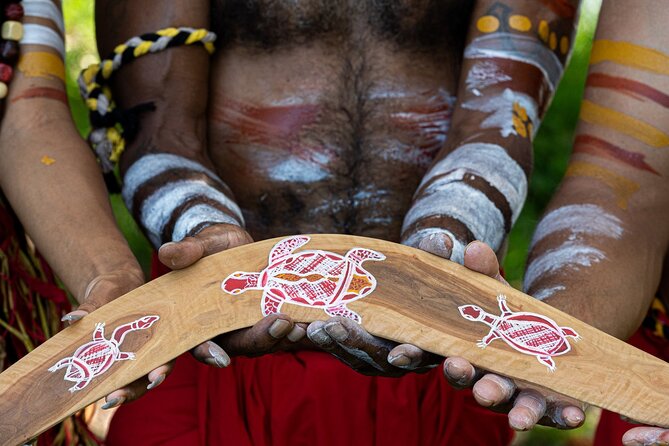
You’ll be guided through traditional artefacts, with a step-by-step approach to using them, and boomerang use is specifically mentioned as part of the learning. Then at Hummock Lookout, you’ll sound a bullroarer. Taken together, those parts mean you’re not only learning facts. You’re learning how knowledge becomes action—how something made for a purpose is connected to country and community.
Language is the other difference-maker. You’ll get opportunities to learn parts of language during the day, including at Hummock Lookout and through the CBD drives where language is described as embedded in Bundaberg. The practical effect for you is that the tour gives you a few usable words and place-meaning ideas. You’re more likely to remember what you heard because it’s attached to a location you visited.
Just keep expectations realistic. This is a half-day, so you’re not going to master a language. What you can expect is a guided taste of how language works with place, boundaries, and identity.
Bush tucker at Yarn Time: tasting culture, not just food

The Yarn Time morning tea is built around raw flavours of native bush tucker. That detail matters, because it’s not presented as a novelty snack. It’s framed as part of what people use from plants and country, tied to the same knowledge you hear about at Baldwin Swamp.
For me, the strongest value here is that food becomes a teaching tool. You’ll be given something to taste, and then the guide has context to explain why it matters and how it connects to land use. Even if you’re cautious with new tastes, the guided format helps you make sense of what you’re eating.
If you have dietary restrictions, you might still want to ask before booking, since the tour description doesn’t spell out specific options. But in general, the structure sounds geared toward education through tasting rather than just filling you up.
Also note that snacks are included throughout the half-day experience, so this isn’t a tour where you pay extra just to avoid hunger.
Price and value: $75.31 for 3 hours in a small group
At $75.31 per person, the tour feels priced for people who want more than a basic city stroll. You’re paying for more than transport. You’re getting an air-conditioned vehicle, included snacks, and the paid time of Traditional Owner guides who teach through story, language, and artefact learning.
The tour is also capped at 10 travellers, which supports better interaction. With a small group, you can actually ask questions and get clearer explanations. That makes the price easier to justify, even though it’s only about 3 hours.
Where value might shift for some people is in the extra admission at Hummock Lookout. If you want the absolute lowest total cost, factor that in. Still, several other elements are included, and Baldwin Swamp Environment Park is listed as free.
Bottom line: for a short, guided, hands-on cultural morning in Bundaberg, the price looks fair.
Who should book this tour (and who should skip it)
This tour is a strong fit if you:
- want Indigenous cultural learning tied to specific Bundaberg sites
- enjoy hands-on moments, like artefacts and sounding a bullroarer
- like guided language snippets and place-based context
- prefer small groups (max 10) over large bus tours
- want food included through the Yarn Time bush tucker morning tea
It might be less ideal if you:
- struggle with a day that requires moderate physical fitness
- want a fully indoor, weather-proof experience (this one requires good weather)
- are trying to avoid any additional paid admissions (Hummock Lookout isn’t included)
If you’re balancing a busy Queensland itinerary, this is the kind of tour that can upgrade a quick stop in Bundaberg into something much more meaningful.
Should you book Taribelang Bunda Cultural Tours?
Yes, if you want a structured half-day that mixes Dreamtime teachings, language learning, and site-specific stories with real hands-on moments. The combination of bush tucker through Yarn Time plus artefact time (boomerang learning and sounding a bullroarer) makes it more interactive than many short tours.
I’d especially book it if you’re the type who likes to understand where a place’s meaning comes from, not just what it looks like. Just plan for the good-weather requirement and the possible extra admission at Hummock Lookout, and you should be set.
FAQ
Where is the meeting point and where does the tour end?
The tour starts at 18/96 Mount Perry Rd, Bundaberg North QLD 4670, Australia, and it ends back at the same meeting point.
What time does the tour start?
The start time is 9:30 am.
How long is Taribelang Bunda Cultural Tours?
The duration is approximately 3 hours.
What is the maximum group size?
The tour has a maximum of 10 travelers.
What’s included in the tour price?
Included features are snacks throughout the half-day, an air-conditioned vehicle, all fees and taxes, and a step-by-step guide to using Aboriginal artefacts.
What isn’t included?
Personal expenses are not included. Also, admission at Hummock Lookout is listed as not included.
Does the tour require a certain fitness level?
Yes. Travelers should have a moderate physical fitness level.
Are service animals allowed?
Service animals are allowed.
What happens if the weather is bad or I need to cancel?
The tour requires good weather. If it’s canceled due to poor weather, you’ll be offered a different date or a full refund. For cancellations, you can cancel up to 24 hours in advance for a full refund.