REVIEW · QUEENSLAND
The Crystal Caves Self-Guided Tour
Book on Viator →Operated by The Crystal Caves · Bookable on Viator
Crystals glow underground on Atherton’s main street. René Boissevain’s Crystal Caves turns a simple stroll into a hands-on, self-guided walk where the headlamp is part of the fun. You get a souvenir guidebook and can go at your own pace through tunnels and grottoes designed to make light (and sparkle) do the work.
I also like that you’re allowed to see and touch a big collection of crystals and fossils, with time to slow down for photos instead of racing a group. The main consideration is that the cave includes crawlspaces and challenges, so a moderate fitness level helps, especially if you’re traveling with kids or anyone who dislikes tight spaces.
In This Review
- Key things to know before you go
- Crystal Caves, Atherton style: what makes this visit feel different
- Entering the crystal tunnels: lighting, directions, and pacing
- The self-guided part actually works: headlamp and guidebook strategy
- Over 600 touchable crystals and fossils: what you can expect to notice
- The physical reality: crawlspaces, challenges, and who should plan for them
- Photos inside a low-light cave: getting great pictures without stress
- Finishing strong: the gift and jewelry shop (and the fun family moment)
- Price and value: $17.93 for 1–2 hours of hands-on sparkle
- Practical logistics that matter: mobile ticket and real-world timing
- Who this Crystal Caves self-guided tour is best for
- Should you book René Boissevain’s Crystal Caves?
- FAQ
- How long does the Crystal Caves self-guided tour take?
- What’s included with the ticket?
- Do I need to bring a headlamp?
- Is there a shop on site?
- Are kids allowed?
- What is the cancellation policy?
Key things to know before you go
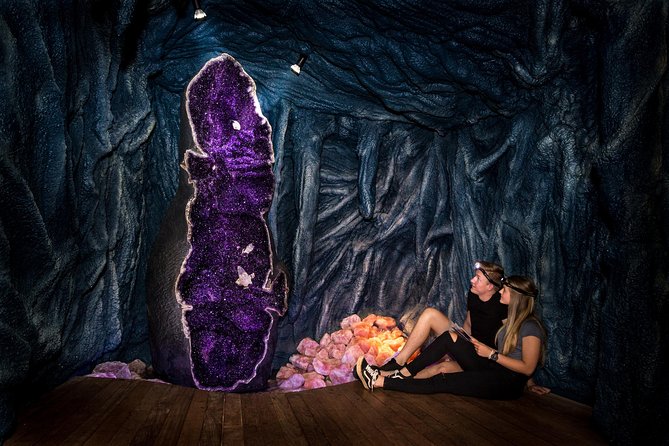
- Headlamp included: you’ll actually use it, and it changes how the cave feels
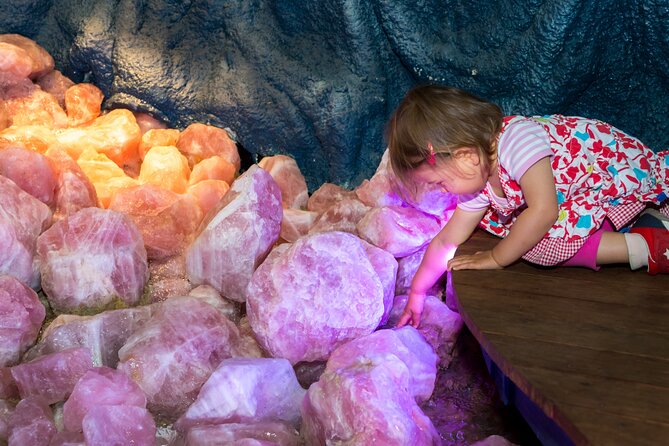
- Hands-on viewing: you can see and touch over 600 crystals and fossils
- 300m2 of man-made tunnels & grottoes: a good chunk of walking for 1–2 hours
- Soft, focused lighting: it highlights shiny spots but can make direction feel weird
- Mobile ticket: easier entry without extra paperwork clutter
- Gift and jewelry shop: a natural place to finish with something you’ll use back home
Crystal Caves, Atherton style: what makes this visit feel different
This isn’t a museum-style “stand behind the barrier” place. It’s more like stepping into a fan-built world of crystals and fossils, where the lighting is kept deliberately low and the displays are set so you’ll notice the sparkle first and the labels second. That’s a big part of why it works as self-guided entertainment: you aren’t waiting for explanations—you’re moving at your own rhythm while the cave draws your attention to the good stuff.
The other smart design choice is the guidebook plus headlamp combo. The headlamp gives you the control. You can look up, check corners, and stop where something catches your eye. The guidebook helps you make sense of what you’re seeing without turning your visit into a lecture. In a place like this, that combination usually gives you the best “wow” per minute.
And for value: at $17.93 per person, you’re buying a chunk of indoor time, free WiFi, photo opportunities, and access to a large, touch-friendly collection—so you’re not just paying to pass through a small room.
You can also read our reviews of more guided tours in Queensland

Entering the crystal tunnels: lighting, directions, and pacing
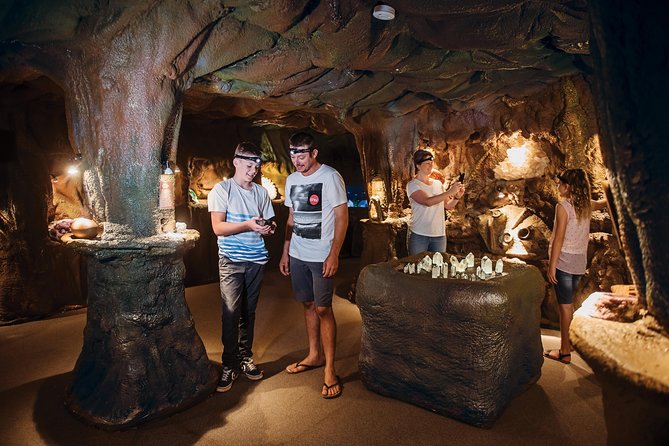
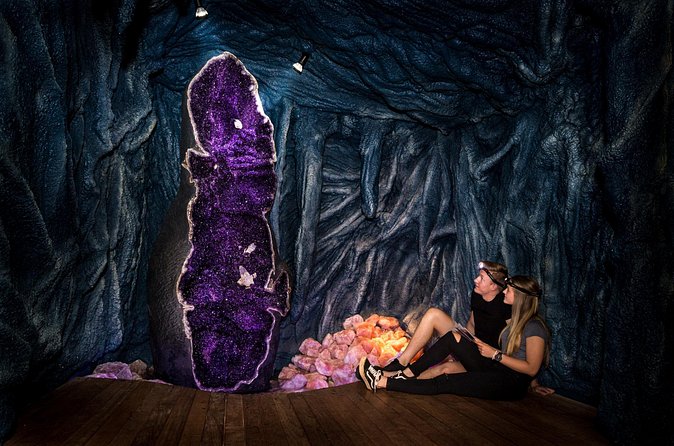
When you walk in, the cave lighting is soft and aimed at shiny areas. It’s not bright in the generic way indoor attractions are. It feels focused—like someone is spotlighting the crystals instead of lighting a path. That creates the effect you want: your eyes lock onto glittering nooks and crannies.
The tradeoff is that your sense of direction can get thrown off. The passageways wind downward, so even if you’re paying attention, it can feel like you’re drifting deeper. Here’s how to handle it: start slow, take a minute early on to get your bearings, and then let yourself relax. If you try to rush, you’ll miss the reason this place is fun—there’s a lot to notice in every bend.
Pacing is also part of the layout. The cave includes crawlspaces and other challenges. You can accept them or avoid them, depending on your comfort. I’d think of it like an experience with optional effort built in. If you’re traveling with younger kids, you’ll likely spend more time stopping, photographing, and encouraging rather than speed-walking.
The self-guided part actually works: headlamp and guidebook strategy
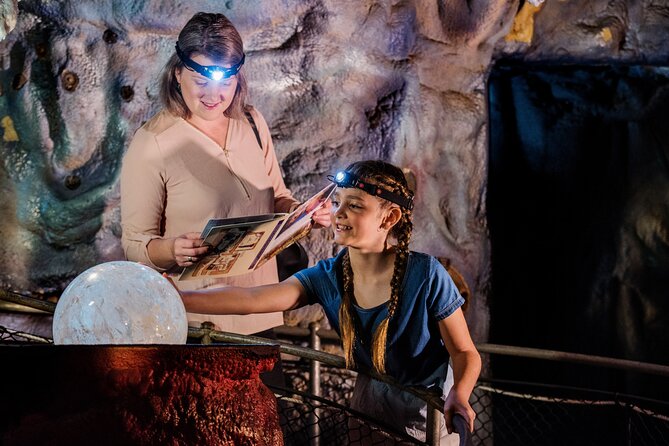
Self-guided tours can go one of two ways: either you feel lost and bored, or you feel in control. This one tends to work because the basics are provided. You get a complimentary headlamp and René’s souvenir guidebook (titled René’s World). That means you’re not improvising your way through the cave with your phone flashlight and guesswork.
How I’d do it:
- Use the headlamp like a tool, not a gimmick. Scan slowly, then hold the light on interesting surfaces long enough for sparkle to become detail.
- Let the guidebook tell you what you’re looking at, not how to feel about it. You’ll pick up more if you read while you’re standing in the right spot.
- Take breaks on purpose. There’s room to sit and just contemplate what nature has left behind—then compare it to the fossil/crystal pieces around you.
Free WiFi is a nice bonus when you want to look up something quickly to match the guidebook info, or when you just want to upload a photo without burning data.
Over 600 touchable crystals and fossils: what you can expect to notice
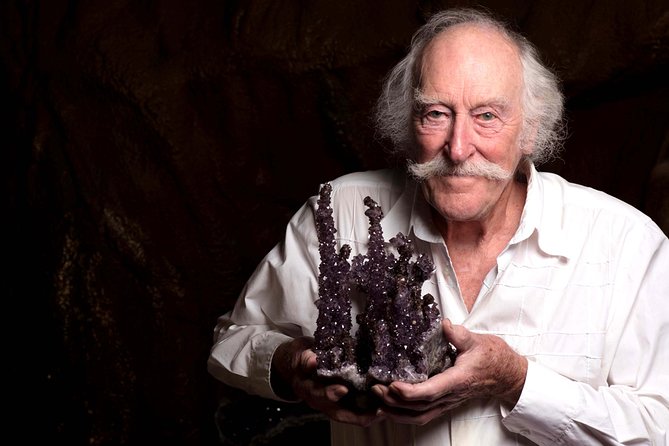
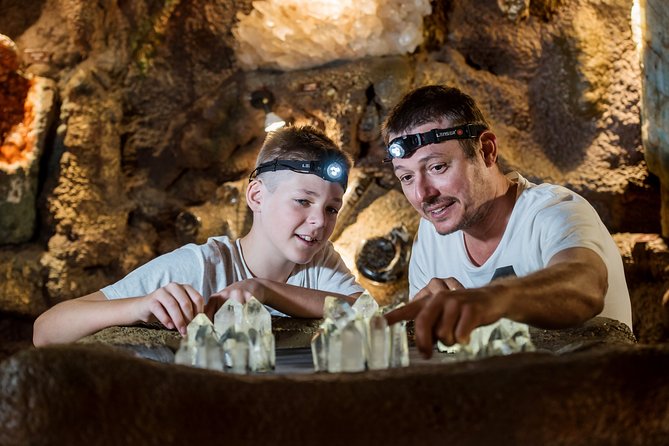
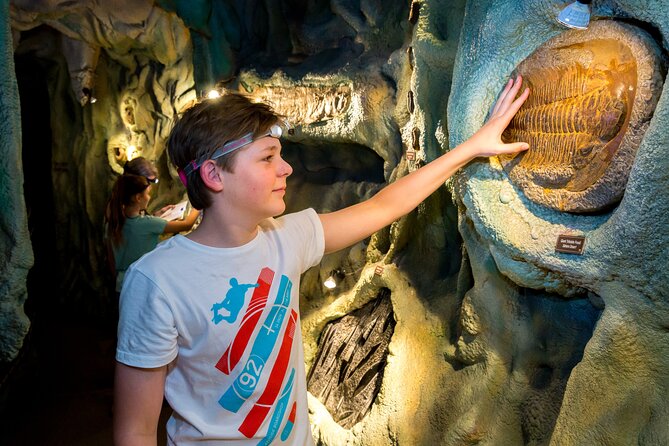
The headline is simple: you’ll see and touch over 600 crystals and fossils during your visit. That’s not a small collection, and it matters because a cave experience can easily become repetitive if you’re not allowed close-up interaction. Here, the “hands-on” element keeps you engaged.
What you’ll likely notice as you go:
- Different textures and growth patterns as the cave lighting shifts and you move between areas
- Fossil forms that feel more real because you’re not viewing them from far away
- The way light changes the look of crystals—especially when your headlamp angle changes
A cool extra: this is built around René Boissevain’s passion. The cave is essentially a personal collection turned into a walking experience, with hand-made tunnels and grottoes. That style has a benefit. You feel like you’re walking through someone’s obsession, not just checking items off a list.
One practical tip: don’t treat every shiny thing as identical. Slow down when you find a cluster that looks layered. That’s often where the most interesting forms show up, and where the touch-friendly setup makes the details easier to understand.
The physical reality: crawlspaces, challenges, and who should plan for them
This is the piece to take seriously, even if it sounds slightly adventurous. The cave includes crawlspaces and challenges. They’re optional, in the sense that you can accept or avoid them depending on your agility and mindset—but they are part of the route.
So, ask yourself a couple of questions:
- Do you feel comfortable moving through tight spaces, even for a short time?
- Can you manage uneven, indoor cave-like terrain with a headlamp on?
The operator lists a moderate physical fitness level as the expectation, and that’s fair. If you’re traveling with someone who is limited in mobility, you’ll want to plan for a slower, more selective pace and be ready to skip the more challenging bits.
For kids: children must be accompanied by an adult. That matters here because the cave invites curiosity. It’s not just a “look only” environment—touch is part of the experience—so your supervising role is real.



Photos inside a low-light cave: getting great pictures without stress
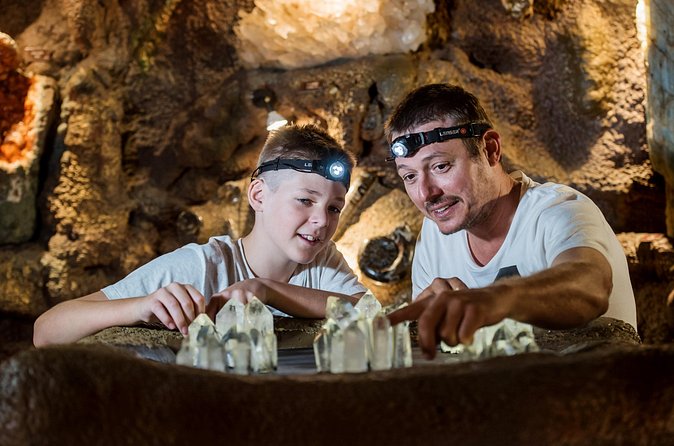
This is one of those places where your photos don’t need fancy tricks. The lighting is soft but focused on the sparkly surfaces, so you’ll get natural contrast. Plus, you’re given the freedom to take photos without a hard push to keep moving.
A good way to avoid frustration: let your headlamp set the exposure, then reposition your body instead of continuously changing settings. The goal is simple—keep the light on the crystal long enough to capture its texture, not just its shine.
Also, remember that the cave can disorient you. Don’t let that rush your photo time. If you’re shooting, pause and check where you are so you don’t keep retracing your steps.
Finishing strong: the gift and jewelry shop (and the fun family moment)
Most people will want a last stop after the cave walk, and this place gives you that. There’s a gift and jewellery shop on-site, so it’s easy to turn a memorable experience into a small keepsake.
One review highlight that stuck with me: families really enjoy the hands-on energy in the shop area, with staff being helpful and patient when kids get excited about touching items. Another highlight called out geode-related play—cracking geodes was considered a standout moment. If that sounds like your kind of souvenir, you’re in the right place.
Even if you’re not buying anything, the shop is a nice way to round out the visit. You can compare what you saw inside with what’s available to take home, and it helps make the cave feel like more than a quick stop.
Price and value: $17.93 for 1–2 hours of hands-on sparkle
At $17.93 per person, the value is tied to a few things you don’t always get together:
- A self-guided layout with unlimited time to see and touch (within a typical visit length)
- A large space to explore—300m2 of man-made tunnels and grottoes
- Included gear: headlamp and a souvenir guidebook
- Access to a collection of 600+ crystals and fossils
- Photo opportunities and free WiFi
So you’re not just paying for entry. You’re paying for an activity that’s designed to keep you busy. A 1–2 hour window is realistic, and for many people, that’s exactly the sweet spot for an indoor attraction: long enough to feel satisfying, short enough to fit into a travel day.
Booking ahead also helps. This experience is commonly booked about 15 days in advance, so if you’re visiting during peak periods, I’d plan to reserve sooner rather than later.
Practical logistics that matter: mobile ticket and real-world timing
You’ll get a mobile ticket, and that keeps entry simple. The cave sits on Atherton’s Main Street in Queensland, which is handy if you’re building an itinerary around town rather than hauling yourself to a remote detour.
It’s near public transportation, but if you’re self-guiding, having a plan for when you’ll start your walk is still key. Go when you can enjoy the full pace—this isn’t the kind of place that feels good if you’re rushed.
And with a maximum of 52 travelers, you’re not likely to feel like a crowd is swallowing the experience. The cave is still busy enough to feel lively, but the self-guided format helps you keep your own bubble.
Who this Crystal Caves self-guided tour is best for
This is a great match if you like hands-on experiences, curious photo stops, and learning at your own speed. I’d especially point it toward:
- Families with kids who want to touch things (and need an adult nearby)
- Travelers who enjoy small indoor adventures on a tight schedule
- People who like crystals/fossils but don’t want a formal guided lecture
- Anyone who wants a good “rainy day” option that still feels playful
If you hate tight spaces, you might still enjoy the cave, but you should treat the crawlspace areas as optional—and be ready to skip what doesn’t feel comfortable.
Should you book René Boissevain’s Crystal Caves?
Book it if you want a value-priced, self-guided indoor adventure that lets you slow down and actually interact with the displays. The included headlamp, touch-friendly approach, and the sheer amount of crystals and fossils (600+), plus free guidebook time, make it feel like more than a quick stop.
Don’t book it if you’re sensitive to enclosed/tight spaces and would rather keep your movement totally straightforward. The cave is fun, but it has challenges, and that’s part of the experience.
If you’re the type who enjoys wandering with a purpose—reading a guidebook here, taking a photo there, and letting the lighting reveal details—you’ll probably have a great time. This is the kind of place where a small town stop can turn into a standout memory.
FAQ
How long does the Crystal Caves self-guided tour take?
The visit is usually about 1 to 2 hours.
What’s included with the ticket?
You get a self-guide briefing, a complimentary headlamp, the souvenir guidebook René’s World, and unlimited time to see and touch over 600 crystals and fossils. Photo opportunities and free WiFi are included too.
Do I need to bring a headlamp?
No. The tour provides a complimentary headlamp.
Is there a shop on site?
Yes. There’s a gift and jewellery shop where you can pick up something after your cave walk.
Are kids allowed?
Children must be accompanied by an adult.
What is the cancellation policy?
You can cancel for free up to 24 hours in advance for a full refund. If you cancel less than 24 hours before the start time, the amount paid isn’t refunded.