REVIEW · YULARA
Uluru Base Segway Tour at Sunrise
Book on GetYourGuide →Operated by Uluru Segway Tours · Bookable on GetYourGuide
Uluru looks unreal at sunrise, then you get to glide the full base. This Uluru Base Segway tour mixes early light, practical Segway training, and guided stops that connect Mutitjulu Waterhole to Anangu culture, plant and animal life, geology, and even European-era history. I really love the way you cover the whole circumference without the punishing walking, and I also love how the guides work with first-timers—people on my radar (like Sye and Charlie) kept things calm when nerves hit. The main catch: you need the right fitness/health for a ride and a short walk, plus you’ll be up early in cold, windy outback weather.
You’ll start with pickup from Ayers Rock Resort (options include Desert Gardens Hotel, Sails in the Desert, Ayers Rock Campground, or Outback Pioneer Bar & Bottle shop), then travel to the rock, practice on your Segway, and set off on a guided ride around the base. Expect a small group capped at 12 and a pace that actually leaves time to stop, look, and ask questions. Also note you’ll need a Uluru-Kata Tjuta National Park entry ticket (not included), so plan that cost into your budget.
In This Review
- Key things that make this tour work
- Sunrise at Uluru, but with wheels: what this experience is really like
- The Segway training block: where first-timers either relax or panic
- Getting to the rock: pickup options and the first outback wake-up call
- The ride around Uluru: full base in daylight and stop-and-learn moments
- Weather reality check
- Mutitjulu Waterhole: the short walk that adds meaning
- Breakfast at first light: what you get and why it matters
- What the guides actually do: stories, photos, and calm coaching
- Price and national park entry: is it worth $143?
- Who should book, and who should skip it?
- Should you book this Uluru Base Segway Tour at Sunrise?
- FAQ
- What is included in the Uluru Base Segway sunrise tour?
- Do I need a park entry ticket?
- How long is the tour?
- What should I bring or wear?
- How big is the group?
- Who isn’t suitable for this tour?
Key things that make this tour work
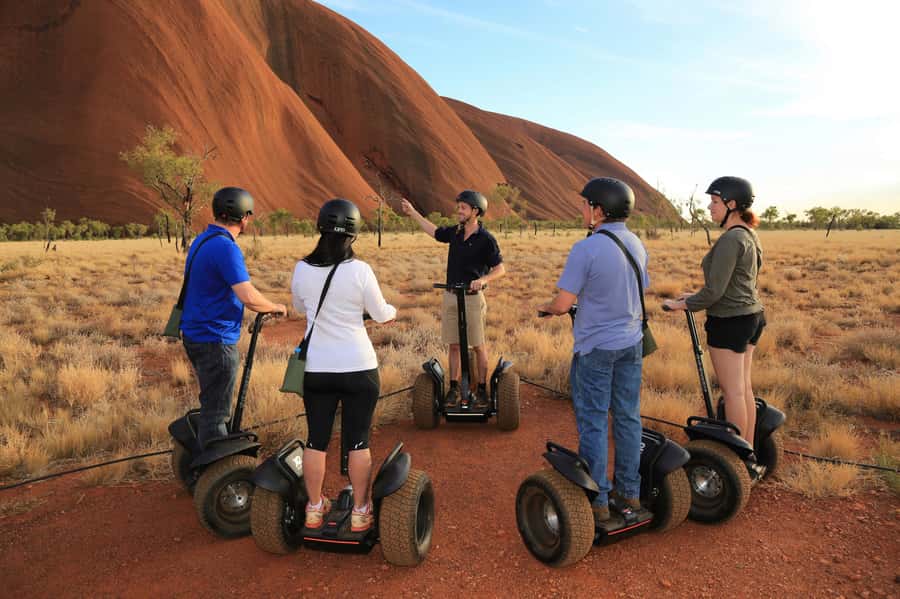
- Small-group Segway riding (max 12) keeps you from feeling like cattle in a big crowd.
- Real training before you roll means most first-timers feel steady by the time you start the loop.
- Sunrise timing + full-base touring in daylight gives you views when it’s calm and not too hot.
- Mutitjulu Waterhole walking stop adds meaning beyond the rides—plus great photo opportunities.
- Guides connect culture, geology, and wildlife with practical, stop-and-learn explanations.
- Focused packing rules (closed-toe shoes, cap, water) protect you in desert conditions.
Sunrise at Uluru, but with wheels: what this experience is really like
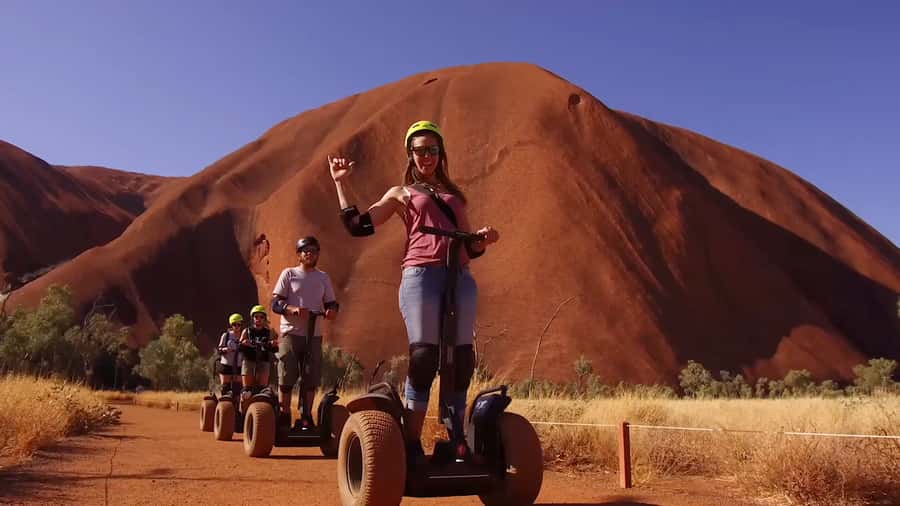
There are lots of ways to see Uluru. This one is different because it’s built around two smart ideas: start at first light and use a method that lets you cover more ground than walking. The sunrise part isn’t just for photos—it’s for the mood. At that hour, the air feels sharper and calmer, and the rock’s tones shift as you move from stop to stop.
Then comes the practical magic: the Segway. Even if you’ve never ridden one, you’re not dropped into chaos. You get training and a practice ride, which is a huge deal at a place where everyone is tired, excited, and running on early-morning adrenaline. Once you’re rolling, you’re moving along the base in full daylight, so you get enough time to see features clearly rather than racing through quick photo stops.
The other thing I appreciate is the balance. This tour isn’t only about the vehicle. You’ll get guided information on Anangu culture, flora, fauna, and geology, plus a look at European history of the area, all while you ride and then walk into the Mutitjulu Waterhole area.
A few more Yulara tours and experiences worth a look


The Segway training block: where first-timers either relax or panic
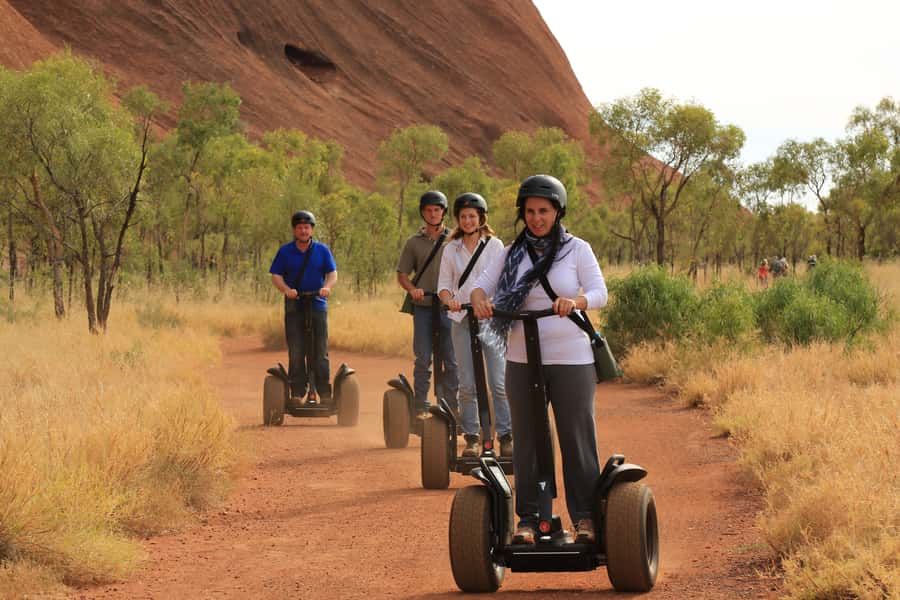
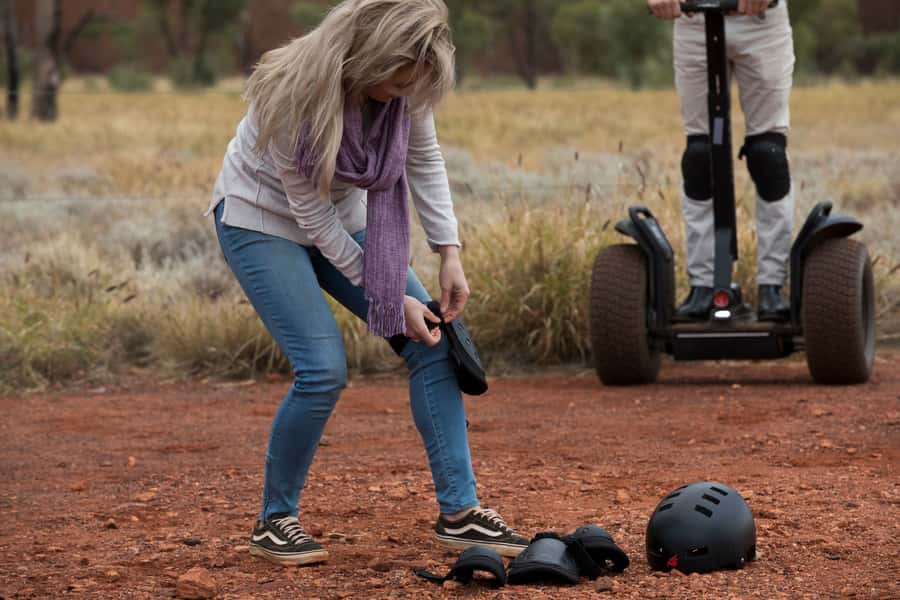
Before you go anywhere near the best views, you get a Segway orientation at the base area. You’ll do a safety briefing and then a practice ride so your body learns the basics: how to balance, how to steer, and how to stop smoothly.
This part matters more than you might think. Uluru is on the bucket list of nearly everyone, so the day can feel high-pressure. The best tours reduce that pressure early. On this one, the training is designed to get you comfortable before the group starts moving. People in the feedback pool singled out patient instructors—one guide named Sye was specifically praised for helping everyone get confident, and others (like Betty, Danielle, and Jess) were praised for both teaching and organization.
A couple of practical notes so you’re prepared:
- Closed-toe shoes are required. Flip-flops won’t work.
- Wear what you can handle for balance while standing. One reviewer mentioned sore feet from standing, so take that seriously even if you consider yourself “fit.”
- You’re in desert conditions, so bring your cap, sunglasses, and at least 1 liter of water per person (more is fine).
If you show up wearing the right shoes and you listen during training, the Segway part is usually fun fast.
Getting to the rock: pickup options and the first outback wake-up call
The day starts with transfers. You can be picked up from Ayers Rock Resort locations such as:
- Ayers Rock Campground
- Desert Gardens Hotel (Ayers Rock Resort)
- Sails in the Desert
- Outback Pioneer Bar & Bottle shop
That matters because it avoids the stress of figuring out transport to the base area. You’re on a scheduled flow: bus transfer time is part of the day, then you arrive, get training, and settle into the sunrise rhythm.
You’ll spend time at Uluru for a sunrise-style picnic stop before the long ride segment. This is where the morning either feels magical or feels painfully cold, depending on weather. In the feedback, one common theme was that the sunrise can look different with cloud cover or rain—so plan for the possibility that first light might be muted. Even then, the ride and the waterhole walk still make the early start worth it.
The ride around Uluru: full base in daylight and stop-and-learn moments
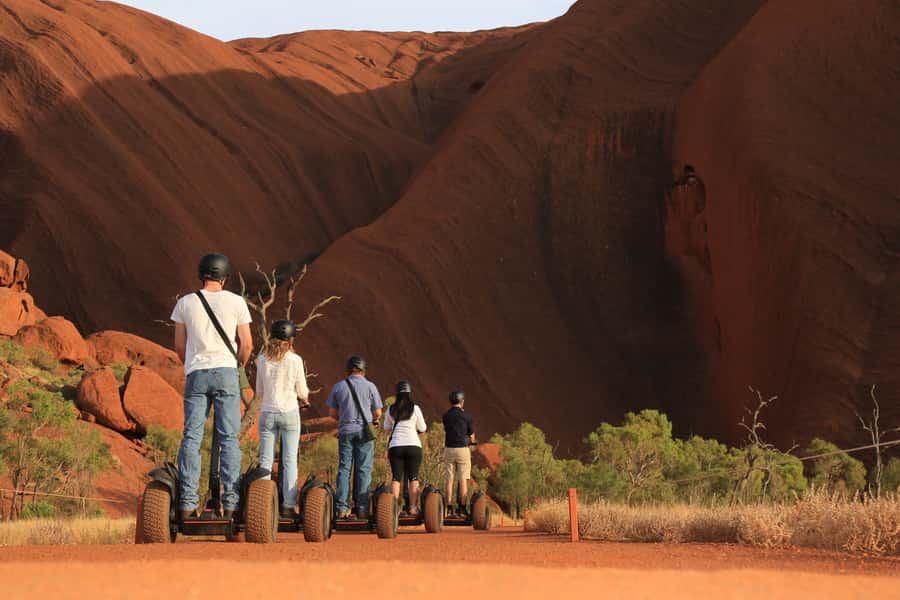
After the sunrise moment, you head into the main activity: the guided Segway tour around Uluru, which runs about 2.5 hours. The payoff here is simple—you see the full base without turning the day into a long foot trek.
Why that’s valuable:
- You keep your energy for the walk section and for photos.
- You don’t lose the sense of place to fatigue. At Uluru, the heat can catch you quickly. Getting the biggest “viewing section” done earlier helps.
- You get repeated chances to stop. A lot of the meaning of Uluru isn’t one view—it’s how the stories and features connect as you move.
As you roll, your guide explains what you’re passing: the rock’s features, how the area is understood through Anangu culture, and how flora and fauna show up around different parts of the base. Guides like Harley and Dana were praised for making the facts feel lively, and others (like Sam, Lisa, and Britney) got compliments for pacing and for being patient with new riders.
A really practical bonus: because you’re on a Segway, you can keep your head up. That means you don’t constantly stop and start like walking tours can. You can focus on matching what you see with what you learn.
Weather reality check
You might hear people talk about getting the perfect sunrise. Weather on the day can change the exact route. In the feedback, there was at least one rainy scenario where the group followed a wet-weather track and still had a great time, with one person noting a partial refund for the change. So if rain hits, don’t assume the day is ruined—just know the route may adapt.

Mutitjulu Waterhole: the short walk that adds meaning
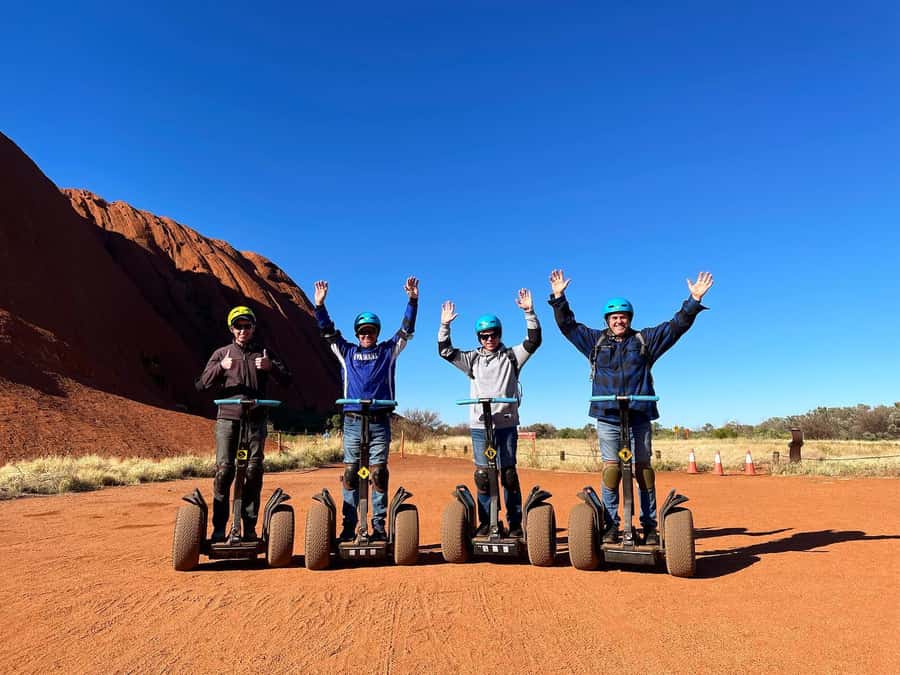
The highlight that isn’t just “riding for views” is the Mutitjulu Waterhole guided walk. This is about 30 minutes and it’s guided, so you’re not wandering while trying to guess what matters.
This stop helps the day land emotionally and culturally. The waterhole isn’t treated as scenery—it’s presented in context. You learn how Mutitjulu connects to local Anangu significance, and you also hear explanations tied to the natural setting. In the feedback, this was repeatedly described as a special part of the morning, precisely because it feels less like a checklist stop and more like you’re getting close to something important.
What to expect on the ground:
- You’ll park your Segway experience and shift to walking time.
- You’ll be near the waterhole area while your guide talks through the stories and meaning.
- It’s a short window, but it usually feels like the “why” behind the tour.
Breakfast at first light: what you get and why it matters
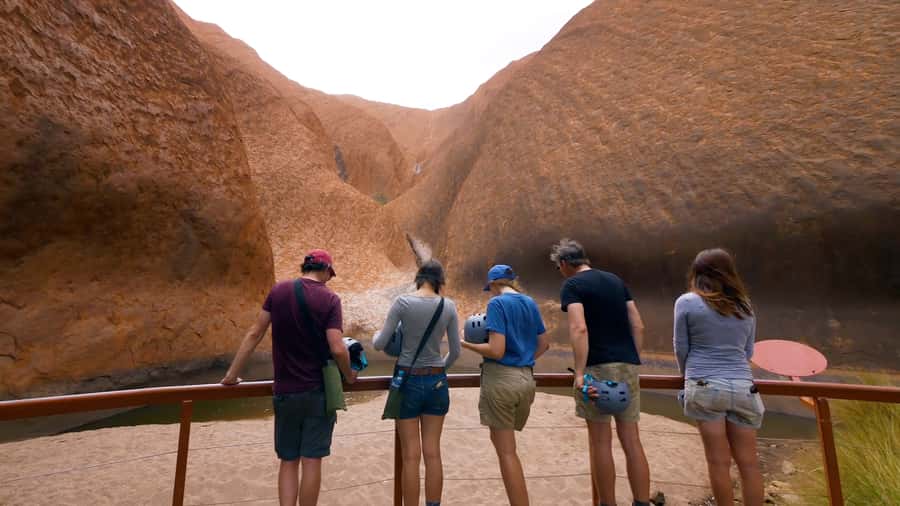
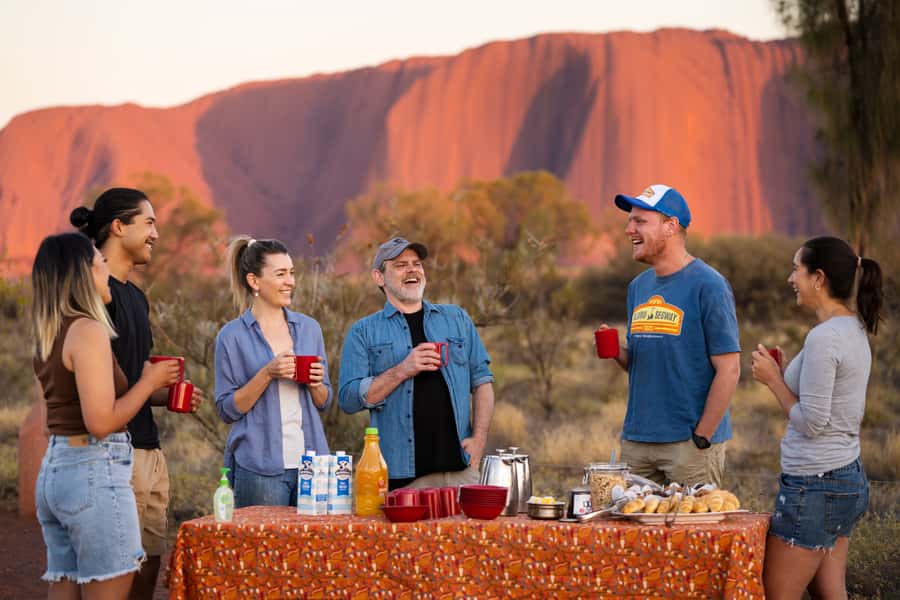
If you select the breakfast option, you’ll have a light breakfast as part of the sunrise setup. From the feedback, it’s often described as very good for what it is—people talked about items like muffins, warm croissants, jam, muesli, and hot drinks (tea, coffee, and hot chocolate were mentioned). One reviewer also called out coffee in a way that sounded genuinely excited.
This isn’t just comfort food. Breakfast helps you last through the training and the Segway portion without getting cranky or under-fueled. And at Uluru, a little comfort matters because the morning can feel aggressively cold even in a “warm” season—wind chills are real.
Practical tip: pack a layer. Even if you’ll work up a sweat later, the early start often means you’ll be standing around before you’re moving.
What the guides actually do: stories, photos, and calm coaching
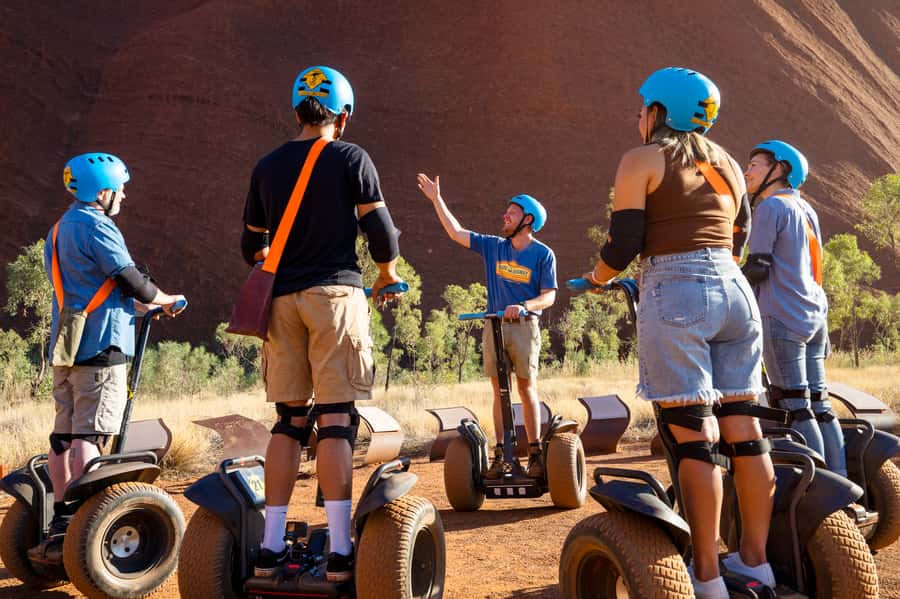
One of the biggest reasons this tour earns such a high rating is not the vehicle—it’s the people. Across the feedback, guides were praised for:
- organization and smooth timing
- patience during training
- clear explanations
- a respectful tone when discussing Anangu culture and stories
You’ll hear live narration in English, and there’s also an audio guide available in multiple languages (French, German, Italian, Spanish, Chinese, Japanese). If your group wants to switch things up for understanding, the audio layer can help.
Photo support also comes up. Multiple people mentioned their guides taking photos during stops. Some noted quick sharing methods depending on phone type (for example, an iPhone feature was called out, while Android users were described as getting photos another way). So if photos matter to you, keep your phone accessible and your charger ready for later.
Price and national park entry: is it worth $143?
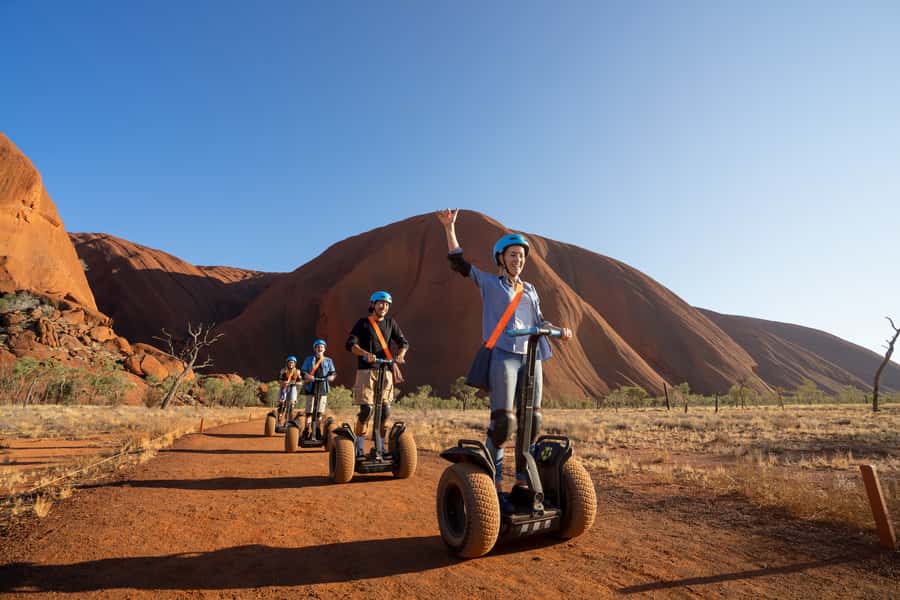
At $143 per person, this tour is not a budget activity. But it can still be good value if you weigh what you’re actually buying: time, coverage, and guided learning with a method that lets you see more than walking would.
Here’s the value equation as I see it:
- You’re getting about 5 hours total, including transfers, training, the Segway loop, and the waterhole walk.
- The Segway training and small-group size reduce the “stress cost” of trying something new.
- The guide brings context that turns the visuals into understanding, including culture, geology, and local flora/fauna.
- Breakfast (if selected) reduces extra meal planning during a very early start.
The big additional cost to remember is the Uluru-Kata Tjuta National Park entry ticket (listed as $38 per adult, not included). If you’re comparing prices against other Uluru tours, include that entry fee so the comparison is fair.
If you’re choosing between walking and riding, this is one of those “pay for convenience” experiences that can make the day feel smoother—especially in hotter months.
Who should book, and who should skip it?
This tour is best for people who want a full Uluru base experience without turning it into a long hike, and who are comfortable learning a new mobility device. It’s recommended for ages 12–55. Kids under 12 can’t participate, and people over 65 are discouraged due to increased fall risk.
It’s also not a fit if you have limits in these categories (all explicitly flagged):
- pregnant women
- people with back problems
- people who can’t ride a bike
- wheelchair users
- visually impaired people
- people over 260 lbs / 118 kg
- people with pre-existing medical conditions or recent surgeries
So if any of those are you, don’t try to “power through.” Instead, choose a different Uluru experience that matches your comfort level.
If you’re healthy, within the age/weight guidance, wearing closed-toe shoes, and you’re okay standing on a Segway for long stretches, you’ll probably love the format.
Should you book this Uluru Base Segway Tour at Sunrise?
I think you should book it if you want three things at once: early-light views, full-base coverage, and guided explanations that connect what you’re seeing to why it matters. The best part of this tour is how quickly the day turns from learning to rolling—once you’re past training, you get a smooth loop with frequent chances to stop and look.
Skip it if you’re sensitive to cold mornings, you know your balance or health situation won’t handle Segway riding or walking, or if you’re comparing value on a strict low-cost basis and don’t want to add the park entry fee.
If you do book, my advice is simple: bring the right shoes, pack water, layer up for the wind, and trust the training. You’ll spend the rest of the morning focused on Uluru—not figuring out the machine.
FAQ
What is included in the Uluru Base Segway sunrise tour?
The tour includes transfers to and from your accommodation, Segway training, the Segway ride around Uluru, and a guided walk into Mutitjulu Waterhole. Light breakfast is included only if you select the breakfast option. Uluru-Kata Tjuta National Park entry tickets are not included.
Do I need a park entry ticket?
Yes. All guests need a Uluru-Kata Tjuta National Park entry ticket, and it costs $38 per adult (not included in the tour price).
How long is the tour?
The duration is about 5 hours total.
What should I bring or wear?
Bring water (at least 1 liter per person is recommended), plus a cap, sunglasses, and a shirt with sleeves. Wear closed-toe shoes—open-toed shoes and flip-flops won’t be permitted.
How big is the group?
The tour is a small group, limited to 12 participants.
Who isn’t suitable for this tour?
This tour isn’t suitable for children under 12, pregnant women, people with back problems, people who can’t ride a bike, wheelchair users, people over 65 (discouraged), visually impaired people, people over 260 lbs / 118 kg, or people with pre-existing medical conditions or recent surgeries.