REVIEW · CAIRNS
Cairns: Great Barrier Reef 30-Minute Helicopter Flight
Book on GetYourGuide →Operated by Nautilus Aviation Pty Ltd · Bookable on GetYourGuide
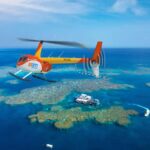
A short flight should not feel this big. This 30-minute helicopter ride gives you a high-altitude way to see the Great Barrier Reef’s colors, islands, and reef shapes all at once. I love that you get aerial landmarks like Green Island and Upolu Sand Cay, plus the chance to spot animals from way up high.
The best part is the guide’s live commentary while you’re in the air, turning what looks like blue water into real reef habitat. One possible drawback: window seats aren’t guaranteed, so if your photos depend on glare-free views, plan for the fact that you might not get the best spot.
In This Review
- Key Highlights Worth Getting Excited About
- Aerial Views of the Great Barrier Reef in Just 30 Minutes
- Pier Heliport to the Skies: How the Flight Actually Feels
- Green Island, Arlington Reef, Vlasoff, and Upolu Sand Cay From Above
- Wildlife Spotting: What You Can Watch for From High Above
- Price and Value: Is $322 Worth a 30-Minute Flight?
- Small-Group Comfort: Seats, Luggage, and the Window Question
- Timing, Check-In, and What to Do When Plans Get Tight
- Who This Helicopter Reef Flight Suits Best
- Should You Book? My Practical Take
- FAQ
- How long is the Great Barrier Reef helicopter flight?
- Where do I meet for this flight?
- Is this a private helicopter tour?
- What animals might I spot during the flight?
- What should I bring, and what is not allowed?
- Is there a weight limit for passengers?
Key Highlights Worth Getting Excited About
- 30 minutes in the air gives you a rare aerial look even if your schedule is tight
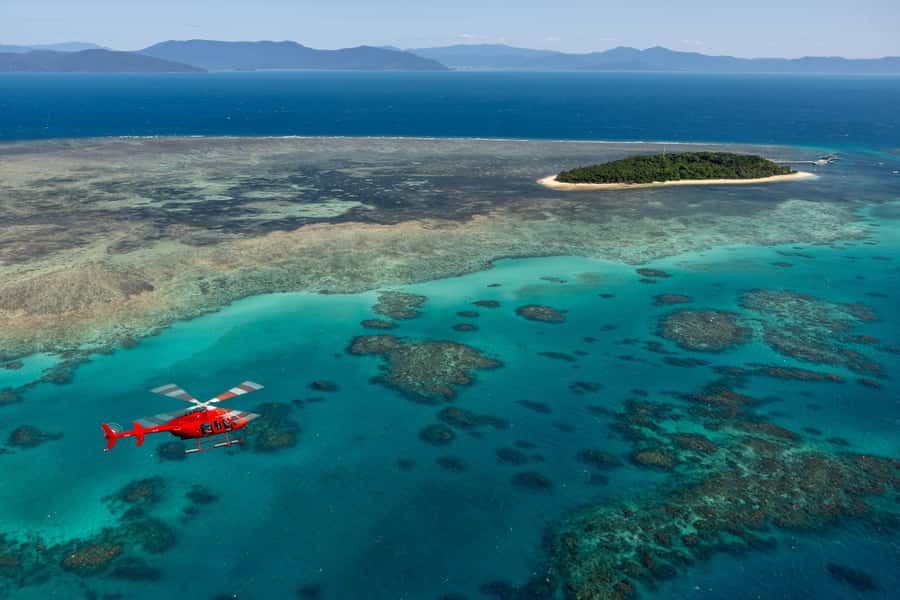
- Green Island, Arlington Reef, Vlasoff, and Upolu Sand Cay are all visible from above
- Wildlife spotting can include sea turtles, sharks, manta rays, dolphins, dugong, and (seasonally) humpback whales
- Small group capped at 6 keeps the cockpit experience from feeling hectic
- Shared flight, not private, so expect to ride with other passengers on the same departure
- Selfie sticks aren’t allowed, which helps keep the cabin space workable for everyone
Aerial Views of the Great Barrier Reef in Just 30 Minutes
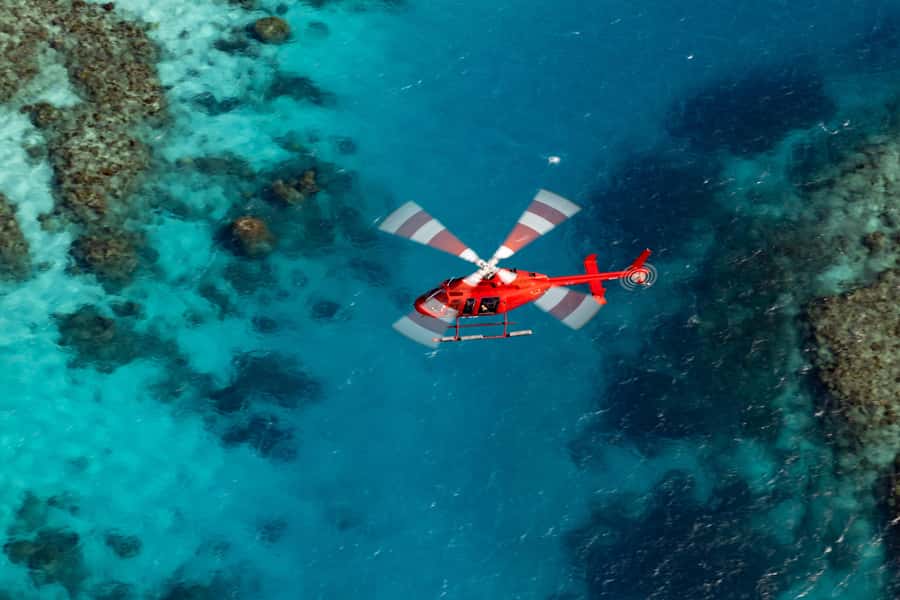
Let’s be honest: most reef experiences are either about what’s under the surface or about what you can reach by boat. A helicopter flips that. In half an hour, you see how the reef system actually sits in the sea—patches, edges, sandbars, and shallow water that can look like painted gradients from the sky.
You’ll fly over the Great Barrier Reef region with standout features you can recognize quickly. Expect views of Green Island, the reef around Arlington Reef, and areas labeled Vlasoff and Upolu Sand Cay from the air. From above, those sand cays and reef structures can be easier to pick out than when you’re swimming or using underwater platforms.
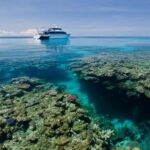
And yes, the colors are the headline. You’ll see a mix of deep blues, lighter turquoise shallows, and the darker tones where water is deeper or cloudier. That contrast helps you “read” the reef from the sky—like seeing the reef’s outline and texture before you ever get close to it.
A few more Cairns tours and experiences worth a look
Pier Heliport to the Skies: How the Flight Actually Feels
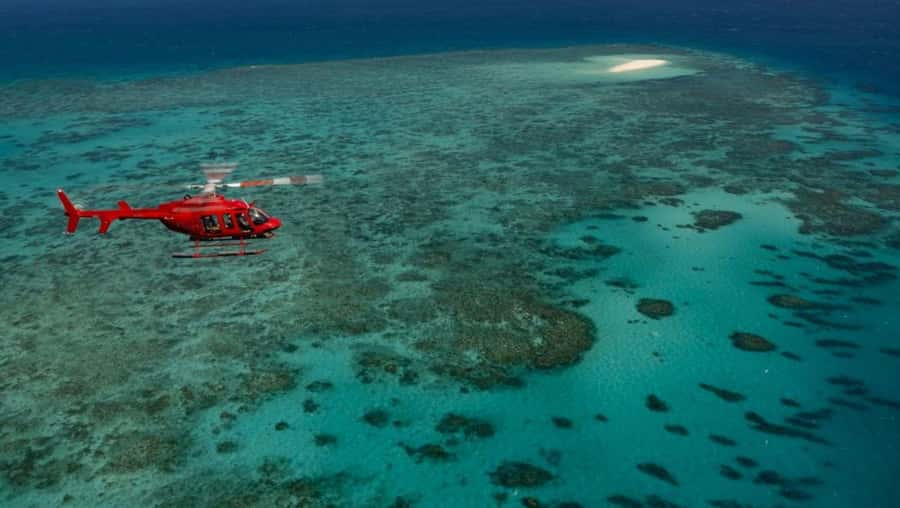
This is a short, fly-and-see experience. You’ll meet at Pier Heliport, and the flight itself runs for 30 minutes. It’s operated as a shared basis experience, and the group is limited to 6 participants, so you’re not stuck in a cattle-style queue inside a terminal.
Check-in matters more than you might think for something this short. You’re recommended to arrive 45 minutes before your scheduled departure, and check-in closes 30 minutes before departure. If you’re late, you can miss the flight and forfeit your fare—no second chances here.
A live guide is included, speaking English, and that matters because the best views come with context. When you know what you’re looking at—reef habitat versus sand versus deeper channels—you’ll enjoy the ride more than if you just shoot photos and hope for the best.
Green Island, Arlington Reef, Vlasoff, and Upolu Sand Cay From Above
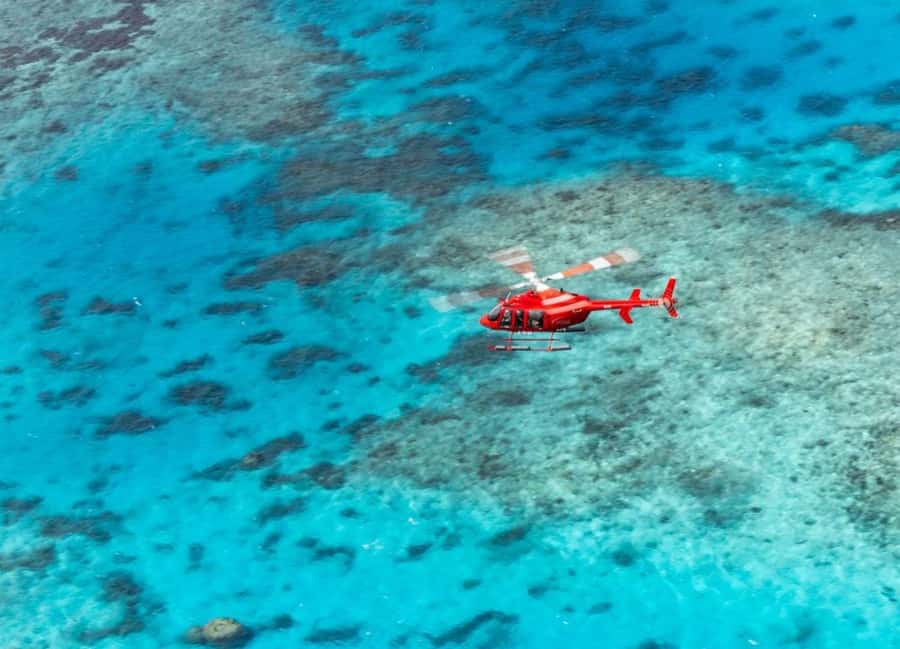
The flight’s viewing power is in the combination of islands and reef zones. You’re not just looking at one thing for 30 minutes. Instead, you get multiple recognizable segments of the reef system, which makes the ride feel varied rather than repetitive.
Here’s what each landmark category does for your eyes:
Green Island: This is the kind of place you can spot quickly because it reads as land surrounded by reef water. From the air, you get a clear sense of coastline shape and how the island sits against the surrounding reef zones. It’s also a great “anchor” point for your photos because your brain can lock onto it fast.
Arlington Reef: Reef systems can be hard to picture from the shore, but from above, reef edges and patchy structures can look like patterns. Seeing Arlington Reef from the air helps you understand how reef doesn’t just sit in one block—it spreads, breaks, and changes character.
Vlasoff: This is one of the reef areas you’ll fly over, and from high above you’ll likely notice how the water tones shift over different sections. That tonal change is your clue that you’re not looking at uniform ocean; you’re looking at reef-influenced shallows and channels.
Upolu Sand Cay: Cays are your “wow” moment for many people. From the helicopter, you get a clear picture of sand shapes surrounded by water that looks different in intensity and color. It’s a fast lesson in how sand and reef coexist—and how much the seabed affects what you see.
Even if you’ve visited the Great Barrier Reef before, this aerial perspective gives you a different map. You’ll likely come away with a better mental model of what you saw underwater later, or what you should target next time.
Wildlife Spotting: What You Can Watch for From High Above
If you’re going for wildlife, this flight is built for that. From the air, larger animals can be easier to spot than when you’re down in the water or limited to a surface search area.
The kinds of sightings that have been reported during flights include sea turtles, sharks, manta rays, dolphins, and dugong. Those are all animals that can show up at the surface or move across open water, where they’re visible from above when the light and conditions cooperate.
There’s also seasonal “special event” potential. Humpback whales have been spotted during their annual migration, specifically Jul-Sep, when they pass through warm tropical waters briefly to raise calves. If your trip falls in that window, this becomes an extra reason to plan the helicopter.
A practical tip: don’t expect guaranteed sightings of everything. But do expect that the guide will help you scan efficiently. The value isn’t just spotting an animal—it’s learning where to look and why certain areas may be more productive from the air.
Price and Value: Is $322 Worth a 30-Minute Flight?
At $322 per person, this isn’t a budget activity. But price isn’t just about minutes in the air—it’s about access. Getting the reef from above, with multiple landmark views and a live guide pointing out what matters, costs real money because aircraft time is expensive and the experience is inherently limited by flight scheduling.
Here’s how I’d judge the value for your trip:
You’ll feel it’s worth it if:
- You only have a short time in the region and want the reef “big picture” fast
- You’re the type who enjoys photography and wants angles you can’t get from boats or shorelines
- You’ve done underwater reef time already, and you want the aerial layer that connects it all
You might hesitate if:
- You’re hoping for a long, slow wildlife experience. This is quick and visual, not an extended safari-style outing
- You’re very price-sensitive and would rather spend that money on reef cruises, day trips, or guided snorkeling experiences
One review trend you can trust: people often compare it to reef viewing by glass-bottom boat or semi-submersible. Those options show you underwater scenes. The helicopter adds the spatial understanding—how reef systems and islands relate to each other—so it often feels like the missing piece.




Small-Group Comfort: Seats, Luggage, and the Window Question
This flight is capped at 6 participants, which usually keeps the experience calmer. Still, it’s not private, so you may be sharing the ride with other people.
Seat placement is the big variable to plan for. Window seats are not guaranteed, so if you care about photography and glare control, it’s smart to show up ready to handle seat outcomes without getting stressed. If you’re flexible, the overall experience still lands because the views are spectacular from most angles, especially with the guide helping you time your looking.
About your gear:
- Bring sunglasses, a camera, and sunscreen
- Selfie sticks aren’t allowed, which keeps cabin space safer and easier for everyone
Bags also matter. You need to advise your passenger weight and carry-on details at booking time. The max single-seat weight is 130 kg, including carry-on luggage/bags. If you’re above that threshold, you’ll need to purchase an additional seat at 50% of the ticket price, paid to the local partner on the day of travel.
None of this is meant to be difficult—it’s about safety and proper seating. Still, it’s a good reminder: for a helicopter flight, you can’t treat your weight and luggage like an afterthought.
Timing, Check-In, and What to Do When Plans Get Tight
Because the flight is only 30 minutes, the ground time is where you win or lose momentum. You should aim to check in early and stay close to the helipad area once you arrive. If you miss check-in, you miss the flight, and that’s it.
Also, consider the minimum passenger rule. This tour requires a minimum number of passengers to operate. If that threshold isn’t met, there’s a chance the experience could be canceled, but you should be offered an alternative or a full refund if that happens.
And a small logistics note: there’s no hotel pickup or drop-off from Port Douglas. So you’ll want to factor in how you get yourself to the helipad at the right time.
If you’re juggling multiple reef activities, I’d treat this as a “clean slot” on your schedule. Don’t stack it right after something that might run long.
Who This Helicopter Reef Flight Suits Best
This is a strong match if you want the Great Barrier Reef in a format that’s fast, visual, and guided.
You’ll likely love it if:
- You’re short on time and want the “big reef picture”
- You enjoy wildlife spotting from above and like the idea of scanning with help from a guide
- You want iconic locations like Green Island and Upolu Sand Cay without spending all day traveling between viewpoints
It’s also a good choice for:
- Couples and small groups who want a shared thrill without a long multi-leg day
- People who have already done reef viewing from the water and want aerial context to connect the reef’s shapes to what they saw below
If you’re nervous about helicopters or heights, or you’re sensitive to motion, you’ll want to think carefully before booking. The flight is brief, but it still is a helicopter ride.
Should You Book? My Practical Take
If you’re deciding between another reef boat day and this helicopter, I’d lean toward booking the helicopter when you want maximum variety and a fast, high-impact view. The value shows up in the combination: multiple reef landmarks, a live guide, and a real chance at seeing wildlife from high above—all in just 30 minutes.
If $322 feels steep, decide based on what you’ll gain. This won’t replace snorkeling or reef cruises. It complements them by giving you the reef system’s shape and scale from the sky. For many people, it’s the part that makes the whole reef trip feel “mapped” in their mind.
FAQ
How long is the Great Barrier Reef helicopter flight?
The flight duration is 30 minutes.
Where do I meet for this flight?
You meet at Pier Heliport.
Is this a private helicopter tour?
No. It’s shared with a small group and is limited to 6 participants.
What animals might I spot during the flight?
Reported sightings include sea turtles, sharks, manta rays, dolphins, dugong, and humpback whales during Jul-Sep.
What should I bring, and what is not allowed?
Bring sunglasses, a camera, and sunscreen. Selfie sticks are not allowed.
Is there a weight limit for passengers?
Yes. The maximum single-seat weight is 130 kg, including any carry-on luggage/bags. Passengers above 130 kg need to purchase an additional seat at 50% of the ticket price.