REVIEW · HOBART
From Hobart: Mt Wellington Pinnacle 2 Hour Small Group Tour
Book on GetYourGuide →Operated by Island of Tasmania Tours · Bookable on GetYourGuide
Mt Wellington has a way of resetting your brain. In this 2-hour small-group tour, you get a real feel for alpine Tasmania without rushing, from snow gums and rock pillars up to the Pinnacle views.
I especially love the guided storytelling by David and how the drive sets the stage before you even reach the top. The 30 minutes free at the summit is the right amount of time to breathe, frame photos, and ask questions without feeling herded.
One thing to plan for: it’s not a short, flat walk tour. You’ll be climbing up to 1,270m, and it’s not suitable for wheelchair users.
Quick highlights (what makes it worth your time):
- Guiding with David (he’s studied botany, geology, and water resources locally)
- A focused small-group minibus ride with a sound system and air-conditioning
- Tree line to summit with snow gums, flowering banksia, and visible geology
- Half an hour on top at the Hobart and South West Wilderness viewing platforms
- Weather-ready pacing, including extra stopping when conditions shift (fog, storms, even snow)
- Photo-friendly viewpoints on the way up and back down
In This Review
- Meeting at 20 Davey Street: The Easy Start to a Big Mountain Day
- Hobart Scenery and the “Before You Climb” Stories
- Fern Tree and the Cool Temperate Garden Feel
- The Springs, Bruny Glimpses, and the Chalet Hut at Ground Level
- From Tree Line Toward the Pinnacle: Botany, Geology, and Clues in the Rocks
- The Summit Stop: How to Use Your 30 Minutes at the Top
- Photo Opportunities Without the Rush: Views on the Way Up and Back Down
- Weather Reality on Mt Wellington: Fog, Storms, and Snow Moments
- What You Need to Bring (and Wear) for Comfort on the Climb
- Small Group vs. Big Bus: Why the Format Matters on This 2-Hour Plan
- Price and Value: $38 for a Real Taste of Mt Wellington
- Who Should Book This Tour (and Who Might Want Another Option)
- FAQ
- Where do I meet for the Mt Wellington Pinnacle 2 hour tour?
- How long is the tour, and how much time do I get at the summit?
- Is food or drinks included?
- Do I get a guided drive to and from the summit?
- Is this tour wheelchair accessible?
- What should I bring for the tour?
- Should You Book This Mt Wellington Pinnacle Tour?
Meeting at 20 Davey Street: The Easy Start to a Big Mountain Day
Your day starts at the Tasmanian Travel and Information Centre at 20 Davey Street (use the side facing Elizabeth Street). It’s a simple meet-up spot, which matters because Mt Wellington tours run on timing. When everyone rolls out together, the tour keeps its rhythm and you don’t waste that precious summit window.
Once you’re onboard, you’ll settle into a comfortable, air-conditioned minibus with a sound system, so even if the weather is doing something dramatic, you still get the full story. This matters on Mt Wellington because visibility can change fast. The driver and guide can keep things moving without you feeling lost or left behind.
Hobart Scenery and the “Before You Climb” Stories
The first stretch is a guided scenic drive through historic Hobart. You’re not just transferring from place to place. You’re getting context—how the city sits against the mountain, and how people historically related to this huge presence.
As you head through South Hobart, you’ll spot Mt Wellington towering over the area, and you’ll also pass the Cascade brewery building dating back to 1824. The guide shares its story, which is a nice change from purely botanical talk. It helps you connect the modern city to the early days, when access, observation, and survival around the mountain mattered.
Then comes the shift from city edges into cooler forests and the mountain’s growing personality. If you’re only in Hobart for a couple days, I like this setup because it gives you two kinds of payoff fast: city context and the start of the alpine world.
A few more Hobart tours and experiences worth a look
Fern Tree and the Cool Temperate Garden Feel
After South Hobart, you move into tall Eucalyptus forests and then pass through Fern Tree. The key vibe here is cool temperate greenery—well watered gardens that can even be covered in snow at times.
This section is a smart warm-up. You’re still not at tree line yet, but you’re already noticing a different atmosphere than you’d get in a typical city day. The guide’s background in botany pays off here. You don’t just hear plant names—you hear why they look and behave the way they do in Tasmania’s environment.
And yes, you’ll get those glimpses of waterfalls and mountain views along the route. It’s not one single “wow moment.” It’s a slow build, with plenty of chances to look out and take photos.
The Springs, Bruny Glimpses, and the Chalet Hut at Ground Level
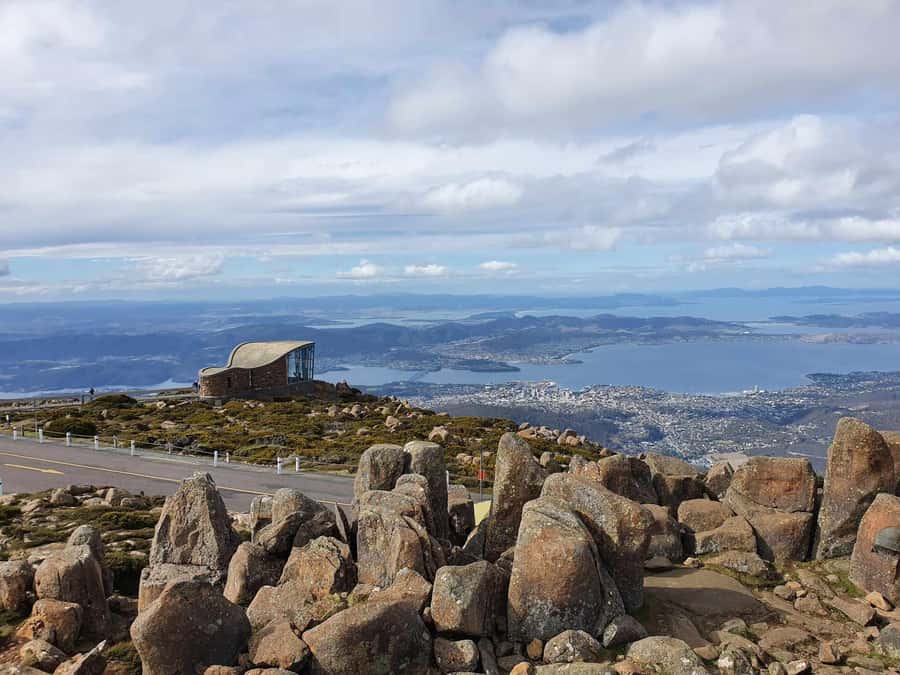
Next you pass The Springs, where you’ll get a quick trailer view of Bruny Island—a tiny taste, just enough to leave you thinking about a follow-up day trip if you’ve got time.
Then the tour turns more alpine-leaning as you approach the mountain features. You’ll see a rustic dolerite bluestone shelter hut (often referred to as the chalet). That stop works because it’s tactile history: this is a functional structure, not just a roadside sign. It gives you a sense of how people have moved through and used these areas over time.
From there, you’ll be looking at the kind of hardy vegetation that makes Mt Wellington special: snow gums and other colorful plants that can handle the harsh swings. You’ll also get a view of a waterfall and the kind of angles that make the mountain feel steeper than it looks from below.
If you like geology and how the rocks shape the terrain, this is where the tour starts earning its keep. Your guide isn’t just narrating. You’re getting explanations tied to what you can see.
From Tree Line Toward the Pinnacle: Botany, Geology, and Clues in the Rocks

Once you’re above the tree line, the feeling changes fast. The wheels start climbing again, and suddenly the mountain looks less like a forest you’re visiting and more like an ecosystem you’re watching from up close.
At this stage, the tour delivers three things I value:
1) clear sightlines to the summit
2) plant and rock details that don’t require a degree to appreciate
3) enough time to ask questions without the guide moving on mid-thought
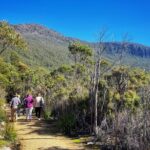
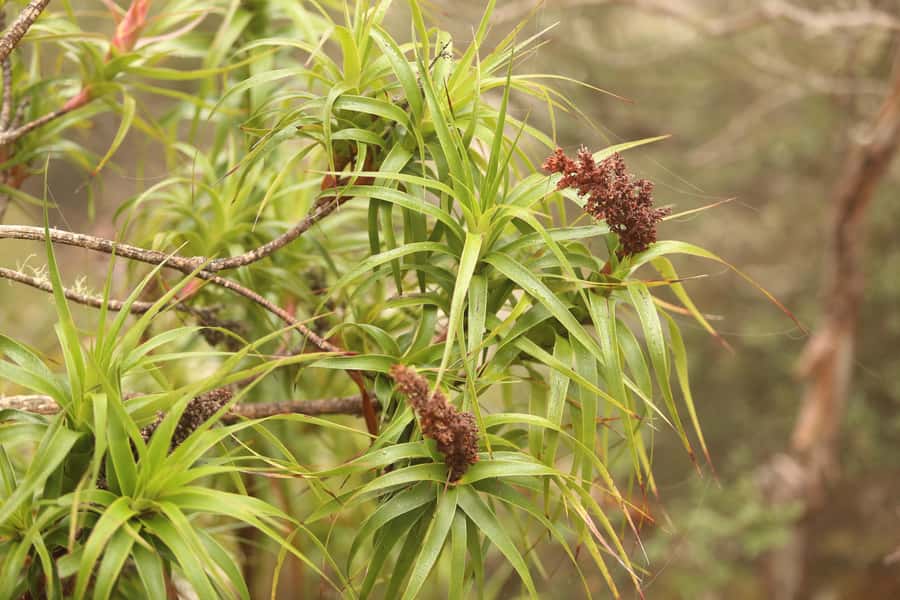
The route to the Pinnacle at 1,270m (4,180ft) includes stops for viewing the evolving scenery: alpine vegetation, abrupt rock pillar formations, and rockier ground that hints at boulder fields and cliffy terrain. Snow gums show up prominently, along with flowering banksia trees when conditions allow.
Your guide, David, is a big part of why this feels more than a quick drive. He’s studied botany, geology, and water resources, and he ties those subjects back to the mountain environment around you. That combination is rare on short tours. You get the science without the lecture vibe.
The Summit Stop: How to Use Your 30 Minutes at the Top
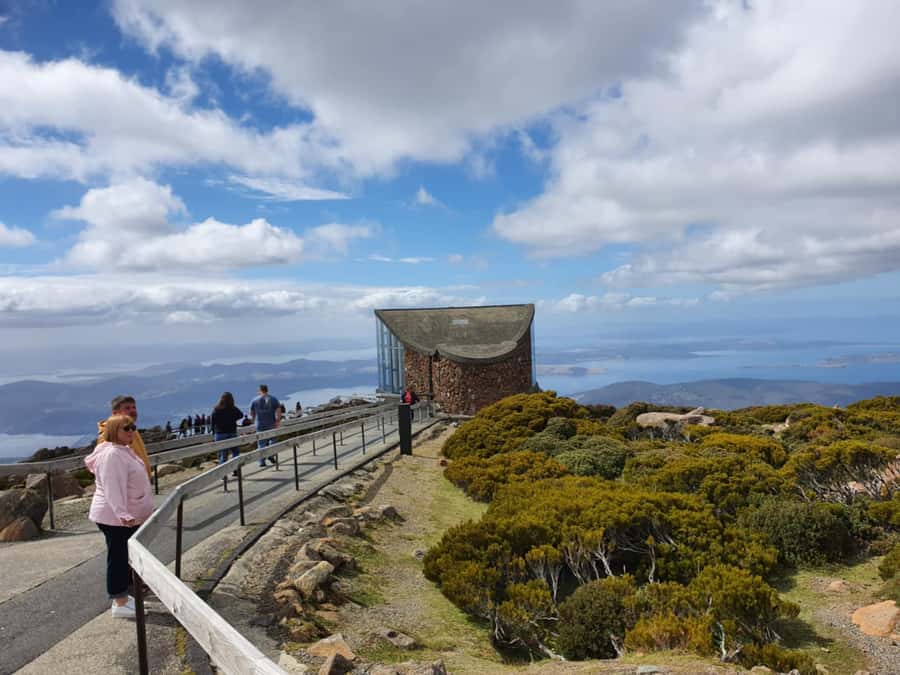
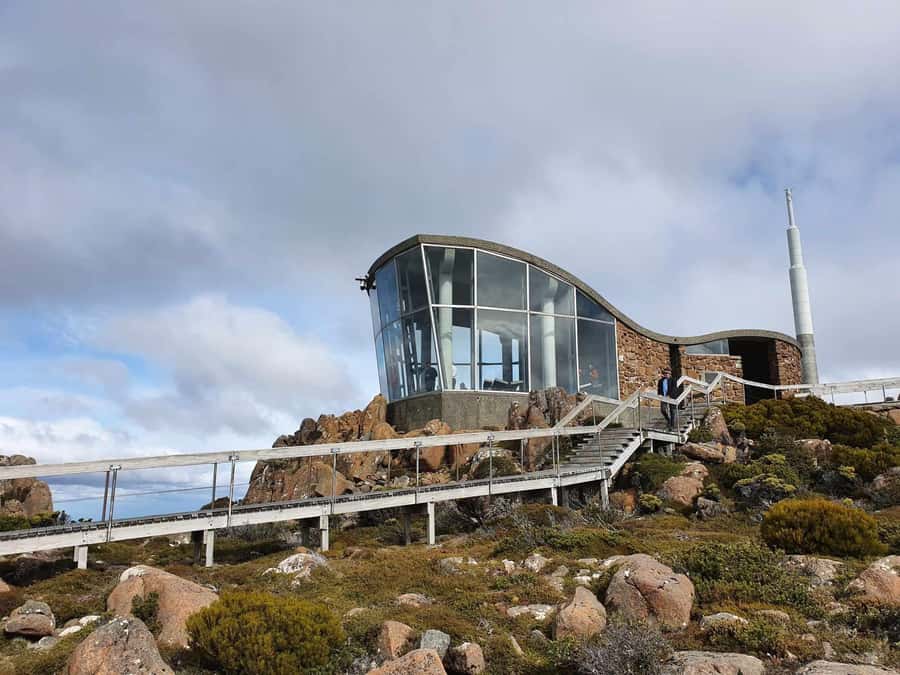
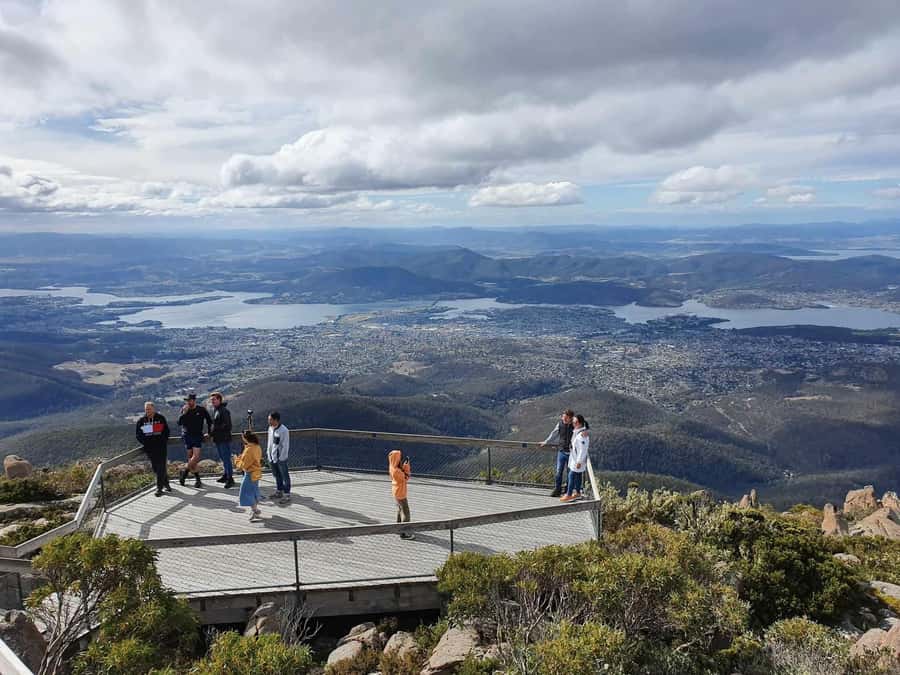
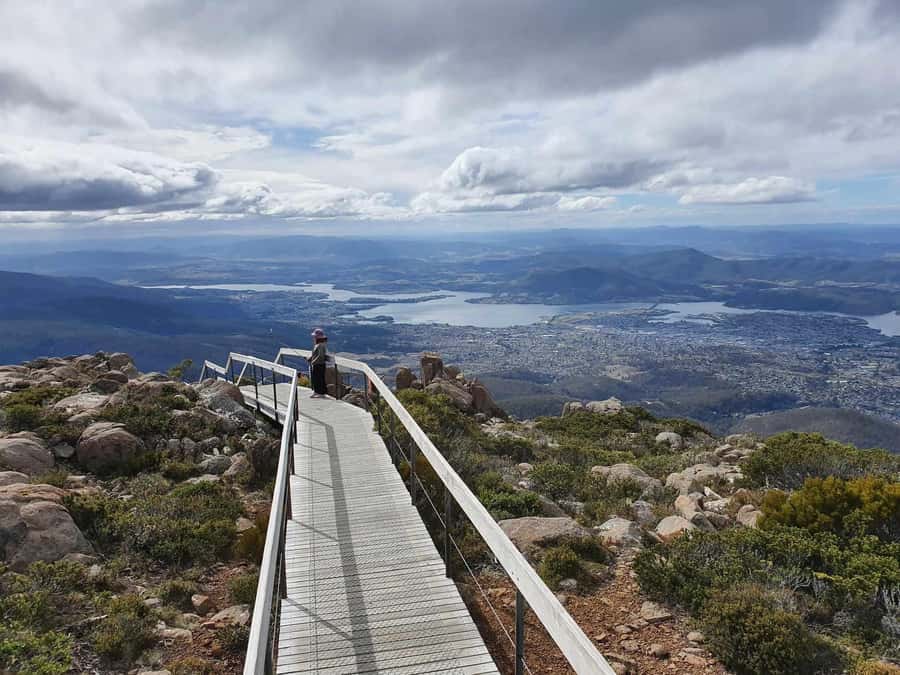
At the Pinnacle, you get 30 minutes of free time to explore the views from the Hobart and South West Wilderness viewing platforms. Thirty minutes can sound short, but on Mt Wellington it’s enough time to do three practical things:
- Scan the horizon and pick the view you want to photograph
- Take a few steps for a better angle (you’ll feel the difference)
- Rest briefly and read the terrain with your own eyes before you head back
This is also the best time to look toward the Tasmanian Wilderness World Heritage Area mountains, when visibility allows. Even if clouds roll in, the summit still delivers. You’re looking down and around a big natural stage—cliffs, rock forms, and the alpine vegetation that survives where most plants struggle.
From the on-mountain stories and the way the guide frames it, the summit isn’t just scenery. It’s the result of weather, rock, and time working together. When you’re up there, it becomes obvious why people remember Mt Wellington as more than a drive.


Photo Opportunities Without the Rush: Views on the Way Up and Back Down
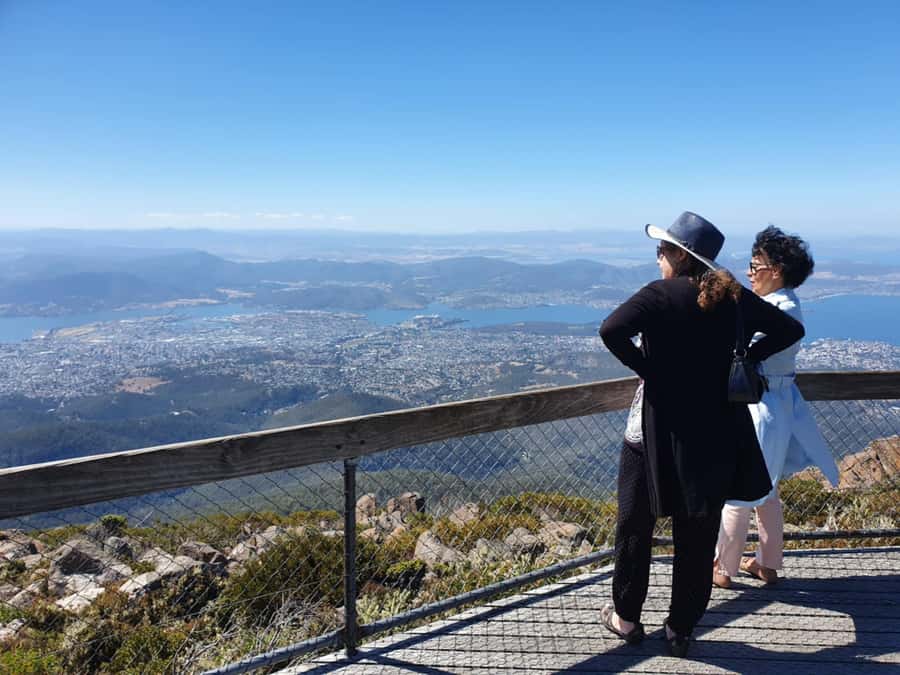
The tour isn’t one long straight shot. It includes multiple scenic lookouts, which means you get more chances to capture the mountain as it changes.
One advantage of a small-group format is that you don’t feel stuck in a human line at every pull-off. You can pause, step aside for photos, and come back without the bus moving like a conveyor belt.
On the return trip, you’ll pass more forest and mountain scenery, plus you’ll hear more stories for the drive down. I like that the tour doesn’t treat the summit as the only “event.” The descent still has meaning, especially if you’re trying to understand how the mountain fits into the wider Hobart region.
And if you’re arriving by ship, there’s an optional drop-off at the cruise ship terminal, which can save you time and stress.
Weather Reality on Mt Wellington: Fog, Storms, and Snow Moments
Mt Wellington weather has a personality. It can be foggy at first, clear later, then shift again. The good news is this tour is paced for reality, not fantasy.
In past conditions like foggy mornings, the guide makes the best of what you can see, and the plan still gets you to the summit area. In more dramatic conditions, the tour can include additional stopping partway back down to grab the best possible view.
You might also catch snow on the upper slopes. The mountain can deliver a quick storm sweep and a moment of winter magic—without turning the day into a miserable slog. The main thing is to dress for it, because the change between Hobart and the top can feel bigger than the clock suggests.
What You Need to Bring (and Wear) for Comfort on the Climb
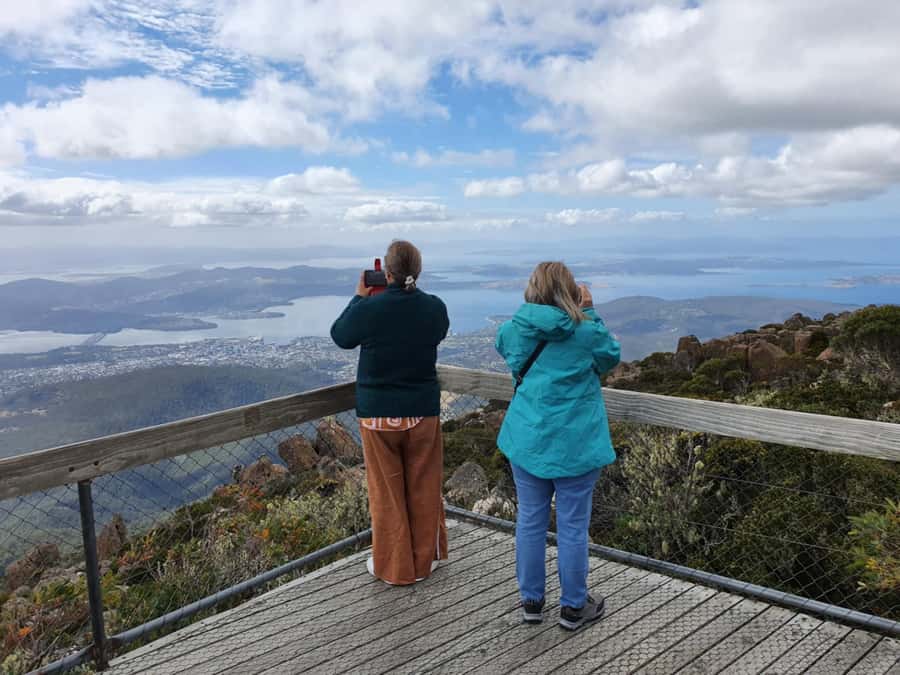
This is an outdoor tour, and your comfort will affect how much you enjoy it. Bring comfortable shoes with grip. The terrain around viewpoints can be uneven, and you’ll want stable footing even if you’re not doing a long hike.
Wear outdoor clothing that can handle cool-to-cold conditions on the mountain. Even in “mild” Tasmania weather, the top can feel sharper. If you’re the type who runs cold, pack an extra layer.
Also note the simple vehicle rules: no smoking in the vehicle, and the tour does not allow alcohol or drugs in the minibus. Electric wheelchairs aren’t supported on this tour, and it isn’t suitable for wheelchair users.
Small Group vs. Big Bus: Why the Format Matters on This 2-Hour Plan
You’re choosing a short tour, so every minute has to count. That’s where the small-group approach earns its keep.
A smaller group usually means:
- fewer people competing for attention at viewpoints
- more time for David to answer questions
- less waiting around at stops
This is especially helpful on Mt Wellington, where the guide wants to point out things you might miss on your own: specific plant features, geology cues, and why the water and terrain matter. When you have time to ask, you learn faster and enjoy the scenery more.
Price and Value: $38 for a Real Taste of Mt Wellington
At $38 per person for 2 hours, you’re not paying for a half-day hike or a full-day trek. You’re paying for a guided minibus ascent and a curated introduction to the mountain’s key features—plus that 30 minutes at the summit.
To judge value, I look at three things:
- How much you get (scenery, viewpoints, and explanation)
- How smoothly it runs (timing and transport)
- Whether it helps you decide if you want more later
This tour scores on all three. You get a focused climb to 1,270m, science-backed explanations from a guide who’s studied the mountain environment, and enough summit time to make your own judgment about the views. It’s also a smart option if you’re short on time but want something more substantial than a quick lookout stop.
Who Should Book This Tour (and Who Might Want Another Option)
I’d point you toward this tour if:
- you’re in Hobart for a tight schedule
- you want a guided introduction to Mt Wellington’s plants and geology
- you prefer a smaller, more conversational group format
- you like photo stops and scenic drive viewpoints as much as the summit itself
I’d skip it or look for a different option if:
- you need wheelchair accessibility (this one isn’t suitable)
- you’re expecting a long hike or extended trail time (this is a short guided experience)
- you want food provided (you’ll need to handle snacks or meals on your own)
FAQ
Where do I meet for the Mt Wellington Pinnacle 2 hour tour?
You meet at the Tasmanian Travel and Information Centre at 20 Davey Street, on the side facing Elizabeth Street.
How long is the tour, and how much time do I get at the summit?
The tour runs for 2 hours total, and you’ll get 30 minutes of free time to explore at the top at the Pinnacle.
Is food or drinks included?
No. Food and drinks aren’t included, so plan to eat separately before or after.
Do I get a guided drive to and from the summit?
Yes. You’ll take a guided minibus tour to and from the summit, with commentary and an audio system in the vehicle.
Is this tour wheelchair accessible?
No. It is not suitable for wheelchair users, and electric wheelchairs aren’t allowed.
What should I bring for the tour?
Bring comfortable shoes and outdoor clothing. The mountain conditions can feel quite different from the city.
Should You Book This Mt Wellington Pinnacle Tour?
If you want a high-impact Mt Wellington experience in a short window, I think this one is a strong yes. The value comes from the combination of guided minibus ascent, a guide with real training in botany and geology, and that 30-minute summit slot where you can take in views without rushing.
Book it when you’ve got limited time in Hobart and you still want more than a drive-by. If you’re sensitive to cold or you’re hoping for clear views, pack for shifting weather and keep your expectations flexible. Mt Wellington can change its outfit fast, and that’s part of what makes it memorable.