REVIEW · KANGAROO ISLAND
Sunset Nocturnal Adventure Tour
Book on Viator →Operated by Hanson Bay Wildlife Sanctuary · Bookable on Viator
Dusk turns Hanson Bay into a wildlife movie set. This 90-minute guided walk is built for cooler hours, when animals move more, and then it keeps going after dark to give you a real shot at nocturnal creatures. I love that you get small-group attention with guides like Max and Tom (both praised for being funny and full of details), and I also love the sanctuary focus: it is not just a drive-by stop, it is time inside the habitat.
The main thing to keep in mind is simple: wildlife is wild. You can see a lot in 1.5 hours, but you should not count on spotting every species, like echidnas.
In This Review
- Key highlights (quick hits)
- Hanson Bay at dusk: why this timing matters on Kangaroo Island
- The 90-minute walk: what you’ll do from first steps to night searching
- During sunset hours: get the daytime stars to show up
- After dark: switch your attention to nocturnal animals
- The real payoff: animals plus atmosphere
- Wildlife you can look for: koalas, wallabies, kangaroos, echidnas, bats, and possums
- Koalas: more than a single sighting
- Kangaroos and wallabies: movement in the open
- Echidnas, bats, and possums: the “maybe tonight” group
- The biggest rule: sightings can’t be guaranteed
- Getting the most out of your guide: Max, Tom, Fiona, and the small-group advantage
- Why small group size helps you spot more
- A guide who knows the sanctuary rhythms
- Price and value: is $60.97 per person worth it?
- Admission is included
- The sanctuary model is conservation-funded
- Exclusive access plus time
- Where the “worth it” feeling comes from
- What to bring and how to plan your evening walk
- Weather matters: how cancellations and rescheduling work in plain English
- Who should book this sunset and nocturnal tour?
- Should you book this Kangaroo Island sunset and nocturnal tour?
- FAQ
- Where does the Sunset Nocturnal Adventure Tour start?
- How long is the tour?
- What animals might I see on this tour?
- How big is the group?
- What fitness level do I need?
- What happens if the weather is poor?
Key highlights (quick hits)
- Sunset to night timing: animals are most active as the day cools, then you continue after dark
- Nocturnal wildlife focus: you’ll look for echidnas, bats, and possums, not just daytime favorites
- Small-group feel: designed as a maximum 10-person experience, with the activity listing noting up to 15 travelers
- Guided spotting and animal stories: expect guided narration that helps you read animal behavior
- Exclusive sanctuary access: the tour includes admission to Hanson Bay, a large protected area
- Stargazing moments: you’re in an area where the sky is spectacular once darkness arrives
Hanson Bay at dusk: why this timing matters on Kangaroo Island
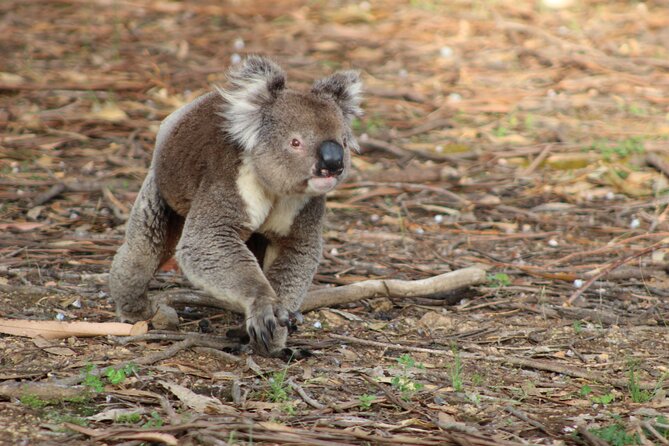
Kangaroo Island is famous for wildlife, but timing is what turns a nice nature walk into a memorable one. This tour is planned around that sweet spot when the day has cooled down and animals start acting like it is their shift change. By the time the walk is in full swing, you’re already in the right hours for koalas, kangaroos, and wallabies to show themselves more often than they would at midday.
The setting is also a big deal. Hanson Bay Wildlife Sanctuary is described as a 5,000-acre protected area, and that scale matters because animals need space and cover. Instead of scanning from a road or stopping at a fence line, you’re moving through the sanctuary with a guide, watching behavior in context. One standout detail from guides and the experience itself is the sense of transition: the walk starts with day visitors in view, then the night layer kicks in with nocturnal activity.
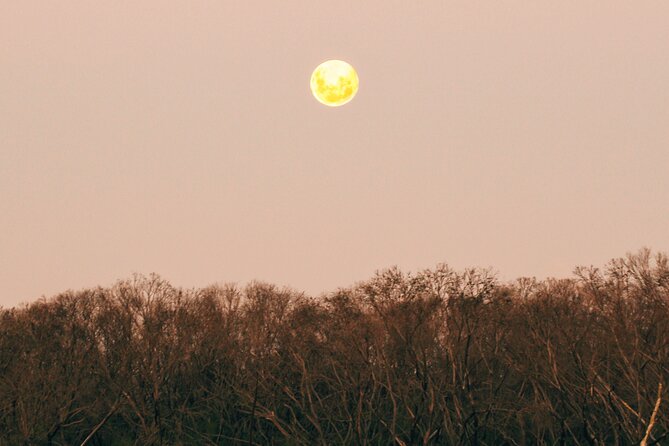
And yes, the skies are part of the experience. You are walking under the Great Southern Skies, and when night settles in, the stars become part of the payoff. In one account, that sky moment was called out as gorgeous. It is not just a wildlife tour; it is a sky-and-animal evening.
You can also read our reviews of more evening experiences in Kangaroo Island
The 90-minute walk: what you’ll do from first steps to night searching
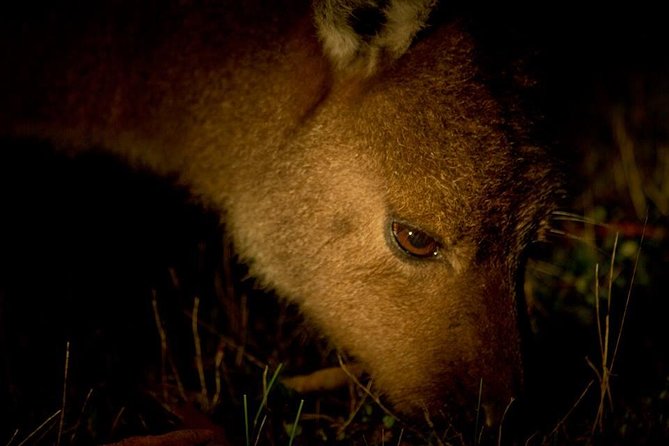
The tour’s core is straightforward: you meet at Hanson Bay Wildlife Sanctuary (7797 S Coast Rd, Karatta SA 5223) and take a fully guided 90-minute walking route. The activity finishes back at the meeting point, so you are not dealing with transport or a long end-of-day logistics shuffle.
Here’s how the flow typically feels:
During sunset hours: get the daytime stars to show up
At the start, you are in the sanctuary when many animals are more active. Guides help you spot and interpret what you’re seeing, from relaxed koalas to kangaroos moving through open areas. You’re also likely to notice the social side of wildlife: koalas can call loudly, and sometimes you may even catch courting behavior when things are heating up. If you see a koala making noise, it is not random sound; it is part of how animals communicate, and your guide will connect that behavior to what is going on in the season and in the local population.
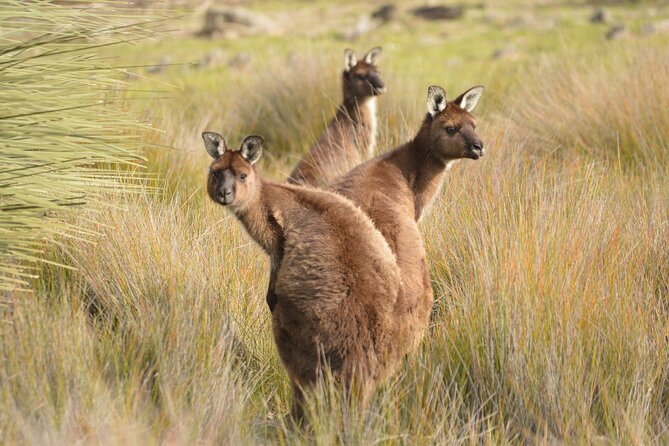
This is also when wallabies and kangaroos may move into view more clearly. People who go on this tour tend to describe seeing multiple species rather than one animal type. That is exactly what you want from a short evening outing: variety without wasting time.
After dark: switch your attention to nocturnal animals
Once the light drops, the tour keeps going. The goal shifts from daytime wildlife to the creatures that come out later. Echidnas, bats, and possums are specifically mentioned as targets during the nocturnal phase.
The important thing: the guide’s job is not only spotting; it is helping you understand why the animals might be doing what they’re doing right then. In a 90-minute window, you are not going to watch everything happen from beginning to end, so your best results come from learning how to look—quietly, patiently, and with guidance that tells you what signs matter.
The real payoff: animals plus atmosphere
The sanctuary doesn’t just feel like a list of sightings. The walk has a mood shift: from warm sunset light to darker paths and night sounds. People remember the combination of animals and sky. Even if you miss one species, the evening can still feel complete because you’re there for the transition, not just for one highlight photo.


Wildlife you can look for: koalas, wallabies, kangaroos, echidnas, bats, and possums
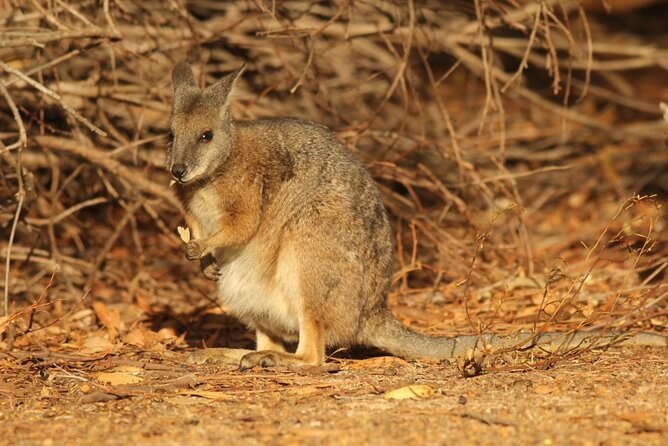
Let’s be practical about wildlife expectations. This tour is built for seeing a set of native animals, and the tour description explicitly calls out koalas, tammar wallabies, kangaroos, echidnas, bats, and possums. In real life, you can get lucky and see a lot, or you can have a quieter night.
Koalas: more than a single sighting
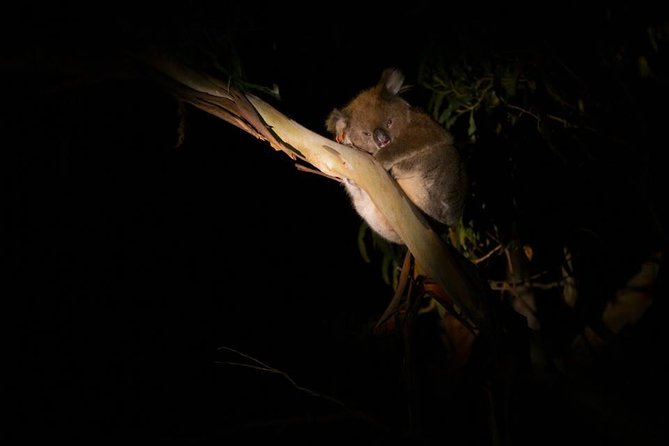
Koalas are usually the headline, and the guide will help you move beyond the wow moment into understanding behavior. There are stories of koalas calling, and in at least one case, even courting behavior was described during the dusk window. If you want an evening where koalas feel active rather than sleepy, this is the time to go.
Kangaroos and wallabies: movement in the open
Kangaroos and wallabies often show up as you look for signs of feeding and movement. One review highlighted kangaroos drinking from their dam area, which is a great reminder: animals often cluster around water, even after the sun starts to lower.
Echidnas, bats, and possums: the “maybe tonight” group
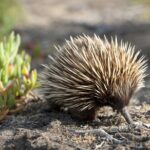
Echidnas, bats, and possums are the nocturnal bonus. This is where you need patience and acceptance. Echidnas can be seen, but not on every run. One account noted that they were hoping for echidnas but did not get a sighting in the end. That is the reality of wildlife in the wild.
Bats and possums also fall into the same category: you may get clear sightings, or you might mostly get guide interpretation that explains what to look for. Either way, the value is not just in whether a creature appears; it’s in learning how to read their presence—movement, timing, and habitat cues.
The biggest rule: sightings can’t be guaranteed
Your guide can stack the odds through timing and skill, but nobody can promise every species in 90 minutes. The tour is designed to maximize your chances, not to guarantee a checklist.
Getting the most out of your guide: Max, Tom, Fiona, and the small-group advantage
The guide experience seems to be one of the strongest parts of this tour. Multiple people mention guides named Max and Tom as standout. They’re described as funny as well as knowledgeable about what you’re seeing, and that matters. When you laugh and learn at the same time, the walk holds your attention instead of turning into a lecture while you stare into shadows.
Why small group size helps you spot more
The tour is advertised as a maximum of 10 people, while the activity information also says a maximum of 15 travelers. Either way, it’s designed to be small. In a small group, you can stop where animals are likely to be active without constant bottlenecks. You also get clearer sightlines. Most importantly, you can ask a question and get an answer that connects directly to what you’re looking at in that moment.
If you’re the kind of person who likes asking why something is doing what it is doing, a guided small group is your friend. If you prefer quiet viewing with minimal talking, you’ll still benefit from knowing what to watch for—especially when it’s dark.
A guide who knows the sanctuary rhythms
One review noted that Tom grew up near the sanctuary and spent his childhood roaming the beaches and bush of Kangaroo Island. Even if you never share that kind of local background, the effect is the same: the guide seems comfortable with the rhythms of the area and the way wildlife shows up.
Price and value: is $60.97 per person worth it?
At $60.97 per person, this isn’t a throwaway activity. One review even raised the point that it felt overpriced. That’s a fair reaction if you expect a tour to be mostly about animal luck with little else.
But the value story here is more than just wildlife sightings:
Admission is included
The tour includes the admission ticket for the sanctuary. So you’re paying for access and for a guided experience inside the protected area.
The sanctuary model is conservation-funded
Ticket sales are described as funding restoration and protection of sanctuary ecosystems, including feral animal control and weed control. Translation: your ticket helps keep the habitat in workable shape for animals to thrive. That is harder to quantify than a photo, but it is a real factor in how much value you get.
Exclusive access plus time
You are not just visiting a viewing spot. You get a guided walk through the sanctuary during the best hours (sunset into night). In wildlife watching, time is often the currency. Spending 90 minutes in the right window with someone helping you interpret what you see can be more valuable than a cheaper activity that gives you less access and less guidance.
Where the “worth it” feeling comes from
If you go in expecting a guided, conservation-backed night walk with a decent chance of multiple species, you’re more likely to feel good about the price. If your priority is seeing a specific nocturnal animal on demand, you may feel let down when wildlife timing does not line up.
What to bring and how to plan your evening walk
This is an evening walking tour on a natural site, so plan like it’s dark and cooler than you think.
- Wear comfortable, closed-toe shoes with good grip. You’ll be walking in the sanctuary at dusk and then after dark.
- Bring layers. Even in warmer seasons, the temperature can drop once the sun goes down.
- If you get cold easily, pack accordingly. A 90-minute walk feels longer when you’re chilly.
- Bring a camera if you like, but also be ready for moments when you just want to watch and listen. The point is wildlife behavior, not perfect photos.
The tour description also notes moderate physical fitness. That usually means you do not need to be an athlete, but you should be comfortable walking for about 1.5 hours.
Weather matters: how cancellations and rescheduling work in plain English
This experience requires good weather. If weather conditions are poor, the operator will either offer a different date or a full refund. That’s important because nocturnal viewing depends on more than animal behavior; it depends on whether people can safely walk and see in the conditions.
Also, because it’s a wildlife tour, weather affects you twice. First for safety and scheduling. Second because animals may adjust their activity patterns depending on conditions.
Who should book this sunset and nocturnal tour?
This tour is a great fit if you:
- Want to see native animals at the most active hours of the day and then again after dark
- Like guided wildlife interpretation, not just self-guided sightseeing
- Appreciate a small-group experience where you can hear the guide and still see what’s happening around you
- Are traveling from outside Australia and want a memorable introduction to kangaroo island wildlife behavior in a real habitat
It’s also good for people who enjoy atmosphere. If stargazing is on your travel wish list, the Great Southern Skies angle gives you an extra layer to the evening.
It may be less ideal if you:
- Need a strict, guaranteed checklist of animals (wildlife does not work like that)
- Have mobility limitations that make walking outdoors at night difficult
Should you book this Kangaroo Island sunset and nocturnal tour?
If you’re on Kangaroo Island and your schedule allows it, I think it’s worth booking. The combination of sunset timing, guided sanctuary walking, and a shift into nocturnal searching is exactly what makes this different from a quick wildlife stop.
Choose it if you want more than photos. Choose it if you want to learn how to read animal behavior at the hours when the bush starts doing its real work. Just go in with the right mindset: this is a tour that maximizes chances, not a guarantee.
If you want to maximize your odds even more, pick this kind of experience early in your Kangaroo Island trip window. That way, if you miss a nocturnal species like an echidna on night one, you still have time to adjust plans.
FAQ
Where does the Sunset Nocturnal Adventure Tour start?
It starts at Hanson Bay Wildlife Sanctuary, 7797 S Coast Rd, Karatta SA 5223, Australia, and it ends back at the same meeting point.
How long is the tour?
The guided walk is about 1 hour 30 minutes (about 90 minutes), and a sanctuary admission ticket is included.
What animals might I see on this tour?
You can look for koalas, tammar wallabies, kangaroos, echidnas, bats, and possums. Wildlife sightings are not guaranteed.
How big is the group?
The experience is described as a small-group tour with a maximum of 10 people, and the activity info also notes a maximum of 15 travelers.
What fitness level do I need?
The tour is listed for travelers with a moderate physical fitness level, since it is a walking experience.
What happens if the weather is poor?
This experience requires good weather. If it is canceled due to poor weather, you’ll be offered a different date or a full refund.
If you want, tell me when you’re going on Kangaroo Island (month and rough time of sunset). I can help you decide where this fits best with other wildlife plans.