REVIEW · CANBERRA
Canberra: Old Parliament House ‘Walk Through History’ Tour
Book on GetYourGuide →Operated by Museum of Australian Democracy at Old Parliament House · Bookable on GetYourGuide
Democracy has hallways, and this one walks you through. Old Parliament House feels built for storytelling: you’ll follow the dramas of Australian government through King’s Hall and into the Senate and House chambers. I especially like the chance to sit in the real leather benches and look up at the soaring timber paneling and eucalyptus-leaf carpet, and I also like how the guide connects the big moments to the people behind the scenes, including press and staff who kept Parliament running. One catch to plan for: entry via the Main Entry uses steps, so if that’s an issue, use the Accessible Entry with lifts.
At $14 per person for a 45-minute live English tour, it’s an easy add-on that doesn’t steal your whole day. The tone tends to be sharp and entertaining, with guides praised for clear, well-delivered commentary, including guides like Katie and Oli. If you’re hoping for long, slow museum wandering, this isn’t that kind of visit, but it’s perfect for a focused history hit in Canberra.
In This Review
- Key highlights worth your attention
- Old Parliament House in Canberra: what this 45-minute walk gives you
- Entering King’s Hall: the crossroads you’ll want to look up at
- Senate and House of Representatives chambers: the “sit and imagine” part
- The building itself: 1920s “Stripped Classical” details you can actually notice
- Prime Minister’s Suite and party rooms: where decisions meet personality
- Protest, press, and power: the people angle that makes it stick
- Museum of Australian Democracy: what the last stop helps you do
- Price and value: why $14 makes sense for most visitors
- Who should book this tour (and who might want a different option)
- Practical tips to get more out of it
- Should you book the Old Parliament House Walk Through History tour?
- FAQ
- How long is the Walk Through History tour at Old Parliament House?
- What areas of Old Parliament House are included in the tour?
- What is the meeting point?
- Is food or drinks included?
- Is the tour available in English?
- Is the tour wheelchair accessible?
- Are carers allowed to attend?
- Can I bring alcohol or drugs?
- What’s the cancellation policy?
Key highlights worth your attention
- King’s Hall first: you start in the building’s crossroads space, then work your way into the chambers.
- Sit-and-look details: leather benches, timber paneling, and eucalyptus-leaf carpet help you picture debates in context.
- Real decision rooms: you get access to the Senate and House of Representatives chambers, plus working spaces like party rooms.
- Prime Minister’s Suite stop: you’ll hear how leaders wrestled with issues of their day in the same building footprint.
- Power, protest, and press stories: the tour includes behind-the-scenes angles, not just speeches and votes.
- Museum of Australian Democracy connection: it ends by tying the building’s past to how democracy works now.
Old Parliament House in Canberra: what this 45-minute walk gives you
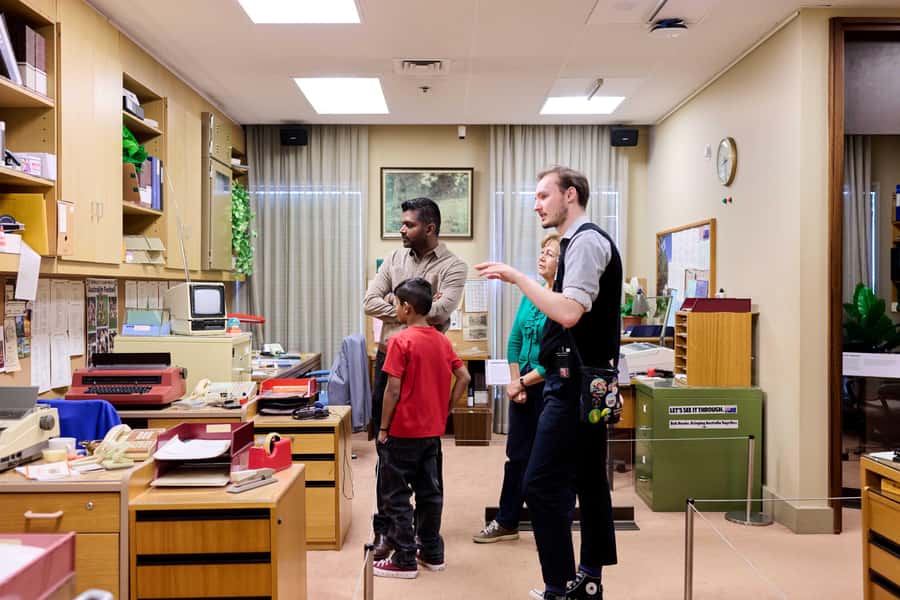
This tour is built like a smart circuit. In under an hour, you’re guided through the places where Australian parliamentarians met and argued, and you also get the “how it actually ran” perspective that most quick stops skip.
You’ll move through key areas including King’s Hall, the Senate chamber, and the House of Representatives chamber. From there, you’ll hear about how the building functioned as a workplace, with stops that reference party rooms and the Prime Minister’s Suite. Along the way, the guide’s job is to bring the building to life with stories about protest, press, and power, plus the people who kept Parliament moving from day to day.
And then comes the museum connection. Today, Old Parliament House is the Museum of Australian Democracy, so the tour naturally points you toward the idea that democracy isn’t just speeches on a podium. It’s systems, people, and everyday influence.
You can also read our reviews of more walking tours in Canberra

Entering King’s Hall: the crossroads you’ll want to look up at
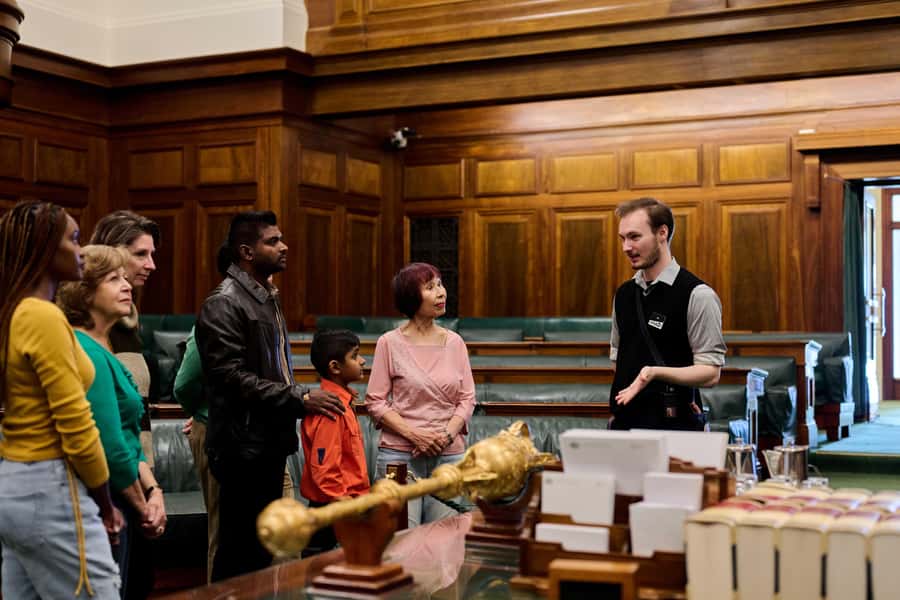
King’s Hall is where you get your bearings fast, and it’s one of the smartest parts of the tour. It’s described as the bustling crossroads of the building when Parliament was in operation, and that makes sense once you’re standing in it.
Here’s what I like about starting in King’s Hall: it frames the whole experience as movement and interaction. You’re not only learning what decisions happened. You’re also learning how people flowed through the same spaces—where conversations started, where tension spread, and where the everyday rhythm of a legislature lived.
Practically, it also works because it’s the main floor starting point. You’ll begin the tour there after showing your ticket at reception. Then the guide pulls you forward into the chambers and working rooms in a way that feels like you’re following a route that once mattered to staff and politicians.
If you’re the type who likes to orient yourself before reading every sign in sight, King’s Hall helps you do that.
Senate and House of Representatives chambers: the “sit and imagine” part
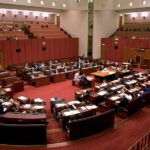
One of the best reasons to do this tour is that you don’t just look at rooms from the doorway. You’re allowed into the Senate and House of Representatives chambers, and you can sit in the leather benches.
That changes how you take in the space. Standing in a room gives you facts. Sitting gives you scale. And when you look up—at the timber paneling and the eucalyptus-leaf carpet—you can start to picture the sound and atmosphere of major speeches, walk-outs, and votes taking place here.
The guide’s focus matters too. The stories aren’t random trivia. You hear about key figures and pivotal moments that defined modern Australia, and the setting helps the information land. Even if you remember the broad outlines of Australian political history, seeing where the debates happened makes the timeline feel more real.
A small consideration: because the tour is only 45 minutes, you won’t have long, quiet time in each room. If you like slow museum pacing, choose this when you’re ready to listen closely rather than linger.
The building itself: 1920s “Stripped Classical” details you can actually notice
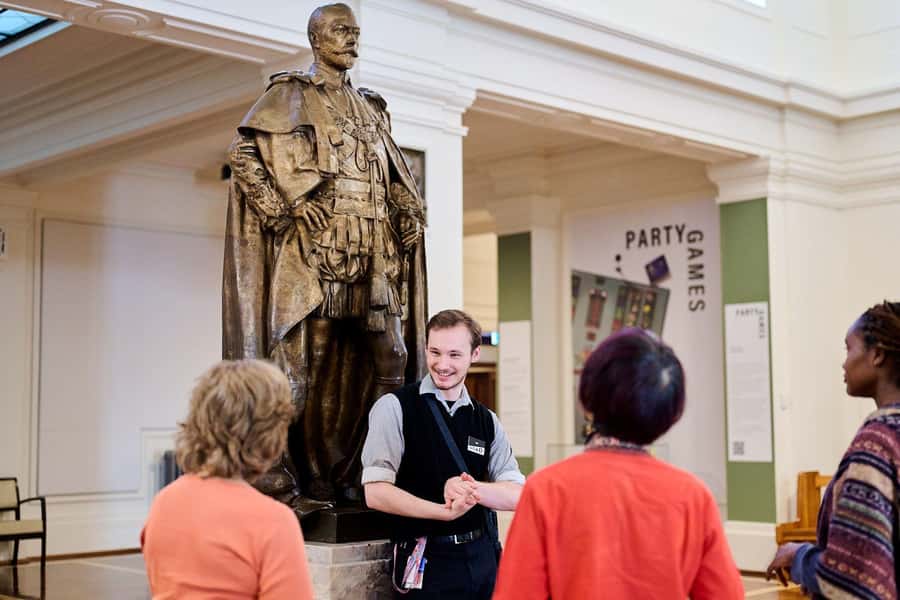
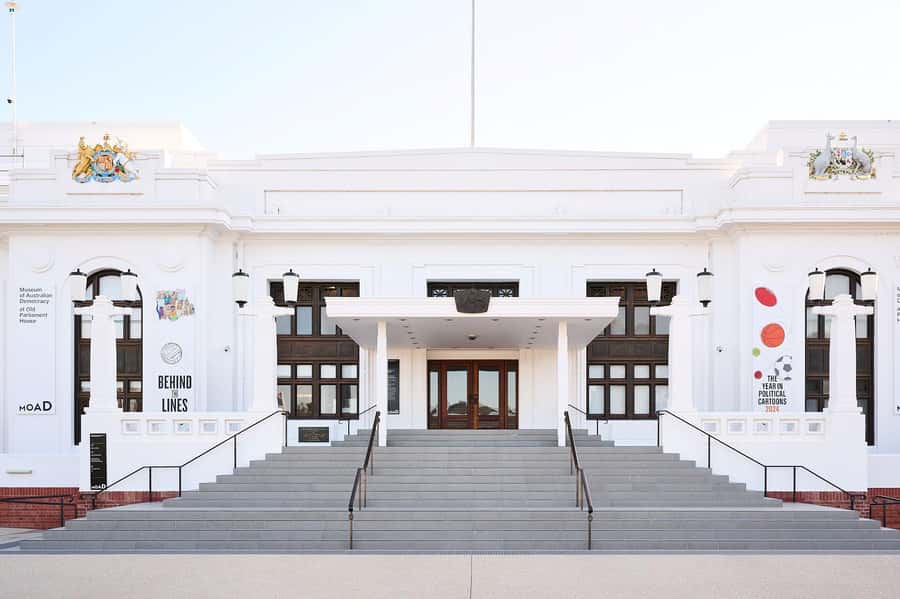
This is one of those tours where architecture isn’t treated as a side note. Old Parliament House is a preserved 1920s Stripped Classical building, and the guide points your attention toward the visual language that shapes how power feels inside.
You’ll hear about the building’s architecture and key figures tied to it, but the real value for most people is that you’re standing in it. You can see the materials and design choices up close: the soaring timber paneling, the leather benches, and the eucalyptus-leaf carpet texture that makes the chambers feel distinctly period.
When a tour actually brings you into the space, architecture stops being a word and becomes something you can read with your eyes. It also gives context for why the room style mattered to the drama of parliamentary life. Governments are formal for a reason, and the environment reinforces that feeling.
Prime Minister’s Suite and party rooms: where decisions meet personality
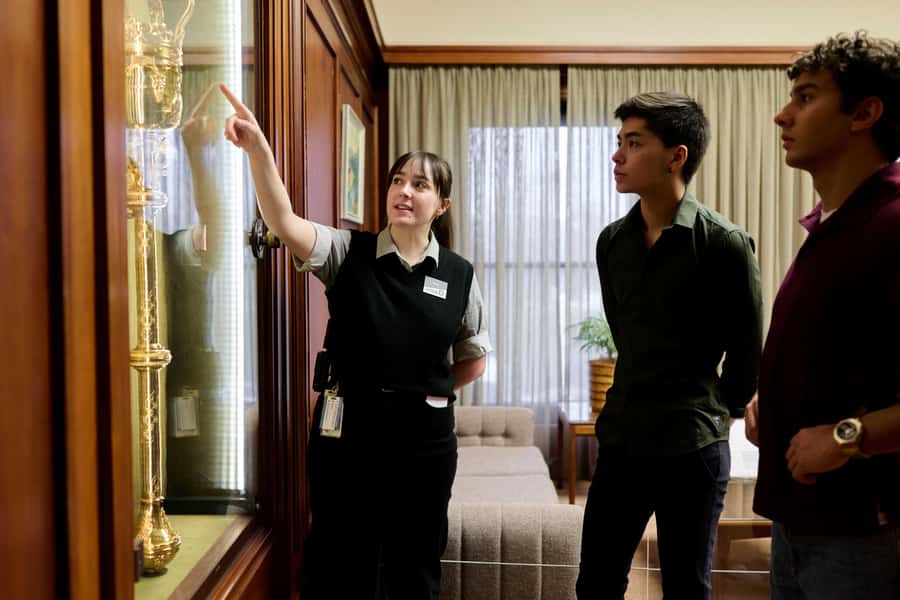
After the chambers, you move into working spaces like party rooms and the Prime Minister’s Suite. This part is especially useful if you’re trying to understand politics as more than a set of voting results.
You’ll hear names connected to the modern era—Gough Whitlam, Malcolm Fraser, and Bob Hawke—and the tour frames the spaces as places where leaders wrestled with the issues of their day. That’s a subtle shift from history as a list of events. It turns history into a workday reality: people negotiating, strategizing, and trying to move the country forward while pressure is coming from every direction.
I also like the way the tour includes the behind-the-scenes cast. You get stories about clerks and journalists, and even roles that sound ordinary until you remember they’re essential: the barbers and staffers who helped keep daily life going and helped certain conversations happen. That angle is what makes the tour feel grounded rather than purely ceremonial.

Protest, press, and power: the people angle that makes it stick
A lot of political tours lean heavily on speeches and formal decisions. This one adds texture with stories about protest, power, and the press. The message is simple: democracy isn’t only inside Parliament walls; it’s also contested and observed, shaped by disagreement and by coverage.
It also helps that the tour is candid about how Parliament ran. You hear that real systems have support staff, and the people behind those systems matter. When you learn that clerks and journalists played a role in how Parliament functioned, you start to see government as a network, not a spotlight.
This is one of the most praised elements: guides are clearly good at telling these stories in a way that stays understandable and interesting. If you get a guide like Katie or Oli, the commentary tends to land as both entertaining and precise, which is a huge deal when you’re learning something historical in a limited time window.
Museum of Australian Democracy: what the last stop helps you do
The tour doesn’t end with walking out into the Canberra street air and forgetting everything five minutes later. It points you toward the broader context by connecting Old Parliament House to its current life as the Museum of Australian Democracy.
From here, the museum idea becomes practical: democracy is something you can study as a system—how it works, why it matters, and how ordinary people influence change. That matters because it stops the tour from feeling like you traveled only to look at old buildings.
Instead, you leave with a question you can carry into the museum areas: where do decisions come from, and who gets heard?
If you like taking one structured tour and then using what you learned to guide your self-paced exploring, this is a smart pairing. It also makes the tour feel more than a history lecture.
Price and value: why $14 makes sense for most visitors
At $14 per person for a live, English-guided, 45-minute tour, the value is strong—especially in Canberra, where time can be tight and museum options can eat your day.
Here’s what you’re getting for the price:
- Guided access to the building’s signature spaces, including King’s Hall, Senate, and House of Representatives chambers
- Context about architecture and key figures
- Stories about protest, power, press, and the behind-the-scenes staff who helped Parliament function
- A museum connection at the Museum of Australian Democracy
For many visitors, that’s a lot of learning per minute. You’re not paying for a long, slow experience. You’re paying for a focused orientation to one of Australia’s most important civic spaces. If you’re the type who wants a quick but meaningful introduction before deeper exploring, this is priced in a way that fits.
Who should book this tour (and who might want a different option)
This tour fits best if you:
- Want a short guided introduction to Australian parliamentary history
- Like learning through real spaces, not only photos or diagrams
- Enjoy hearing stories that connect debates to people, including press and staff
You might consider a different option if you:
- Prefer unhurried time in rooms without listening to a spoken route
- Want a full museum day rather than a guided “walk through history” format
In other words: this is ideal for orientation and understanding, not for total immersion or long lingering.
Practical tips to get more out of it
A few small things can make the difference between a “nice tour” and a “I’m glad I did that” tour.
First, plan your entry. Entry via the Main Entry uses steps, while an Accessible Entry is available with lifts. If you’re bringing a wheelchair, it’s noted as first come, first served and wheelchairs are available on that basis.
Second, read the rules before you arrive. Alcohol and drugs aren’t allowed, and bare feet aren’t allowed. It sounds obvious, but it’s the kind of rule that can ruin your day if you forget.
Third, arrive at the right desk. You simply show your ticket at the reception desks for Main Entry or Accessible Entry, and the tour starts in King’s Hall on the main floor. If you’re cutting it close, do yourself a favor and give yourself a little buffer.
Finally, bring the right mindset. This is a listening tour. The best experience comes when you let the guide’s narrative connect rooms, people, and moments.
Should you book the Old Parliament House Walk Through History tour?
If you’re visiting Canberra and you want one activity that feels both meaningful and time-friendly, I’d say book it. For $14 and 45 minutes, you get access to the chambers, key architectural cues, and the kind of behind-the-scenes storytelling that turns civics into something you can picture.
It’s also a strong choice if you like practical context: you’ll see the spaces where Parliament worked, and then you’ll end with the museum framing of how democracy works and how ordinary people can influence change.
Only skip it if you’re craving a long, quiet museum drift. If you’re good with a guided route and want a smart Canberra history stop, this one delivers.
FAQ
How long is the Walk Through History tour at Old Parliament House?
It runs for 45 minutes.
What areas of Old Parliament House are included in the tour?
The tour includes access to King’s Hall and the Senate and House of Representatives chambers.
What is the meeting point?
Entry is via the Main Entry or Accessible Entry. You show your ticket at the reception desks, and the tour starts in King’s Hall on the main floor.
Is food or drinks included?
No. Food and drinks are not included.
Is the tour available in English?
Yes. The live tour guide provides commentary in English.
Is the tour wheelchair accessible?
Yes, it’s wheelchair accessible. Main Entry uses steps, and there is an Accessible Entry with lifts. Wheelchairs are available on a first come, first served basis.
Are carers allowed to attend?
Yes. Carers may accompany free of charge.
Can I bring alcohol or drugs?
No. Alcohol and drugs are not allowed on the tour.
What’s the cancellation policy?
You can cancel up to 24 hours in advance for a full refund.