REVIEW · DARWIN
Darwin: Small Group 2-Hour Heritage Walk
Book on GetYourGuide →Operated by Walk Darwin · Bookable on GetYourGuide
Darwin can feel big and spread out, but this walk makes it readable. I love the leisurely pace and the way John ties story to street corners, not just dates. I also like that you see reconstructed heritage buildings and other spots you usually miss on a bus. One thing to consider: it’s still a real walking tour, with limited places to sit, so plan for heat and steady movement.
This is a local-led, 2-hour guided walk that moves at a human speed. You’ll start under the John McDouall Stuart statue in Raintree Park, then work your way through central Darwin. Expect spoken commentary in English, plus plenty of chances to look closely at architecture, public artworks, tropical plants, and whatever wildlife decides to show up.
The focus is Darwin’s transformation—how the city’s older layers were reshaped by World War II and Cyclone Tracy, and then how it grew into the multicultural, tropical place you see now. If you’re short on time and want a city introduction that actually sticks, this tour is a strong bet.
In This Review
- Key highlights worth planning for
- Why Darwin’s streets explain the city’s identity
- Meet under John McDouall Stuart and get oriented fast
- World War II and Cyclone Tracy: history you can actually point to
- Old courthouse and police station: when law and order leave footprints
- Brown’s Mart and the theater connection to community life
- Palmerston Town Hall ruins: why a ruin can still teach
- Government House, Parliament House, and the Supreme Court: modern power with historical roots
- Hidden treasures on foot: public art, plants, and the chance of wildlife
- How hard is it really? Pace, sun, and what to bring
- Price and value: $41 for a local story in a short time
- Who this tour suits best
- Where it ends: transition to the rest of your day
- Should you book this Darwin heritage walk?
- FAQ
- How long is the Darwin Small Group 2-Hour Heritage Walk?
- What is the group size?
- Where do we meet for the tour?
- Where does the tour end?
- Is hotel pickup included?
- What will we see during the walk?
- What should I bring?
- Are pets or bare feet allowed?
- Is the tour suitable for children or people with low fitness?
Key highlights worth planning for
- Small group of up to 10 with spoken commentary you can actually hear
- Walking-only access to places that don’t work well on a bus route
- Reconstructed heritage sites you can see up close and photograph clearly
- WWII and Cyclone Tracy context explained through streets, buildings, and surviving landmarks
- Central-city route with an easy finish near Knuckey Street and the Esplanade
Why Darwin’s streets explain the city’s identity
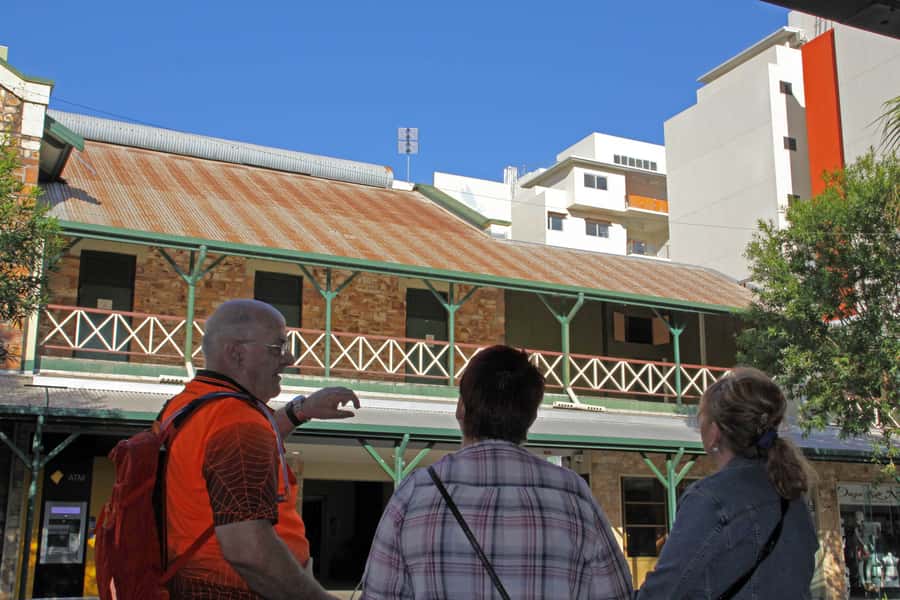
Darwin’s story isn’t one straight line. It’s more like layers—pioneer paths, wartime scars, a disaster that forced rebuilding, and then a steady reshaping into a modern tropical port with multicultural life.
What makes this walk work is that it connects big events to what’s still visible today. You’re not just hearing history as a lecture. You’re walking past the courthouse, police station, and theater spaces where earlier civic life played out, then looking at the government buildings that represent how the city moved forward. That street-level link is why a guide matters here.
Also, Darwin is hot. The tour is designed for a relaxed pace, and the reviews strongly support that the guide keeps things comfortable and hydrated. The walk isn’t a sprint; it’s a guided stroll with meaning behind every corner.
You can also read our reviews of more walking tours in Darwin
Meet under John McDouall Stuart and get oriented fast
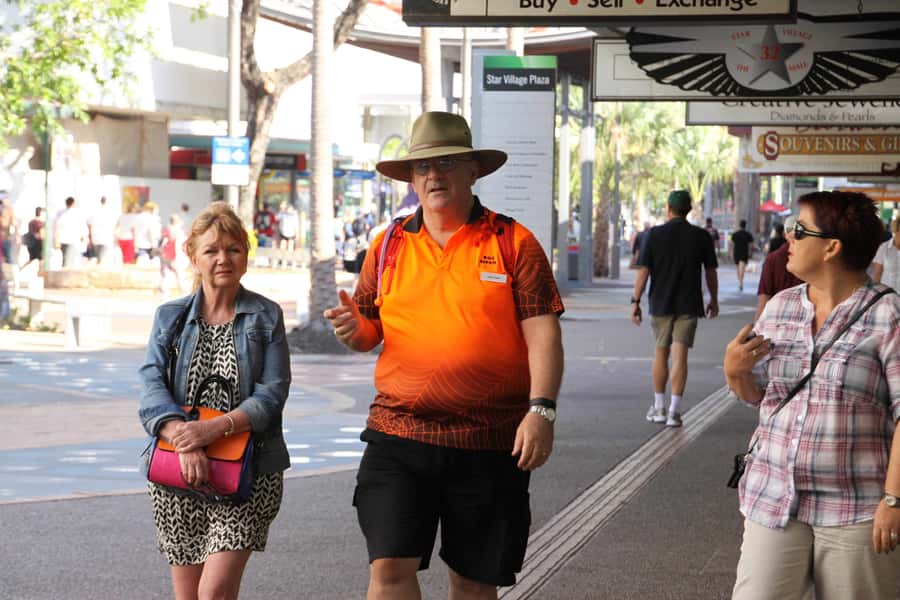
You’ll meet under the John McDouall Stuart statue, with your guide wearing a bright orange shirt. This is a smart starting point because it immediately gives you a sense of Darwin’s wider character: a frontier-linked name, right in the open.
From there, you begin the loop on foot, following paths of pioneers. You’ll get context right away, so your first impressions of the city won’t feel random. Instead of wandering and guessing, you’ll understand what you’re looking at while you’re still fresh enough to take it all in.
If you’re the type who likes to know where everything is before you jump into the rest of your day, this tour does that job quickly. And since it’s only two hours, it fits neatly into a first-time Darwin itinerary.
World War II and Cyclone Tracy: history you can actually point to
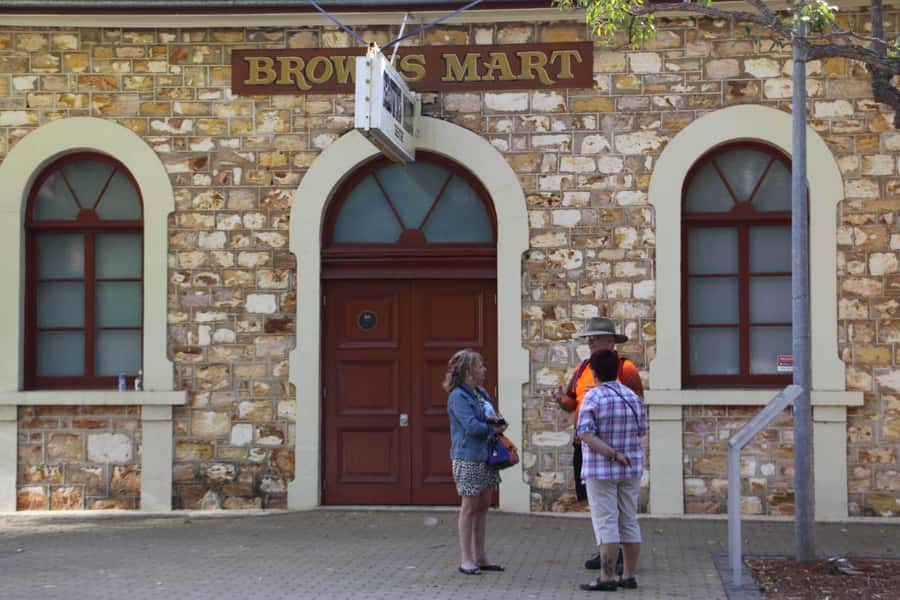
A lot of cities have war stories. Darwin’s are personal because the landscape and the built environment reflect those disruptions.
During the walk, your guide shares Darwin’s WWII bombings and what came after. Then you’ll connect that to Cyclone Tracy and the rebuilding that reshaped parts of the city. This matters because it explains why certain buildings feel preserved, reconstructed, or purposely brought back into view.
Instead of treating these events as distant facts, you’ll see them as forces that changed design, planning, and what the city chose to rebuild. And when the guide moves you from one historic-looking site to another, you start noticing patterns: what was saved, what was rebuilt, and how civic space evolved.
Old courthouse and police station: when law and order leave footprints
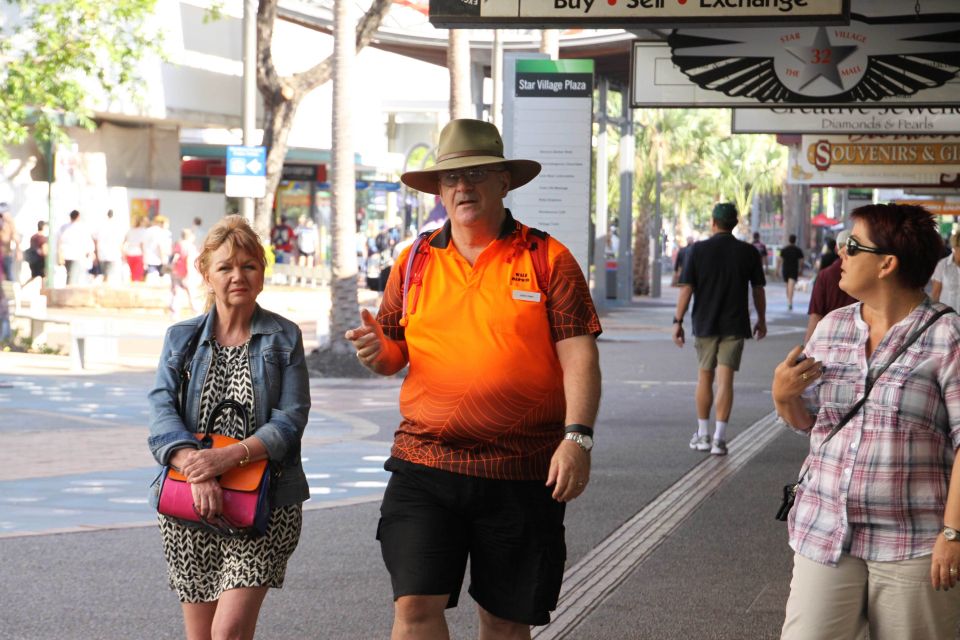
One of the most rewarding parts of this tour is visiting remaining heritage buildings that have been painstakingly reconstructed. The old courthouse and police station are key examples.
Standing near a former courthouse or police station, you get a better feel for what civic Darwin looked like before modern rhythms took over. These weren’t just background structures. They were where government and authority showed up in everyday life.
The advantage of seeing these on foot is scale and detail. On a bus, you tend to miss the small architectural choices. Walking lets you slow down and look at textures, entrances, and the overall feel of the building, even if you can’t go inside.
Practical tip: take a few photos from different angles. Reconstructed buildings can look one way from the street, and another way as you reposition yourself just a few steps.
Brown’s Mart and the theater connection to community life
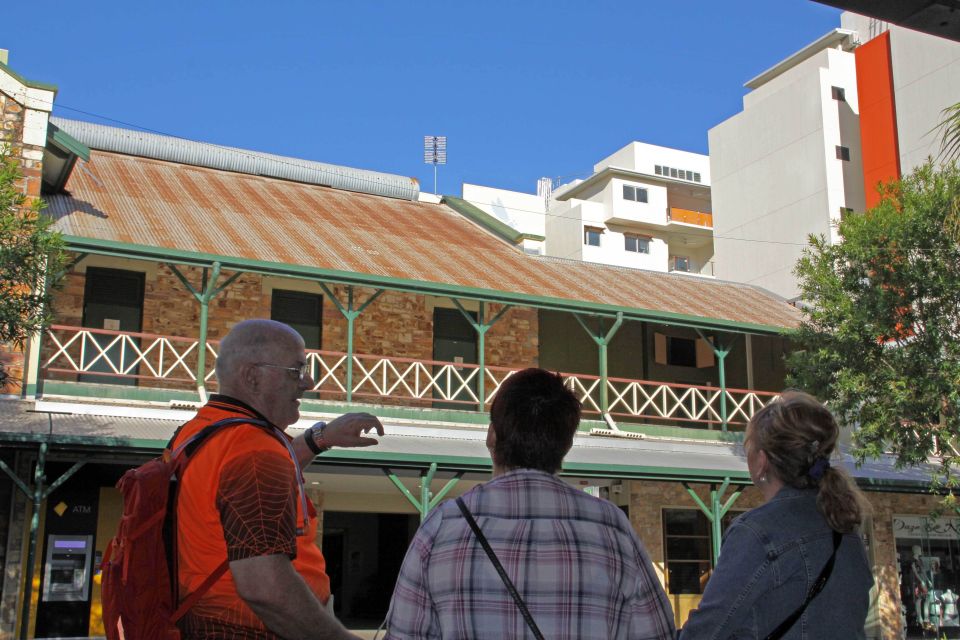
Another highlighted stop is Brown’s Mart theater. Even if you’re not a theater person, it’s a useful piece of Darwin’s cultural puzzle.
Historic venues like this help you understand that the city wasn’t only about defense, government, and logistics. It also had community life, performance, and gathering—social energy that often continues even when the city changes around it.
On this walk, the guide’s job is to make the theater feel less like a name on a sign and more like a place that once mattered to real people. That’s the value of a local storyteller: they’re not just listing sites. They’re explaining why the site matters.
And again, you’re walking. That means you can pause for photos of the building and nearby public artwork without feeling like you’re holding up a bus full of people.
You can also read our reviews of more historical tours in Darwin
Palmerston Town Hall ruins: why a ruin can still teach
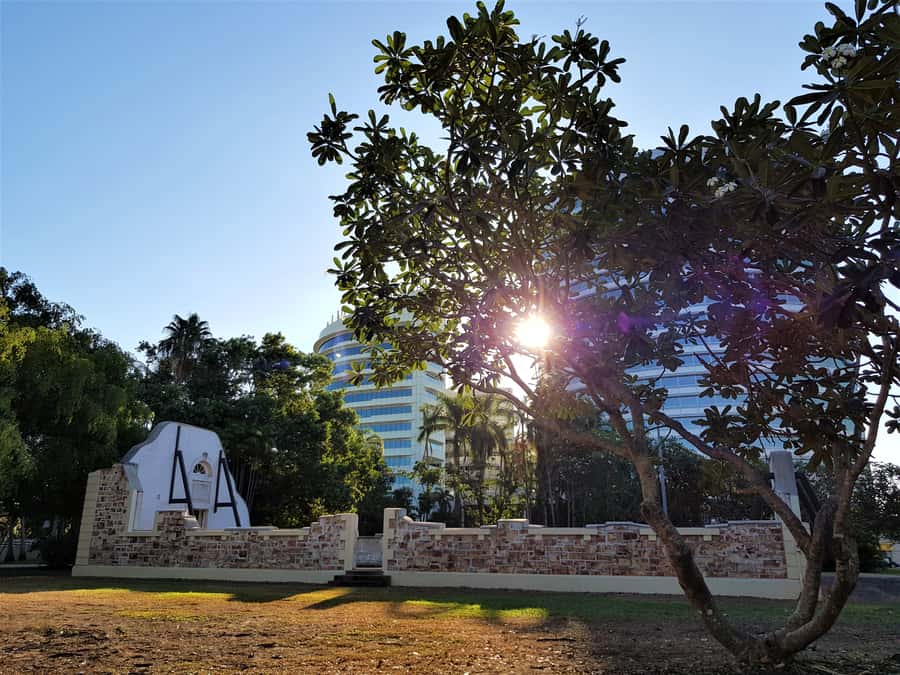
The tour also includes the Palmerston Town Hall ruins, another site that has been painstakingly reconstructed. Ruins can be confusing to visitors: you might wonder what you’re supposed to feel or understand.
In this context, the point is not just the physical remains. It’s what the ruins represent about how the city dealt with disruption and chose to rebuild and reinterpret heritage. When a guide frames what you’re seeing, a ruin becomes part of the larger recovery story.
Because you’re on a walking route, you can see how the surrounding streets and modern structures sit next to the older fabric. That contrast is often where the learning lands hardest.
Government House, Parliament House, and the Supreme Court: modern power with historical roots
As you continue through the streets of Darwin’s modern tropical city, you’ll view Government House, Parliament House, and the Supreme Court of the Northern Territory.
These aren’t random stops. They show how Darwin organized its civic life and how government presence translates into architecture and street form. When you connect these buildings to the earlier stops—courthouse, police station, reconstructed heritage—you see a clear shift from the city’s older civic structures to the institutions that define governance today.
This part is especially good if you like architecture or you want to feel grounded in how a city functions. The tour’s design keeps you moving through central areas where you can absorb both the official buildings and the everyday streets around them.
Hidden treasures on foot: public art, plants, and the chance of wildlife
One of the big promises here is that you’ll find hidden treasures on foot. That shows up as small stops for public artworks and architectural details that you’d likely miss from far away.
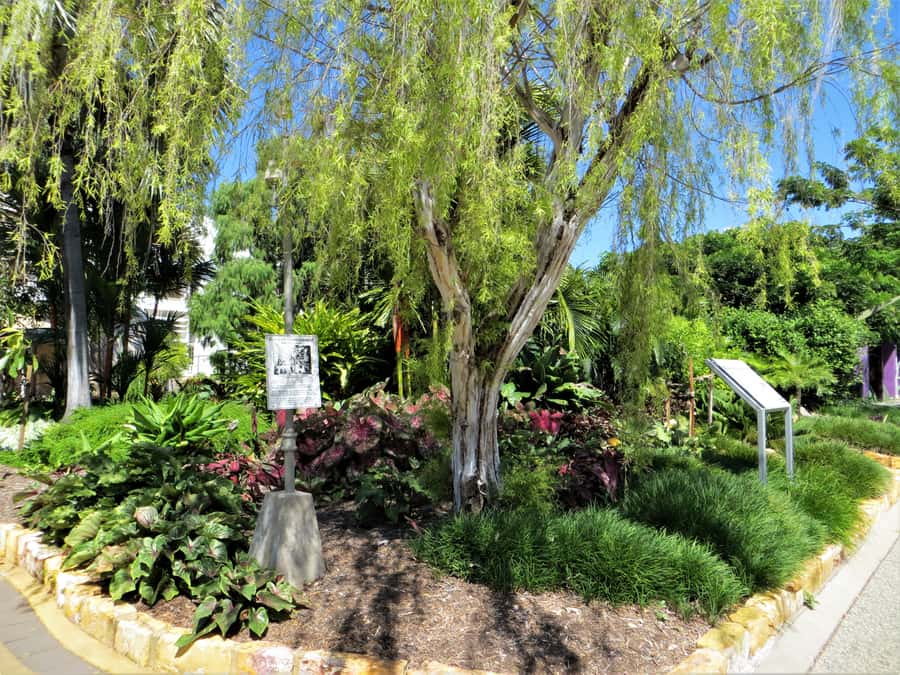
Darwin’s tropical environment adds another layer. You’ll have opportunities to photograph tropical plants and possibly wildlife. Of course, wildlife isn’t guaranteed, but it’s the kind of place where you might spot something during a slow walk if you keep your eyes open.
If you’re traveling with a camera or phone you actually use, this tour is set up for that. The route isn’t about sprinting from one landmark to the next. It’s about stepping into the spaces between buildings, where photos become more interesting than postcard shots.
How hard is it really? Pace, sun, and what to bring
Even though it’s described as leisurely paced, it’s still a walking tour. The tour notes that there aren’t many places to stop, sit, and rest, so a level of fitness is required.
Weather is the big wildcard in Darwin. I’d treat this like a warm-weather walk: wear sunscreen, bring water, and plan your timing around the sun. The essentials are clearly listed for you:
- sun hat
- camera
- sunscreen
- water
- hand sanitizer or tissues
You also can’t assume you can smoke your way through it. Smoking isn’t allowed. And you’ll want closed-toe comfort because bare feet aren’t permitted.
If you’re someone who gets uncomfortable in heat or needs frequent breaks, this might feel long. But if you can handle steady walking at a relaxed pace, you’ll be fine.
Price and value: $41 for a local story in a short time
At $41 per person for a 2-hour guided walk, the value comes from what you get in that time window.
First, you’re paying for a live local guide with spoken commentary, not a self-guided map. That’s the difference between seeing buildings and understanding why they’re there. The guide also covers the big transformational events—WWII bombings and Cyclone Tracy—and ties them to the modern city you’re looking at.
Second, the small group size helps. With a maximum of 10 participants, it’s easier to hear the guide, ask questions, and move at a pace that doesn’t turn into a shuffle. This also makes the experience feel personal, and the minimum of 2 paying guests means you can sometimes end up with a very small group if only a couple people book.
Third, the tour includes heritage reconstructions and civic landmarks you’d otherwise have to plan yourself. If your Darwin time is limited, paying for a structured route can be cheaper than trying to piece together a self-guided walk that matches your interests.
Things that aren’t included are also part of the value math: there’s no food or drink and no hotel pickup. That’s easy to handle, but you should plan to start the tour hydrated and ready to move.
Who this tour suits best
This walk is a great fit if you want:
- a first-time Darwin orientation that feels grounded in real places
- a slow city intro with stories tied to buildings
- a chance to take photos of architecture, public art, tropical plants, and maybe wildlife
It’s also a good option if you like walking tours where you can ask questions and get more than a quick summary.
It’s not suitable for children under 10, and low-fitness travelers should think carefully. There aren’t many chances to sit, and the walk is still a continuous effort. If you need frequent stops, you may be happier with a different style of sightseeing.
Where it ends: transition to the rest of your day
The tour finishes at Knuckey Street & Esplanade, Darwin City NT 0800. That’s a convenient way to wrap up because it puts you near a lively central area where you can keep exploring afterward.
Finishing downtown is also a practical advantage. Instead of ending somewhere awkward, you can turn this into a smooth day: heritage context from the walk, then food, waterfront time, or museums based on what you feel like doing next.
Should you book this Darwin heritage walk?
Yes—if you want a meaningful first look at Darwin in just two hours, this is a strong choice. The combination of WWII and Cyclone Tracy context plus reconstructed civic heritage sites makes it more than a casual stroll. You’ll leave with a clearer mental map of the city and a better sense of how the past shaped what you see now.
Book it especially if:
- you’re short on time and want a local-led route
- you care about history tied to real buildings, not just stories
- you like walking tours with small groups
Skip it if you:
- have trouble walking without frequent resting
- need a kid-friendly option (it’s not for children under 10)
- hate warm-weather walking and don’t want to plan for sun exposure
If you’re comfortable walking, bring the basics, and show up ready to slow down—this tour is one of the easiest ways to get Darwin’s story to click.
FAQ
How long is the Darwin Small Group 2-Hour Heritage Walk?
It lasts 2 hours.
What is the group size?
It’s a small group limited to 10 participants.
Where do we meet for the tour?
You meet under the John McDouall Stuart statue (your guide will be wearing a bright orange shirt).
Where does the tour end?
It finishes at Knuckey Street & Esplanade, Darwin City NT 0800, Australia.
Is hotel pickup included?
No. Hotel pickup and drop-off aren’t included.
What will we see during the walk?
You’ll see heritage and civic sites including the old courthouse and police station, Brown’s Mart theater, Palmerston Town Hall ruins, and you’ll view Government House, Parliament House, and the Supreme Court of the Northern Territory. You’ll also have time to spot public artworks, architecture, tropical plants, and possibly wildlife.
What should I bring?
Bring a sun hat, camera, sunscreen, water, and hand sanitizer or tissues.
Are pets or bare feet allowed?
Pets aren’t allowed (assistance dogs are allowed). Bare feet aren’t allowed.
Is the tour suitable for children or people with low fitness?
No for children under 10, and it requires a level of fitness since there aren’t many places to stop, sit, or rest.