REVIEW · DARWIN
Darwin Walking Tour: World War II Reflections
Book on Viator →Operated by Walk Darwin Pty Ltd · Bookable on Viator
Darwin’s streets remember 1942. This guided World War II reflections walk takes you through Darwin City’s historic quarter and points out what still echoes from the bombing of 1942. You’ll hear the stories as you go, with stops at buildings and memorials tied to civilian life, military planning, and loss.
I like two things most. First, I like how the tour stays specific to Darwin—less general talk, more “look at this place, here’s why it mattered.” Second, I like that it’s paced for real walking (about 3 km total) with plenty of stops, so you don’t feel rushed or stuck listening like it’s a lecture.
One consideration: this is not a light theme. You’ll visit memorials and sites connected to death and destruction, including the 1942 bombing, so it can feel heavy if you want only casual sightseeing.
In This Review
- Quick hits on Darwin’s WWII Reflections walk
- Why this walking tour works in Darwin City
- Meeting point and route: how you’ll actually experience it
- Stop 1: The Vic Hotel—WWII social life in a landmark building
- Stop 2: Brown’s Mart Theatre—when culture became a naval asset
- Stop 3: Administrator of the Northern Territory buildings—civil authority and wartime command
- Stop 4: Parliament House—where the bombing struck civilian work
- Stop 5: Darwin Cenotaph—harbour views tied to 19 February 1942
- What I’d call the real value: city orientation + WWII wayfinding
- Practical details that affect your comfort
- Who this tour is best for (and who should skip it)
- Should you book this WWII Reflections walking tour?
- FAQ
- How long is the Darwin Walking Tour: World War II Reflections?
- Where do I meet the tour, and where does it end?
- What is included in the ticket price?
- Is hotel pickup and drop-off included?
- How much walking is involved, and what fitness level is needed?
- Does the tour run in bad weather?
- What is the group size?
- Is this tour suitable for children?
- What should I bring with me?
- FAQ
- How far in advance should I book?
- Is there food or drinks provided?
- Do I need a physical ticket?
Quick hits on Darwin’s WWII Reflections walk
- Small group, big attention: maximum of 10 people, with spoken commentary from a local guide.
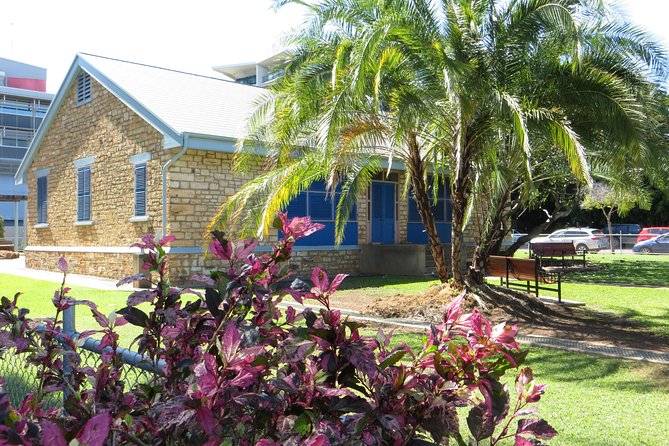
- Real places tied to 1942: you move past buildings like the Vic Hotel and Brown’s Mart Theatre that connect directly to wartime roles.
- Meaningful memorial stops: the Darwin Cenotaph overlooks the harbour linked to the first air raid on 19 February 1942.
- Includes entry at key stops: guided access and ticketed moments are free at the listed sites.
- Easy-to-follow route: a gentle, roughly 2–2.5 hour city walk from the start point near The Mall to the Cenotaph area.
Why this walking tour works in Darwin City
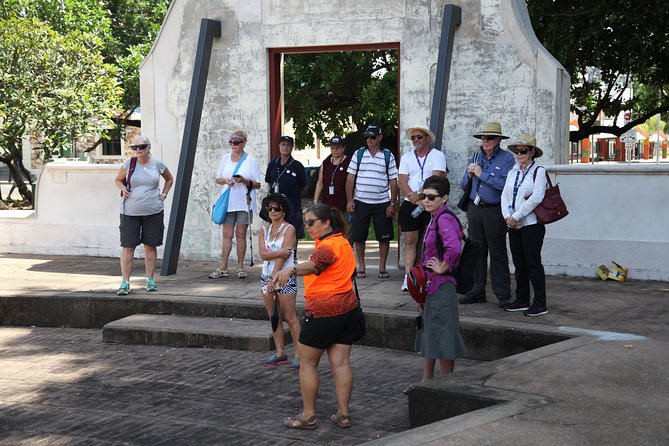
Darwin is a city where history shows up fast—especially if you know what to look for. This tour is built for that. Instead of taking you to one museum and calling it done, you get a route through the central district where wartime details can be spotted in ordinary streets, buildings, and public spaces.
The best part is the guide-led storytelling. The tour is designed around walking, with spoken commentary that connects the past to what you can see right now. You’re not just collecting facts; you’re learning how to read the city. That matters in Darwin because a lot of the built environment looks familiar—until someone points out how it was used during WWII.
Time-wise, it’s a sweet spot. You’re out for about 2 to 2.5 hours, starting at 8:30 am, which is great in Darwin because mornings are easier to manage than peak heat.
You can also read our reviews of more walking tours in Darwin
Meeting point and route: how you’ll actually experience it
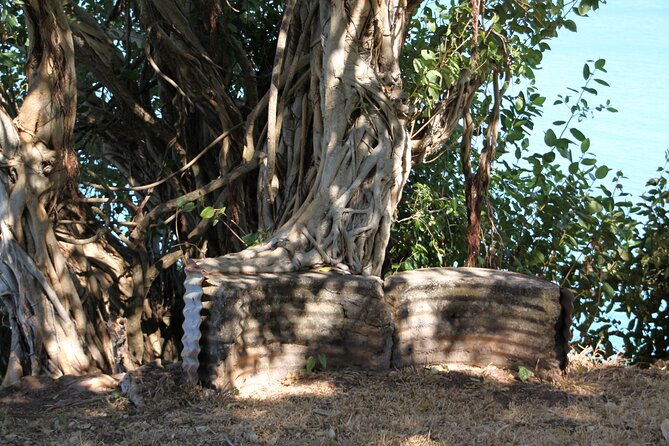
You start at the corner of The Mall and Knuckey St in Darwin City (near John McDouall StuartCnr). The walk ends at the Darwin Cenotaph War Memorial in Bicentennial Park by the Esplanade.
That matters for planning. Because you finish at a major memorial spot, you can naturally continue on foot around Bicentennial Park and nearby viewpoints. Or you can head out for refreshments right after, since there are cafes close by.
Also, you’re not expected to do a marathon. The walk is described as gentle, with a total distance around 3 km and frequent pauses. That makes it workable if you have moderate physical fitness, especially since the route is in central Darwin and you’re moving at a relaxed pace.
Stop 1: The Vic Hotel—WWII social life in a landmark building
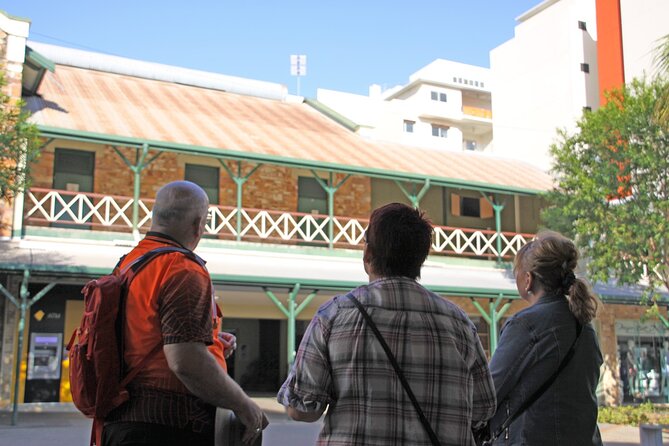
The first big “wow” moment is the Vic Hotel. This building has been part of Darwin’s social scene for more than 100 years, and during WWII it worked as an entertainment hub for both Australian and American service personnel.
This stop is useful because it expands the idea of what wartime meant. It’s easy to think of WWII as only bases, bombers, and bunkers. The Vic Hotel story reminds you that life still continued—people gathered, relaxed, and passed time, even while the city was under threat. It gives you a more human angle on the war.
If you like tours where you can look at architecture and then connect it to daily life, this is one of the strongest early stops.
Stop 2: Brown’s Mart Theatre—when culture became a naval asset

Next up is Brown’s Mart Theatre, which existed before WWII as a community heart. During the war, it became part of the Navy base HMAS Melville, used as the preparation and defence base for Australia.
That transition—from theatre to naval use—is the kind of detail that makes the walk feel real. You can stand in a familiar-style historic building and imagine an entirely different rhythm of days: planning, organisation, and defence work.
One practical tip: if you’re the type who likes to take photos, bring your camera and set expectations early. Some stops are designed for walking-and-listening, so quick photos are better than trying to get perfect shots while the guide is talking.
Stop 3: Administrator of the Northern Territory buildings—civil authority and wartime command
Then the tour turns to the restored Administrator of the Northern Territory buildings. These buildings capture early Darwin life, and today they’re offices for the Administrator. In WWII they were linked to naval command roles.
This stop adds an important layer: war wasn’t only “frontline action.” It also ran through administration—where decisions were made and where command functions operated. Seeing this kind of civic building in that context helps you understand how WWII reshaped everyday structures.
It’s also a good moment for questions. If you want to ask how Darwin’s government and services interacted with defence, the guide’s commentary here is where it tends to click.

Stop 4: Parliament House—where the bombing struck civilian work
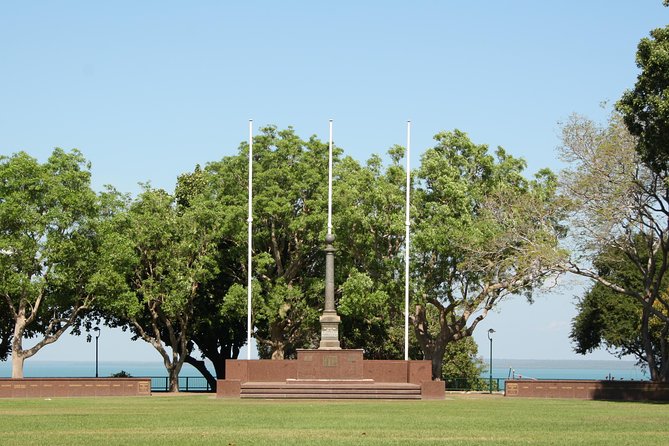
At Parliament House, the theme becomes direct and specific. The building stands as a memorial to civilian Post Office staff who lost their lives at this site during the bombing of Darwin in 1942.
The tour includes time to go inside, where you can see where a bomb fell and learn about the rebuilt Post Office area (the stop is described as showing the impact and the rebuilding story).
This is one of the heavier stops on the route, and it’s also one of the most meaningful. You’re not just looking at a plaque—you’re being shown the physical point of damage and the civilian consequences of the attack.
If your travel style is “I want to understand what happened,” this is the part that gives you grounding.
Stop 5: Darwin Cenotaph—harbour views tied to 19 February 1942
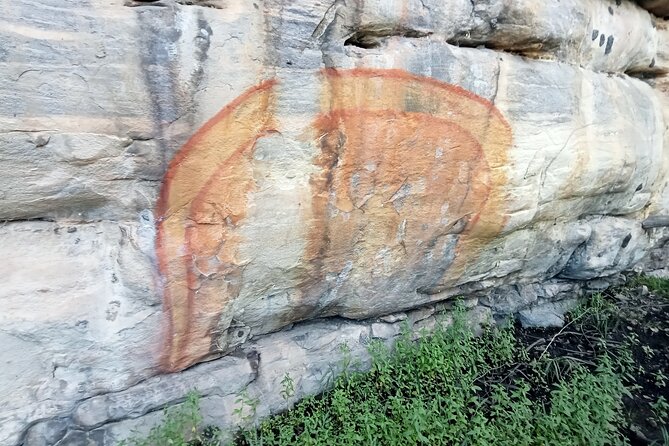
The walk closes at the Darwin Cenotaph in Bicentennial Park. The cenotaph is a key memorial for Northern Territorians who served in the war. It also overlooks the harbour connected to the first air raid on 19 February 1942.
The stop is important for context because it connects sacrifice to place. You can see the harbour area the memorial looks over and get the sense of why the day mattered so much for Darwin’s community and coastline.
The site description also notes an anti-aircraft unit (referenced as the 14th Anti-Air). Even if you’re not a military-history person, that detail helps explain how defence systems were part of the city’s wartime landscape.
When you finish here, you’ll likely want a few minutes to just look. The walk ends in a space meant for remembrance, not speed.
What I’d call the real value: city orientation + WWII wayfinding
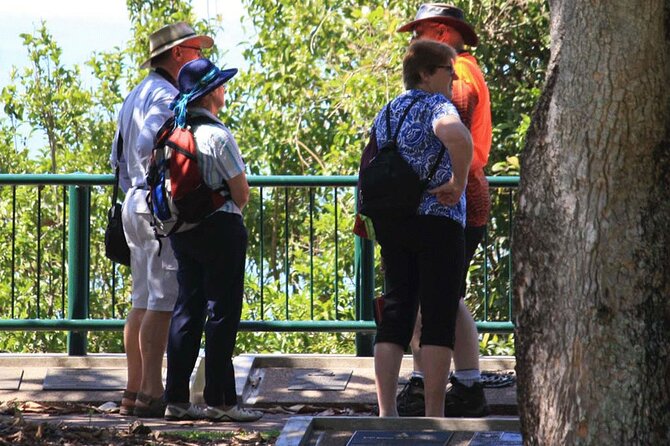
For $42.32 per person, the real value isn’t only the WWII theme. It’s the way the tour helps you read Darwin afterward. You’ll come away with a mental map of where wartime roles happened—social hubs, theatre/community buildings repurposed for defence, administrative areas tied to command, and civilian memorial sites.
This is the kind of orientation that makes the rest of your trip easier. Even if you don’t plan another tour, you’ll be better at understanding what you’re seeing on your own: when you notice a historic façade, you’ll know to look for why it mattered in 1942.
Also, the tour is small (max 10), and the guide uses spoken commentary. That combo tends to make the walk feel interactive. If you have questions—like how wartime changed civilian spaces—your guide can usually answer without derailing the schedule.
Practical details that affect your comfort
A few specifics will help your morning go smoothly:
- Start time: 8:30 am gives you the best shot at comfortable walking.
- Weather: the tour runs in all weather conditions, and it’s stated that it’s designed for good weather; if it’s cancelled due to poor weather, you’ll be offered another date or a full refund.
- What to bring: camera, sunscreen, hat, and drinking water.
- Footwear: good enclosed non-slip walking shoes are recommended.
- Kids: children must be accompanied by an adult.
And since this is a WWII-focused walk, wear something that keeps you comfortable during pauses. You’ll spend time at memorials and inside at least one building, so you’ll want layers you can manage as conditions shift.
Who this tour is best for (and who should skip it)
This fits best if you:
- want a guided introduction to Darwin’s WWII connections
- enjoy walking tours where the route teaches you how to see the city
- like history that connects to real buildings and exact places
- want an easy 2–2.5 hour plan that starts early and ends at a clear landmark
It’s not the best fit if:
- you prefer purely cheerful sightseeing with no memorial or bombing references
- you dislike walking with frequent stops (even though it’s gentle, it’s still a walking tour)
If your idea of a great day is learning how a city’s past lives in its present, you’ll probably feel satisfied by the time you reach the Cenotaph.
Should you book this WWII Reflections walking tour?
Yes, I think it’s a strong booking in Darwin—especially if it’s your first trip and you want fast orientation. The route is short enough to fit into a travel day, the group size stays intimate, and the stops focus on places where wartime meaning is tied to the buildings and public spaces you can still see.
Book it if you’re curious about how WWII hit mainland Australia and how Darwin’s community structures were involved—from social life to defence-related reuse to civilian memorial sites. Skip it only if you want an upbeat, low-emotion tour. This one takes the bombing of 1942 seriously, and it expects you to meet it there.
FAQ
How long is the Darwin Walking Tour: World War II Reflections?
It runs for about 2 hours to 2 hours 30 minutes.
Where do I meet the tour, and where does it end?
You meet at John McDouall Stuart Cnr The Mall & Knuckey St, Darwin City. The tour ends at the Darwin Cenotaph War Memorial in Bicentennial Park, Esplanade, Darwin City.
What is included in the ticket price?
The ticket includes a local guide and spoken commentary.
Is hotel pickup and drop-off included?
No. Hotel pickup and drop-off are not included.
How much walking is involved, and what fitness level is needed?
The tour involves a moderate amount of walking and is intended for people with a moderate physical fitness level. Good walking shoes are recommended, and the walk is described as gentle with frequent stops.
Does the tour run in bad weather?
It operates in all weather conditions. The experience also notes that if it’s cancelled due to poor weather, you’ll be offered a different date or a full refund.
What is the group size?
The tour has a maximum of 10 travelers and requires a minimum of 2 people to operate.
Is this tour suitable for children?
Children must be accompanied by an adult.
What should I bring with me?
Bring a camera, sunscreen, a hat, and drinking water. Enclosed non-slip walking shoes are recommended.
FAQ
How far in advance should I book?
On average, this tour is booked about 6 days in advance.
Is there food or drinks provided?
Food and drinks are not included, so you’ll want to plan your morning accordingly.
Do I need a physical ticket?
You’ll receive a mobile ticket. Confirmation is received at the time of booking.