REVIEW · CANBERRA
Personalised Sightseeing in Canberra, with John
Book on Viator →Operated by Canberra Day Tours · Bookable on Viator
Canberra gets easier when the plan is in good hands. This private hop-on hop-off style tour with John is interesting because you choose what to see, get a timetable for best value, and avoid the squeeze of big group buses. I like the peace of a private vehicle and the way John shares practical recommendations as you go. One thing to consider: the day is on you for stop planning, because this bus does not start with a quick orientation loop first.
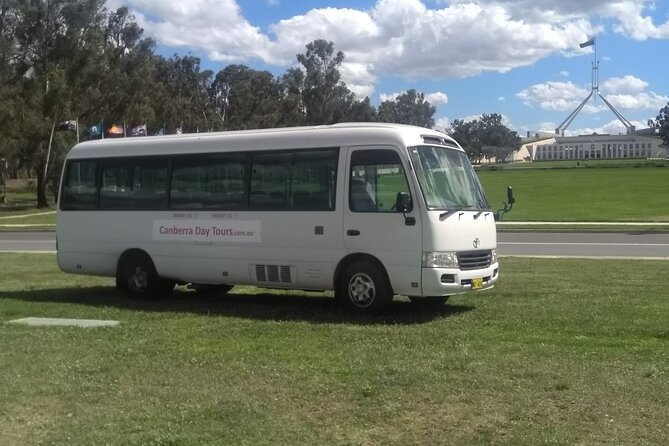
You start at Canberra Museum and Gallery (CMAG) and board the Explorer Loop Bus. You can do a one-hour loop or stay longer (the tour is flexible from about 1 to 6 hours), with a heated, air-conditioned ride between the major sights.
The price is about $43.03 per person, which becomes much easier to justify because several top attractions on the route are listed with no entry fee (like the Australian War Memorial and major Parliament sites). If you only want a couple of stops, you’ll do well. If you try to cram everything, you’ll feel it fast.
In This Review
- Key highlights you’ll actually feel during the day
- Why this private Canberra loop feels calmer than big bus tours
- Meet John at CMAG and start with a plan, not a first-look loop
- How to pick stops (2 to 3 is the sweet spot)
- Australian War Memorial and Anzac Parade: the stop that sets the tone
- Lake Burley Griffin area: Visitors Centre and the Canberra story in small bites
- National Library, science at Questacon, and art stops that don’t cost extra
- National Library of Australia
- Questacon
- National Gallery of Australia and National Portrait Gallery
- High Court and the Parliament corridor: architecture with real-world weight
- High Court of Australia
- Old Parliament House: Museum of Australian Democracy
- Parliament House
- National Museum of Australia and NFSA on request
- National Film and Sound Archive (NFSA)
- What John does best: timing, humor, and handling the little problems
- Value check: how $43.03 can stretch in Canberra
- Who this private Canberra sightseeing day is for
- Should you book this tour with John?
- FAQ
- Is this tour private?
- Where does the tour start and end?
- How long is the tour?
- When does the Explorer Loop Bus depart from CMAG?
- Is the bus heated and air-conditioned?
- Does the bus do an orientation loop first?
- Are the main attractions included in the route free to enter?
- Can you choose which attractions to visit?
- What if I want National Film and Sound Archive (NFSA)?
- What’s the cancellation policy?
Key highlights you’ll actually feel during the day
- John runs a timetable-focused game plan so you stop in an order that makes sense.
- A private vehicle feel—you’re not stuck with a full bus and forced pacing.
- Heated and air-conditioned transport on the city loop.
- Major Canberra icons are on the route: Anzac Parade Memorials, Embassies, and Parliament areas.
- Stack “no entry fee” stops to stretch your day and your budget.
- John is flexible if timing goes sideways, including when a stop needs to be revisited.
Why this private Canberra loop feels calmer than big bus tours
Canberra is built for wide, open space, and that can make sightseeing feel either relaxing or awkward, depending on your transport. This tour fixes the second problem: you’re not trying to piece together rides between far-apart attractions. Instead, you hop on and off the Explorer Loop Bus with John guiding the order of your day.
What you’re really paying for is control. You can pause for photos, slow down at the spots you care about, and skip the ones that don’t spark anything for you. Multiple reviews point to the same theme: John is punctual, friendly, and good at keeping people moving without rushing them out the door.
The other “small but big” advantage is that you’re not competing for attention. In a big group bus setup, your questions and timing get lost. Here, the experience stays personal—John goes over your timetable with you and suggests what to stop at for the best value.
The one caution I’d give: because the bus doesn’t do an orientation loop first, you need to lean on John for early guidance. If you want the view of the city first and then decide later, start by asking for the clearest plan possible before you commit to stops.
You can also read our reviews of more tours and experiences in Canberra.
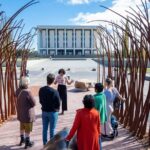
Meet John at CMAG and start with a plan, not a first-look loop
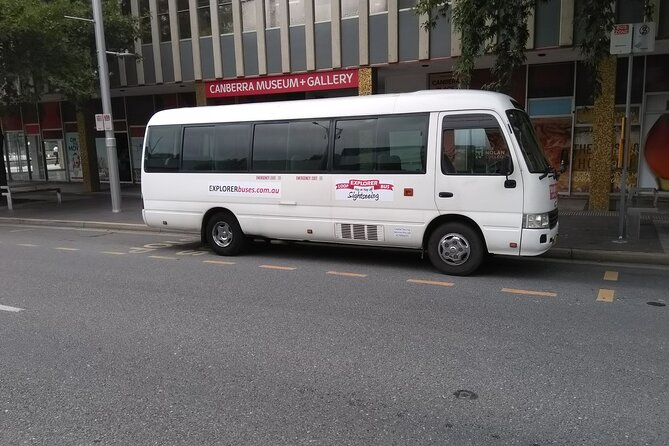
Your meeting point is Canberra Museum and Gallery (CMAG), 176 London Circuit, City Centre. That matters because it’s not just a random stop—CMAG is near Lake Burley Griffin, so you’re starting in the middle of the action rather than on the edge.
A key detail: this is not the typical hop-on hop-off format where the bus drives around for a quick “getting your bearings” loop. John goes through your timetable and recommends which attractions to stop at so you get the best value for your day in Canberra.
In practice, that means you’ll decide earlier than some people expect. You’ll also likely have fewer total stops—because the best day is the one you can actually enjoy between pickups. One review sums it up perfectly: pick no more than two stops for a full, leisure-paced experience.
If you’re the type who hates over-planning, don’t worry. John’s role is partly to prevent bad planning. But it helps to arrive ready to answer a simple question: what are your must-sees—War Memorial, Parliament, museums, galleries, or science?
How to pick stops (2 to 3 is the sweet spot)
Canberra’s top attractions are spread out, and the loop bus is your time-saving tool. But time still moves forward while you’re deciding and walking. Several reviews highlight the same practical advice: choose a small set and give them real attention.
Here’s a strategy that works well:
- Pick two or three major stops you’d regret skipping.
- Build in time for photo moments and short breaks.
- If you want more, add one “lighter” stop that’s close to your chosen cluster.
Why this works: the bus is designed for hop-on hop-off pacing. If you stack too many heavy sites, you’ll spend more time moving and less time looking.
Another smart point from the reviews: starting early helps. Even if you’re relaxed, the day can feel like it speeds up once you’re bouncing between landmarks.
And if you’re worried about missing a stop or getting off at the wrong time, know that John has handled that gracefully—one review mentions he took a missed-stop revisit seriously and returned them to where they needed to be.
Australian War Memorial and Anzac Parade: the stop that sets the tone
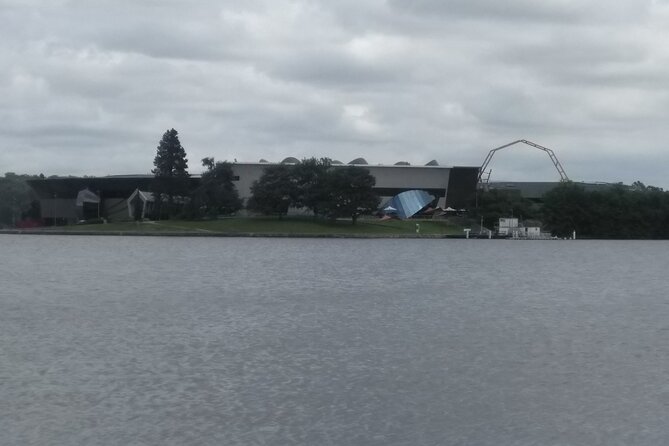
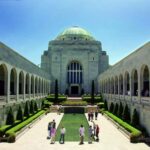
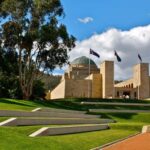
If you only do one “big Canberra” site, make it the Australian War Memorial. It’s described as the most visited attraction in Australia and, importantly for your time, it has no entry fee (per the information provided for this tour’s stops).
This is the kind of place where you’ll either love it or feel emotionally overloaded and need to pace yourself. Either way, it’s central to understanding Canberra. On this route, it also connects you to the Anzac Parade Memorials theme, which is part of the city’s identity.
What I like about including it on a loop bus day: you’re not forced into a long transit shuffle. You can arrive, spend the time you want, and then keep moving on your own schedule.
The only drawback? You’ll probably want more time than you planned, because the War Memorial is not a quick look-and-go stop. If you’re choosing between War Memorial and another heavy hitter like Parliament, decide based on what you actually want to feel that day—reflection at the Memorial or the civic drama of Parliament.
Lake Burley Griffin area: Visitors Centre and the Canberra story in small bites
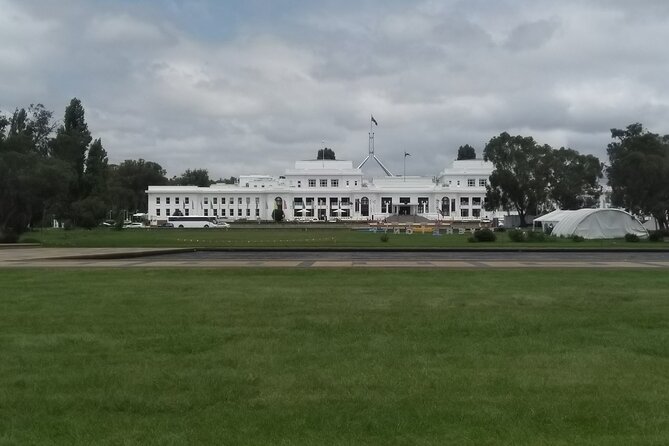
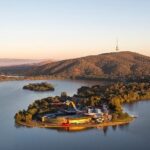
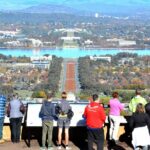
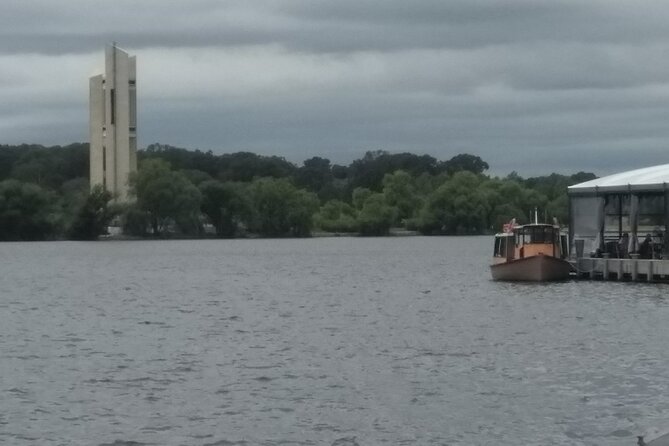
On the route, you’ll pass through the Canberra and Region Visitors Centre on Lake Burley Griffin. It’s positioned alongside the Captain Cook Memorial Water Jet, which rises to about 100 metres in the air. Even if you don’t plan a long stop, it’s a good place to orient yourself because the lake setting gives Canberra its calmer “breathing space.”
This is also where you can grab local help without hunting for it later. It’s a practical stop—think of it like your in-between reset.
Nearby, the National Capital Exhibition is another no-entry-fee stop. This is where you get the story of Canberra: how it came to be and how it functions. If you’re the type who wants context before you walk into bigger buildings, this can make the rest of the day click.
A cafe is noted at the National Capital Exhibition. That’s useful because it turns a quick stop into a real break without needing to reorganize your day.


National Library, science at Questacon, and art stops that don’t cost extra
If you want variety—culture, science, and reads—you can stack several stops that are listed with no entry fee.
National Library of Australia
The National Library of Australia is included because you can see Captain Cook’s handwritten log on display, plus other exhibits. Even if you keep the stop brief, this is an easy win for people who like a calm, indoor break.
Questacon
Questacon is the hands-on stop. The tour notes that it’s mainly for kids (especially for physics-style hands-on learning), but it can still be a fun stop for adults who enjoy interactive exhibits. This is a good choice if your group includes younger travelers or you want a break from solemn monuments.
National Gallery of Australia and National Portrait Gallery
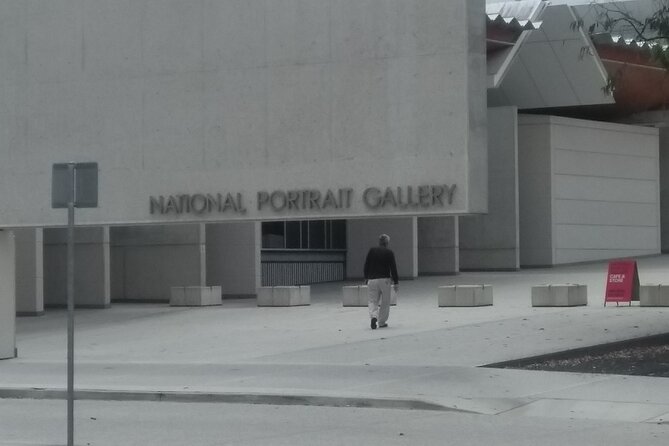
The National Gallery of Australia is listed with no entry fee, and it’s described as featuring important works of art. Nearby on the route is the National Portrait Gallery, which is specifically called out for its renowned portrait collection.
This is where your stop-picking matters most. Art museums can be quick or slow depending on your pace and attention span. If you’re tired, treat these as “wander stops.” If you’re energized, go deeper and let John suggest what’s worth your limited time.
High Court and the Parliament corridor: architecture with real-world weight
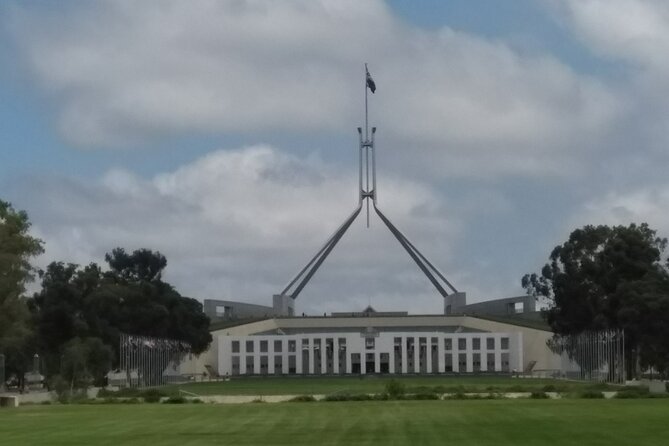
Two of the strongest “Canberra-only” experiences come from the civic buildings: High Court of Australia and Parliament spaces.
High Court of Australia
The High Court is described as Australia’s highest court of appeal, with three court rooms inside a ten-story building and wonderful architecture. It’s also listed with no entry fee. If you’re curious about how the country’s system feels in physical form, this is a great mid-day stop because it’s memorable without taking over the whole day.
Old Parliament House: Museum of Australian Democracy
Old Parliament House is listed as the most important building in Australia’s parliamentary story. It’s now the Museum of Australian Democracy, and the key detail that matters is that it preserves what was there during the Hawke Government transition to the current Parliament House.
Also: there’s no entry fee noted for this stop, and there’s a cafe. That means you can turn it into a real break rather than just a photo stop.
Parliament House
Then you get to the current Parliament House, described as one of the great buildings of the world. The tour notes an original Magna Carta dated 1297 is on display here. It’s also listed with no entry fee.
These Parliament stops tend to work best as a pair. If you’re only choosing one, decide whether you want the “museum of change” vibe (Old Parliament House) or the modern civic presence (Parliament House).
National Museum of Australia and NFSA on request
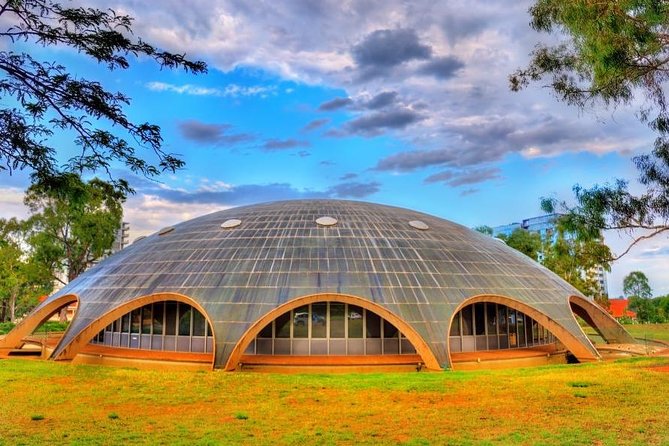
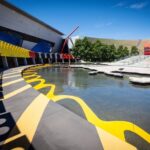
For something that feels more playful and big-topic, the route includes the National Museum of Australia. It’s noted for Australiana across the last two hundred years, and it includes standout items like Phar Lap’s heart and the original prototype for the Holden Motor Car. There’s also mention of a Pompeii Exhibition.
If you have any interest in Australian stories beyond politics and monuments, this stop is a strong use of time. It’s also a good counterbalance to War Memorial heaviness.
National Film and Sound Archive (NFSA)
The NFSA is included, but with one important nuance: it’s available on request only. It’s described as a place for the history of film, sound, and radio in Australia, and it’s listed as no entry fee (for this tour’s inclusion list).
That “on request” detail is why John’s role matters. If NFSA is a priority for you, tell John early so the timetable can flex around it.
What John does best: timing, humor, and handling the little problems
The reviews don’t just say John is friendly. They describe the practical ways he makes the day smoother.
A few recurring strengths show up clearly:
- Punctual pick-ups and clear organization.
- A strong sense of Canberra that turns into real suggestions for stops.
- Humor and personality without losing control of the schedule.
- Willingness to help when something goes wrong, including missing a stop and needing a return.
One review even notes John adjusted the route and added a detour to the National Museum area so a person could see an Egypt Exhibition without struggling with transport. Another review praises him for being willing to stop for quick photo moments at venues while still keeping the day moving.
There is one small issue worth flagging from the reviews: audio. One person noted they had trouble hearing him at times if a microphone wasn’t used at the start or wasn’t loud enough later. If clear commentary is a big deal for you, it’s reasonable to ask early in the day that John make sure the audio works well for your group.
Value check: how $43.03 can stretch in Canberra
At $43.03 per person, this tour isn’t trying to sell you a single-ticket “one attraction” day. It’s designed for multiple iconic stops, and value comes from two things: your flexibility and the mix of stops that are listed with no entry fee.
From the included stops, you can reasonably plan around the following no-entry sites:
- Australian War Memorial
- National Capital Exhibition
- National Library of Australia
- National Gallery of Australia
- High Court of Australia
- Old Parliament House
- Parliament House
- National Film and Sound Archive of Australia (available on request)
Even if you choose only two of those, you’re already getting strong money-to-moment value. Add the fact that the bus is heated and air-conditioned, and you’re not spending extra time organizing transport between far-flung buildings.
The best value move is simple: use John’s timetable to pick stops that cluster well. Don’t just pick the most famous site. Pick the most efficient mix.
Who this private Canberra sightseeing day is for
This works especially well if you:
- Want top Canberra highlights without stress.
- Prefer a smaller, more personal experience over crowded group tours.
- Like the idea of hop-on hop-off flexibility but want an expert to help you plan.
- Have limited time and want help choosing what matters most.
It’s also a good fit for people who care about both civic Canberra (Parliament, High Court) and cultural Canberra (galleries, libraries, museum collections). If you’re traveling with kids, Questacon is on the route too, and that adds variety.
If you’re the kind of traveler who wants every stop and every museum in one day, you might find the schedule tight. The tour model is flexible, but time is still finite—so your best day comes from smart prioritizing.
Should you book this tour with John?
I’d book it if you’re coming to Canberra with questions like: Which stops are worth my limited time? How do I structure the day so I don’t waste it in transit? And how do I make the city feel less like a checklist?
This private approach is a strong choice because you get John’s on-the-ground guidance and a calm transport setup from CMAG through the major landmarks. If your must-sees include the Australian War Memorial and Parliament areas, the route already supports that.
I’d hesitate only if you hate planning at all. Because there’s no early orientation loop and John uses a timetable to guide your stops, you’ll need to choose your priorities when you start. For many people, that’s a feature. For a few, it’s a mismatch.
If you’re aiming for a practical, no-drama day that hits Canberra’s core icons with less guessing, this is a very solid way to do it.
FAQ
Is this tour private?
Yes. It’s described as a private tour/activity, and only your group will participate.
Where does the tour start and end?
It starts at Canberra Museum and Gallery (CMAG), 176 London Circuit, Canberra ACT 2601, and it ends back at the meeting point.
How long is the tour?
The duration is listed as approximately 1 to 6 hours, depending on how you use the hop-on hop-off loop time.
When does the Explorer Loop Bus depart from CMAG?
The departures are listed at multiple times in the day, including 9.30am, 10.30am, 11.30am, 12.30pm, 1.30pm, 2.30pm, and 3.30pm. Exact availability can vary by day, so it’s worth confirming.
Is the bus heated and air-conditioned?
Yes, the bus is heated & air-conditioned.
Does the bus do an orientation loop first?
No. It’s noted that the bus does not do an orientation loop first up. John goes through the timetable and suggests the attractions to stop at.
Are the main attractions included in the route free to enter?
Several are listed as no entry fee in the tour information, including the Australian War Memorial and key Parliament and gallery stops. Some other attractions may have different rules, but the info provided lists multiple no-entry options.
Can you choose which attractions to visit?
Yes. You select your attractions, and John provides a timetable and best-value ordering to help you plan your day.
What if I want National Film and Sound Archive (NFSA)?
NFSA is listed as part of the tour, but it is available on request only, so you’d want to ask John early.
What’s the cancellation policy?
You can cancel for a full refund up to 24 hours in advance of the experience start time. If you cancel less than 24 hours before, the amount paid isn’t refunded.