REVIEW · HOBART
Salamanca Walk – History Tour
Book on Viator →Operated by Peter Lutz · Bookable on Viator
Salamanca and Battery Point have stories. This 2.5-hour history walk connects Tasmania’s convict-era past to the streets you see today, using photos and drawings as you go. You also get a gentle, real-world feel for the neighborhood with stops at Arthur Circus Park and St David’s Park.
I love the street-level storytelling here. The guide explains who lived in these buildings, what they did for work, and how the colony took shape, with old images you can compare to the present. I also like the small-group size (maximum 15), because it makes it easy to ask questions and actually hear the answers.
One drawback to plan for: it’s about 2.5 hours on foot with limited chance to stop and sit, so build in a little flexibility if you need frequent breaks.
In This Review
- Key highlights worth showing up for
- Why Salamanca and Battery Point make history click
- Meeting at Salamanca Arts Centre and getting your bearings
- Salamanca Place and the market area: where the colony’s daily life shows up
- Battery Point’s convict-era backbone: craftsmen, clergymen, merchants, convicts
- Arthur Circus Park stop: the view pause and the details you’d miss
- St David’s Park stop: how parks and buildings share the timeline
- What the guide’s visuals add (and why they matter)
- Pacing, group size, and who should book
- Price and value: $28.69 for 2.5 hours with included visuals
- Should you book the Salamanca Walk history tour?
- FAQ
- FAQ
- How long is the Salamanca Walk history tour?
- Where does the tour start?
- How much does the tour cost?
- Is it a small group?
- Is the walk hard to do?
- Are kids welcome?
- What’s included in the tour?
- Is food or alcohol included?
- Can I cancel and get a full refund?
Key highlights worth showing up for

- Salamanca to Battery Point in one smooth loop so you get the lay of the land fast
- Convict heritage explained with names and jobs: craftsman, clergyman, free settlers, merchants, and convicts
- Photos and drawings included to compare the past to the present right where it happened
- Arthur Circus Park stop where you’ll pick up extra details you’d likely miss on your own
- Battery Point architecture and Derwent views framed in context, not just sightseeing
- Small group (max 15) with time for questions, plus free tickets for children under 16
Why Salamanca and Battery Point make history click
If you’ve ever walked past historic buildings in Hobart and wondered what you were supposed to notice, this is the fix. The Salamanca Walk keeps things human. You’re not just reading dates. You’re learning how people lived, worked, and got pulled into the colony’s early rhythms.
The tour’s big strength is how it ties story to place. Salamanca is where the colony’s life and commerce start to show up. Battery Point is where the built forms and steep stories sit side by side. And because the route includes both, you can start to see the logic of the whole area, not just individual sights.
You’ll also feel the “family tour” vibe in a good way. The pace is described as physically not demanding, and you’ll see that it’s built for mixed ages. I like that. Hobart is best enjoyed at walking speed, not museum speed.
You can also read our reviews of more walking tours in Hobart



Meeting at Salamanca Arts Centre and getting your bearings
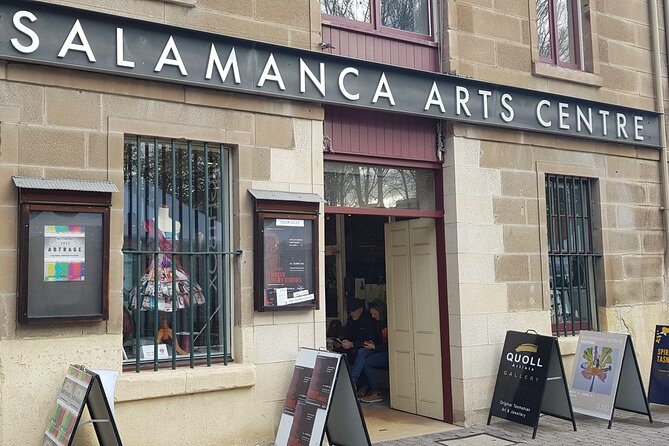
You start at the Salamanca Arts Centre at 77 Salamanca Place, Battery Point. It’s a very sensible launch point because you’re immediately in the zone where Salamanca’s character and Battery Point’s housing styles begin to connect.
From there, the guide sets the tone quickly: slow, clear, and story-first. In one departure led by Peter Lutz, people noted how friendly and humorous he was, and how he handled questions well. Even if your guide isn’t Peter, the format stays the same: you get plenty of visuals, and you’re encouraged to ask about what you’re seeing.
If you like tours that feel like a conversation instead of a lecture, this one tends to land that way. The small group cap (15) matters here. With fewer people, you’re not always waiting for someone else to move, and the guide can keep the pace steady.
Salamanca Place and the market area: where the colony’s daily life shows up
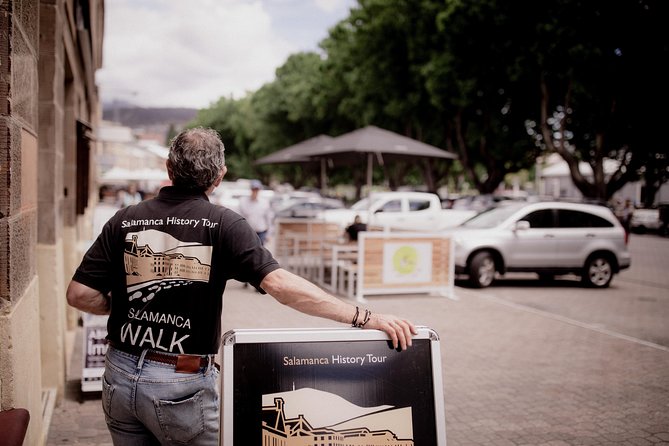
Early on, you’ll be in and around Salamanca Place and the area that people associate with markets and local activity. This part isn’t about shopping. It’s about understanding why this neighborhood became the center of early Hobart life.
A standout theme you’ll pick up is how the shoreline and land use changed. One key detail you’ll hear is about reclaimed land and how that shaped what grew where. When you learn that, you can suddenly look at streets and blocks with better context. They stop looking like random blocks and start looking like a planned-by-necessity city in progress.
This is also where historical markers and memorials show up for people who want personal meaning. One review highlighted the First Fleet memorial in Salamanca Place and how seeing it with historical context landed on a personal note. Even if your family story isn’t tied to that, it’s the kind of stop that makes you think about why people chose these spots to remember.
And throughout Salamanca, you’ll see what the tour really offers: comparison. The guide uses old photographs and drawings while you’re standing in the exact streetscape they describe, so you’re not just imagining the past.
Battery Point’s convict-era backbone: craftsmen, clergymen, merchants, convicts
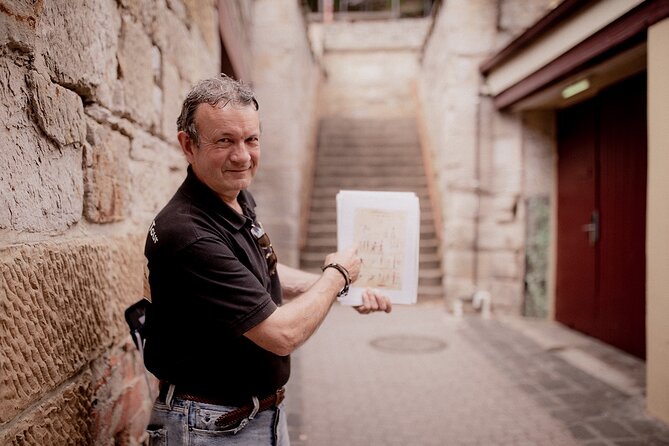
As the walk shifts into Battery Point, the tone becomes darker in a way that still feels clear and grounded. The tour is specifically framed around Hobart’s notorious convict heritage, and you’ll hear stories about the early foundations of the colony by convict labour.
What I like here is the range of people included. The history isn’t limited to one stereotype. You learn about craftsman, clergyman, free settlers, merchants, and convicts, and how their roles fit together. Even if you think you already know the broad convict story, these human roles help it feel real instead of abstract.
You’ll also hear work details that make the colony sound practical, not just grim. The tour includes the idea of quarrying stone and hunting whales as part of how the settlement grew. Those aren’t random facts. They help explain why specific kinds of buildings and infrastructure appeared where they did.
Battery Point also gets treated as architecture with a story attached. The tour points out architectural treasures overlooking the Derwent River. You get to enjoy the view, but you also learn how the view and the buildings connect to the lives being discussed.
Arthur Circus Park stop: the view pause and the details you’d miss

Stop 1 is Arthur Circus Park, and it works as a reset button in the middle of the walk. Parks like this are perfect for history tours because your eyes and ears can slow down. You’re not constantly dodging crowds or distractions. You can actually absorb what the guide is connecting for you.
One detail that came through clearly in feedback is the mention of a pine connected to America. That kind of small, specific note is exactly why I find walking tours like this more useful than reading a guidebook. You end up noticing plants and street features as part of the bigger story of what Hobart imported, cultivated, or adapted.
At Arthur Circus Park, expect the guide to use photos and drawings to help you “see” the area in earlier stages. This is where the tour’s method shines: you’re standing in the present while the guide shows the past, so your brain builds a timeline fast.
If you’re traveling with kids, this stop is also helpful. It’s a calmer moment with a clear reason to pause, which makes the rest of the walk feel less like a nonstop march.
You can also read our reviews of more historical tours in Hobart




St David’s Park stop: how parks and buildings share the timeline
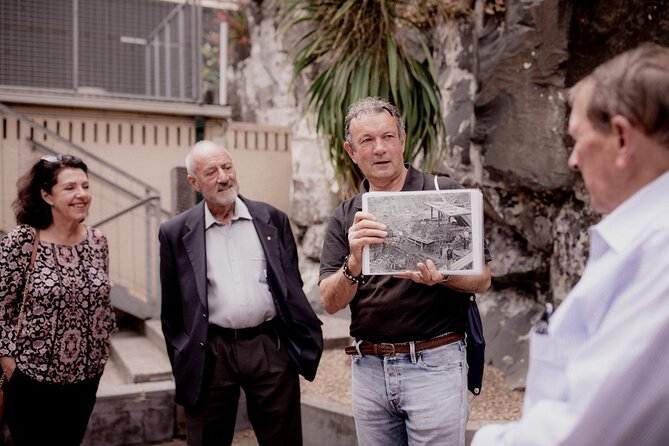
Stop 2 is St David’s Park, and it continues the same approach: context, then details. This is another place where you’re likely to catch how the neighborhood’s layers sit side by side.
The park setting also gives the guide room to connect different parts of Salamanca and Battery Point without sprinting across blocks. You’ll hear links between early settlement choices and the later patterns you can still see in the streets.
If you’re the type who likes asking questions, this is usually where that energy works well. With a maximum group size of 15, you’re not shouting over each other, and the guide can slow down to answer what you’re curious about.
What the guide’s visuals add (and why they matter)
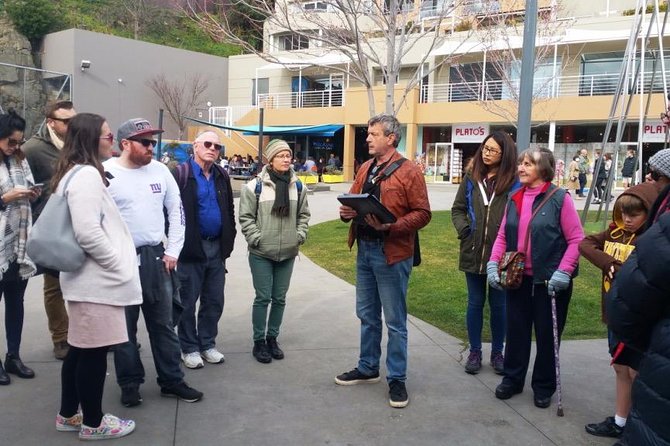
A lot of history tours say you’ll get photos. This one is different because the visuals are part of how the story is built, not a separate slideshow moment.
The included material is specifically pictures and drawings of Hobart, Salamanca, and Battery Point. That matters because drawings can show what photos can’t: layout, emphasis, and the way an area looked at a glance. And because you’re receiving them while you walk, you build a stronger mental map than you would from a museum caption.
I also appreciate the interactive feel described by people who’ve done the tour. Guides like Peter Lutz have been praised for being super friendly and for handling lots of questions. That style matters because it turns the photos into tools. You’re not passively watching. You’re looking with guidance.
One more bonus: the guide also shares practical contemporary suggestions, including food and pub ideas. If you’re using Salamanca as your base, those kinds of local picks can save time later.
Pacing, group size, and who should book
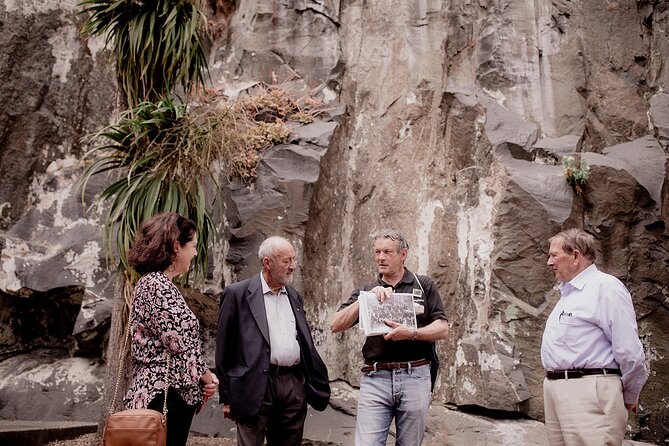
The tour runs about 2 hours 30 minutes, and it’s built to be accessible. It’s physically not demanding and has been attended by all ages. That lines up with the “gently paced walking tour” promise.
The small group size (max 15) is the real comfort factor. You’ll likely feel like you’re walking with a small class, not getting squeezed with strangers. And when you can ask questions, you end up learning more than the planned script.
This is a strong match for you if:
- You want convict-era context but don’t want it to feel like a dark lecture
- You like walking tours that teach you what to look for in architecture
- You’re visiting Hobart for the first time and want to understand two iconic neighborhoods fast
- You’re traveling with kids under 16, since they get free tickets
It’s also a decent option if you’ve been to Hobart before. Some people book it after circling Salamanca multiple times without knowing what they were looking at. A good guide can change that in a single morning or afternoon.
Price and value: $28.69 for 2.5 hours with included visuals
At $28.69 per person, this doesn’t feel like a premium “splurge” tour. It’s positioned as a straightforward way to get real context without draining your budget.
The value comes from three things:
- Time: roughly 2.5 hours is long enough to connect multiple neighborhoods
- Group size: maximum 15 means you’re not just collecting facts in a crowd
- Included materials: photos and drawings aren’t just marketing; they’re part of how the story works
If you’re comparing it to the cost of self-guided wandering with no structure, the included visual aids and the guide’s on-the-ground explanations are what you’re paying for. And because the walk ends back at the meeting point, you don’t need an extra plan to get oriented after.
Should you book the Salamanca Walk history tour?
I’d book it if you want Hobart to feel understandable fast. Salamanca and Battery Point are easy places to visit. This tour makes them easy places to understand.
Book it early in your stay if you like building a mental map. Once you get the storyline, you’ll notice more on every later walk—especially details about land changes, building uses, and the way the convict era shaped the colony’s start.
One thing to consider is the timing and stamina. It’s not described as strenuous, but it is about 2.5 hours on foot. If you need frequent sitting breaks, you may want to pair it with a longer lunch after.
If your goal is a history tour that stays readable, human, and visually grounded, this is a solid pick.
FAQ
FAQ
How long is the Salamanca Walk history tour?
It runs for about 2 hours 30 minutes (approx.).
Where does the tour start?
The meeting point is Salamanca Arts Centre, 77 Salamanca Place, Battery Point TAS 7004.
How much does the tour cost?
The price is $28.69 per person.
Is it a small group?
Yes. It’s guaranteed to be small, with a maximum of 15 travelers.
Is the walk hard to do?
No. The experience is described as physically not demanding and has been attended by all ages, with a gently paced route.
Are kids welcome?
Yes. Children under 16 can get free tickets.
What’s included in the tour?
You get pictures and drawings of Hobart, Salamanca, and Battery Point.
Is food or alcohol included?
No. Alcoholic beverages and food and beverage items are not included.
Can I cancel and get a full refund?
Yes, free cancellation is available. You can cancel up to 24 hours in advance for a full refund (cut-off is based on local time).