REVIEW · VICTORIA
Tungatt Mirring, Stone Country Half Day Tour – Budj Bim
Book on Viator →Operated by Budj Bim Cultural Landscape Tourism · Bookable on Viator
Budj Bim hits you fast. In about four hours, you’ll follow ancient kooyang eel technology and stories connected to the Budj Bim Cultural Landscape.
I like the strong on-the-ground focus: real stone works, trap systems, and smoking trees you can see rather than just read about. I also love that you’re guided by a Gunditjmara cultural guide, with explanations that make the engineering and the creation story feel linked, not separated.
A heads-up: this runs on good weather, and there’s some walking during the bush walk and cave visit. If you’re hoping for a long, slow pace at one spot, the time is tight.
In This Review
- Key Things I’d Prioritize Before You Go
- Where Your Tour Starts: Tae Rak Aquaculture Centre
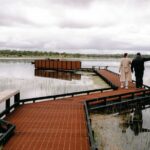
- Stop 1: Lake Condah and the Tae Rak Start Point
- Stop 2: C176 Kooyang Traps, Stone Channels, and Smoking Trees
- Stop 3: Budj Bim National Park, Lake Surprise, Lava Caves
- The Storytelling Link: Why the Guide’s Gunditjmara Perspective Matters
- Price and Value: Is $114.04 Worth It?
- Getting the Most Out of the 4 Hours
- What to Bring (and What to Skip)
- Who This Tour Suits Best
- Should You Book the Tungatt Mirring Stone Country Half Day Tour?
- FAQ
- Where does the Tungatt Mirring tour meet?
- What time does it start and how long is it?
- How many people are on the tour?
- What’s included in the price?
- Are admissions included for the stops?
- Is there any walking or cave time?
- What happens if the weather is bad?
Key Things I’d Prioritize Before You Go
World Heritage themes in a short half day with three stops that connect food systems to culture
Kooyang eel traps you can actually trace from stone channels to smoking trees
Lake Surprise and lava cave access inside Budj Bim National Park
Small group size (max 20) which usually makes questions easier
Air-conditioned transport between sites so you’re not baking in the van
Free admission at each stop so your money goes toward the guide experience, not tickets
Where Your Tour Starts: Tae Rak Aquaculture Centre
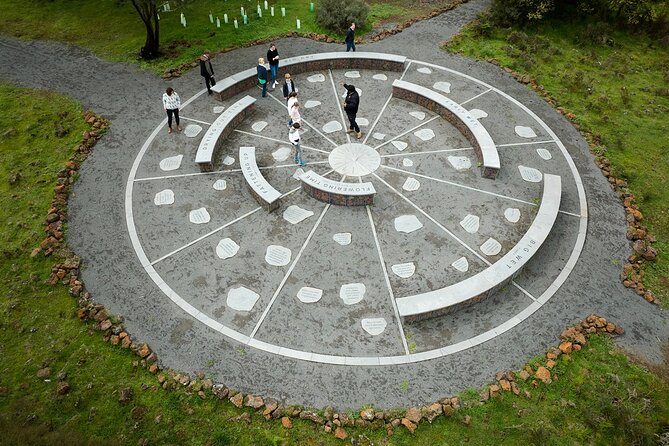
Your tour begins at Tae Rak Aquaculture Centre and Cafe on Vaughan Rd, Breakaway Creek (start time 9:30am). You’ll start here, then hop between three nearby locations with travel time of about 20 minutes each way.
This matters more than you might think. Budj Bim is not one “lookout and done” stop. It’s a system—water, traps, living knowledge, and volcanic features that shaped where people worked. A short driving loop helps you see the chain without turning the day into a full-day marathon.
You also get a practical baseline at the start point. You’re not just arriving at an archaeological site cold; you begin at a place tied to aquaculture, then you move out to what the old works were designed to do.
You can also read our reviews of more tours and experiences in Victoria.

Stop 1: Lake Condah and the Tae Rak Start Point
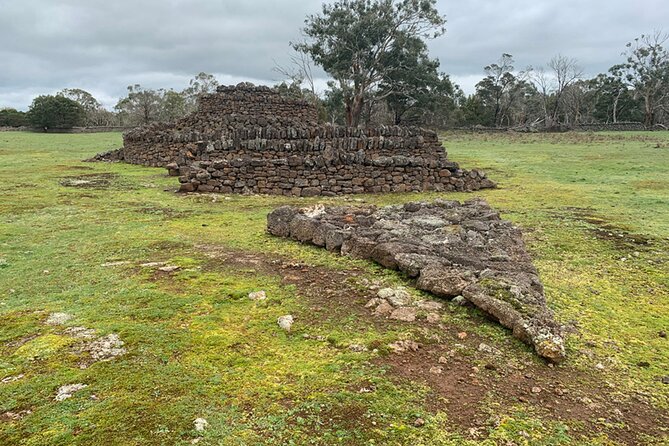
At Lake Condah, you’ll meet up at the Tae Rak Aquaculture Centre and then travel around 20 minutes to the next location. There’s no paid entry required at this stop, and the time on it is short—about 5 minutes as a listed segment.
So what’s the point of such a quick stop? It works like an orientation moment. Lake Condah is part of the broader Budj Bim water story, and you’ll be in the mindset of a living cultural system, not just a scenic lake. If you’re the type who likes context before you start zooming in on details, this brief opening helps.
Potential consideration: since the stop time is short, don’t expect this to be the main “wow” moment. The stronger visuals and deeper explanation come at the next two stops.
Stop 2: C176 Kooyang Traps, Stone Channels, and Smoking Trees
C176 is where the practical engineering really shows itself. You’ll spend about an hour here, and this is one of the most important parts of the day.
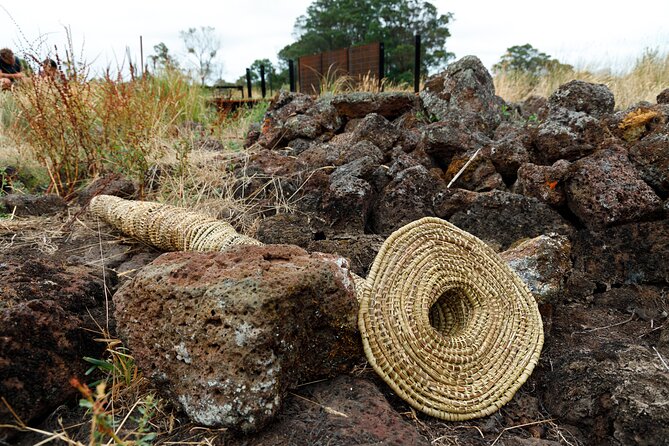
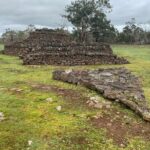
Your guide will show you extensive kooyang (eel) traps, stone channels, and remnants of ancient stone house sites. You’ll also learn about kooyang smoking trees—one of those details that makes the whole food system feel complete. Trapping eels is only half the job. The other half is how food was processed and preserved close to where it was harvested.
Here’s why I think this stop is so valuable for you, even if you’re not a “history person.” Seeing trap structures and channel remnants turns abstract “ancient people were smart” into something you can picture: water flow, placement, labor, and results. It’s the difference between admiring old stones and understanding how people designed work around the environment.
What to watch for during the walk:
- How the stone channels align with water movement
- Where traps sit in relation to those channels
- How smoking fits into the timeline of harvesting and storing
Small-group energy matters here too. With a maximum of 20 travelers, you’re more likely to ask questions and get answers in plain language, which is exactly what you want when the site includes specialized terms like kooyang.
Stop 3: Budj Bim National Park, Lake Surprise, Lava Caves
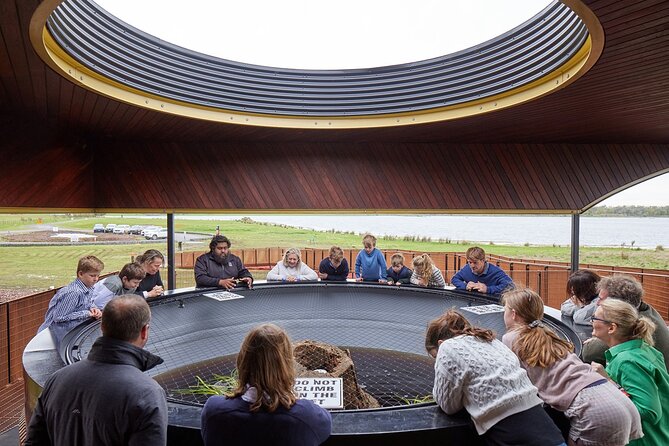
The final stop is Budj Bim National Park. You’ll spend about 1 hour 15 minutes here, and it’s a mix of big geology and guided walking.
First, you’ll see an ancient Budj Bim volcanic crater, now Lake Surprise. That change—volcano to crater lake—isn’t just scenery. It helps explain why water systems became so central to life and harvesting practices in the region.
Then you’ll go on a guided bush walk and also go inside one of Budj Bim’s lava caves. This is where the tour shifts from “stone tools and channels” to “shape of the land.” Lava caves can feel strange and enclosed, so it’s worth noting that you should be comfortable following your guide at a natural, uneven pace.
Possible consideration: cave visits can be cool and darker than the outdoors. If you get cold easily, plan for that. Also, this isn’t a wheelchair-free itinerary described in the info you provided, so if mobility is a concern, you’ll want to judge the walking and cave portion carefully based on your comfort level. The good news: the tour notes that most travelers can participate.
The Storytelling Link: Why the Guide’s Gunditjmara Perspective Matters
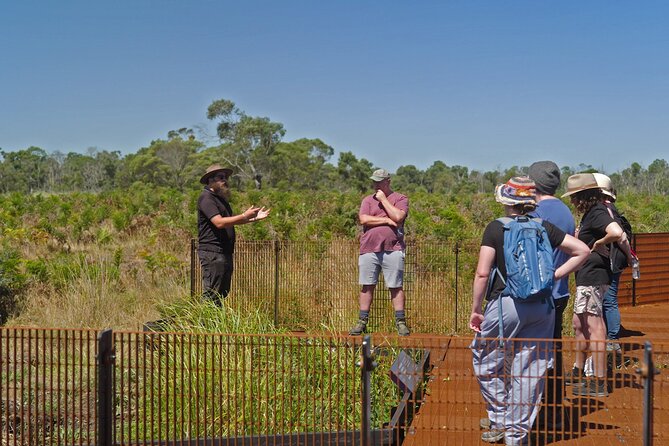
The thing that makes this tour feel different from a standard “heritage walk” is how the cultural and environmental pieces connect.
You’re with a Gunditjmara cultural guide, and the experience is framed around traditional techniques for harvesting eels and fish using the Budj Bim system. You’ll also hear about the Gunditjmara creation story that began in Budj Bim National Park. That’s not a separate add-on; it’s part of why the sites matter.
I like when a guide doesn’t treat culture as a lecture that floats above the land. Here, the story is anchored to what you’re standing near: traps, channels, house remnants, volcanic features, and caves. That’s how you leave understanding more than one layer.
A practical takeaway: if you tend to lose interest when tours become too broad, focus your attention on one “thread” for the day. For example:
- the water thread (channels, harvesting, crater lake)
- or the land thread (volcanic features, caves, where people worked)
Either approach lines up with the way this tour is structured.


Price and Value: Is $114.04 Worth It?
At $114.04 per person for a four-hour experience, you’re paying for three things: transport, a Gunditjmara cultural guide, and access to a small-group interpretation of a World Heritage site.
This is a rare setup where the entry component is straightforward. The stops list admission tickets as free, so your money isn’t being spent on separate admission fees. Instead, you’re funding the expertise and the time your guide spends moving you between C176 and Budj Bim National Park, including the guided walk and cave visit.
You’re also not stuck in a giant bus crowd. The max group size is 20 travelers, which tends to make the experience feel more personal and easier to follow—especially when terms like kooyang and site features like stone channels are part of the explanation.
If you’re trying to decide based on value, ask yourself one question: do you want a guided interpretation that connects food harvesting tech to cultural storytelling? If yes, the price looks fair. If you only want photos and general scenery, you may find a free self-drive option more appealing.
Getting the Most Out of the 4 Hours
Time is short here, but the pacing is logical. You’ll have about 20 minutes of travel between each location, and your total on-tour time is around four hours. That means you should plan to stay mentally present, not just “collect stops.”
A good strategy:
- Treat the C176 hour as your main learning block.
- Let Lake Condah be your context moment, not your deep dive.
- Use the national park time to connect geology (Lake Surprise and crater) with the lived story (creation story starting there).
Because it’s a half day, you’ll also want to avoid stacking another big activity afterward unless you’re sure you’ll enjoy the after-walk fatigue. Cave time and bush walking can sneak up on you.
What to Bring (and What to Skip)
The tour info you provided doesn’t list specific gear requirements, so I’ll stick to practical basics you can rely on for a short outdoors-and-caves morning:
- Comfortable walking shoes for uneven ground during the bush walk
- A light layer for the lava cave (caves can feel cooler)
- A refillable water bottle, especially if the weather turns warm
- Your mobile ticket (the tour uses a mobile ticket system)
Since this experience requires good weather, also keep an eye on forecasts the week before and day-of.
Who This Tour Suits Best
This works well if you:
- want hands-on cultural context tied to real land features
- enjoy learning how technology and daily life connect (traps, channels, smoking)
- like a structured half day instead of a full-day slog
- prefer small group sizes with a guide who can explain terms clearly
It’s also a nice fit for families or general-interest visitors because most travelers can participate, and the pacing includes vehicle time between stops.
If you’re a hardcore “only archaeological sites” person, you might still enjoy it, but you’ll want to lean into the cultural storytelling side. This tour is designed to connect the two, not separate them.
Should You Book the Tungatt Mirring Stone Country Half Day Tour?
If your goal is to understand Budj Bim beyond a postcard, I’d book it. The strongest reason is the combo: kooyang eel traps and stone channels at C176, then a volcanic crater turned Lake Surprise plus a lava cave visit. That blend of food-harvesting engineering and cultural storytelling is hard to replicate on your own.
I’d hesitate only if:
- you dislike guided walking or cave visits, even for a short period
- you’re traveling at a time when weather is unpredictable and you can’t adjust plans
- you’re looking for lots of free time at just one location
Otherwise, this is a focused, small-group way to experience Budj Bim Cultural Landscape Tourism with a guide and a clear story thread from start to finish.
FAQ
Where does the Tungatt Mirring tour meet?
It starts at Tae Rak Aquaculture Centre and Cafe, Vaughans Rd, Breakaway Creek VIC 3303, Australia.
What time does it start and how long is it?
The start time is 9:30am, and the tour runs for about 4 hours total.
How many people are on the tour?
The tour has a maximum of 20 travelers.
What’s included in the price?
Included are an air-conditioned vehicle and a Gunditjmara cultural guide.
Are admissions included for the stops?
Yes—admission tickets are listed as free for the stops shown on the tour.
Is there any walking or cave time?
Yes. You’ll go on a guided bush walk at Budj Bim National Park and also go inside one of Budj Bim’s lava caves.
What happens if the weather is bad?
The experience requires good weather. If it’s canceled due to poor weather, you’ll be offered a different date or a full refund.