REVIEW · ULURU
Ayers Rock Scenic Plane Flight: Desert Explorer
Book on Viator →Operated by Ayers Rock Scenic Plane Flights · Bookable on Viator
Flying over Uluru changes the scale fast. I like that this guaranteed window seat tour pairs crisp views with live onboard commentary, so the Red Centre looks dramatic and also makes sense. You’ll be in the air over Uluru and Kata Tjuta, then on to Lake Amadeus and Kings Canyon, with pilots such as Tim, Hayden, Chrissy, and Amanda praised for clear, history-spotting explanations that answer questions without dragging on.
The main thing to consider: this flight needs good weather, so you should keep your schedule flexible.
In This Review
- Key highlights worth marking on your map
- A 3-hour aerial tour that strings together four icons
- Hotel pickup and airport handoff: the flow of your day
- Uluru and Kata Tjuta from the window: exact angles, no guesswork
- Lake Amadeus low-level pass: patterns on the salt lake
- Kings Canyon approach: George Gill Range to Lost City
- Pilots, headsets, and onboard commentary: where the value hides
- Price and value: is $624 worth it?
- Morning vs afternoon departure: timing for light and comfort
- Weather, aircraft limits, and what to expect on the day
- Who this flight suits best
- Should you book Ayers Rock Scenic Plane Flight Desert Explorer?
- FAQ
- How long is the Ayers Rock Scenic Plane Flight Desert Explorer?
- Do I have a choice of departure time?
- What places does the flight go over?
- Is hotel pickup and drop-off included?
- Is a window seat guaranteed?
- Are headsets and commentary included?
- Are food and drinks included?
- Do I need good weather for this tour?
Key highlights worth marking on your map
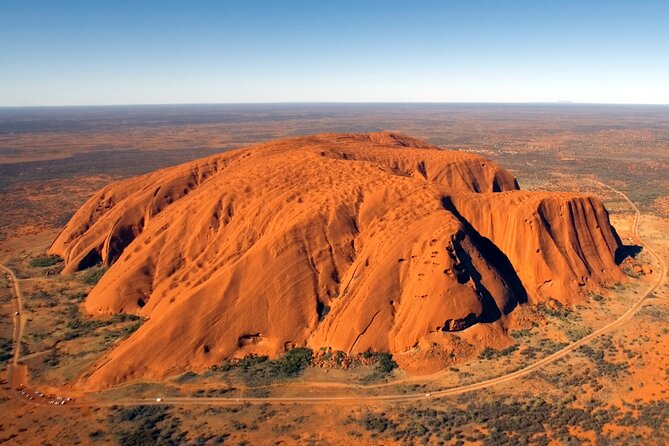
- Guaranteed window seat for clear views of Uluru and Kata Tjuta from start to finish
- Live pilot commentary that turns a postcard view into an explanation you can picture
- Low-level passes over Lake Amadeus for surface patterns and color variation
- Aerial approach to Kings Canyon with views toward the George Gill Range and canyon features like the Lost City and Garden of Eden
- Small group size with a maximum of 7 travelers, plus headsets for everyone to hear well
A 3-hour aerial tour that strings together four icons
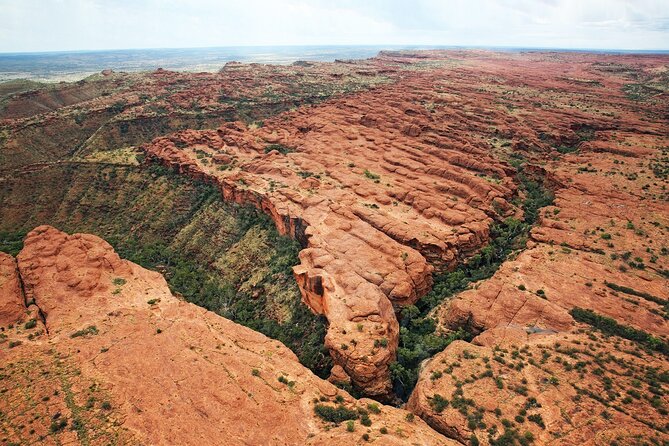
The Ayers Rock Scenic Plane Flight Desert Explorer is built for speed with meaning. In about 3 hours door-to-door (with a 2-hour flight), you get overhead views of Uluru (Ayers Rock), Kata Tjuta (the Olgas), Lake Amadeus, and Kings Canyon. That’s a lot of the “big names” of Australia’s Red Centre in one go, without spending your time on long drives.
This is also a sightline tour. From the fixed-wing aircraft, you can see how these places relate to each other across the outback—distance, shape, and the way water and rock sit in the same wide frame. If you’re the kind of traveler who likes to understand what you’re looking at, the onboard commentary is part of the value, not just a nice extra.
The overall rating is strong: a 4.8 out of 5 average with 95% recommending it. The consistent praise is about timing, pilot quality, and getting the iconic views in one tight session.
You can also read our reviews of more tours and experiences in Uluru.


Hotel pickup and airport handoff: the flow of your day
Your day starts with hotel pickup and drop-off, which matters in Yulara. Without it, you’d be coordinating transport on your own, and that’s exactly where good plans can go sideways in the outback. The tour’s plan is straightforward: you’re collected, taken to the airport, meet the pilot, then fly and return to the same general starting area.
You’ll also receive a mobile ticket, and confirmation is provided within 48 hours of booking (subject to availability). If you’re building a packed itinerary, that quick confirmation window helps you feel organized sooner.
One small practical note: because this is a plane flight, your “time on location” is measured in minutes, not hours. If you want hiking time or time sitting at lookouts on the ground, this won’t replace that. Think of it as a big aerial overview you can pair with on-the-ground stops later.
Uluru and Kata Tjuta from the window: exact angles, no guesswork
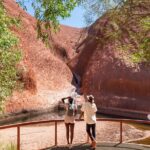
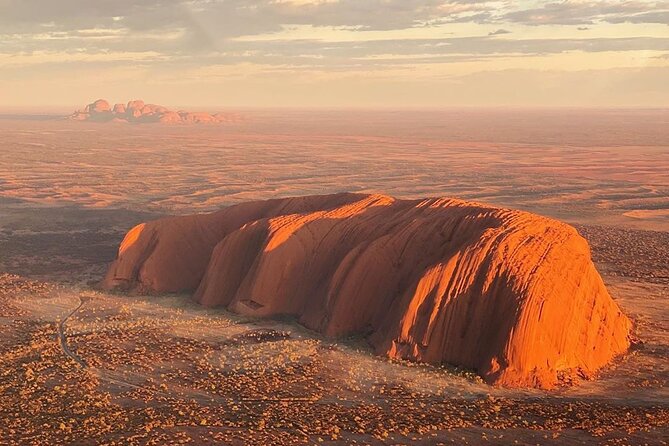
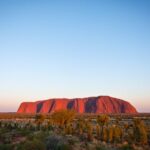
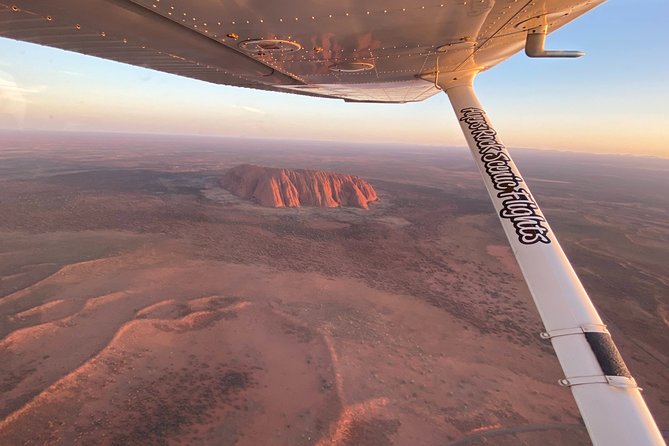
Most people first come to Uluru because it’s famous. The flight adds something different: the sense of volume and orientation. After boarding, the route begins with a turn over the northern and western faces of Uluru—the rock seen from angles you usually don’t get from ground viewpoints.
Then comes Kata Tjuta, with a spin over the domes of the Olgas. This part is easy to love because you can visually compare the rounded dome shapes to the blockier presence of Uluru. The view also helps you understand why locals treat this area as sacred and why it’s not just a “look and go” stop.
The guaranteed window seat is a big deal here. On smaller aircraft, you can’t always count on landing a perfect angle. With the window seat handled for you, you can focus on spotting details—changes in tone, the way shadows slide across rock faces, and how the desert light alters the colors as the plane moves.
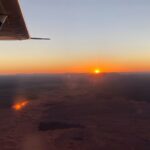
If you’re traveling specifically for sunrise or sunset light, timing matters. One review pointed out that while sunrise is beautiful, the light can sometimes be better around sunset depending on the colors you’re chasing. So if color is your priority, plan your departure time with that in mind.
Lake Amadeus low-level pass: patterns on the salt lake
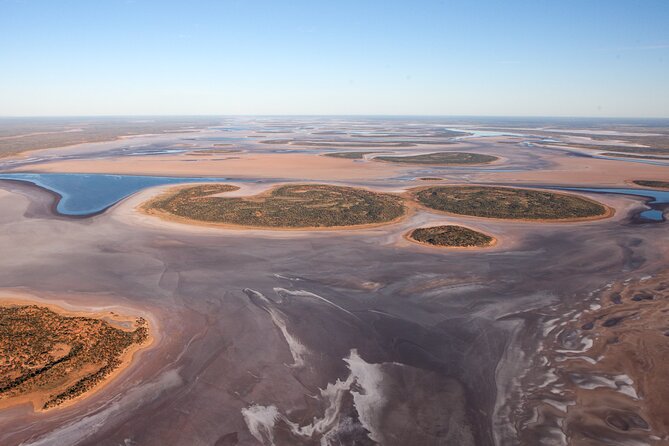
Lake Amadeus is the “wait, what is that?” moment for a lot of people. From the air, it doesn’t just look like a distant lake—it shows surface patterning. The route includes an approach that takes you over an ancient coral reef on the way to the lake, then sets you up for a more detailed look once you arrive.
The highlight here is the low-level pass following the inlet into the lake. That’s the section where the flight earns its keep. At higher altitude, lakes can look flat or uniform. At low level, you can make out the way water and mineral textures reflect light, plus the way colors shift across the surface.
The tour description also mentions the pilot may conduct low-level orbits around the area. Practically, that means you get more than one look direction. Instead of rushing past, you have a better chance to see how the lake’s shape and tones change as the plane banks.
Why it matters: these are exactly the moments when aerial sightlines turn into real understanding. You stop thinking of the outback as empty and start noticing how water, geology, and color are linked in the same view.
Kings Canyon approach: George Gill Range to Lost City
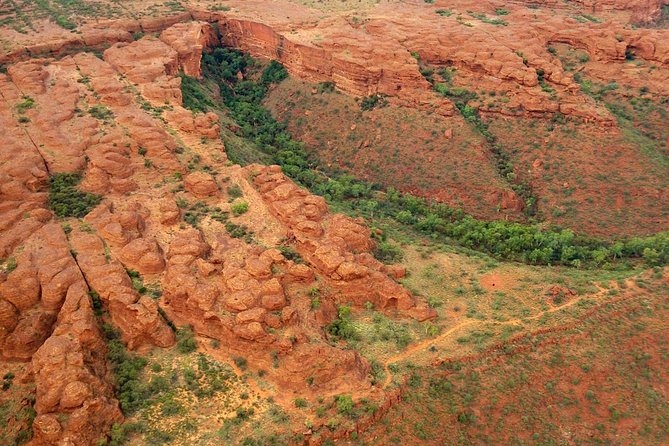
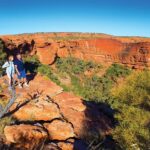
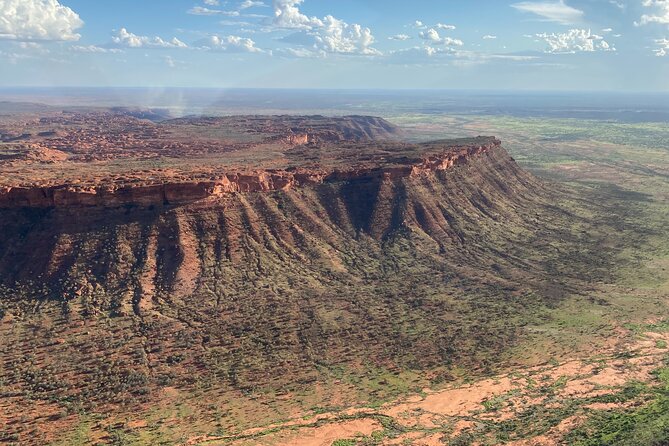
Then you shift from water and rock to a deep, dramatic canyon world. As you head toward Kings Canyon, you gain appreciation for the vastness of the outback because the plane lets you see scale all at once: distances, ridges, and where the canyon opening sits in the larger terrain.
The aircraft approaches the George Gill Range, lined with Ghost Gums, and the pilot points you toward the opening of Kings Canyon. That approach angle helps you understand why canyon country feels so different from open desert—suddenly there’s depth, shelter, and layered rock in one frame.
Inside the canyon, the flight specifically calls out features like the Lost City and the Garden of Eden waterhole. Even if you never step into the canyon floor during this experience, these names give your brain a handle. You’re not just seeing a canyon—you’re seeing named sections from above, with context offered by the pilot.
One drawback to be aware of: this is still an aerial look. You’re getting the overview and the geometry, not a full on-foot explore of the canyon trails. If your heart is set on walking, treat the plane flight as the “orientation shot” that makes future ground time more rewarding.


Pilots, headsets, and onboard commentary: where the value hides
On paper, this is a list of famous places. In practice, what makes it memorable is the human layer: the pilot and the clarity of the narration. The tour includes headsets so you hear the live commentary, and that turns the flight into something more than window gazing.
In the feedback, pilots were singled out repeatedly for being personable and answering questions. Names that come up include Tim (praised for knowledgeable commentary and a great sunrise flight), Hayden (credited with excellent answers and a smooth, informative experience), Chrissy, and Amanda for professionalism and high-quality guiding.
You should expect the pilot to point out what you’re seeing as you approach each key site. That makes a difference because outback terrain can look similar if you’re only looking at colors. When the narration ties the view to the geography—north faces vs south faces, dome clusters, where inlets sit, how the canyon opening lines up—your photos stop being random and start telling a story.
Also, since the group is capped at 7 travelers, the pilot can keep an eye on everyone’s questions and seating positions. That small-group feel matters more in a plane than you’d expect.
Price and value: is $624 worth it?
At $624 per person, this isn’t a budget activity. The value comes from what you’re buying: coverage, time, and convenience.
Here’s the practical math. In roughly a 2-hour flight (plus hotel transfer time), you cover multiple major landmarks that would usually require multiple drive days and a lot of sitting in cars. If you’re short on time, flying compresses the “big icons” into one clean slot.
Then there’s the included stuff that often adds up if you price it separately:
- Hotel pickup and drop-off
- Fixed-wing flight
- Headsets
- Live commentary
- Guaranteed window seat
And the experience is also built for sightseeing in the Red Centre. Seeing Uluru, Kata Tjuta, Lake Amadeus, and Kings Canyon from above is the point. If you’re going to spend your limited time doing only ground viewpoints, you may decide you don’t need the cost. But if your itinerary is tight and you want the overview that driving can’t fully replicate, this can feel like smart spending.
One cost reality: food and drinks aren’t included. That’s typical for a short tour, but it does mean you should plan a meal before you get picked up (or after you land) rather than assuming you’ll be fed in the air.
Morning vs afternoon departure: timing for light and comfort
This tour offers a choice of morning or afternoon departure, and that choice can change the colors you see. The Red Centre is all about light angle, and aerial views don’t magically escape that rule.
If you’re chasing sunrise vibes, you might love the calm feel and the early-day clarity that often comes with morning departures. One sunrise experience was praised as great, and the pilot was noted for being helpful and informative. Still, another note suggested that sunset light can be better for color depending on what tones you prefer.
Here’s how I’d decide:
- Choose morning if you want a clean start and love early light on rock textures.
- Choose afternoon if you’d rather avoid the early start and still get good viewing conditions.
In both cases, dress for the fact that aircraft temperatures can change. Even if it’s warm on the ground, bring a layer you’ll be comfortable in at the airport and during the flight.
Weather, aircraft limits, and what to expect on the day
This experience requires good weather. That’s not a small detail. If conditions are poor, the flight can be canceled and you’ll be offered a different date or a full refund. So if your travel dates are fixed and non-movable, this is the one part of the plan you should think about early.
The good news is that the schedule is simple and the group is small. The aircraft typically holds up to 7 travelers, and with headsets included, you’re not stuck in a loud cabin trying to guess what the pilot is pointing at.
Also check the basics in your travel party: children must be accompanied by an adult, service animals are allowed, and most travelers can participate. If you have mobility or health considerations, a plane flight is usually manageable, but it’s still worth asking your operator questions before you lock it in.
Who this flight suits best
This is a great pick if:
- You want a fast way to see Uluru, Kata Tjuta, Lake Amadeus, and Kings Canyon without stacking multiple drives.
- You like getting context while you look, not just staring out the window.
- Your schedule is tight and you want maximum iconic coverage in one session.
It’s less ideal if:
- You want long walks, canyon hikes, or extended time on the ground at each landmark.
- You’re sensitive to weather uncertainty and can’t shift plans if the flight needs to change.
For many people, the best strategy is to pair the flight with at least one serious ground day—use the plane to learn the geography, then use your feet to experience the places up close.
Should you book Ayers Rock Scenic Plane Flight Desert Explorer?
I’d book it if your goal is to see the big Red Centre highlights in a single, efficient time block and you care about understanding what you’re viewing. The combination of guaranteed window seat, headsets, and live pilot commentary is exactly what turns a flight from just sightseeing into something memorable.
I wouldn’t book it if weather flexibility is impossible for you or if your dream trip is mostly about hiking and time on the ground. In that case, you can still see plenty, but you’ll want to allocate time for driving and walking instead of paying for an aerial overview.
FAQ
How long is the Ayers Rock Scenic Plane Flight Desert Explorer?
The scenic flight is about 2 hours, and the overall experience is listed as 3 hours approximately, including hotel pickup and drop-off.
Do I have a choice of departure time?
Yes. You can choose either a morning or afternoon departure.
What places does the flight go over?
You’ll fly over Uluru, Kata Tjuta, Lake Amadeus, and Kings Canyon, with the route also highlighting areas such as the George Gill Range, Lost City, and Garden of Eden waterhole.
Is hotel pickup and drop-off included?
Yes. Hotel pickup and drop-off are included.
Is a window seat guaranteed?
Yes. The experience provides a guaranteed window seat.
Are headsets and commentary included?
Yes. You get headsets to hear the guide clearly and there is live commentary on board.
Are food and drinks included?
No. Food and drinks are not included.
Do I need good weather for this tour?
Yes. The experience requires good weather. If it’s canceled due to poor weather, you’ll be offered a different date or a full refund.