REVIEW · ALICE SPRINGS
Historical Alice Tour
Book on Viator →Operated by Emu Run Experience · Bookable on Viator
Alice Springs history hits you fast. In about 4.5 hours, you’ll follow the story of Mparntwe (the Arrernte name for Alice Springs) and how it grew from a place called Stuart into a true outback hub.
I love two things most: the history is practical, not just dates on a board, and the sites are built around real outback services that still matter. A good view break at Anzac Hill rounds it out without dragging the day long.
One possible drawback: you spend much of the time at indoor or visitor-centre style stops, and the tour has a good-weather requirement—so plan for sun or heat, and don’t count on this as a rainy-day activity.
In This Review
- Key highlights you’ll actually care about
- Starting With Mparntwe: Why This Tour Works in 4.5 Hours
- School of the Air: Education for Kids Far From Anywhere
- What you’ll likely enjoy most
- A small consideration
- Telegraph Station Historical Reserve: Stuart Learns to Communicate
- Practical takeaways I think you’ll get
- If you’re short on attention
- Royal Flying Doctor Service Museum: Medical Care Over Distance
- What makes this stop special
- A consideration before you go
- Anzac Hill: Your Free Viewpoint Over Town and Ranges
- Tip for the viewpoint hour
- Price and Logistics: Does $131.08 per Person Feel Worth It?
- Weather and Timing: What to Plan for on a 1:00 pm Start
- Who This Historical Alice Springs Tour Fits Best
- Should You Book the Historical Alice Springs Tour?
- FAQ
- What’s the duration of the Historical Alice Tour?
- Is pickup offered?
- What’s included with admission on the tour?
- How long do you spend at each main stop?
- How many people are on the tour?
- What happens if the tour is canceled due to poor weather?
Key highlights you’ll actually care about
- Mparntwe first: Learn the Arrernte name and how it connects to the town’s wider outback story.
- School of the Air, up close: See how primary education reaches kids on remote properties across the Northern Territory.
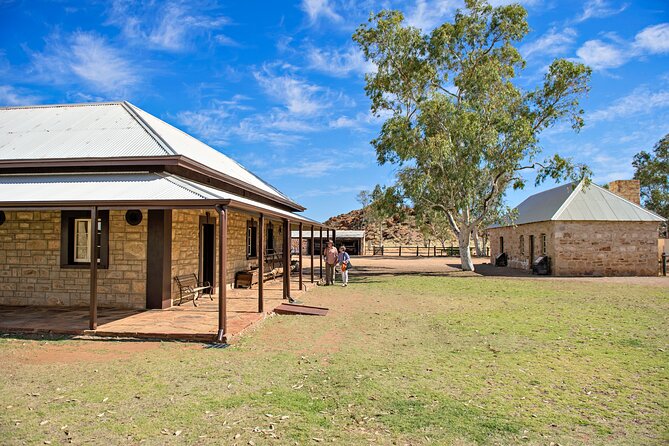
- Telegraph Station with scale: Discover how messages ran between Darwin and Adelaide for 150 years.
- Royal Flying Doctor Service focus: Understand medical care and emergency evacuation flights for remote rural Australia.
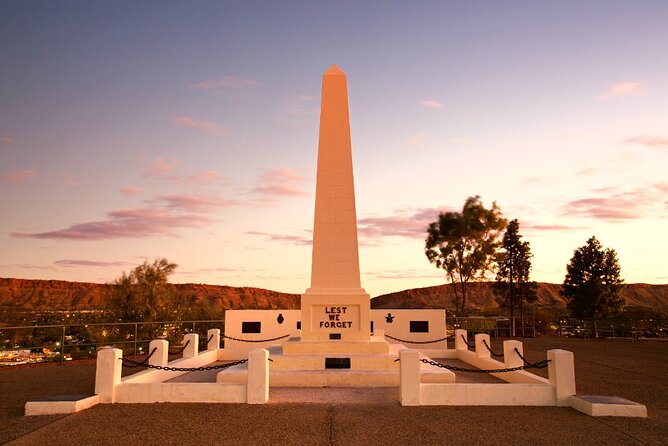
- Anzac Hill payoff: A free viewpoint session with the MacDonnell Ranges as your backdrop.
- Small-group feel: Maximum 20 travelers, with a guide-led pace that keeps the information moving.
Starting With Mparntwe: Why This Tour Works in 4.5 Hours
This is an Alice Springs history tour that doesn’t try to win you over with trivia. It moves fast on purpose. You start with Mparntwe—pronounced m’barn-twa—and you quickly get the sense that Alice Springs isn’t just a dot in the outback. It’s a meeting point shaped by communication, education, and healthcare across huge distances.
If you like tours where every stop connects to the next one, you’ll feel at home here. Your guide frames why the town formed where it did, and how key services turned isolation into a livable system. That matters because a lot of Alice Springs history isn’t behind glass—it’s about practical solutions people built for real life.
You’ll also feel the small-group advantage. With a cap of 20, the guide can actually address questions instead of reading from a script. In at least some past departures, groups have been as small as six, which makes the experience even more conversational.
Finally, you get a clean mix: three ticketed cultural stops, then a free viewpoint. That balance makes the four-and-a-half-hour run feel like a “full sampler,” not a rushed checklist.
You can also read our reviews of more historical tours in Alice Springs
School of the Air: Education for Kids Far From Anywhere
Your first stop is the Alice Springs School of the Air Visitor Centre. It focuses on one of the Northern Territory’s most important education stories: how primary schooling reaches children living on remote properties.
The way this place is set up helps you understand the challenge quickly: kids don’t just need a teacher and a workbook. They need a system that can bridge distance reliably enough for everyday learning. This centre highlights how the program supports primary school children in remote areas across the region, and it gives you a sense of how communication technologies and teaching strategies came together to make learning possible.
What you’ll likely enjoy most
- The human angle: It’s not abstract. You see education as a lifeline for families who can’t easily move closer to a school.
- The “how it works” feeling: Even if you already know the School of the Air name, you’ll probably come away with clearer context on how far-reaching it is.
A small consideration
Because it’s a visitor-centre style stop, some of the content will be more interpretive than hands-on. If you want a lot of interactive activities, manage expectations. But if you want to understand the outback’s education reality, this stop does a good job.
Admission here is included, so you’re not starting the tour wondering whether you’ll need extra tickets for a major highlight.
Telegraph Station Historical Reserve: Stuart Learns to Communicate
Next up is the Alice Springs Telegraph Station Historical Reserve—the first European settlement in Alice Springs, originally known as Stuart. The big story is communication: how this site relayed messages between Darwin and Adelaide for 150 years.
That single detail helps you grasp why this stop matters. In much of Australia, distances aren’t just inconvenient—they’re life-altering. A telegraph line wasn’t a gadget. It was how information moved, how people coordinated, and how the outside world stayed connected to the outback.
At this reserve, you’ll walk through the atmosphere of a town that once relied on messages to function as a hub. Instead of thinking of Alice Springs only as a modern base, you’re asked to picture it as a node in a communication network that helped shape settlement and growth.

Practical takeaways I think you’ll get
- Why Stuart became central: Communication helped turn a remote area into a place others could plan around.
- How long services really take to build: When a system runs for 150 years, you stop thinking of it as a short chapter and start seeing it as an engine.
If you’re short on attention
This stop can feel more “history you read” than “history you watch.” The good news is that a guided explanation keeps it moving, and your guide can connect it back to the larger Alice Springs story you’re building across the day.
Admission is included again here, which improves the value because this is one of the more meaningful heritage elements on the route.
Royal Flying Doctor Service Museum: Medical Care Over Distance
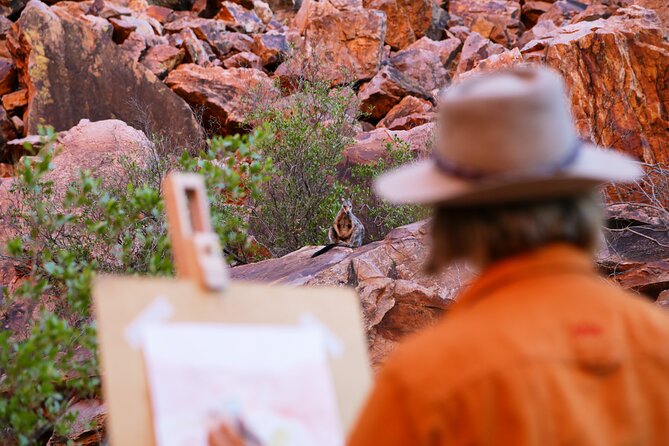
After communication and education, the tour hits the third major outback pillar: health. You’ll visit the Royal Flying Doctor Service Museum, which focuses on medical services and emergency evacuation flights for people who live and work in remote rural Australia.
If you only remember the phrase Royal Flying Doctor Service, that’s a start. But the museum experience is about understanding what “remote” means in healthcare terms. When someone is sick far away, the issue isn’t only treatment—it’s reaching treatment quickly, safely, and consistently.
The museum ties together the idea that the outback demands backup systems. You can’t assume roads, you can’t assume instant response, and you can’t assume you’ll have the right specialist nearby. So this service evolved into something that works like a lifeline—one that can move when time matters.
What makes this stop special
- You’ll connect it back to the town’s growth: Once healthcare is reliable, people can stay, work, and build communities.
- You get a sense of risk management: Emergency evacuation isn’t just dramatic. It’s a plan that has to work again and again.
A consideration before you go
This is an important topic, and it can feel emotionally serious. If you’re the type who prefers light entertainment, you might find it heavier than the telegraph station or the viewpoint. Still, it’s a necessary piece of understanding how Alice Springs functions as a hub.
Like the first two stops, admission here is included too, which keeps the day feeling properly “paid for” rather than nickel-and-dimed.
Anzac Hill: Your Free Viewpoint Over Town and Ranges
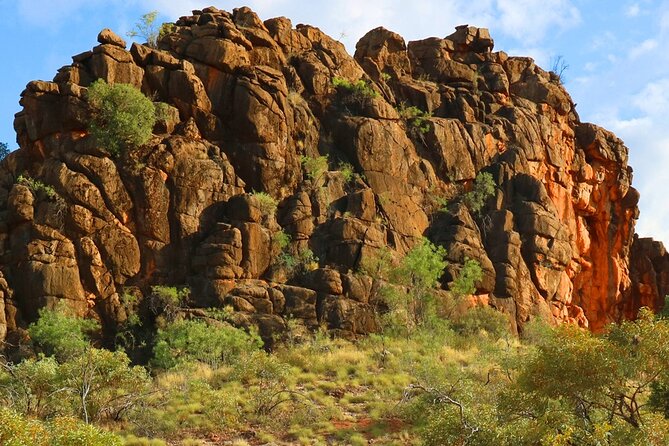
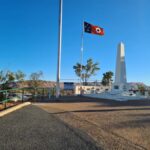
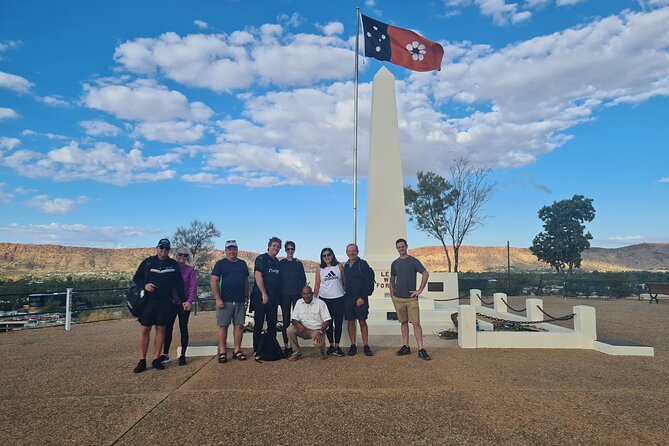
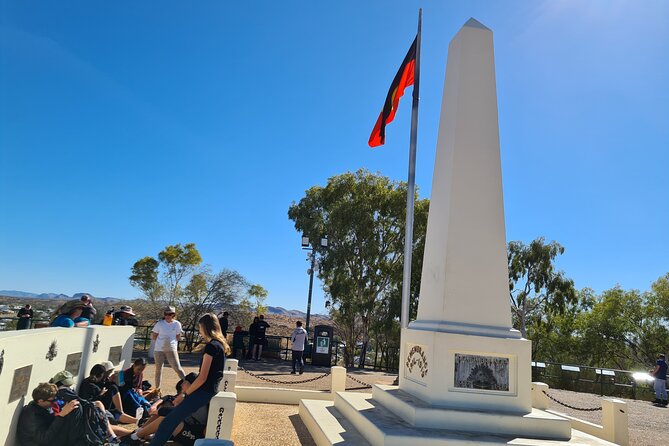
Then comes a breather. You head to Anzac Hill for a free session, roughly an hour, with one of the best vantage points over Alice Springs and the MacDonnell Ranges as a dramatic backdrop.
This is where the tour’s logic clicks into place. Up close, you’re learning about services—education, communication, and medical support. From a hilltop viewpoint, you can start to see the bigger problem those services solve: the distances. You feel the scale of the region, and the town starts to make sense as a place where people need to gather and coordinate.
An hour here gives you time to take photos, slow down your brain, and reframe what you just learned. It also works as a simple way to end the day without rushing into another museum-like setting.
Tip for the viewpoint hour
Bring sun protection and water, even if the sky looks friendly. The day starts at 1:00 pm, and Alice Springs can turn hot later than you expect. Give yourself time to sit and look, not just snap and move on.
Price and Logistics: Does $131.08 per Person Feel Worth It?

At $131.08 per person, you’re paying for more than “getting to places.” You’re paying for a guided run through three major, ticketed institutions plus a viewpoint stop. You’re also getting pickup offered and a mobile ticket, which usually makes the whole thing smoother than piecing together rides on your own.
Here’s how I think about the value:
- Three stops include admission tickets, which matters because these are standalone sites you’d otherwise have to pay for separately.
- You’re not driving between them yourself, which saves time and reduces stress, especially if you’re visiting with limited local navigation knowledge.
- The guide’s role isn’t just transport—it’s interpretation. When the telegraph story, education story, and flying doctor story get tied together, it turns into a coherent picture of why Alice Springs became what it is today.
The tour also keeps a workable length: about 4 hours 30 minutes. That’s long enough to feel like you did something meaningful, but short enough that you’ll still have energy for dinner plans after.
One note on group size: the tour caps at 20. That cap tends to keep things friendly and manageable. Based on past experiences with small groups and well-run guides, it’s a good fit if you value conversation over crowds.
Weather and Timing: What to Plan for on a 1:00 pm Start
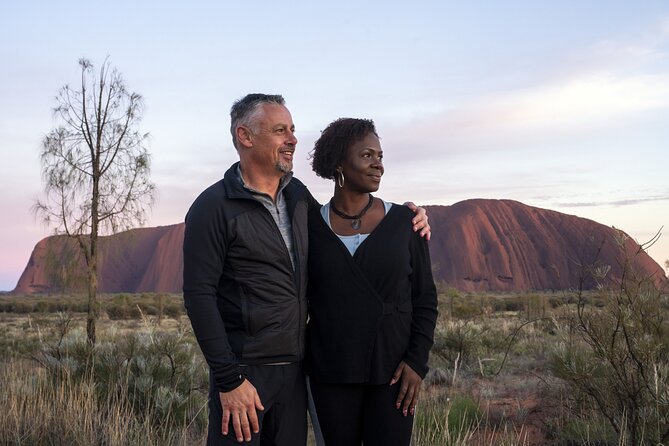
This experience requires good weather. That means if conditions are poor, the tour can be canceled and you’ll be offered a different date or a full refund. So check the forecast close to departure time and dress like you expect direct sun.
Starting at 1:00 pm is also worth planning around. You may want lunch before you go, because the day structure is several timed stops that keep you moving. Don’t count on an easy food break unless you build it into your schedule before pickup.
If you’re sensitive to heat, you can still enjoy this day—just treat the Anzac Hill hour as your “pause.” Wear a hat, consider sunglasses, and keep your water accessible.
Finally, because most people can participate (so it’s not overly technical), the real factor becomes your comfort with walking inside visitor centres and moving between sites. It’s not a hike tour. It’s a guided route through meaningful places.
Who This Historical Alice Springs Tour Fits Best
This tour suits you if you want Alice Springs history that explains how the town works, not just how it looked. If you’re the type who enjoys stories about education, communication, and survival logistics, you’ll get a lot from this mix.
It also fits great for:
- First-timers to Alice Springs who want the big story in one afternoon
- Families who can handle a moderate pace and appreciate kid-focused education history
- People who like guides who can explain context clearly
And it might be less ideal if you want:
- A long outdoors hike or lots of strenuous walking
- A purely light, entertainment-first afternoon
The tone is informative, and your guide plays a big role in keeping it engaging.
Should You Book the Historical Alice Springs Tour?
Yes—if your goal is to understand why Alice Springs became central to the outback. The combination of School of the Air, the Telegraph Station, and the Royal Flying Doctor Service Museum gives you a smart, connected view of how distance got handled in real life. Add Anzac Hill for a free viewpoint, and you get both context and a reset moment.
One final check before you book: make sure you can be flexible with weather and you’re comfortable with an early afternoon start. If those two boxes are fine, this is a strong value way to spend a half-day in Alice Springs with a guide-led story you’ll remember.
FAQ
What’s the duration of the Historical Alice Tour?
The tour runs for approximately 4 hours 30 minutes.
Is pickup offered?
Yes, pickup is offered.
What’s included with admission on the tour?
Admission tickets are included for the Alice Springs School of the Air Visitor Centre, the Alice Springs Telegraph Station Historical Reserve, and the Royal Flying Doctor Service Museum.
How long do you spend at each main stop?
The School of the Air Visitor Centre and the Telegraph Station are about 1 hour 10 minutes each, the Royal Flying Doctor Service Museum is about 1 hour 10 minutes, and Anzac Hill is about 1 hour.
How many people are on the tour?
The tour has a maximum of 20 travelers.
What happens if the tour is canceled due to poor weather?
If the tour is canceled due to poor weather, you’ll be offered a different date or a full refund.