REVIEW · ALICE SPRINGS
West MacDonnell Ranges Full Day – Small Group Tour
Book on GetYourGuide →Operated by Alice Holiday Tours · Bookable on GetYourGuide
One day in the West Macs feels endless. This Alice Springs full-day tour strings together major outback sights with real stops for views, wildlife, and easy walking when you want it. I especially like the bush-food picnic setup and the way the day includes both classic gaps and a proper chasm walk.
I also like that the guide, usually Mahesh, keeps the group moving without making it feel rushed. He’ll adjust to what the day looks like for your group and even has backup ideas if something isn’t running as planned.
One thing to consider: it’s still a full 10-hour schedule with outdoor walking and heat. If you have a back issue, you’re better off skipping this one, and it’s not set up for wheelchair access.
In This Review
- The West MacDonnell Ranges in One Efficient 10-Hour Day
- Meeting Your Guide in Alice Springs: Pickup, Small-Group Feel, and a Busy Day
- Anzac Hill Over Alice Springs: Start With Big Panoramic Views
- Simpsons Gap and Honeymoon Gap: Arrernte Country, Red River Gums, and Classic Gaps
- Standley Chasm: The 80-Metre Walk and Why It’s Worth Building In
- Ellery Creek Big Hole: A Deep Waterhole in Red-Cliff Country
- Ormiston Gorge: Near-Permanent Water for Swimming or a Picnic Walk
- Bush Cooking at Ormiston Gorge: Why This Lunch Feels Like Part of the Place
- Mount Sonder Lookout: 360-Degree Views and Birds of Prey Cues
- Ochre Pits and Neil Hargrave Lookout: Colour, Free-Camp Views, and a Change of Pace
- Glen Helen Gorge: Finish at a Permanent Waterhole and Easy Walking
- Price and Value at $197: What You’re Getting for a Full-Day Outback Route
- What to Bring (and How to Handle the Walking and Heat)
- Who This Tour Fits Best (and Who Should Reconsider)
- Should You Book This West MacDonnell Ranges Full Day Tour?
- FAQ
- How long is the West MacDonnell Ranges full-day tour?
- What does the tour cost?
- Where is pickup and drop-off provided?
- What’s included with the tour?
- Is lunch included, and is it a picnic?
- Can I swim at Ormiston Gorge?
- Does the tour include walking at Standley Chasm?
- What should I bring?
- Is the tour wheelchair accessible?
- What cancellation flexibility do I have?
The West MacDonnell Ranges in One Efficient 10-Hour Day
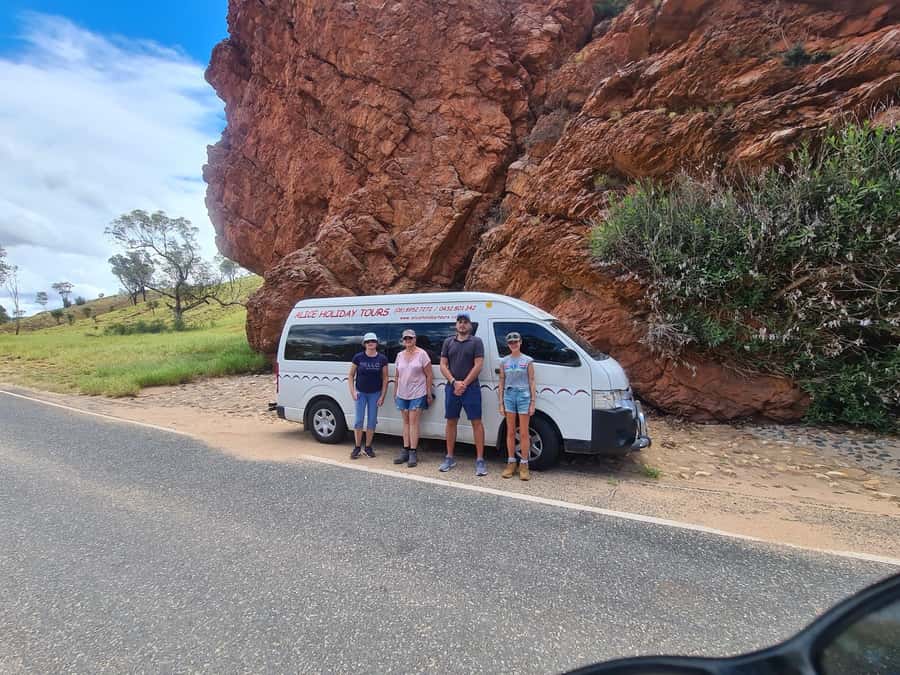
This is a practical way to see the big hitters of the West MacDonnell Ranges (Tjoritja) without needing to rent a car and figure out timing between spots. You’re based out of Alice Springs, then you’re taken out into the ranges for one long day that mixes viewpoints, Aboriginal cultural sites, and swimming-ready waterholes.
The tour is built for people who want variety: a panoramic lookout early, famous gaps mid-morning, a dramatic chasm walk, then a water-and-picnic phase, and finally more lookouts before you wind down at Glen Helen. It’s not about going slow. It’s about hitting the meaningful places at a pace that still leaves you time to take photos and enjoy the stops.
Meeting Your Guide in Alice Springs: Pickup, Small-Group Feel, and a Busy Day
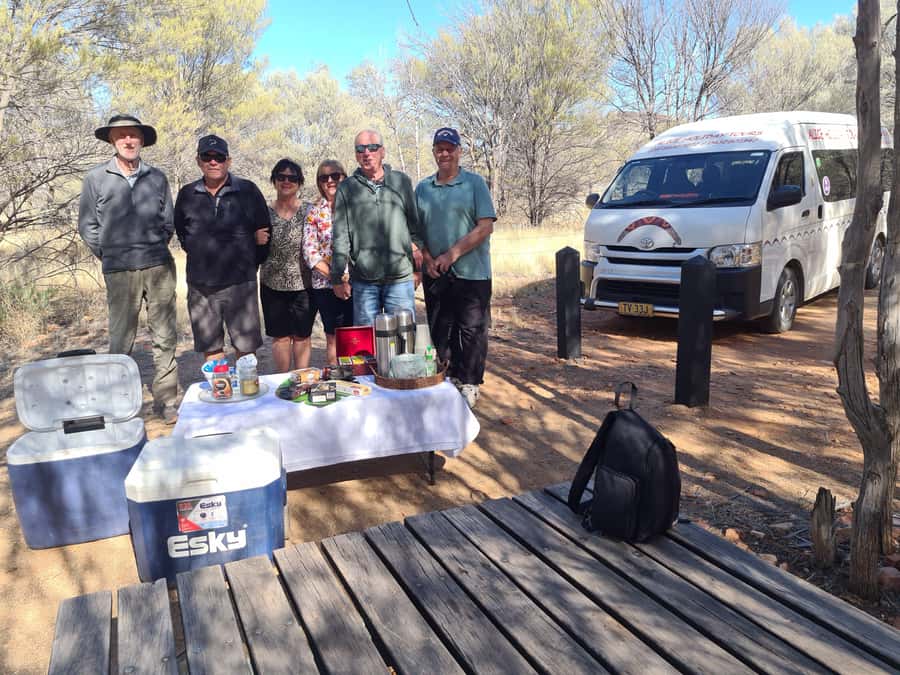
You start with hotel pickup (within 10 kilometres of the Alice Springs town centre), so you don’t burn time organizing transport. Then the bus/coach takes over, and you’re free to focus on what’s outside the windows.
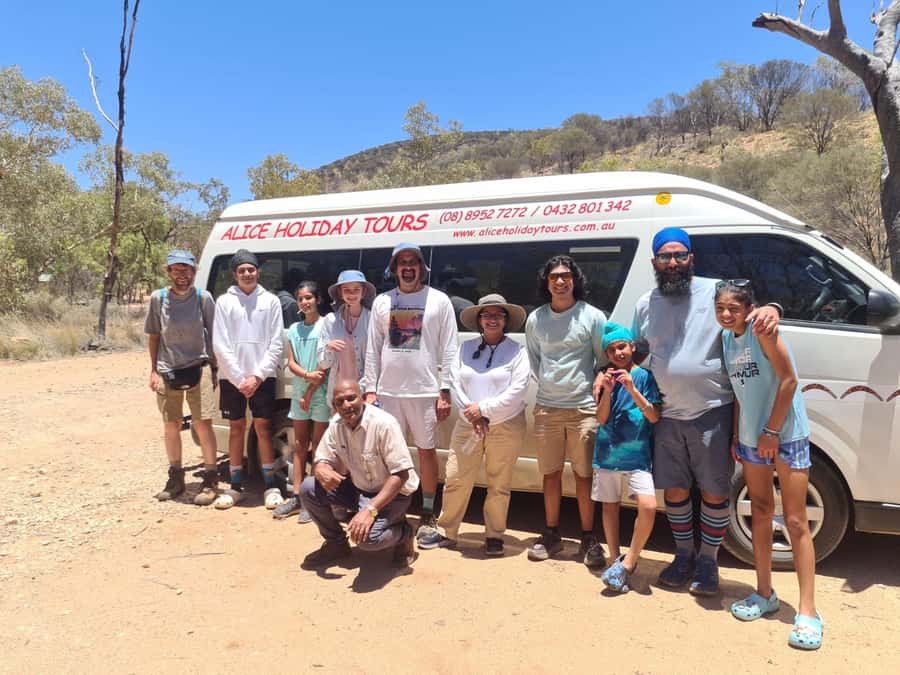
This is marketed as a small group, and you can feel that in how the day is run. The guide (Mahesh) tends to work with the group instead of speaking at everyone. From the way the tour is described and the feedback you’ll see, he’ll also ask what people want to do at stops—walk, pause for photos, or keep things relaxed.
It runs for 10 hours total, so plan it like a full outing, not a casual half-day. You’ll want to bring the basics—especially water, hat, and sunscreen—because a chunk of the day is outdoors.
A few more Alice Springs tours and experiences worth a look
Anzac Hill Over Alice Springs: Start With Big Panoramic Views
Anzac Hill is an easy win at the start. It gives you a high vantage over Alice Springs and the surrounding MacDonnell ranges, so your brain quickly understands the geography before you start visiting gaps and chasms.
Why this matters: when you get to Simpsons Gap, Honeymoon Gap, and Standley Chasm later, you’ll recognize how the ranges shape the valleys and waterholes. The day reads better when you get your bearings early.
This first stop is also a good photo moment, because you’re high up and you can see the range lines. If you’re the kind of person who likes to plan photos by light, arriving early in the day is usually when the views look crisp.
Simpsons Gap and Honeymoon Gap: Arrernte Country, Red River Gums, and Classic Gaps
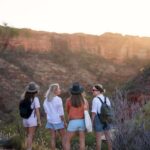
Simpsons Gap is one of the most iconic stops in the region, and it’s not just famous for views. It’s described as a significant site for the local Arrernte Aboriginal people, so it helps to approach it with respect and curiosity, not just as a checklist photo.
At Simpsons Gap, you also get the look and feel of Central Australia’s geology and plant life—especially the mention of ancient Red River Gum trees. That’s part of what makes these gaps more than scenic cutouts in the rock. They’re living places where water, shade, and wildlife all matter.
Then you continue on to Honeymoon Gap, south of Larapinta Drive and opposite Simpsons Gap. The big value here is contrast: you’re seeing two famous gaps close enough that you don’t lose time, but different enough that you notice the details—light, rock tones, and how the surrounding creek beds relate to the water.
Standley Chasm: The 80-Metre Walk and Why It’s Worth Building In
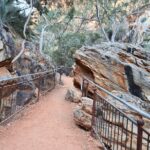
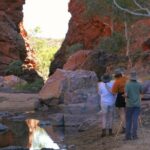
Standley Chasm is where the tour shifts from viewpoint sightseeing into a proper walking moment. The chasm is dramatic—an 80-metre sheer rock face—and the access is via a well-maintained trail that follows a natural creek bed with seating and interpretative signage.
This matters for your expectations. You’re not doing a rugged hike. You’re doing a guided, manageable walk through a canyon-like space where the walls suddenly feel close. If you’ve ever wished Central Australia could feel less flat, this is one of the best answers.
There’s also entry included for Standley Chasm, so you don’t have to hunt down tickets or worry about timing. Just bring comfortable shoes and take your time at the interpretive points—those are part of why the walk feels more meaningful than just going from A to B.
Ellery Creek Big Hole: A Deep Waterhole in Red-Cliff Country
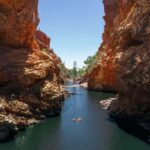
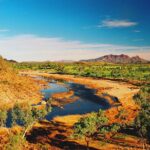
After Standley Chasm, the tour moves to Ellery Creek Big Hole, described as the most significant and deepest waterhole in Central Australia. The setting is classic West Macs: tall red cliffs, sandy areas, and a waterhole fed by the West MacDonnell Ranges (Tjoritja).
Why this stop is valuable: water defines the rhythm of this part of Australia. When you see a deep waterhole like this, you understand why wildlife concentrates here, and why the flora looks the way it does near the edges.
You’re not guaranteed swimming at every water stop, but you should expect a strong chance for wildlife spotting and good scenery photos from the edges. If you’re traveling in warmer months, it’s also the kind of stop where you’ll appreciate a break from the bus and a chance to breathe slower air.

Ormiston Gorge: Near-Permanent Water for Swimming or a Picnic Walk
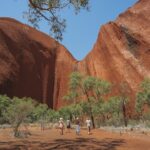
Ormiston Gorge is a must-see on many West MacDonnell itineraries, and this day tour gives you focused time there. The key detail is that it has a near-permanent waterhole, which makes it ideal for swimming—especially in warmer months.
Not everyone wants to swim, though. The tour layout works either way. You can do a picnic walk, or you can go straight for water and relax. This flexibility is a big deal on a full-day tour because it prevents you from feeling like you’re trapped in one pace.
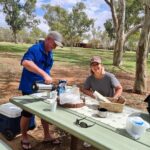
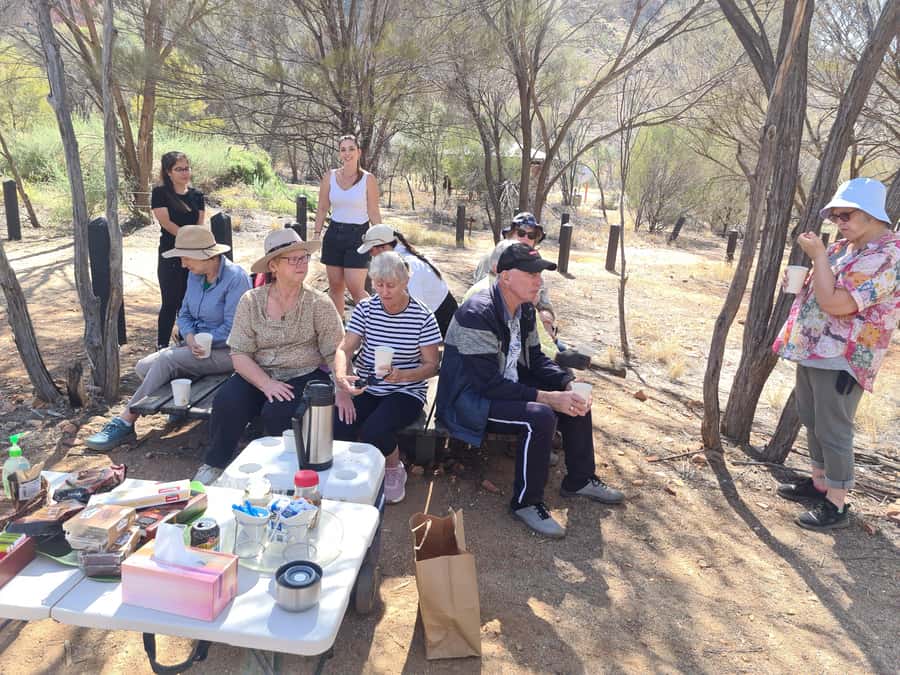
And this is where the day’s included lunch becomes more than just food. While you’re at Ormiston Gorge, the guide does bush cooking, including kangaroo and lamb, and your picnic lunch is ready for you once you arrive.
Bush Cooking at Ormiston Gorge: Why This Lunch Feels Like Part of the Place
This is one of the most praised parts of the tour. Multiple comments highlight that the lunch is the best part of the day—and that it’s generous.
Here’s why that matters to you: lots of outback day tours serve a basic sandwich and call it a picnic. This one ties the meal to the environment. You’re not just eating near a waterhole; you’re eating bush food prepared on-site while you’re there to choose your pace (walk or swim).
If you’re curious about local flavors, this is a straightforward way to experience them without needing insider hunting or planning. If you’re more practical, it still wins because it saves you time and keeps you fueled for the afternoon lookouts.
For taste and satisfaction, the guide’s cooking and the way it’s served at the gorge are a clear strength.
Mount Sonder Lookout: 360-Degree Views and Birds of Prey Cues
Next comes Mount Sonder Lookout, where you get a 360-degree vista toward Mt Sonder and across the surrounding area. This is one of those stops that feels like it belongs on a postcard—but it’s also a place where you can learn to look closer.
The tour description encourages bird watching, including birds of prey such as the wedge-tailed eagle and the peregrine falcon, plus wood swallows circling on thermal updraughts. Even if you don’t spot every species, the cues help you scan the sky with purpose instead of just staring at rock and sky.
Tip from a practical angle: bring your camera ready, but also give your eyes time. A lot of bird spotting in deserts is about patience and noticing movement before you raise the lens.
Ochre Pits and Neil Hargrave Lookout: Colour, Free-Camp Views, and a Change of Pace
After Mount Sonder, you head to the Ochre Pits, a colourful outcrop on the banks of a sandy creek. The ochre has been mined for generations by local Aboriginal people, and the key experience here is seeing the mineral color up close.
This stop helps break the day into different textures. You’ve had waterholes and rock walls; now you shift to mineral color and a different kind of landscape detail—more ground-level and earthy.
Then you go to Neil Hargrave Lookout, located between Ellery Creek and Ormiston Gorge. It’s described as a great spot for panoramic views over the West MacDonnell Ranges and sits near a free-camp area. That free-camp context matters because it signals the lookout is known as a viewpoint people return to.
Even if you don’t camp, you’ll appreciate the perspective: by now you’ve seen several separate sites, and this gives you the chance to connect them visually.
Glen Helen Gorge: Finish at a Permanent Waterhole and Easy Walking
Glen Helen is where the day winds down. You relax for a while, then you can take a short walk down toward Glen Helen Gorge, reaching a striking waterhole area. The ranges here are described as making way for the Finke River system.
This matters because Glen Helen is described as having a permanent waterhole—an essential refuge in the hot summer months. The tour notes that it’s home to nine species of fish recorded for the Finke, and migrating waterbirds.
You don’t need to be a wildlife expert to enjoy this part. The point is the difference between a temporary water scene and a reliable one. When water is permanent, the ecosystem gets denser and more resilient, and it often feels calmer around the edges of the gorge.
After finishing at Glen Helen, you return to your hotel in Alice Springs.
Price and Value at $197: What You’re Getting for a Full-Day Outback Route
At $197 per person for a 10-hour tour, the value depends on what you’d otherwise do on your own.
Here’s what you’re paying for that you’d likely spend extra time or money trying to DIY:
- Pickup and drop-off within 10 km of the Alice Springs town centre
- Transport on a bus/coach for the long back-and-forth distances
- An expert live guide (Mahesh is specifically mentioned in feedback)
- Entry to Standley Chasm
- Tea, coffee, snacks, and picnic lunch, with bush cooking including kangaroo and lamb
If you don’t want to drive, plan, and pay for separate stops, this adds up. Also, the bus is described as air-conditioned, which is a real comfort factor in the heat.
The one trade-off is that you’re committing to a full day with fixed stops. If you want total freedom to linger somewhere for hours, a self-drive day might feel better. But for most first-time visitors, this tour is a strong “see the best first” option.
What to Bring (and How to Handle the Walking and Heat)
You’ll be happier with the right gear, especially because the tour mixes viewpoints, trails, and waterhole areas.
Bring:
- Comfortable shoes (you’ll use them at Standley Chasm and during gorge walks)
- Hat
- Camera
- Sunscreen
- Water
Also, think about simple comfort rules: if you’re heat-sensitive, plan to take shade breaks when you can, and don’t assume every stop has seating. The Standley Chasm trail does mention seating, but other areas are more open.
Walking is described as along a well-maintained trail at Standley Chasm, following the creek bed. That’s good news if you want something scenic without a hardcore climb. Still, the day adds up, so pace yourself.
Who This Tour Fits Best (and Who Should Reconsider)
This is a great fit if you:
- Want a single-day introduction to the West MacDonnell Ranges from Alice Springs
- Like having an expert guide point out details and keep the day organized
- Enjoy a mix of views, short walks, and water stops (with swimming time at Ormiston Gorge)
- Care about food that feels part of the trip, not an afterthought
This is not a good match if you:
- Need wheelchair access (the tour is not wheelchair accessible)
- Have back problems or mobility limits that make uneven outdoor walking hard
- Are pregnant (not suitable)
If you fall into those categories, you’ll likely feel frustrated by the time outdoors and the trail-based stops.
Should You Book This West MacDonnell Ranges Full Day Tour?
If you’re visiting Alice Springs and you want the West Macs highlights without the stress of planning a self-drive day, I’d book it. The standout strengths are the organized route, the included bush-food picnic at Ormiston Gorge, and the mix of iconic gaps plus Standley Chasm.
If you’re worried about long days, heat, or any walking, then look closely at your comfort level first. And if mobility issues are a factor, take the accessibility notes seriously and choose another option that matches your needs.
FAQ
How long is the West MacDonnell Ranges full-day tour?
The tour runs for 10 hours.
What does the tour cost?
The price is $197 per person.
Where is pickup and drop-off provided?
Pickup and drop-off are included within 10 kilometres of the Alice Springs town centre (including hotels, caravan parks, and private residences within that range).
What’s included with the tour?
It includes transportation by bus/coach, an expert English-speaking guide, visits to Anzac Hill, Simpsons Gap, Honeymoon Gap, Standley Chasm, Ellery Creek Big Hole, Ormiston Gorge, Mount Sonder Lookout, Ochre Pits, Neil Hargrave Lookout, and Glen Helen. Tea, coffee, snacks, water, and a picnic lunch are also included, plus entry to Standley Chasm.
Is lunch included, and is it a picnic?
Yes. You’ll have tea, coffee, snacks, and lunch. At Ormiston Gorge, bush cooking is included (kangaroo and lamb), and your picnic lunch is ready for you when you arrive.
Can I swim at Ormiston Gorge?
Ormiston Gorge has a near-permanent waterhole ideal for swimming, especially in warmer months. The tour allows time for either a picnic walk or swimming there.
Does the tour include walking at Standley Chasm?
Yes. There is walking access along a well-maintained trail to reach the chasm area, following the natural creek bed and including seating and interpretative signage. Entry to Standley Chasm is included.
What should I bring?
Bring comfortable shoes, a hat, camera, sunscreen, and water.
Is the tour wheelchair accessible?
No. It is not suitable for wheelchair users.
What cancellation flexibility do I have?
Free cancellation is available up to 24 hours in advance for a full refund.