REVIEW · ALICE SPRINGS
Uluru, Kata Tjuta & Kings Canyon Safari Camping Tour
Book on GetYourGuide →Operated by Adventure Tours Australia · Bookable on GetYourGuide
Uluru at sunrise still feels unreal. This 3-day outback safari links Uluru and Kings Canyon with Kata Tjuta domes, all in a comfy, starry swag-camping setup. It’s a full program built around walks, not just viewpoints, with an English-speaking guide leading the important bits.
I especially like the focus on classic walks: the Uluru base walk and Kings Canyon rim walk through the big-name spots like the Amphitheatre and North and South Walls. I also like that you’re not stuck in one “photo stop” loop, because Kata Tjuta brings a different vibe with its domes and the Walpa Gorge style walk between stone formations.
One thing to consider before you book: this is a tight schedule with early starts, plus camping means you’re signing up for basic shared facilities and possible sleep disruption when the wind picks up.
In This Review
- Key Things You’ll Notice on This Safari Camping Tour
- Price and What You’re Actually Getting for $563
- Day 1: Kata Tjuta Domes First, Then Uluru Sunset at Your Camp
- Arrive at Kata Tjuta (The Olgas) and get oriented
- Walpa Gorge walk style hiking (fitness check, but worth it)
- End the day with Uluru sunset tones
- Day 2: Uluru Sunrise, Anangu Stories, Cultural Centre, Then Kings Canyon at Night
- Uluru sunrise plus cultural context you can actually use
- Don’t skip the Uluru Cultural Centre stop
- Then the day shifts to Kings Canyon camp and stars
- Day 3: Kings Canyon Rim Walk Through Lost City, Garden of Eden, Amphitheatre, and Walls
- The included Kings Canyon trek is the main event
- After lunch, drive back toward Yulara and choose your evening
- What Camping Really Means Here: Swags, Shared Facilities, and Wind
- How to protect your sleep quality
- Walking Gear and Outback Packing That Won’t Let You Down
- Guides, Timing, and the All-Terrain Vehicle Reality
- Food on Tour: Included Meals, but Quality Can Swing
- Who This Tour Fits Best (and Who Should Rethink It)
- Should You Book This Safari Camping Tour?
- FAQ
- What’s included in this Uluru, Kata Tjuta & Kings Canyon camping tour?
- Do I need to pay for park entry fees?
- How long is the tour?
- What are the pickup times?
- Is lunch provided on pickup day?
- How much luggage can I bring?
- What should I bring for the walks and camp?
- Are dietary requirements catered for?
- Is alcohol included?
- Is this tour suitable for children or people with mobility impairments?
Key Things You’ll Notice on This Safari Camping Tour
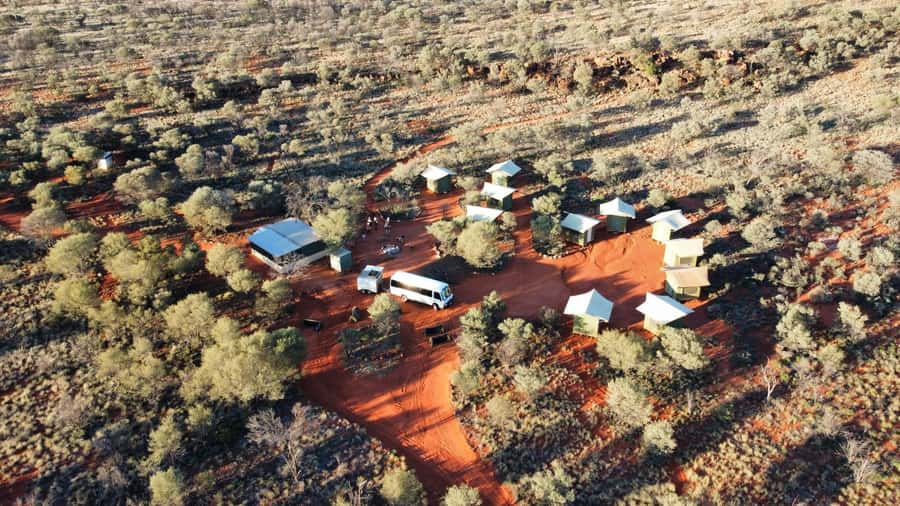
- Uluru sunrise and sunset timing built around the best light, plus an Ewings Lookout viewing moment
- Kings Canyon rim walk hitting key features like Lost City, Garden of Eden, Amphitheatre, and North/South Walls
- Kata Tjuta domes and Walpa Gorge walk that feel totally different from Uluru
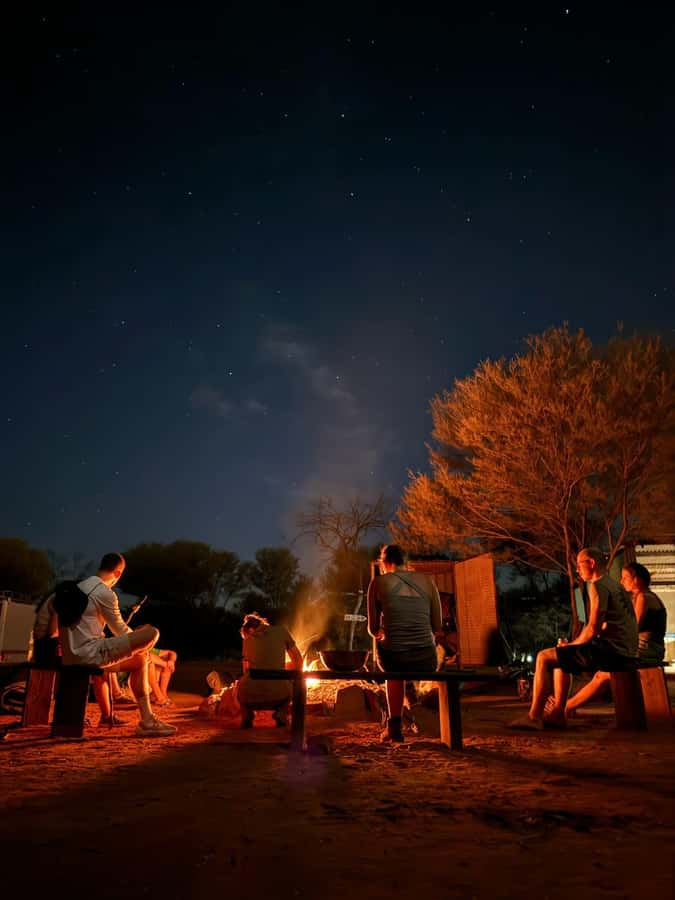
- All meals included, with shared group time around campfires and stars
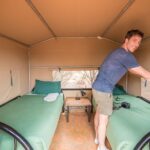
- Permanent eco safari tents with a sleeping bag, pillow, linen, and mattress for real sleep comfort (still camping, still basic)
- A strict luggage limit of 15 kg and no oversize bags, so packing light matters
Price and What You’re Actually Getting for $563
At $563 per person for 3 days (listed as 84 hours), you’re paying for more than “getting to the parks.” You’re also paying for the hard parts that often cost time (and headaches) when you travel independently: park entry fees, guided interpretation, and transport by an all-terrain vehicle that moves the group between Alice Springs, Yulara, Uluru, Kata Tjuta, and Kings Canyon.
In the value column, the inclusions are meaningful:
- Uluru base walk and the Cultural Centre entry
- Kings Canyon rim walk and Kata Tjuta Walpa Gorge walk
- Ewings Lookout sunset viewing area
- All meals, plus camping gear (sleeping bag, pillow, linen, mattress) in permanent eco safari tents
- Watarrka and Uluru Kata Tjuta National Park entry fees
In the “watch-outs” column, food and sleep quality can be inconsistent because camping is camping. Some people loved the structure and the guide-led walks, while others felt the vehicle and camp conditions weren’t always comfortable (especially in heat and wind). If you’re the type who wants hotel-level quiet and spotless facilities, this might feel like a mismatch.
A few more Alice Springs tours and experiences worth a look
Day 1: Kata Tjuta Domes First, Then Uluru Sunset at Your Camp
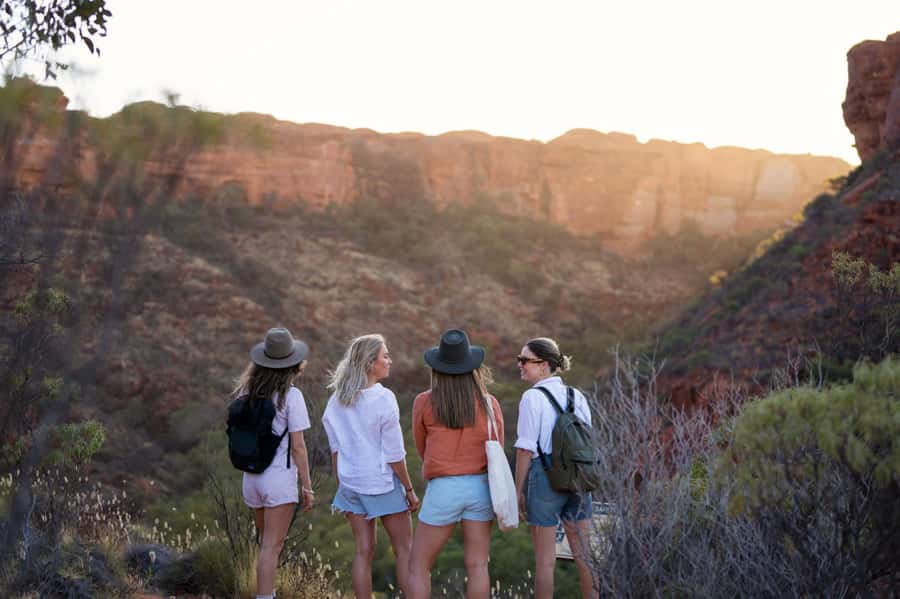
Most trips start with pickup either around 6:00am from Alice Springs or 1:15–2:00pm from Yulara (with the note that a Yulara/airport flight needs to arrive before 1:45pm). Either way, the first day sets the tone: you get a drive, an early taste of the Outback, and then walking time on big-name formations.
Arrive at Kata Tjuta (The Olgas) and get oriented
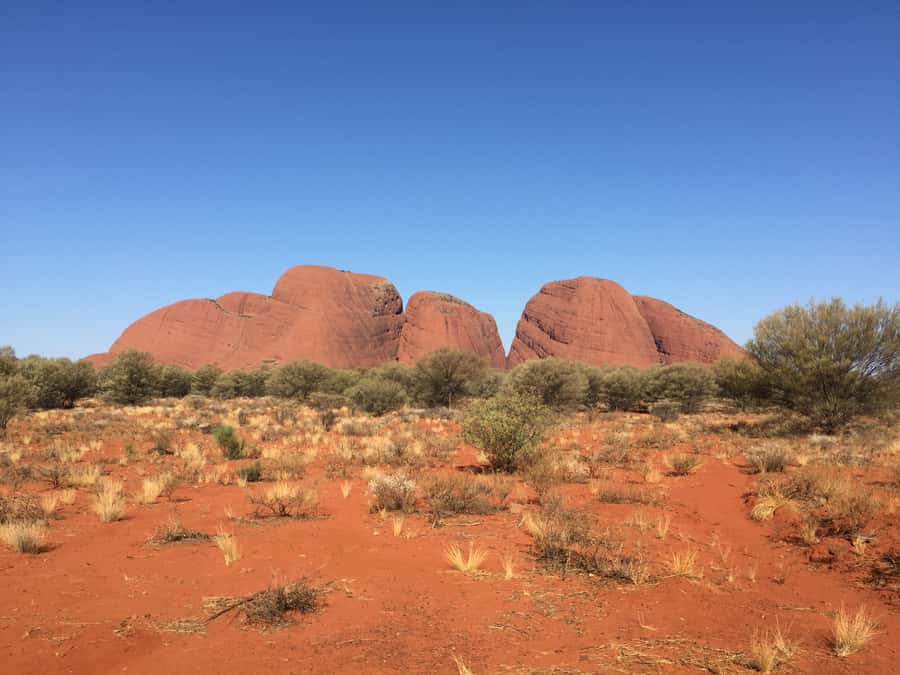
Kata Tjuta is different from Uluru. Uluru is one huge monolith; Kata Tjuta is a field of domes—36 of them—forming a bolder, more “layered” stone world. Your afternoon hike moves between the domes, building visual context before you do the real gorge-style walking later in the tour.
What I like about this order is how it trains your eye. After Kata Tjuta, Uluru reads differently in your head. You notice shapes, erosion patterns, and how the whole region looks under different light.
Walpa Gorge walk style hiking (fitness check, but worth it)
The included experience is a Kata Tjuta Walpa Gorge walk. Even if you keep your pace steady, this is proper outback walking. Expect rock underfoot, changing shade, and that classic sense of being small against massive stone walls.
Tip for you: wear shoes with real grip and bring a hat you trust. There’s no “wander slowly and be casual” cover story here.
End the day with Uluru sunset tones
After your Kata Tjuta time, the schedule heads toward Uluru’s sunset experience. You get to enjoy that gradual shift in earthy tones as the sun lowers, and you return to camp for a group meal and downtime under the stars if conditions allow.
This is where swag camping starts to feel like more than a bed. Around camp, you tend to slow down. People compare highlights. You watch the sky darken. That part is what turns a “walk program” into a memory.
Day 2: Uluru Sunrise, Anangu Stories, Cultural Centre, Then Kings Canyon at Night
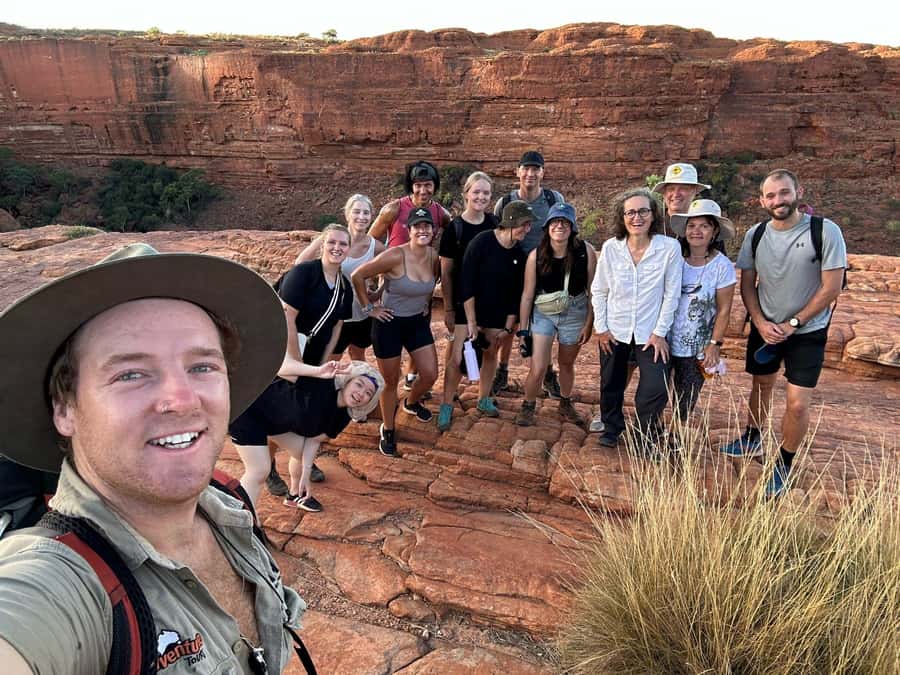
Day 2 is the big “spiritual plus scenery” day. You start early for Uluru sunrise, then you move into cultural interpretation, then you hike, then you travel again toward Watarrka National Park.
Uluru sunrise plus cultural context you can actually use
Your guide takes you to a significant cultural sight where you’ll learn about Anangu rock art and hear one of the creation stories tied to the area. It’s not presented as a random lecture; it’s designed to make the place make sense while you’re still close enough to feel the scale.
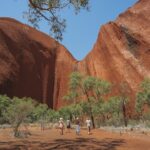
Right after that, you do the self-guided full Uluru base walk. Being self-guided here matters. A guided walk can be great, but Uluru’s scale benefits from your own pace. You can pause, walk slower, step off for photos, and keep your attention on the details without feeling rushed.
Don’t skip the Uluru Cultural Centre stop
After lunch, you visit the Uluru Cultural Centre and see hand-crafted art by local First Nation peoples of the Western and Central Deserts. This is a practical stop. You’re not just looking at art; you’re learning how connection to the land shows up in objects and patterns.
If you only do Uluru as scenery, you miss half the point. If you do the centre, you’ll leave with a better sense of what you saw during the morning.
Then the day shifts to Kings Canyon camp and stars
After Uluru, you head to an exclusive campsite near Watarrka National Park (Kings Canyon). Dinner is served with the group, and the night is built around darkness and sky-watching time.
This is the moment where you realize you’re not just visiting parks—you’re camping in the same environment that shapes the Outback light.
Day 3: Kings Canyon Rim Walk Through Lost City, Garden of Eden, Amphitheatre, and Walls
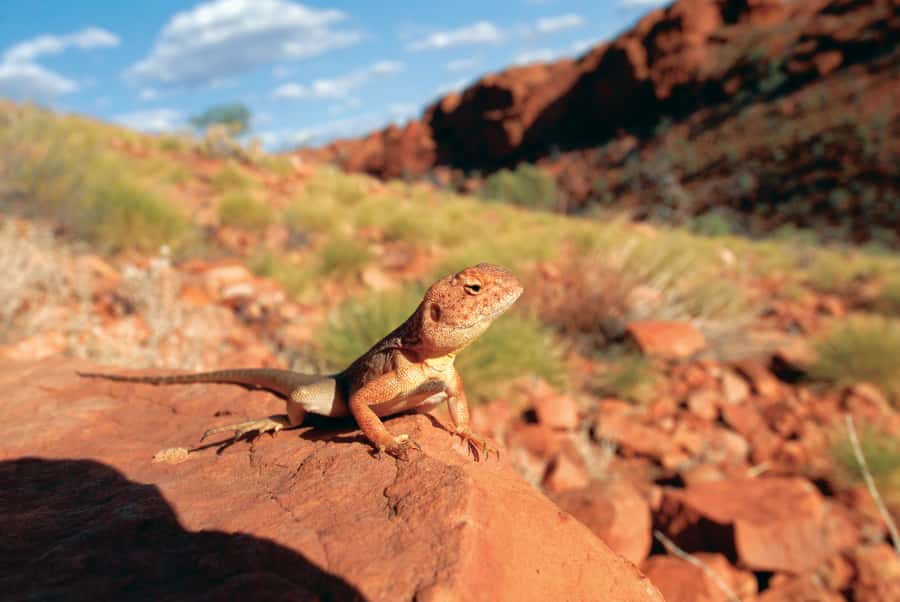
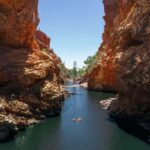
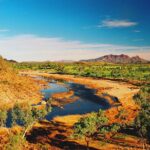
Kings Canyon is the reason many people book a package like this. The gorge is enclosed by steep rock walls, so the walking feels dramatic even before you reach the famous stops.
The included Kings Canyon trek is the main event
Your guide points out the big features on the trek that takes in:
- the Lost City
- the Garden of Eden
- the Amphitheatre
- the North Walls and South Walls
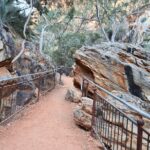
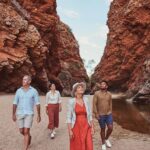
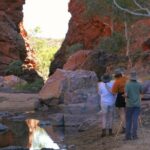
The rim walk gives you that best combination of views and photo angles. You get wide canyon perspectives but also close-in texture—rock face, crevices, and that “how did nature carve this?” feeling.
Fitness note for you: this is a gorge walk in hot country. Even if you consider yourself an average walker, you’ll want breaks and steady pacing. Start early, hydrate, and use your hat.
After lunch, drive back toward Yulara and choose your evening
Once Kings Canyon hiking is done, it’s back on the road for a roughly 3-hour drive to Yulara in the late afternoon.
If you’re on the 2-night tour, it finishes in Alice Springs around 6:00pm on day 3. If you’re on the 3-night tour, you continue to day 4, finishing in Yulara around 9:00am.
In Yulara, you may have optional evening activities at extra cost, including:
- Sunset Camel Cruise
- Field of Lights
- Sounds of Silence
- Wintjiri Wiru Drone display
And there’s also a free option mentioned: the chance to experience Uluru sunset from another perspective that evening.
What Camping Really Means Here: Swags, Shared Facilities, and Wind
The tour uses permanent eco safari tents with basic shared facilities. You get comfy mattresses plus a sleeping bag, pillow, and linen. On paper, that’s a good setup. In practice, camping comfort depends on the night.
Some people reported that sleeping at the Yulara camp was close to impossible because tents can make noise in strong wind. Others flagged that Kings Canyon amenities can be really dirty. That doesn’t mean your trip will match the worst case, but it does mean you should go in with realistic expectations.
How to protect your sleep quality
If you’re even a little sensitive to noise, plan for it. Bring:
- a torch (mentioned as recommended)
- warm clothing in winter (also recommended)
- and consider a small sleep aid like earplugs, even if you normally don’t use them
Also, keep in mind power is limited at camp. A power bank is recommended so you can recharge your phone.
Walking Gear and Outback Packing That Won’t Let You Down
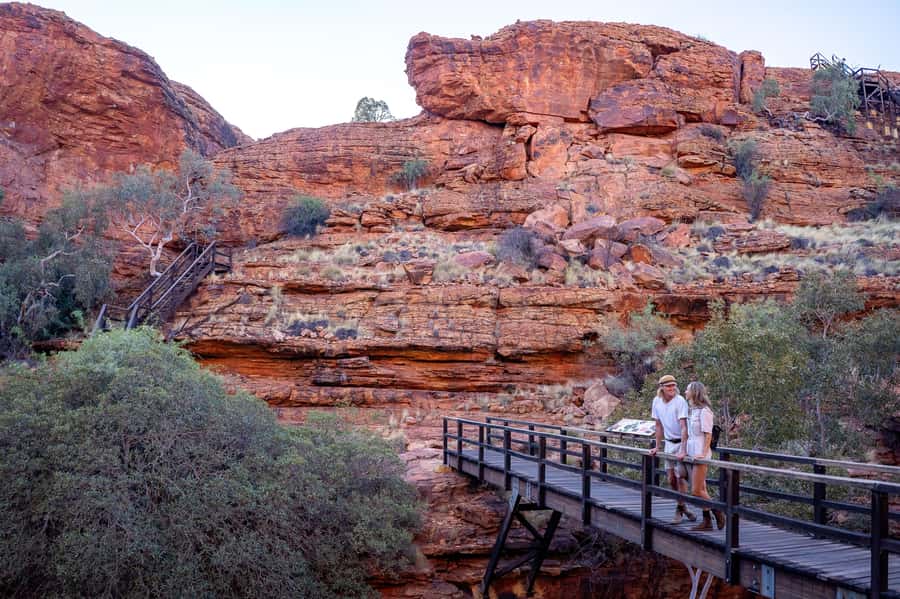
You’re responsible for the basics you need to move safely. The tour recommends:
- sturdy walking shoes
- hat and sunscreen
- water bottle (1.5L)
- torch
- toiletries
- insect repellent/net
- power bank
- warm clothing in winter
Don’t overpack. There’s a strict luggage limit of 15 kg and no oversize luggage. You’re meant to bring one small to medium soft bag or backpack plus a small daypack that fits inside the vehicle.
If you forget to pack walking shoes, you’ll feel it fast. If you forget sun protection, you’ll feel it faster.
Guides, Timing, and the All-Terrain Vehicle Reality
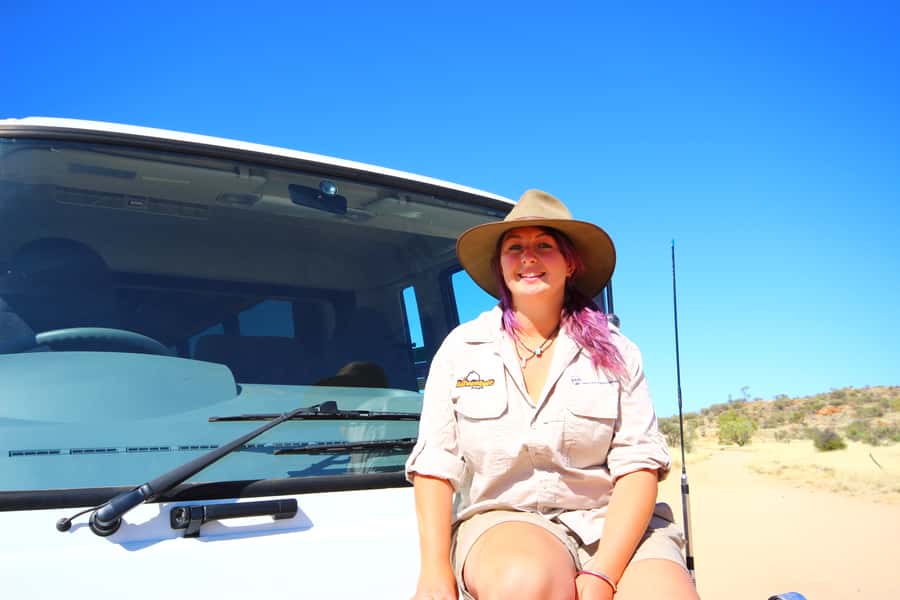
This tour is guide-led for the key cultural and hiking moments, and it’s in English. The big upside is that the guide helps the outback make sense and keeps you on track for sunrise and sunset timing.
The downside is that the program is tight. On some departures, that has meant long bus time before walking starts, plus frequent pick-up or drop-off routing across Alice Springs and/or Yulara.
Also, because it can be hot (and you’re riding in an all-terrain vehicle), vehicle comfort matters. Some departures have drawn complaints about air-conditioning. You can’t control that. But you can control what you bring: water, sun protection, and patience.
Food on Tour: Included Meals, but Quality Can Swing
Meals are included (snacks are not), and dietary requirements can be catered for if you notify the provider 48 hours prior. That’s the good news.
The mixed news is that food satisfaction seems inconsistent. Some people felt it was fine. Others mentioned poor quantity or quality, especially for vegetarians, and concerns about camp kitchen hygiene.
If you’re vegetarian or have any dietary needs, send your requirements early, not late. And if you like snacks for peace of mind, pack a few for yourself since snacks aren’t included.
Who This Tour Fits Best (and Who Should Rethink It)
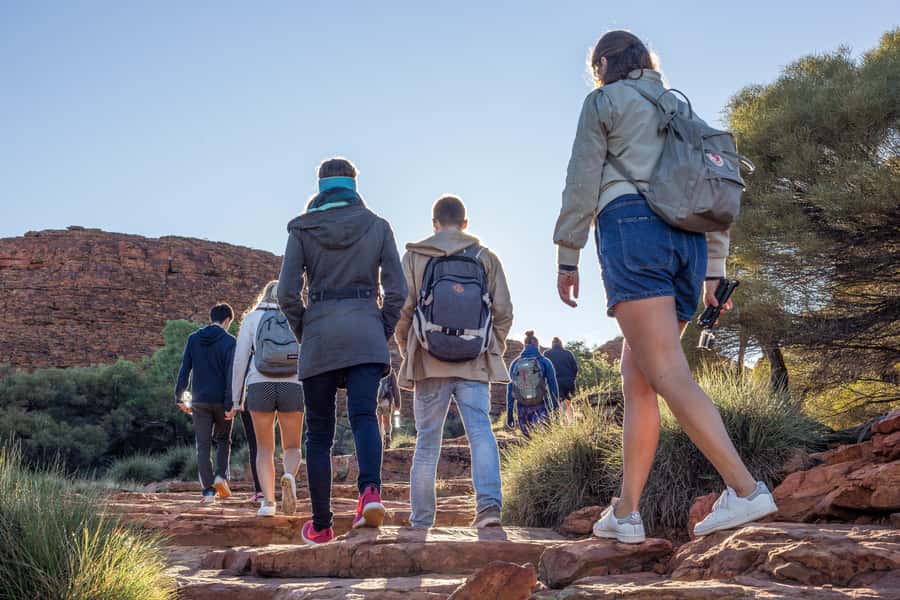
This works well if you:
- want the iconic trio: Uluru, Kata Tjuta, and Kings Canyon
- enjoy walking with sunrise/sunset timing
- can sleep in a tent with basic shared facilities
- like group energy around meals and campfires
It’s not a great match if you:
- need mobility support (the tour states it’s not suitable for people with mobility impairments)
- want hotel comfort and quiet all night
- travel with heavy luggage (you’re limited to 15 kg and no oversize bags)
- are relying on constant detailed commentary if English is your only language support (the tour is English-speaking, and the quality of explanations can vary depending on how the day runs)
Children under 8 aren’t suitable for this tour.
Should You Book This Safari Camping Tour?
Book it if you want a classic Red Centre experience with real walks, sunrise/sunset moments, and camping under southern skies—without having to coordinate routes, park entries, and guide-led interpretation yourself.
Think twice if your top priority is sleep comfort, spotless shared facilities, and a totally relaxed pacing. This tour can be fully scheduled, and camping conditions can be uneven.
My practical recommendation: if you’re flexible on camping basics but strict about safety and footwear, you’ll likely love the walks. If you’re strict about comfort, look at a hotel-based version or upgrade your accommodation where possible. This tour is about the land and the timing. If that’s your style, $563 can feel fair for what’s included.
FAQ
What’s included in this Uluru, Kata Tjuta & Kings Canyon camping tour?
It includes Kings Canyon rim walk, Kata Tjuta Walpa Gorge walk, Uluru Cultural Centre entry, Uluru base walk, Ewings Lookout sunset viewing area, an experienced English-speaking guide, all meals, all-terrain vehicle transport, camping in permanent eco safari tents (with mattress, sleeping bag, pillow, and linen), and Watarrka and Uluru Kata Tjuta National Park entry fees.
Do I need to pay for park entry fees?
No. Park entry fees for Watarrka National Park and Uluru Kata Tjuta National Park are included.
How long is the tour?
The tour is listed as 3 days (84 hours). There are also 2-night and 3-night camping options, which affect your finish time and where you end your trip.
What are the pickup times?
If you’re departing from Alice Springs, pickup is about 6:00am. If you’re departing from Yulara, pickup is between 1:15–2:00pm, and your flight must arrive before 1:45pm.
Is lunch provided on pickup day?
If you’re departing from Yulara, you should have lunch before pickup. There are no food shops or cafes at Ayers Rock Airport.
How much luggage can I bring?
A strict luggage limit of 15 kilograms applies, and oversize luggage is not allowed. You should bring one small to medium soft bag or backpack plus a small daypack.
What should I bring for the walks and camp?
Bring sturdy walking shoes, a hat, sunscreen, toiletries, warm clothing in winter, a 1.5 liter water bottle, a torch, insect repellent/net, and a power bank (power available at camp is limited).
Are dietary requirements catered for?
Yes, dietary requirements can be catered for if you notify the provider 48 hours prior to departure.
Is alcohol included?
No. Alcohol is not included.
Is this tour suitable for children or people with mobility impairments?
Children under 8 years aren’t suitable, and the tour is not suitable for people with mobility impairments.