REVIEW · ULURU
Uluru Private Tour Aboriginal guided option
Book on Viator →Operated by Australian Private Tours · Bookable on Viator
Seeing Uluru close-up feels personal.
This private half-day tour is built around real local knowledge, with an Aboriginal Anangu guide available on request, and stops that take you from Mutitjulu Waterhole to Mala Walk and the Kuniya Walk stories on Uluru itself. I love that you get your own group in an air-conditioned vehicle with bottled water, and the guiding is focused on what the rock features mean and how people live with the place. One thing to consider: the price is per group (up to 6), and you still need to add the national park entry fee per person.
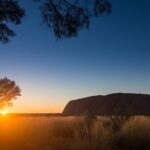
Sunrise or sunset turns the rock into a storybook.
I also like the flexibility of this option: pickup is offered, you can choose the light (sunrise or sunset half day), and you can request an Indigenous Culture Center stop if you want more context beyond the walks. Your day runs about 4 hours, with start times that can vary, so plan your broader itinerary with a little breathing room.
Key things to know before you go
- Anangu guidance on request for on-the-day cultural perspective
- Private group up to 6 with pickup and bottled water
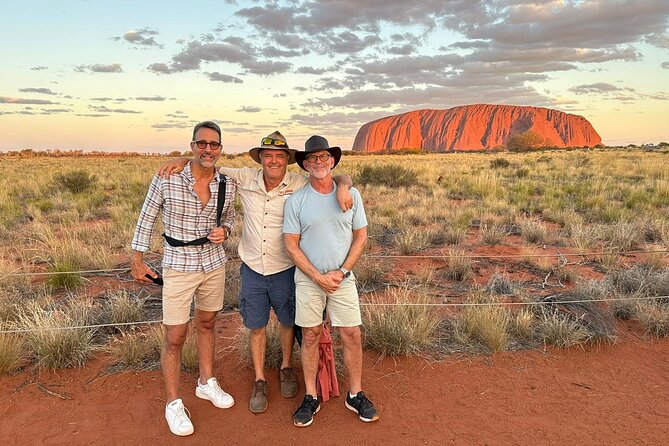
- Sunrise or sunset option timed for the big-color moment over Uluru
- Walks at Mutitjulu Waterhole, Mala Walk, and Kuniya Walk plus a dunes viewing stop
- Air-conditioned vehicle and a drive around Uluru for extra look-backs
- National park entry not included (buy it for 3 days when you arrive)
In This Review
- Uluru Private Tour: What makes it feel different
- Private group comfort and pickup: how the logistics work
- Sunrise or sunset: how to choose the right half day
- Mutitjulu Waterhole: the shaded start that sets the tone
- Mala Walk on Uluru: rock features and the stories they carry
- Kata-Tjuta dunes viewing area: the light moment that sells Uluru
- Kuniya Walk: variation in Uluru stories, not a one-size explanation
- Driving around Uluru: getting the full shape without rushing
- Optional extras: Indigenous Culture Center on request
- Value check: what $788.97 per group really buys
- What to pack for comfort (and fewer headaches)
- Who this tour is best for
- Quick heads-up: the pace and the walking parts
- Should you book this Uluru Private Tour?
- FAQ
- How long is the Uluru Private Tour?
- What is the price for the tour?
- Is national park entry included?
- Does the tour include pickup?
- Is there an air-conditioned vehicle and bottled water?
- Do I need breakfast or lunch?
- Can an Aboriginal Anangu guide be included?
- What is the cancellation policy?
- Is a mobile ticket provided?
Uluru Private Tour: What makes it feel different
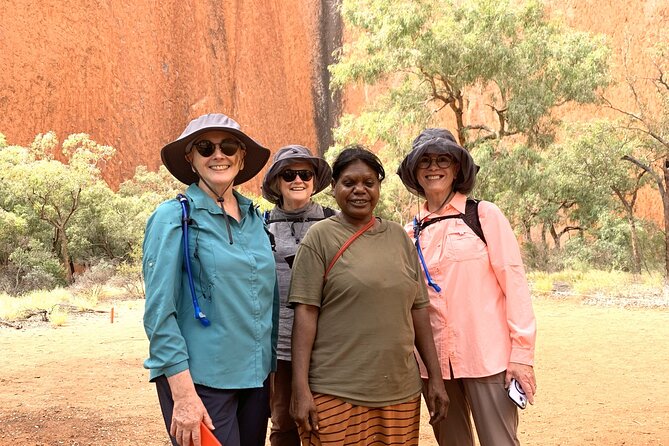
Uluru is famous for photos, but the experience changes fast when someone explains what you’re seeing and why it matters. This is a private, short tour (about 4 hours) that focuses on the key stops most people try to “check off,” but with time for stories and practical walking.
The biggest difference is that the guide team is set up to work with the local Aboriginal community, and they can bring in an Anangu guide on request. In real terms, that means you’re not just hearing general facts. You’re hearing language, cultural meaning, and how the stories connect to specific rock features and daily life around the area.
Two other points I really like for value. First, it’s private transportation in an air-conditioned vehicle with bottled water, so you’re not negotiating shared seats or long gaps between stops. Second, the itinerary has a balanced mix: short walks, shaded stops, and a timed viewing moment when the light hits Uluru and Kata-Tjuta’s direction.
The only drawback is budget math. The tour price is $788.97 per group (up to 6), but the national park entry fee is separate at A$37 per person. If you’re traveling solo, it can feel pricey. If you’re a couple or small family, it starts to look much smarter.
Private group comfort and pickup: how the logistics work
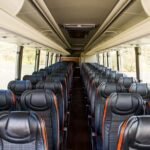
This is built for an easier day. You’ll get pickup offered and travel in a vehicle just for your group, with bottled water, GST, and fuel surcharge included. The vehicle is air-conditioned, which matters in the heat, especially if you book the sunrise option and then the day warms up quickly afterward.
You’ll also get a mobile ticket, which is handy in a place where you don’t want to keep hunting for paper documents. Start times may vary, so don’t lock in a tight connection right after your tour. Treat the half day like a major appointment on your schedule.
What you should plan for: you’re outdoors most of the time, with short walking sections at specific sites. The tour indicates that most travelers can participate, and I’ve seen the guiding approach described as careful and accommodating when ages range widely (including one tour described handling a group that included a mobility challenge). Still, if walking is hard for you, it’s worth asking what portions involve steps or uneven ground before you commit.
You can also read our reviews of more guided tours in Uluru

Sunrise or sunset: how to choose the right half day
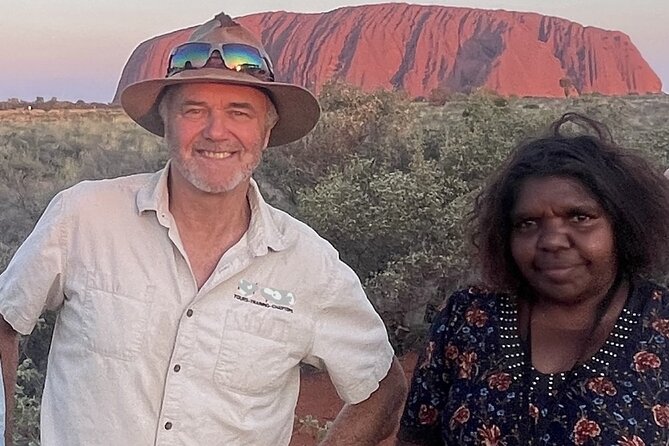
Both choices are good, and the tour’s design makes sense for either. The sunrise option is typically paired with bringing breakfast, and the sunset option is paired with bringing lunch, since coffee and tea aren’t included.
Here’s the simple decision guide I’d use:
- Choose sunrise if you like calm, early light and you’re the type who enjoys watching the color shift as the day wakes up.
- Choose sunset if you want the classic Uluru glow and a slower wind-down day ending at the best visual moment.
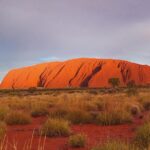
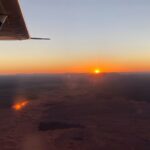
Either way, one stop is timed for that look-over at the dunes viewing area, where the light changes the rock and desert tones for a short window. If you care about photos, sunset usually gives you the most dramatic color, but sunrise has a different kind of magic—quieter and sometimes more comfortable before the heat climbs.
Mutitjulu Waterhole: the shaded start that sets the tone
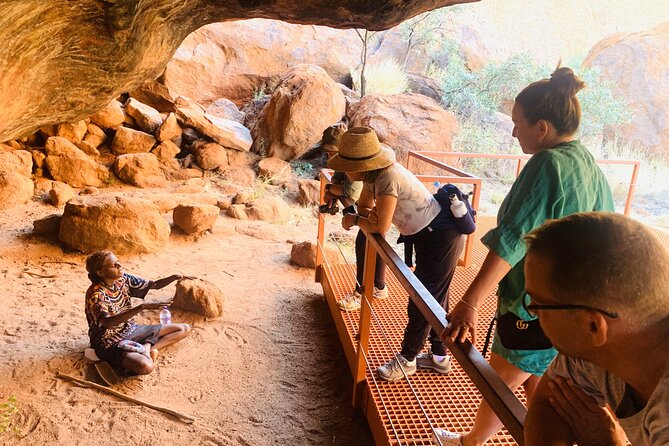
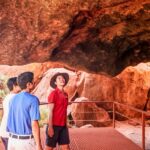
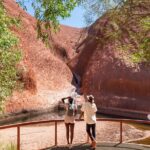
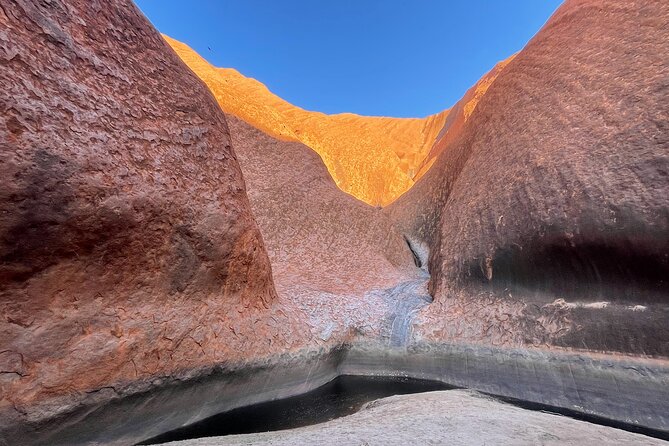
Most days start with energy—people bouncing between stops, trying to get enough in before the light changes. Here, the tour starts with Mutitjulu Waterhole, where you walk through a narrow corridor to a shaded cave area connected to rock art.
This first stop matters because it frames the rest of the day. You’re not just “seeing caves.” You’re learning the way stories attach to places and how people use these sites to share knowledge. You’ll also get introduced to what local Anangu people would do here—meet, share stories, and pass understanding along.
Practically, this is one of the stops that helps you get oriented fast. It gives you context before you start moving around Uluru’s bigger features. It’s also a nice break from bright open sun thanks to the shaded areas.
Mala Walk on Uluru: rock features and the stories they carry
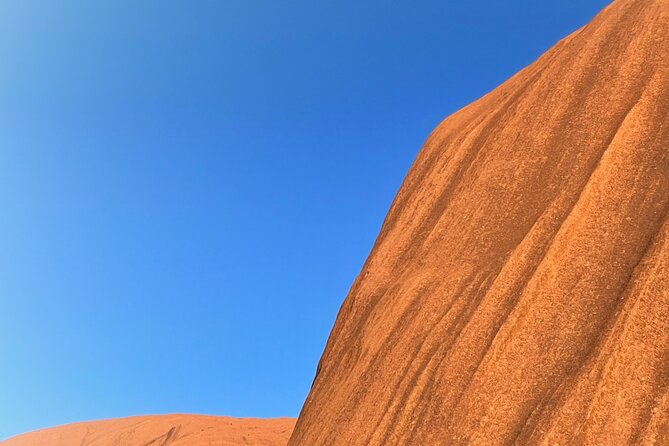
Next comes the Mala Walk. This is where the tour leans into color, formations, and meaning tied to the rock. You’ll explore caves and rock formations along the walk while the guide shares an in-depth perspective on cultural stories linked to the area.
Even if you don’t consider yourself a “history person,” this stop is built for comprehension. You’ll understand how specific rock features connect to story, place, and language. It’s less about long explanations and more about pointing, walking, and having the story attached to what your eyes can actually see in front of you.
One useful thing to remember: because the walk is part of a private pacing, your guide can adjust to your group. I’ve heard multiple guide names tied to this style of pacing—Matt, Rick, and Ruben came up in tour experiences—where guides are described as careful, kind, and tuned into what different ages and interests need.
Kata-Tjuta dunes viewing area: the light moment that sells Uluru
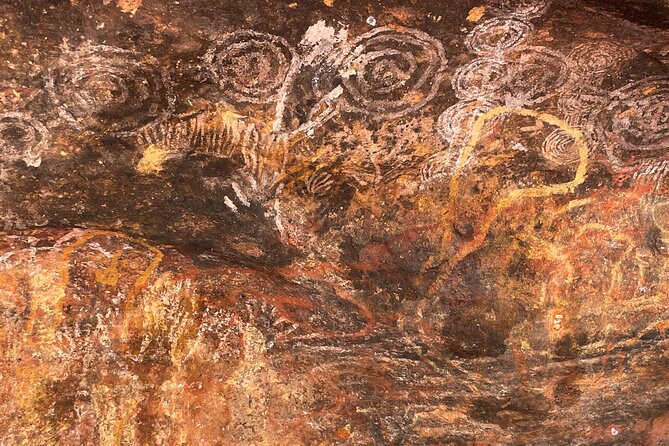
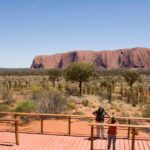
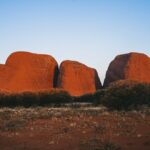
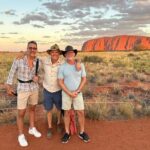
After Uluru’s walking stops, you get a change of viewpoint at the Kata-Tjuta dunes viewing area. The idea is straightforward: take in the rock formations as the light shifts, with the desert horizon helping you feel scale.
This is a shorter stop (about 45 minutes), which is smart. You’re not trapped for hours waiting for one minute of color. You get time to settle in, look, and still keep the day moving.
If you’re booking sunset, this stop will likely be one of your biggest “wow” moments. If you’re booking sunrise, you’ll still get that tonal shift, just with a different mood—less crowd energy, more early-day calm.
You can also read our reviews of more private tours in Uluru
Kuniya Walk: variation in Uluru stories, not a one-size explanation
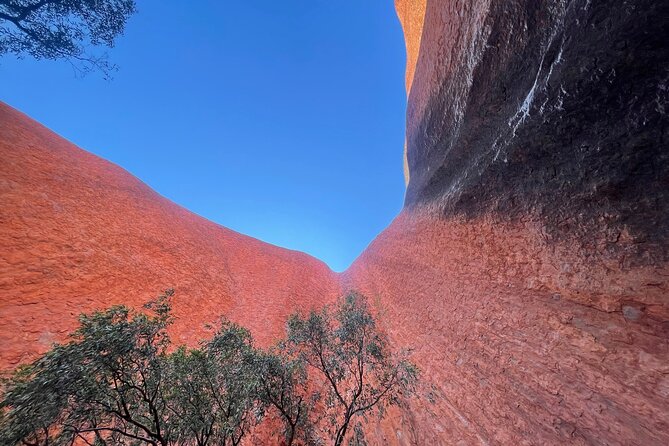
Then you’ll head into the Kuniya Walk section. This part is about how each area of Uluru has different stories handed down from ancestors and shared to educate the next generation. It’s not just repeating what you learned at the previous stops—it’s adding another layer.
As a visitor, I love this approach because you don’t walk away feeling you only saw one story. You see how knowledge is distributed across the rock, and how multiple places are tied to different parts of the cultural map.
You’ll also see unique features that help make the story feel grounded. The tour is clearly designed to keep you moving with purpose: walk, look closely, and listen for the meaning behind the specific shapes and locations.
Driving around Uluru: getting the full shape without rushing
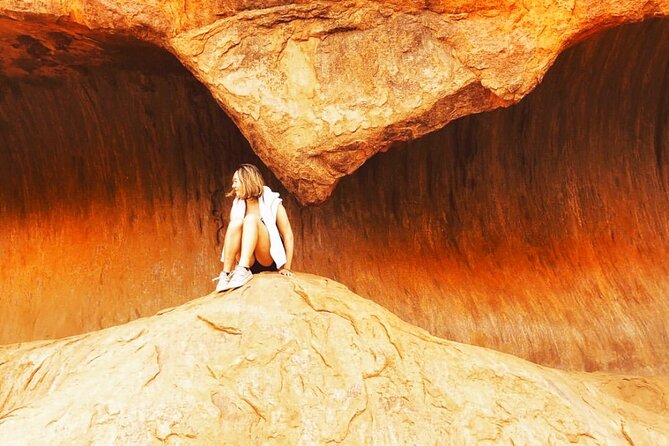
A big part of the experience includes a drive to and around Uluru, with stops along the way to explore highlights. This is a practical win. Not everyone wants to do only walking, and not everyone can.
The driving section also helps you understand how Uluru sits in the wider outback. You start to see the rock as a big, continuous presence rather than a single spot you posed next to.
In the experiences I’ve read through, guides also emphasize care—making sure people have water and feel supported. That shows up in comments tied to guides like Matt and Ruben, where the vibe is: yes, we’ll see everything, but you won’t feel left behind.
Optional extras: Indigenous Culture Center on request
The tour can include the Indigenous Culture Center on request. That’s helpful if you want a more structured context to go with the walks and rock art storytelling.
It’s also a good choice if you’re the kind of traveler who likes a bit of background material you can process on your own after the tour. If you prefer a lighter, outdoor-only day, you can also skip it.
Because this is on request, I’d plan early. Ask what’s possible for the day you book, and set your expectations so you don’t feel rushed or surprised if the timing doesn’t allow it.
Value check: what $788.97 per group really buys
Let’s talk money with clear eyes. At $788.97 per group up to 6, the cost averages out quickly when you share it with friends or family. Even better, you’re buying a private vehicle, bottled water, and a guide format that’s built around flexibility for your group size.
You still have two add-ons to budget for:
- National park entry at A$37 per person (valid for 3 days, purchased on arrival)
- Coffee or tea not included, so bring breakfast or lunch depending on your tour time
If you compare this to piecemeal options—separate tickets, shared shuttles, and time lost waiting—this tour can feel like a straightforward way to get the most meaningful highlights in a short window.
The best value tends to happen when:
- you have 3–6 people to split the group rate
- you want a sunrise or sunset timing without worrying about logistics
- you care about learning from the local Aboriginal community rather than just taking a quick loop
What to pack for comfort (and fewer headaches)
The tour doesn’t include coffee or tea, and you’re told to eat before you go—breakfast for sunrise, lunch for sunset. Beyond that, I’d pack for heat and sun protection since you’re outdoors for walks and viewing.
At minimum, bring:
- a water bottle if you’re the type who likes having one on hand (the tour includes bottled water)
- sun protection (hat, sunscreen)
- light layers for early/late temperatures if you’re doing sunrise or sunset
If you’re traveling with kids or teens, this tour often works well because the walking sections are short enough to keep attention focused. One experience mentioned ages 14 to 85 being handled smoothly by a guide, which suggests pacing is managed.
Who this tour is best for
This is a strong match for:
- small groups who want private guiding instead of shared tour chaos
- travelers who want rock features explained through Anangu storytelling, especially with an Aboriginal guide on request
- anyone who wants a half day that hits key Uluru viewpoints without eating your whole day
It’s also a good fit if you’re celebrating something. One experience tied to a guide mentioned helping make an anniversary feel special, and that lines up with what private guiding can do well: adjust to your mood and timing.
Quick heads-up: the pace and the walking parts
This tour is short, but it is not a couch ride. You’ll walk portions at Mutitjulu Waterhole and both Mala and Kuniya walks. The tour states most travelers can participate, but your comfort level will depend on your own mobility and how you feel in the heat.
If mobility is a concern, ask questions before booking about uneven ground and walking length. It’s reassuring that one tour experience described a guide handling a group member with mobility issues with care, but your situation may be different.
Should you book this Uluru Private Tour?
Yes, if you want Uluru as something more than a photo stop. The mix of key walks, a viewpoint timed for the color change, and a guide approach that centers local stories makes it a memorable use of limited time.
I’d especially book it if:
- you can share the group price with up to 6 people
- you want sunrise or sunset with less stress
- you plan to request an Anangu guide for the day
I’d think twice if:
- you’re traveling solo and the group price feels too high once you add park entry
- you dislike walking, even short walks, and want a purely seated experience
If you’re on the fence, base your decision on this: you’re paying for a short, meaningful guided day with private comfort, and you’ll get more from the rock when the stories are explained directly and respectfully.
FAQ
How long is the Uluru Private Tour?
It’s listed as about 4 hours.
What is the price for the tour?
The price is $788.97 per group (up to 6 people).
Is national park entry included?
No. National Park Entry is not included. It’s A$37.00 per person and is purchased on arrival, valid for 3 days.
Does the tour include pickup?
Yes, pickup is offered.
Is there an air-conditioned vehicle and bottled water?
Yes. The tour includes private transportation, bottled water, and an air-conditioned vehicle.
Do I need breakfast or lunch?
Yes. Coffee and/or tea are not included, and you should have breakfast (sunrise tour) or lunch (sunset tour) before you go.
Can an Aboriginal Anangu guide be included?
Yes. The tour states that on request it can include an Aboriginal guide (Anangu guide) on the day.
What is the cancellation policy?
The experience is non-refundable and cannot be changed for any reason.
Is a mobile ticket provided?
Yes, the tour includes a mobile ticket.