REVIEW · YULARA
Uluru: Uluru Base Segway Tour
Book on GetYourGuide →Operated by Uluru Segway Tours · Bookable on GetYourGuide
Uluru by Segway sounds almost unreal. This 150-minute tour trades tough walking for smooth gliding, then layers in Anangu stories and what makes Uluru matter across time. You’ll cover the base with a guide who ties together culture, plants, animals, and geology as you go.
I love the Segway training setup, because they teach you the basics first and you practice before you’re out on the full route. I also like the small group feel, limited to 10 people, so the pace stays calm and it’s easier to hear the guide at each stop.
One possible drawback: the tour price ($133) doesn’t include your Uluru-Kata Tjuta National Park entry, and you’ll also need your own transport to reach Kuniya Carpark. Add those costs and it can start to feel less like a bargain.
In This Review
- Key Things I’d Pay Attention To
- Why This Uluru Base Segway Tour Makes Sense
- The 150-Minute Flow: From Training to Full Base Loop
- Segway training and practice
- The guided circuit around Uluru
- How it feels in real time
- What You’ll Learn Along the Route: Culture, Plants, Animals, and Rock
- Anangu culture at the center
- Flora and fauna stops
- Geology (and a fair heads-up)
- Price and Logistics: The Real Cost of Visiting Uluru by Segway
- You need your own transport to the carpark
- Getting to Kuniya Carpark (step-by-step)
- Who This Tour Is Best For (and Who Should Skip It)
- Rider requirements you must check
- Not suitable categories (take this seriously)
- Segway Ease and Safety: The Part That Makes It Work
- Weather reality
- Small Group Size and Language Options
- Should You Book the Uluru Base Segway Tour?
Key Things I’d Pay Attention To
- Full base circuit: you ride around the whole rock, not just a short stretch.
- Training first: you get protective gear, safety briefing, and practice before the main loop.
- Culture + science stops: you’ll hear about Anangu culture alongside flora, fauna, geology, and European history.
- Quiet, low-effort riding: Segways are speed-limited and designed for an easier way to see Uluru.
- Small group (10 max): more time for questions and smoother coordination on a shared route.
- Practical rider rules: there’s a weight range and height/fitness limits, so check eligibility early.
Why This Uluru Base Segway Tour Makes Sense
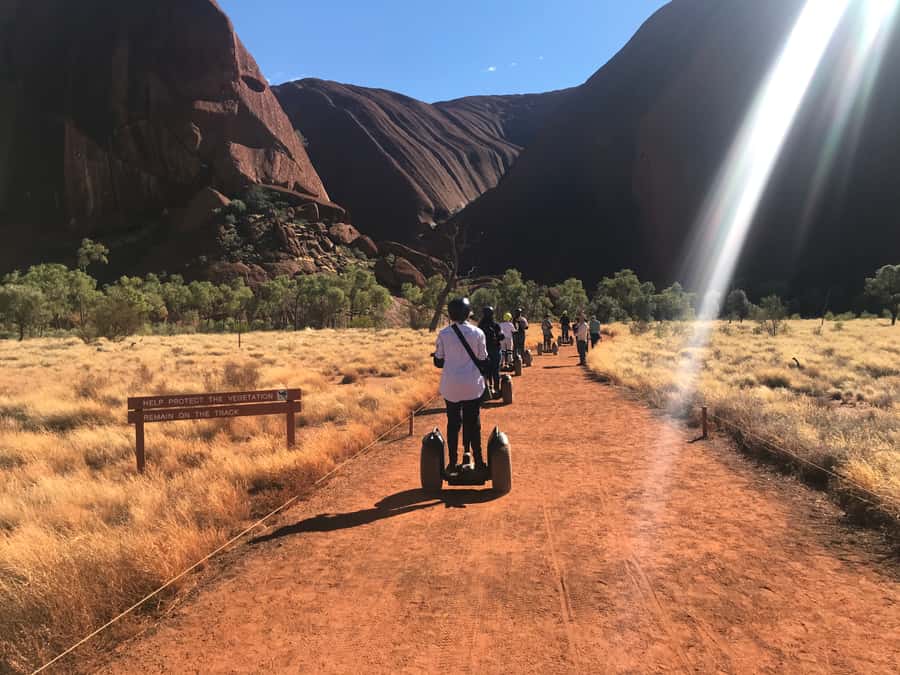
Uluru is one of those places where the “easy” version is still hot, still big, and still slow to cover on foot. This tour solves that problem in a very straightforward way: you glide around the base instead of trekking it all yourself. The payoff is simple—you get the full-circle feel of the rock without spending your whole day walking.
Another thing I like is the pace of the experience. Reviews and the tour structure point to patient instruction and a route that stays manageable, even if you’re new to Segways. That matters in the outback, where you want energy for learning and views, not only for staying upright.
And yes, you’re on a machine. But it’s not a gimmick-only ride. The tour is built around stops that explain what you’re seeing: Anangu connections to the land, plus the natural story (plants and animals) and the rock story (geology).
You can also read our reviews of more tours and experiences in Yulara.


The 150-Minute Flow: From Training to Full Base Loop
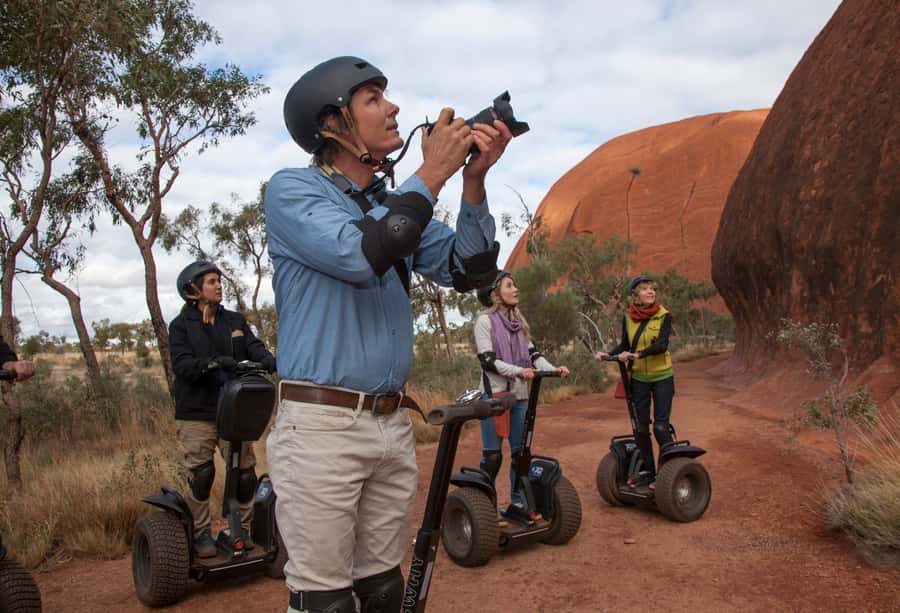
The day moves in a clean sequence. First, you drive to the meeting point at Kuniya Carpark inside Uluru-Kata Tjuta National Park. Then you meet your guide, who handles the Segway basics so everyone can ride safely and comfortably.
Segway training and practice
Before you take off around the base, you’ll get:
- Segway training (how to mount, steer, slow down, and stop)
- All protective and safety gear
- A guided check that you’re comfortable before the main loop
If it’s your first time on a Segway, this is where the tour earns goodwill. Multiple guides are described as patient and focused, and the training time is part of why first-timers don’t feel rushed.
The guided circuit around Uluru
Once everyone is ready, you follow your guide around the entire base of Uluru. The idea isn’t to treat this like a sightseeing sprint—it’s more like a guided walk, except you’re gliding.
Along the way, your guide makes stops to connect:
- Uluru’s history and significance
- Anangu culture
- Flora and fauna you pass
- Geology—what the rock and surrounding ground can tell you
- European history of the area
The Segways are also speed limited, which changes the feel of the tour. You’re not “zipping.” You’re moving steadily, like a smooth, guided circuit where the scenery and explanations stay in sync.
How it feels in real time
A 150-minute duration is long enough to actually learn something, but not so long that you’re mentally fried. In hotter conditions, this “glide-and-stop” rhythm can feel like a relief compared to walking the full base, since you still move through the sights without the constant physical load.



What You’ll Learn Along the Route: Culture, Plants, Animals, and Rock
Uluru isn’t just a big red shape in the distance. It’s tied to living Aboriginal culture and deep geological time, and this tour tries to explain both while you ride close to the rock.
Anangu culture at the center
The tour highlights local Aboriginal knowledge from highly qualified, passionate guides. Expect stories that help you understand why Uluru is significant and how people relate to the land.
In past tours, different guides have shared indigenous stories in a friendly, human way—names you might hear associated with the experience include Hallie, Kyle (often called seg on), Emma, Nick, Meghan/Meagan, and Charly. You won’t necessarily get the same guide, but it’s a good sign that the team includes people who can explain the place clearly, not just recite facts.
Flora and fauna stops
As you circle, the guide points out local plants and animals. You’re learning how to “see” the outback—what might be easy to ignore from a car or from a far viewpoint.
Geology (and a fair heads-up)
Geology is part of the tour content, but one feedback note suggested that some riders want more time specifically on geology. So if your main goal is rock science, plan to supplement this experience with another Uluru learning stop (for example, a ranger talk or a more geology-focused activity) so you get exactly what you want.
Price and Logistics: The Real Cost of Visiting Uluru by Segway
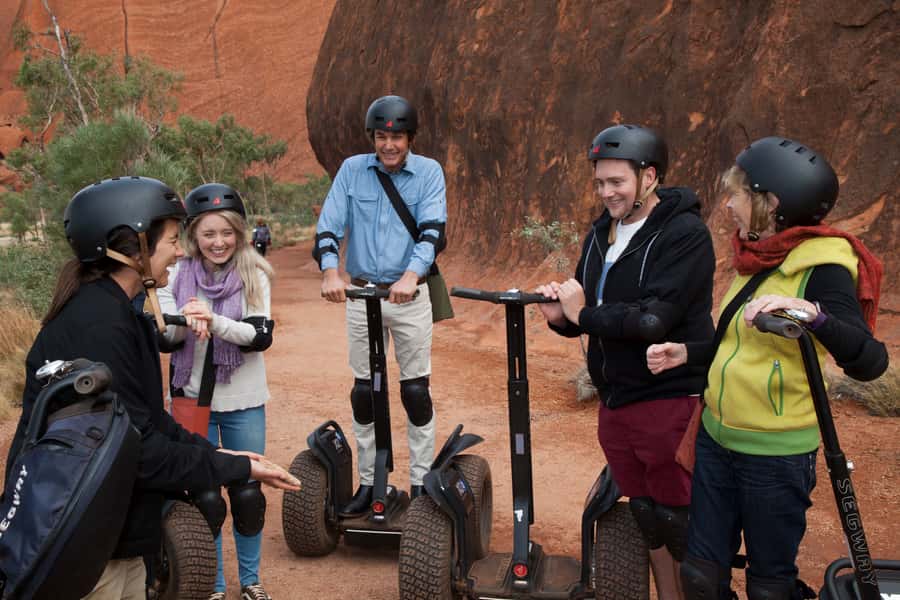
This tour costs $133 per person for 150 minutes. It includes Segway training, the Segway tour around Uluru, and all protective and safety gear.
What’s not included matters a lot:
- Transfers from Ayers Rock Resort are not included.
- Uluru-Kata Tjuta National Park entry ticket is not included. The entry ticket listed is $38 per adult.
- The park entry is required either via your ticket or by paying $25 cash per person for a National Park Entry Ticket.
That means your real total can land meaningfully higher than $133. Still, it can be good value if you factor in what you’re buying: a full base experience without hauling yourself around the whole rock on foot, plus guided interpretation in a small group.
You need your own transport to the carpark
There’s no public transit to Uluru, and it’s too far from the resort to walk. You’ll need to drive your own vehicle to the park and park at the start.
Getting to Kuniya Carpark (step-by-step)
To find the meeting point:
- Drive into the national park.
- Pass the sunset viewing area.
- At the roundabout, turn right.
- Follow the road and take the first left into Kuniya carpark.
- The meeting point is at the back of the carpark and easy to spot once you park.
This part sounds simple, but it’s worth doing carefully. When you’re in a large park with minimal signage, getting to the right carpark saves stress—especially if heat is already on you.
Who This Tour Is Best For (and Who Should Skip It)
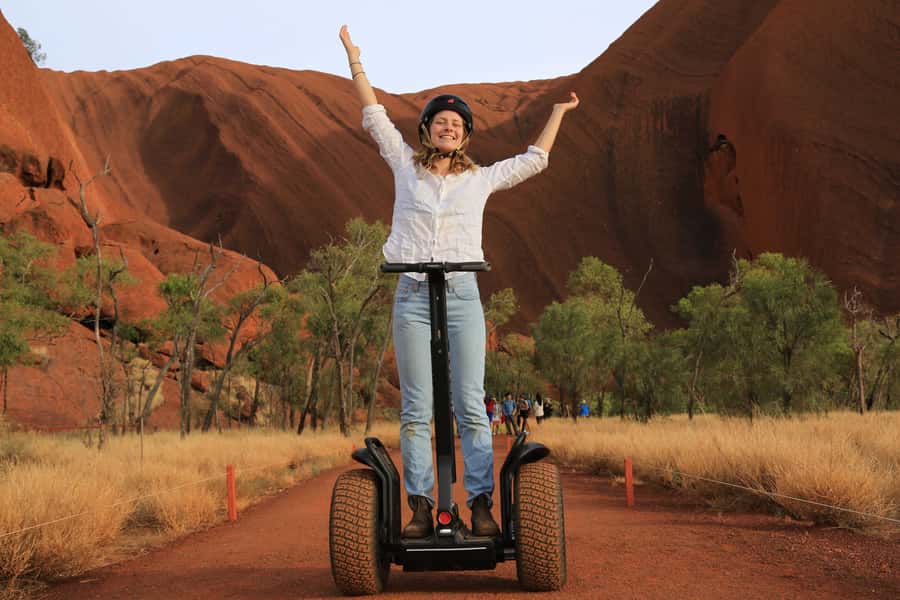
This Segway tour is a good fit if you want close-up Uluru views and guided context without doing the full base hike. The small group size helps, and the training makes it workable for people trying Segways for the first time.
Rider requirements you must check
You need to meet the Segway rider rules:
- Weight range: 45–117 kg
- Closed-toe shoes required (flip-flops won’t be permitted)
- Not allowed: unaccompanied minors
- Language: English live guide, plus an audio guide available in multiple languages (Spanish, Chinese, French, German, Italian, Japanese)
Not suitable categories (take this seriously)
You should not book if you fall into the listed “not suitable” groups, including:
- Children under 12
- Pregnant women
- People with back problems
- People who can’t ride a bike
- Wheelchair users
- Visually impaired people
- People over 260 lbs (118 kg)
- People with pre-existing medical conditions
- People with recent surgeries
- People over 70 years
If any of those apply, it’s better to look for an alternative Uluru experience that matches your needs.
Segway Ease and Safety: The Part That Makes It Work
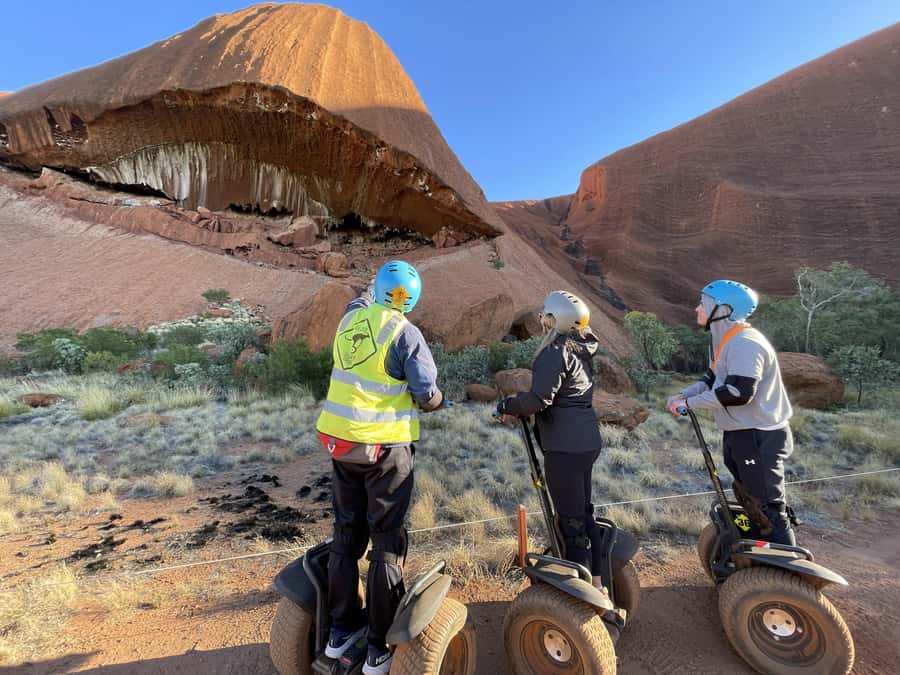
A Segway tour can go two ways: either you get confident fast, or you spend the day tense. The structure here is set up to reduce the tense option—training comes first, protective gear is included, and the tour keeps a manageable speed.
You’ll also want to wear the right gear. You must bring:
- Water
- Closed-toe shoes
- A cap and sunglasses
- A shirt with sleeves
The guide also expects at least 1 liter of water per person, which is a sensible outback guideline. Don’t treat it as optional.
Weather reality
Uluru can change by the hour. One past experience described a showery day with changing colours and water falling, with riders getting soaked. You can’t control weather, but you can plan to stay comfortable and flexible if conditions turn wet.
Small Group Size and Language Options
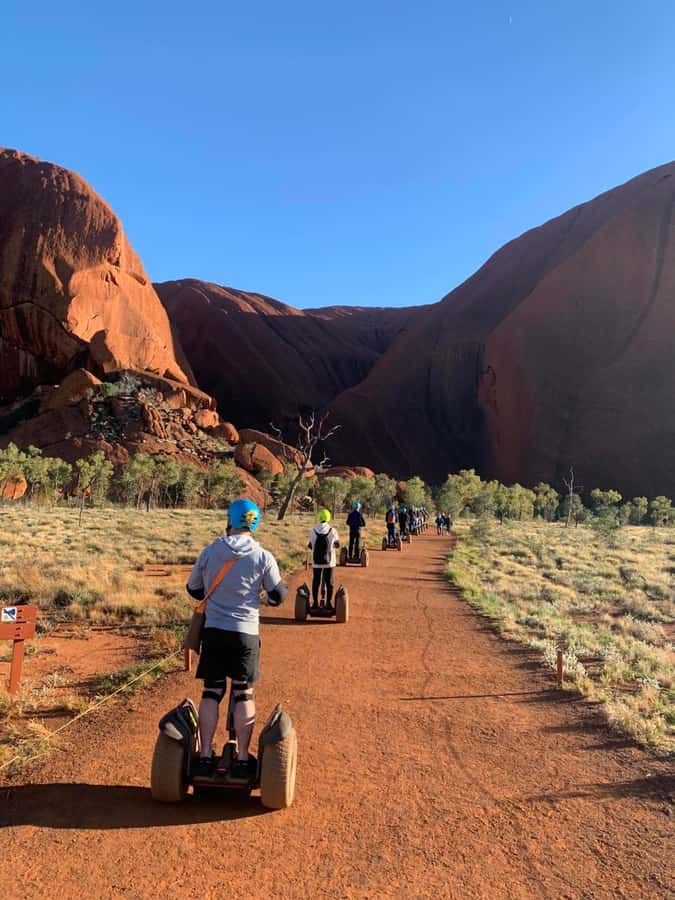
With a group limited to 10 participants, you’re not stuck in a huge line of Segways. That matters for safety and it also improves the quality of the learning, since you’re more likely to hear your guide’s explanations clearly at stops.
You also get an audio guide in several languages (Spanish, Chinese, French, German, Italian, Japanese). The live tour guide is English, but this audio support can help you follow along more easily even if your English is just okay.
Should You Book the Uluru Base Segway Tour?
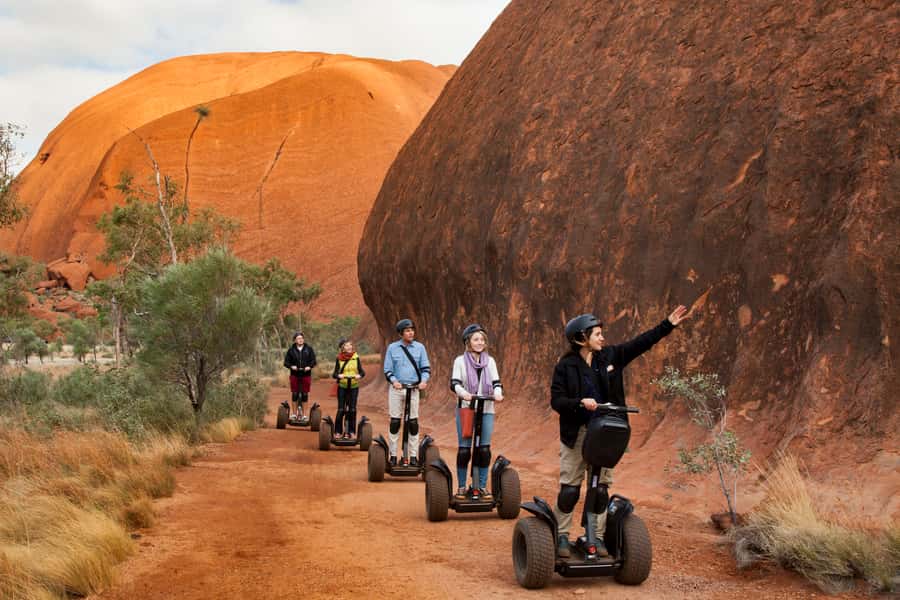
I think this tour is a strong choice if:
- You want a full base circuit without committing to a long walk.
- You’re excited by cultural storytelling plus natural and geological explanations.
- You want a small-group experience where instruction starts before riding.
- You’re okay with paying for park entry on top of the tour ticket.
I’d skip it if:
- You’re in a listed “not suitable” category (especially weight limits, medical conditions, or mobility/vision needs).
- You’re trying to keep costs ultra-low, because park entry and lack of transfers can add up.
- You want geology as the main event. This tour includes it, but if geology is your priority, pair it with a more geology-forward option.
If you match the requirements and you want a close-up, guided Uluru loop with less physical grind, booking this Segway tour is a very reasonable way to spend part of your Central Australia time.