REVIEW · YULARA
Uluru: Guided Trek of Uluru’s Base in a Small Group
Book on GetYourGuide →Operated by SEIT · Bookable on GetYourGuide
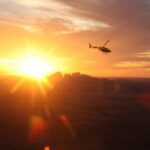
Uluru at dawn hits different. This 6-hour, small-group sunrise walk turns the famous monolith into something you can actually read, from Tjukurpa stories to rock art and waterholes. Guides like Lucia and Dimitri are the kind who make Uluru feel living, not just scenery.
What I love most is the full base walk (about 10.5 km) with expert guidance at a steady, human pace. Second, you get the practical bonus of an outback picnic breakfast with tea and coffee, so you’re not just “walking pretty” while your energy fades.
The main drawback is simple: it’s early and it’s a long walk. If you don’t like dawn starts or you’re worried about distance, this might feel like too much—though the trail is mostly flat and the group stays small.
In This Review
- Key points to know before you go
- Why a sunrise base walk makes Uluru feel different
- Pickup, the national park ticket, and the clock you’ll be living by
- Walking the full base: what 10.5 km really feels like
- Rock art, waterholes, and the Kuniya walk toward Mutitjulu
- Mala Walk to Kantju Gorge: where stories meet big scenery
- Breakfast in the outback: the tucker bag plan that keeps you going
- Guides, audio options, and how small groups change the feel
- What to pack so sunrise feels fun, not annoying
- Value check: is $169 a good deal for this Uluru morning?
- Who this tour is best for (and who should skip it)
- Should you book this Uluru base trek at sunrise?
- FAQ
- How long is the Uluru guided trek?
- When is pickup?
- How many people are in the group?
- How far will I walk?
- Is breakfast included?
- Do I need to buy Uluru Kata Tjuta National Park tickets?
- What languages are available for audio?
- What language is the live guide?
- Where does the pickup happen?
- What should I bring for the walk?
Key points to know before you go
- Sunrise timing: you start walking before the sun fully rises, when Uluru’s colors change fast
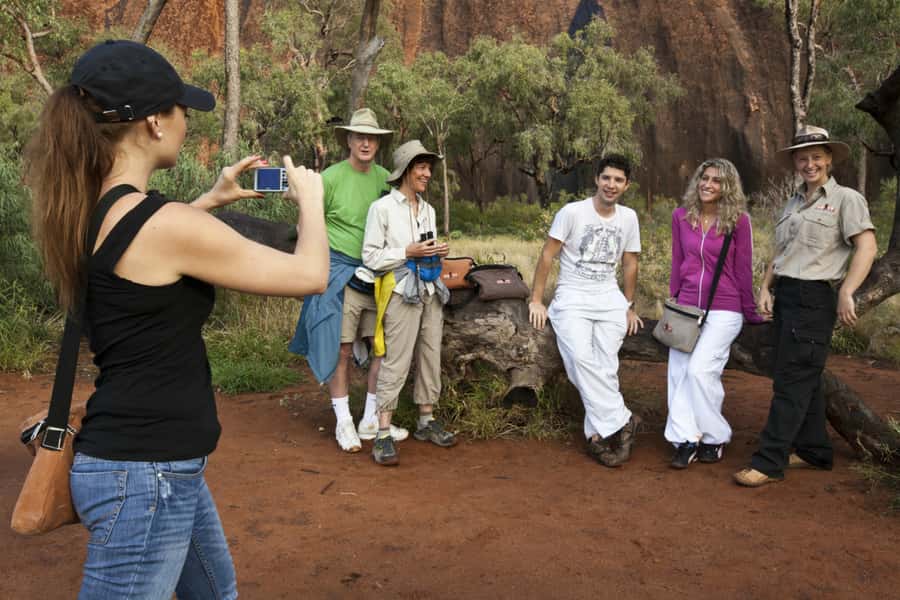
- Small group (max 11): enough space to hear your guide clearly and still move at a good pace
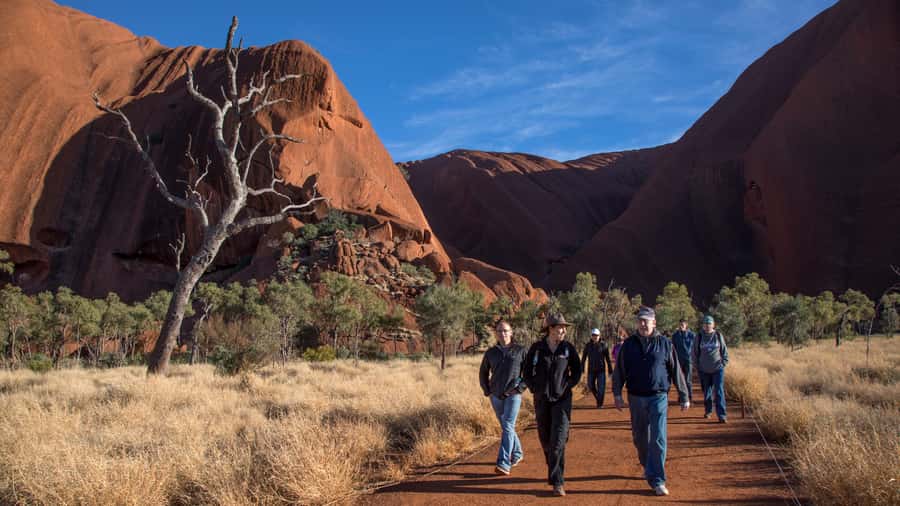
- Full base track (~10.5 km): you circle Uluru rather than seeing only highlights from one viewpoint
- Cultural stops built into the route: Mutitjulu Waterhole and story-linked walks such as Kuniya and Mala
- Breakfast mid-walk: an outback picnic served along the way, not after you’re already tired
- Audio support in multiple languages: optional audio in Spanish, Chinese, French, German, Italian, Russian
Why a sunrise base walk makes Uluru feel different
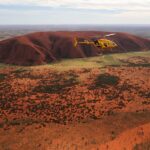
Uluru is one of those places where lighting does half the storytelling. Starting before sunrise means you watch the stone shift from shadowy charcoal to warm tones as the first light spreads across the rock face.
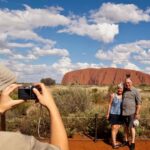
I also love that this isn’t a drive-by. You’re walking the base, so you feel the scale in a way you can’t get from a few photos at a viewing area. Your guide points out details you’d otherwise miss: geology you can “see” once it’s explained, and cultural meanings you can understand because they’re tied to specific spots.
This is the kind of morning where the outback feels quiet and focused. You’re not racing, you’re not hustling for a single viewpoint—you’re building a full picture as the day wakes up around you.
You can also read our reviews of more guided tours in Yulara

Pickup, the national park ticket, and the clock you’ll be living by
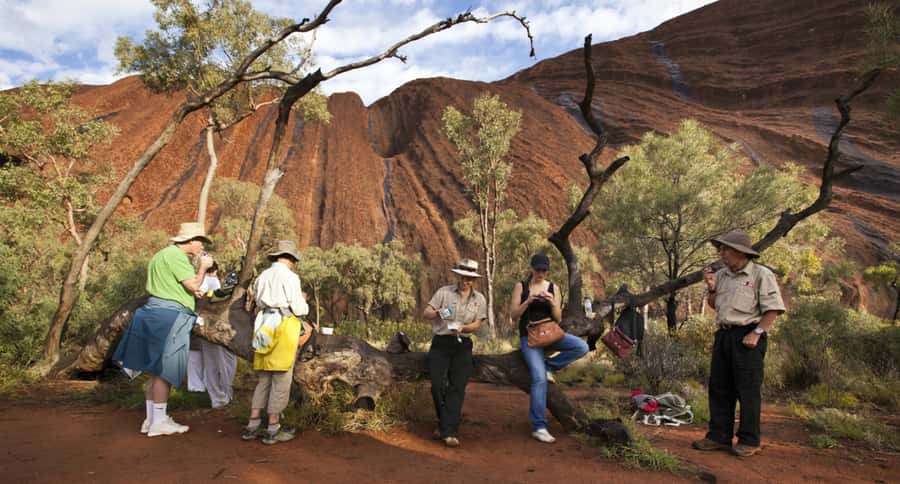
Your tour begins with pickup about one hour before sunrise from Ayers Rock Resort hotels (and nearby locations for certain accommodations). From there, the group heads into Uluru Kata Tjuta National Park toward the start of the base walk.
One cost item matters here: national park entry tickets are not included. You can buy them at the entry station, and they’re valid for three consecutive days from the date of issue, which is handy if you plan to do more than one park activity during your stay.
Price is $169 per person for a reason. You’re paying for a professional driver/guide, hotel pickup, a small-group limit (maximum 11), and a breakfast stop. The park ticket is extra, but the rest of the core experience is wrapped in—so you’re not juggling multiple vendors while your morning is already underway.
Also, this operator’s transport scores are strong, with 91% of reviewers giving a perfect score for transport. That usually means you can expect comfortable, on-time logistics for an early start.
Walking the full base: what 10.5 km really feels like
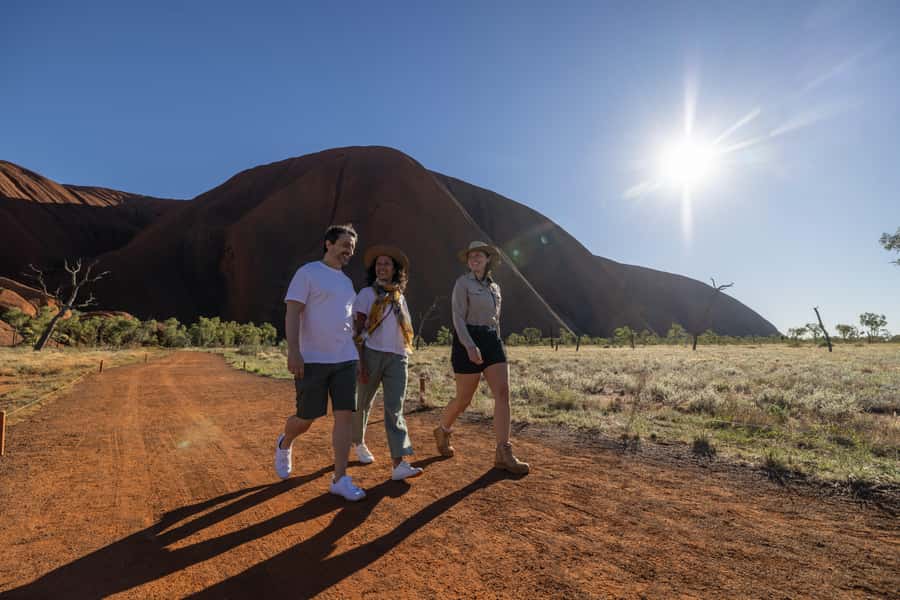
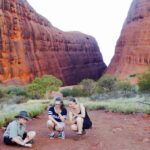
This trek is typically listed around 10.5 km, and it’s structured as a guided perimeter walk around Uluru. In practice, what you’ll notice most is the rhythm: rest stops, short storytelling pauses, and time built in for photos.
Good shoes matter. Even though the terrain is generally described as flat and easy to walk on, it’s still gravel and it’s still a lot of walking before the day warms up. Plan for dust, cooler morning air, and the fact that your legs will be working longer than you might expect from a “perimeter” route.
One small but smart thing you can do: prepare for morning chill. Some guides and guests recommend a pullover for early cold, especially if you’re out before sunrise and you haven’t yet warmed up.
A useful detail: the pacing is designed for real people. In the field notes you’ll hear from the guide, there’s space to catch your breath, hydrate, and take your time—especially because you’ll want your head up for what’s being pointed out.
Rock art, waterholes, and the Kuniya walk toward Mutitjulu
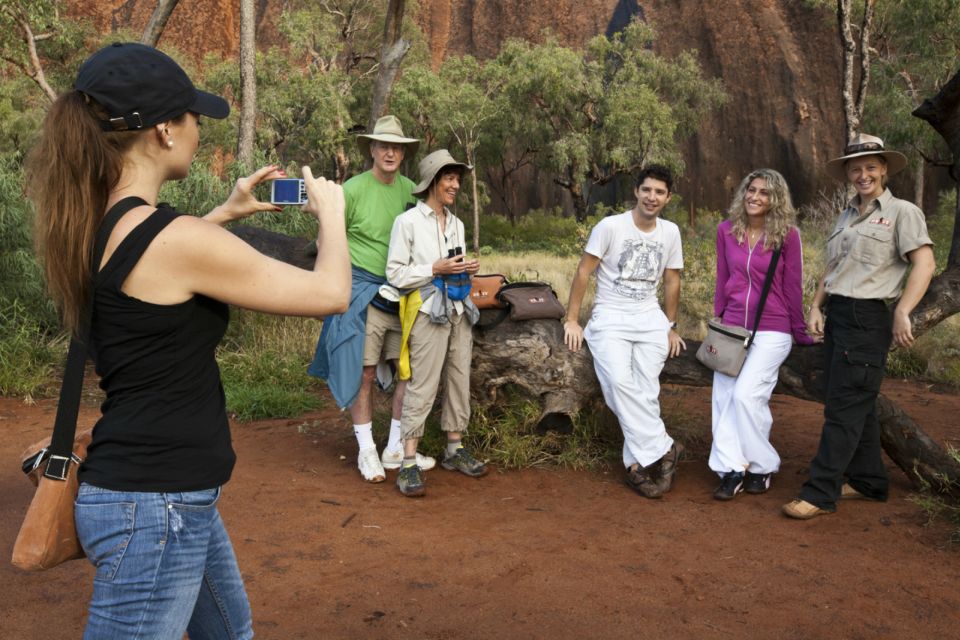
After you start walking, you’ll move through sections of Uluru where the guide can connect what you’re seeing to meaning. That’s the core value of this tour: you’re not just following a track—you’re learning how to interpret it.
One highlight is the route that leads toward Mutitjulu Waterhole. This is a place people reference again and again because water makes life possible, and the area around it connects land, survival knowledge, and cultural storytelling.
Along the way, your guide shares Tjukurpa (creation story) themes tied to specific walking segments. In the Kuniya walk area, you’ll hear about the story of Liru and Kuniya, presented in a way that helps you understand why certain markings and features matter to the Anangu (local Aboriginal people).
You’ll also stop at spots where rock art and other cultural signs are part of the conversation. The goal isn’t to memorize facts. It’s to connect the visuals—shapes, marks, and landscape features—to the story framework your guide uses to explain how people relate to the land.
Mala Walk to Kantju Gorge: where stories meet big scenery
As the route continues, the guide shifts to additional creation stories and more specific landscape points. One named segment is the Mala Walk, where you’ll learn about the Mala people story as you move toward Kantju Gorge.
Kantju Gorge is where Uluru starts to feel more “texture” than “monolith.” It’s a change in what you pay attention to: the contours of the rock, the way water and time shape the area, and the way your guide explains the significance without turning it into a lecture.
What makes this section worthwhile is the pacing. You’ll likely feel like you’re walking with someone who knows when to talk and when to let the scene do the work. That’s especially important at Uluru, where the day can start clear and then change quickly with wind, temperature, and shifting light.
If you’re the type who usually rushes through museums or landmarks, this is a good reset. The tour keeps you moving, but it also slows you down in the right places—at story points that make the rock feel personal.
You can also read our reviews of more hiking tours in Yulara
Breakfast in the outback: the tucker bag plan that keeps you going
Mid-walk, you’ll stop for outback picnic breakfast in a carry pack. You’ll also have tea and coffee, which is a big deal when you’re up early and your body hasn’t fully decided it’s morning yet.
Is it a full meal? It’s meant to be enough to power you through the remaining hours, and most people find it works well with the pacing. Still, if you know you need something more filling in the morning, consider this a light-to-mid breakfast rather than brunch-as-a-bulk-event.
The practical advantage is timing. You eat while you’re already in the flow of the walk, so you’re not spending your best energy either waiting for food or scrambling to find it later. And because the day warms up after sunrise, that mid-route refuel can make the difference between finishing strong and feeling drained.
Guides, audio options, and how small groups change the feel
This tour is limited to 11 participants, and it shows in how the experience lands. With a smaller group, you can actually hear the guide at distance, and you’re less likely to get “stuck in the back” during story stops.
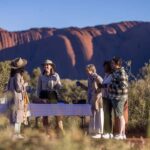
The guides’ style is a major reason people rate this so highly. Names that pop up across recent experiences include Lucia, Dimitri, Lara/Laura, Michael, Andy, Tim, Lily, Max, and Rachel. Different personalities, same theme: lots of enthusiasm, a strong safety focus, and a way of sharing that turns Uluru’s features into something you understand.
If you’re not fully comfortable with English, there’s help. The tour includes an audio guide in Spanish, Chinese, French, German, Italian, and Russian. You can also use audio in your native language as the guide explains key points in English.
Audio is useful, but don’t treat it like a replacement for the guide’s direction. The best moments usually happen when you’re listening to the guide while you’re actually standing where the story is anchored.
What to pack so sunrise feels fun, not annoying
You’ll walk about 10.5 km, so pack like it’s an actual hike. That means sensible walking shoes, plus a hat and sunscreen for when the sun climbs.
Bring a water bottle. You’ll want to hydrate during the walk, and the tour explicitly asks you to come prepared. In addition, warmer layers are worth it. Even when Uluru later warms up, the start can be chilly, so a light layer or pullover makes the morning more comfortable.
A small extra that has helped some people: a face fly net. That’s not required for everyone, but if you’re bothered by insects in dusty areas, it’s a smart comfort item.
One more tip: keep your expectations realistic. This is not a “slow stroll.” The surface is easy, but the time on your feet adds up. If you keep a steady pace, take the short rests, and drink water when offered, the walk feels manageable and even satisfying.
Value check: is $169 a good deal for this Uluru morning?
For $169, you’re getting a lot of the expensive parts of guided travel: pickup, a small-group setting, a trained guide, and a structured route with breakfast included. Most of the comparable costs you might otherwise pay separately—like transport to the start, a guide’s time, and food—are included here.
The one extra cost you must plan for is the park entry ticket. But since tickets are valid for three days, you can make that money work if you’re doing multiple activities in the park across your stay.
If you want Uluru in one day but you don’t want the “only highlights” approach, this base walk is strong value. You’re paying to see the full perimeter with context, not just to check a box.
Who this tour is best for (and who should skip it)
You’ll probably love this tour if you:
- want a guided walk with story context rather than random wandering
- prefer a small group with more attention from the guide
- like sunrise experiences and want cooler conditions and softer light
- are comfortable walking around 10.5 km at a steady pace
You might want a different option if you:
- know you struggle with early mornings and long walks
- want a shorter, lower-impact version of Uluru
- expect a heavy breakfast style meal
This tour is also a good fit if you’re traveling alone or with family and you want the guide to keep things moving while still allowing breaks and photo stops.
Should you book this Uluru base trek at sunrise?
I think this is a smart booking for most first-time Uluru visits. The combo of sunrise light, full base walking, and cultural interpretation turns Uluru from a landmark into a place you understand.
Book it if you’re prepared for the distance and you’re excited to learn while you walk. It’s not just about views—it’s about standing in meaningful spots as the day begins.
Skip it if you want maximum comfort over effort, or if you want Uluru mainly through short photo stops. In that case, a less strenuous option will likely fit you better.
If you do book, show up ready: shoes on, hat ready, water planned, and a light layer for the early cold. Then let the morning do its job.
FAQ
How long is the Uluru guided trek?
The tour lasts 6 hours.
When is pickup?
Pickup is about one hour before sunrise.
How many people are in the group?
The group is kept small, with a maximum of 11 participants.
How far will I walk?
You’ll walk approximately 10.5 km.
Is breakfast included?
Yes. An outback picnic breakfast is included in a carry pack, along with tea and coffee.
Do I need to buy Uluru Kata Tjuta National Park tickets?
Yes. National park entry tickets are not included and must be purchased separately at the entry station.
What languages are available for audio?
Audio guides are included in Spanish, Chinese, French, German, Italian, Russian.
What language is the live guide?
The live tour guide provides the tour in English.
Where does the pickup happen?
Pickup is included from out the front of hotel reception within Ayers Rock Resort. For Emu Walk Apartments, pickup is at Desert Gardens Hotel. For The Lost Camel, pickup is at Sails in the Desert.
What should I bring for the walk?
Wear sensible walking shoes. Bring a water bottle, and plan for a hat, sunscreen, appropriate walking gear, and warmer clothing in cooler months.