REVIEW · YULARA
Yulara: Uluru and Kata Tjuta Sunset Helicopter Tour
Book on GetYourGuide →Operated by Professional Helicopter Services · Bookable on GetYourGuide
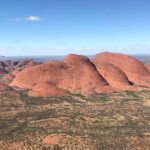
Uluru looks different from the air, and this 36-minute sunset helicopter ride is built for jaw-dropping views without wasting daylight. I love the bird’s-eye photo angles you can’t get from the ground, especially over Uluru and Kata Tjuta’s dramatic rock walls. One thing to keep in mind: the flight path is intentionally limited, so you won’t get a full-circle tour around the rocks.
My second big win is how professional the pilots and crew make the whole experience feel—from pickup to safety briefing to calm, clear in-air guidance. The possible drawback is that cultural sensitivity changes the exact aerial route, so some dream shots (like a perfect overhead pass) won’t happen.
In This Review
- Key points before you go
- 36 Minutes Over the Red Centre: What You Really Get
- Pickup and Transfer: Staying Smooth Inside a Tight Time Window
- Safety Briefing and Step-In Reality: What to Expect Before Takeoff
- Uluru From Above: Photo Angles and the Cultural Flight Path
- Kata Tjuta Highlights: Walpa Gorge, Valley of the Winds, and Olga’s Western Face
- Sunset Timing: Why Light Changes Everything in 36 Minutes
- Comfort, Cameras, and “Do This, Not That” Tips From Real Flights
- Price at $318: Is This Helicopter Ride Good Value?
- Who This Sunset Helicopter Tour Fits Best
- Should You Book This Helicopter Sunset Tour?
- FAQ
- How long is the helicopter flight?
- Is hotel pickup included?
- Where does the tour take place?
- Do they fly directly over Uluru and Kata Tjuta?
- Can I bring luggage or large bags?
- What should I wear or bring?
- Is this tour suitable for people with mobility impairments?
- Is there a weight limit?
- Is free cancellation available?
Key points before you go
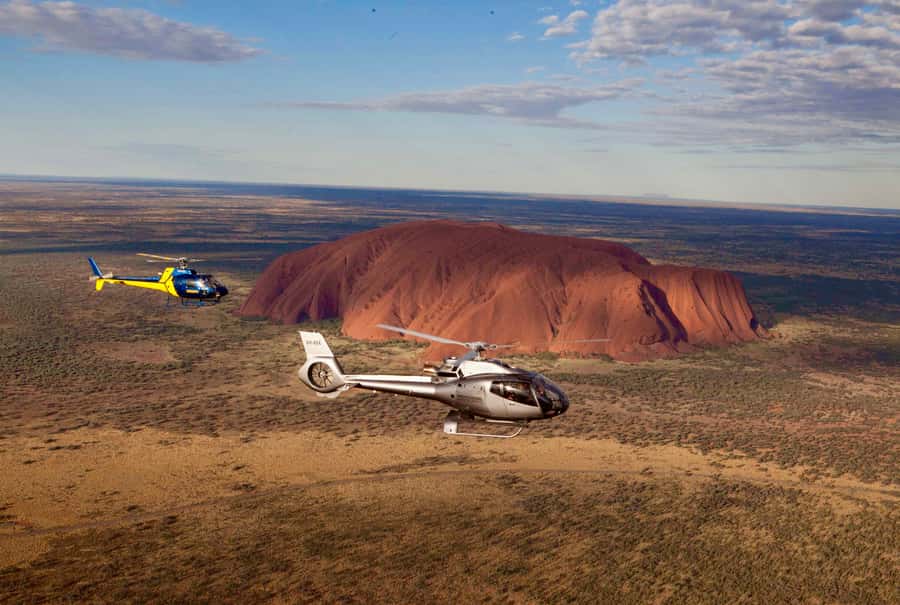
- 36 minutes in the air over Uluru-Kata Tjuta, timed for sunset light
- Hotel pickup at Ayers Rock Resort in an air-conditioned bus, then short transfer to the airport
- Safety briefing and step-access helicopter entry—you’ll want to move confidently
- Walpa Gorge and Valley of the Winds shown from above for instant scale
- Cultural flight restrictions mean you won’t fly directly over or fully around the rocks
- Photo tips that actually help, including bracing your camera against the windows to reduce reflections
36 Minutes Over the Red Centre: What You Really Get
This is the kind of tour that gives you a quick “wow” and then leaves you time to enjoy the rest of Yulara without feeling rushed all day. The flight is only 36 minutes, but it’s packed: Uluru, Kata Tjuta (The Olgas), and the canyon-like sections of the park are all visible from heights that instantly make the scale click.
The aerial view matters here because Uluru and Kata Tjuta aren’t just pretty rocks. They’re landforms with real structure—ridges, valleys, and cliff bands that the eye can’t fully read from the roads. From the helicopter, you see why locals treat this country as sacred and why the views are so powerful even when the light changes fast at sunset.
You’ll also get that rare “panorama in one shot” feeling. The tour is designed to show the rock formations in relation to each other, so your photos look like what your brain remembers: huge, red, and strangely timeless.
You can also read our reviews of more evening experiences in Yulara


Pickup and Transfer: Staying Smooth Inside a Tight Time Window
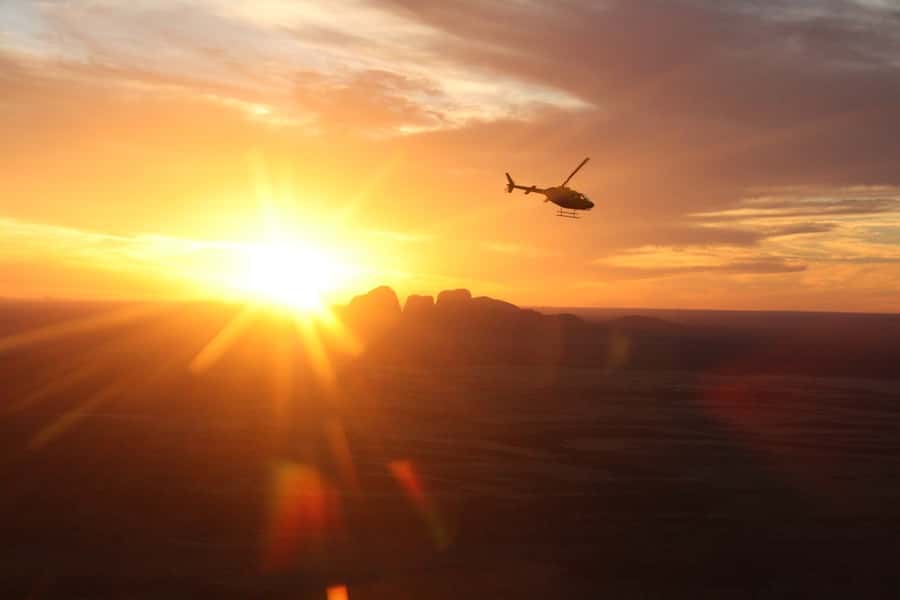
Your day starts with pickup from Ayers Rock Resort. The tour includes air-conditioned bus transport between your hotel and Ayers Rock Airport, and the whole process runs like it’s meant for timing—because sunset light doesn’t wait.
Pickup points include:
- Sails in the Desert Hotel (outside the reception lobby)
- Outback Hotel & Resort (outside the reception lobby)
- Desert Gardens Hotel (outside the reception lobby)
- Ayers Rock Resort Campground (meet at the bus stop on the ring road)
Plan to be waiting at least 5 minutes early at your chosen spot. That small buffer makes a big difference when you’re traveling as a group.
One more practical note: departure times are approximate, and the provider confirms the exact flight and meeting time. If you like to be very organized, keep an eye on their message so you don’t get caught between “scheduled” and “confirmed.”
This is also a good place to mention that transport has strong ratings for punctuality and comfort—so you’re not just buying a seat in the sky; you’re buying a system that works.
Safety Briefing and Step-In Reality: What to Expect Before Takeoff
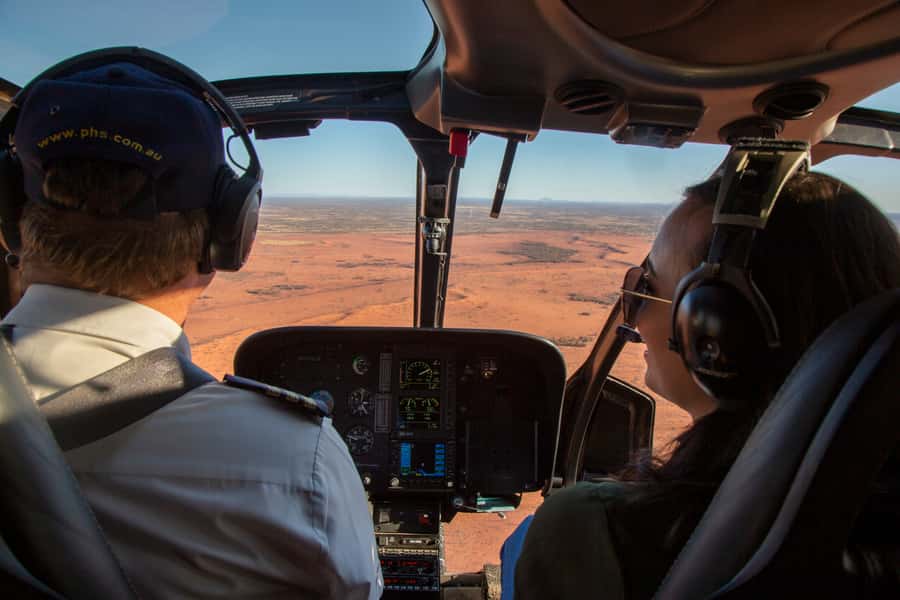
When you arrive at the airport, you’ll get a thorough crew briefing. You’ll hear the safety arrangements before boarding, and you’ll be reminded about how to handle the helicopter entry and exit.
Here’s the part people forget to think about until they’re standing there: you need to be able to use steps and platforms to get in and out. If you use a walking aid or have mobility concerns, this isn’t the right fit. The tour is explicitly listed as not suitable for people with mobility impairments, and low fitness can also be an issue—mainly because boarding and standing steadiness matter.
The upside is that the flight itself tends to feel controlled and reassuring. In real-world experiences with this operator, pilots and crew come across as professional, polite, and focused on safety first—and that calm communication helps if you don’t love heights.
Uluru From Above: Photo Angles and the Cultural Flight Path
Uluru is the star, but it’s not shown the same way you’d get from a drone or a full sightseeing circuit. The flight path does not fly directly over nor completely around Uluru (or Kata Tjuta) because of cultural sensitivity. That means your view is amazing, but it’s also respectful—and intentionally limited.
So what does that mean for you, practically?
- You’ll still get impressive Uluru views from the air.
- You won’t get a perfect overhead pass or a full circular sweep.
- Your best photos may depend on where you’re seated and what the pilot prioritizes for your side of the cabin.
On some flights, pilots adjust carefully so passengers on different sides still feel they’re getting the good angles. I like that approach because it turns the flight into a shared experience rather than a “left side wins” situation. You can also expect clear narration and guidance in English, so you’re not guessing what you’re looking at.
Photo tip that matters: bring your camera mindset to the window. One of the most useful hints is to keep your camera positioned against the window to reduce reflections. Reflections can make your shots look hazy even when the scenery looks sharp to the naked eye. I’d rather you spend your time composing than fighting glare.
Also, don’t be surprised if the pilot’s commentary is paced. There’s a sense that they speak when information is useful and stay quiet when you’re busy watching the views.
Kata Tjuta Highlights: Walpa Gorge, Valley of the Winds, and Olga’s Western Face
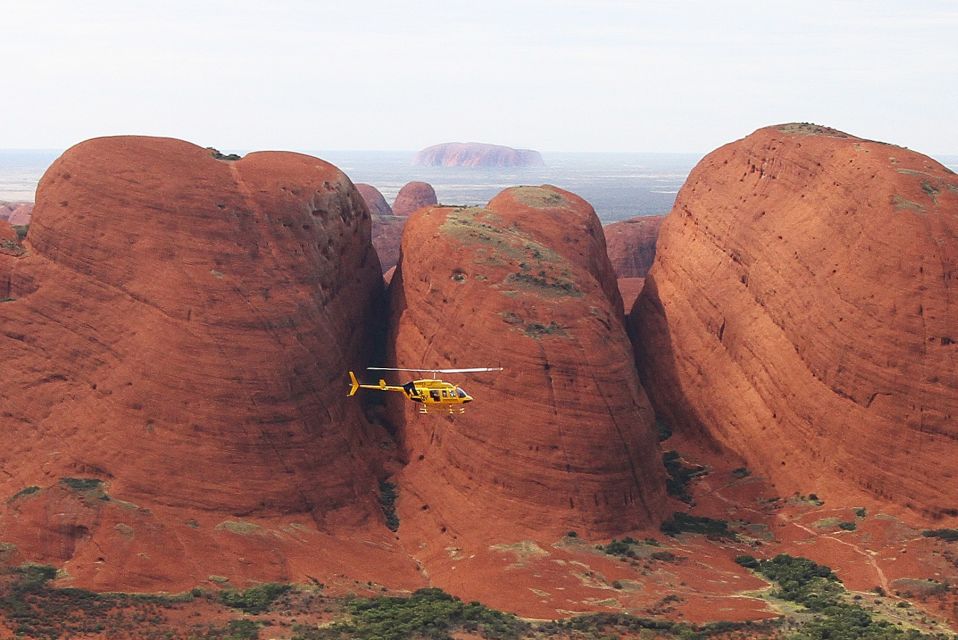
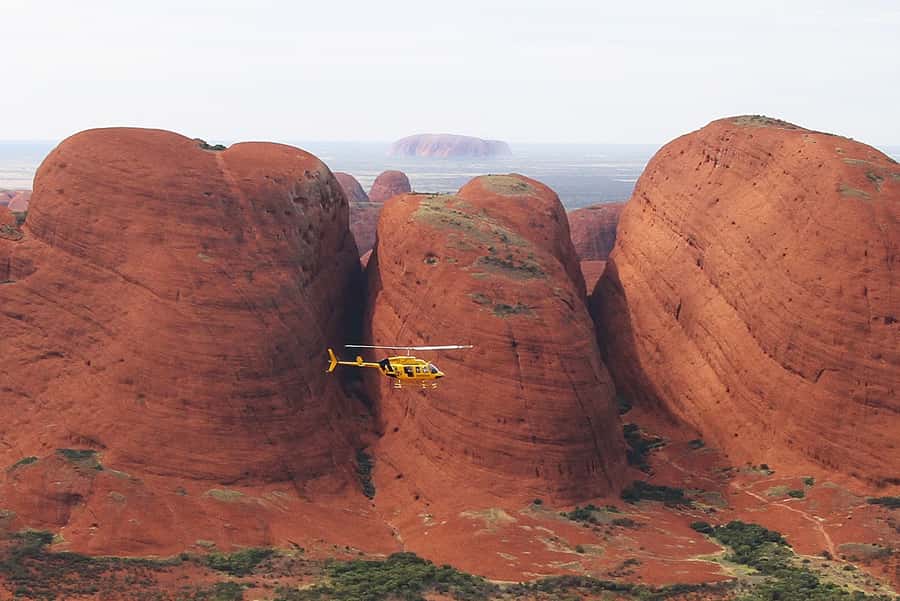
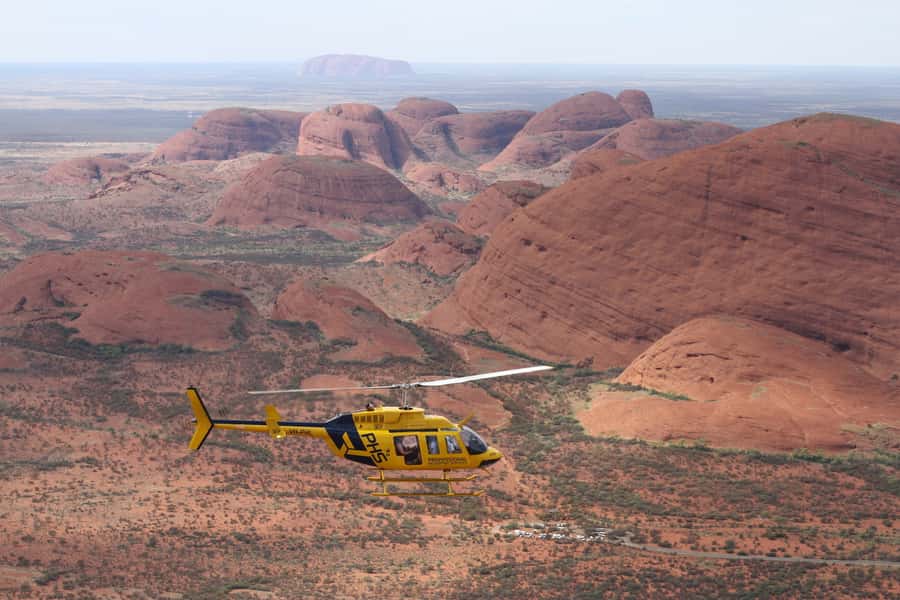
Kata Tjuta is where the aerial view gets seriously dramatic. The flight includes travel down the western face of Kata Tjuta, plus time over the Walpa Gorge and the Valley of the Winds.
From ground lookouts, these places can feel like “more rock.” From the helicopter, they read like a whole system. You can actually see how the gorge cuts through, how the walls stack up, and how the valley stretches. That’s the difference between looking at a feature and understanding it.
The tour also flies toward views over Mount Olga’s western side, which is designed for getting a strong shot where Uluru and Kata Tjuta can appear together in one frame. Even if you don’t manage a perfect “both rocks in one photo” result every time, you’ll understand the geography instantly.
One bonus for photographers: weather in the Red Centre can change fast. On at least one flight, a storm in the distance created a moody, photo-friendly backdrop. You might not get that every time, but you can absolutely benefit if the sky has texture.
A few more Yulara tours and experiences worth a look
Sunset Timing: Why Light Changes Everything in 36 Minutes
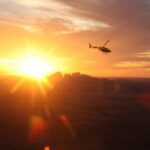
Sunset is the point of this tour, and it’s not just a marketing word. At dusk, shadows deepen and the red tones shift—so the rocks look richer and the textures show more clearly. In a short flight, you feel that difference because the lighting evolves while you’re already in the air.
That said, sunset also means your timing is tight. This is why the pickup matters and why it helps to be ready at the meeting point early. When everything runs on schedule, you get more consistent lighting for photos rather than scrambling as the sun drops.
If you’re hoping for the perfect golden moment, here’s the honest advice: don’t chase only the brightest color. Look for contrast too—edges of cliffs, the line of a gorge, and shadow depth often make the strongest images.
Comfort, Cameras, and “Do This, Not That” Tips From Real Flights
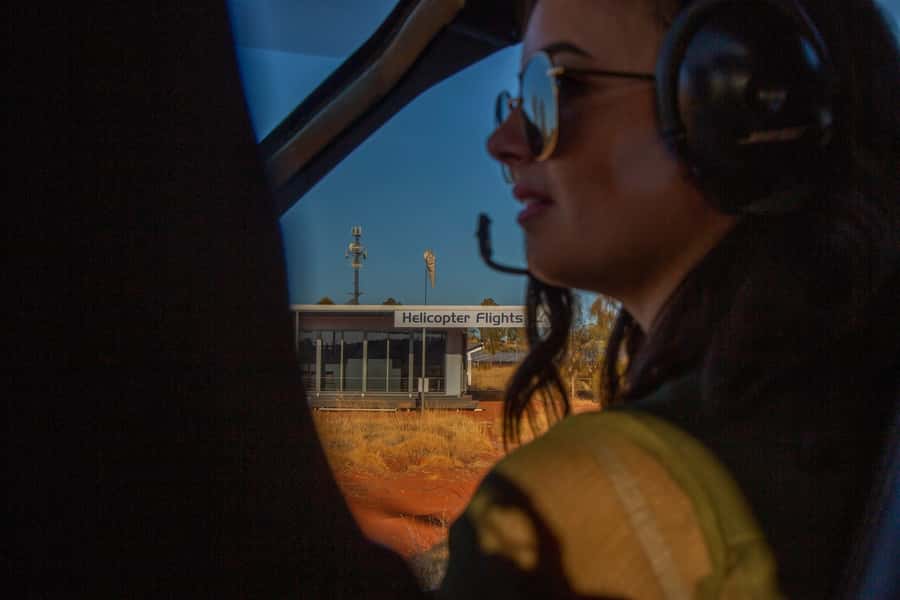
A helicopter tour can feel intimidating if you’ve never done one. What helps is preparation and small practical habits.
Wear: closed-toe shoes. That sounds basic, but it’s exactly what you’ll want when you’re stepping in and out.
Bring for photos: your camera ready before you board, not after. In flight, you won’t have the luxury of long setup time.
Reduce window reflection: brace the lens against the window and keep your hand steady. If you can, use your camera’s grip so you’re not bumping the glass.
Think about seating: if you’re traveling solo, you’ll be paired with another passenger. Some people like front seating for a different view. Follow pilot guidance about windows and vents—don’t improvise.
Also, if you see another helicopter nearby during your flight, it can look like a coordinated operation. That might happen on some days, but treat it as a bonus, not a guarantee.
What I really like in how this tour is run is the attention to pacing. The tone from pilots (names like Cal, George, Emily, Pete, and Tia have come up in real experiences) tends to blend narration with moments of calm. That matters because you want time to watch, not just hear information.
Price at $318: Is This Helicopter Ride Good Value?
At $318 per person for a 36-minute flight, this is not a budget activity. But it doesn’t feel overpriced in the way some thrill rides do, because the product is very focused: it delivers a rare perspective of Uluru-Kata Tjuta that you can’t recreate on a short drive.
Here’s how I judge the value:
- You’re paying for access to angles that are hard (or impossible) from the ground. The scale of Walpa Gorge and the Valley of the Winds becomes instantly legible.
- You’re paying for organization—pickup, transfer, briefing, and a tight flight timeline designed for sunset.
- You’re paying for time efficiency. A 36-minute flight can still leave you with a full afternoon/evening for other Yulara experiences.
If you’re the type who loves photos, this can be money well spent because the composition possibilities are better than typical lookout shots. If you mainly want gentle sightseeing with minimal movement, you might find the helicopter too intense—especially since it requires step/platform access and isn’t suitable for mobility impairments.
Who This Sunset Helicopter Tour Fits Best
This tour is a strong match if you want:
- High-impact views fast, especially at sunset
- Meaningful photo opportunities, including Walpa Gorge and Valley of the Winds
- A flight with live English guidance so you understand what you’re seeing
It’s less suitable if you:
- Have mobility impairments (not recommended)
- Are over 275 lbs / 125 kg (weight limit applies)
- Have low fitness levels, due to the physical reality of boarding and getting seated
If you’re traveling with a camera and you like clear narration, you’ll probably enjoy it a lot. If you get anxious about flying, focus on the briefing and listen carefully to the crew. A well-run safety talk helps more than you’d expect.
Should You Book This Helicopter Sunset Tour?
I’d book it if you can handle the step access, you’re comfortable with a short but intense experience, and you want a different kind of connection to Uluru and Kata Tjuta—one that comes from seeing the rock formations as 3D terrain, not just distant icons.
I’d think twice if you’re hoping for a full aerial circuit around the rocks. The flight path is intentionally limited, so your expectations should be “incredible views with cultural respect,” not “a drone-perfect 360.”
If you’re in that sweet spot—photo-ready, reasonably fit, and excited by sunset light—this tour offers clear value for the time you spend. It’s one of those experiences that makes the Red Centre feel bigger than you expected.
FAQ
How long is the helicopter flight?
The helicopter flight is 36 minutes.
Is hotel pickup included?
Yes. You get pickup from select Ayers Rock Resort hotels, including Sails in the Desert Hotel, Outback Hotel & Resort, Desert Gardens Hotel, and the Ayers Rock Resort Campground ring-road bus stop.
Where does the tour take place?
It takes place in Northern Territory, Australia, in the Uluru-Kata Tjuta National Park area around Yulara.
Do they fly directly over Uluru and Kata Tjuta?
No. The flights do not fly directly over or completely around Uluru or Kata Tjuta due to cultural sensitivity.
Can I bring luggage or large bags?
No. Luggage or large bags are not allowed.
What should I wear or bring?
Wear closed-toe shoes.
Is this tour suitable for people with mobility impairments?
No. It is listed as not suitable for people with mobility impairments, and you must be able to use steps and platforms to board and exit.
Is there a weight limit?
Yes. The tour is not suitable for people over 275 lbs (125 kg).
Is free cancellation available?
Yes. You can cancel up to 24 hours in advance for a full refund.